





How to Play a Singing Bowl – Complete Beginner to Professional Guide
Singing bowls may look simple, but playing them correctly is a refined practice that combines technique, awareness, and intention. When played properly, a singing bowl produces layered sound waves that support meditation, relaxation, emotional balance, and professional sound healing.
This guide explains how to play a singing bowl correctly, from beginner basics to advanced techniques. You will learn how to hold the bowl, choose the right mallet, strike and sing the bowl, avoid common mistakes, and use advanced methods for meditation and healing.
Understanding How a Singing Bowl Produces Sound
A singing bowl produces sound through vibration. When struck or when a mallet is rubbed around the rim, the metal walls of the bowl begin to vibrate. These vibrations create a fundamental tone along with natural overtones, which interact with air and the body to produce calming and grounding effects.
Traditional Himalayan singing bowls were not designed as musical instruments in the modern sense. They were sound tools used for meditation, ritual, and healing, where a relaxed and mindful approach allows the sound to emerge naturally.
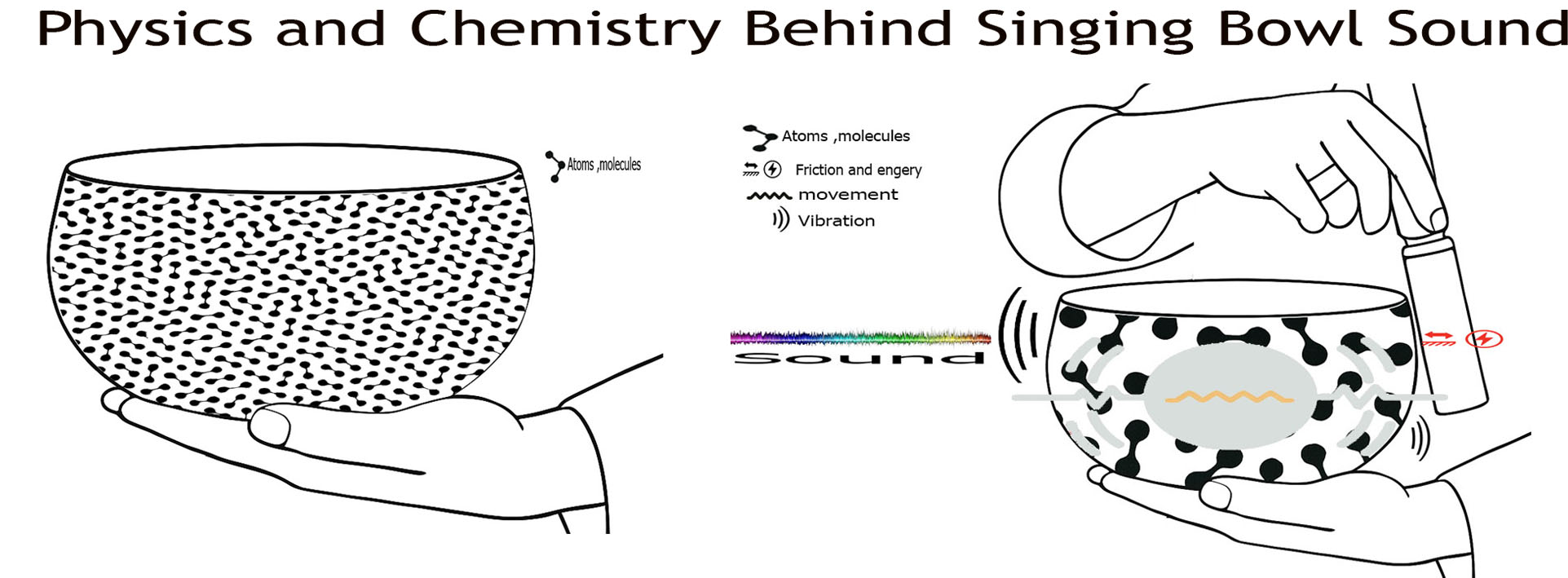
From a physics perspective, striking the bowl introduces energy into the metal, while rubbing the rim creates continuous friction between the mallet and the bowl. This energy causes the atoms and molecules within the metal structure to move back and forth in a repeating pattern. This movement is known as vibration, and it travels across the bowl’s shape, producing a stable main tone and multiple overtones.
From a chemistry perspective, the metal is composed of atoms bonded together in a solid structure. When energy is applied, these atomic bonds stretch and relax without breaking. The atoms oscillate within their bonded positions, allowing vibration to move smoothly through the bowl. The bowl’s shape, thickness, and metal composition influence how these atomic movements combine and resonate.
As the vibrating bowl moves, it transfers this motion to the surrounding air. Air molecules are pushed and pulled, creating waves of compression and expansion that travel outward as sound. These vibrations can also be felt directly through the body when the bowl is held or placed nearby, which is why singing bowls are often experienced as calming, grounding, and physically soothing.
A gentle, steady playing technique allows energy to flow evenly into the bowl. Rather than forcing sound, relaxed movement supports balanced vibration, clearer tone, and longer-lasting resonance.
How to Hold a Singing Bowl Properly
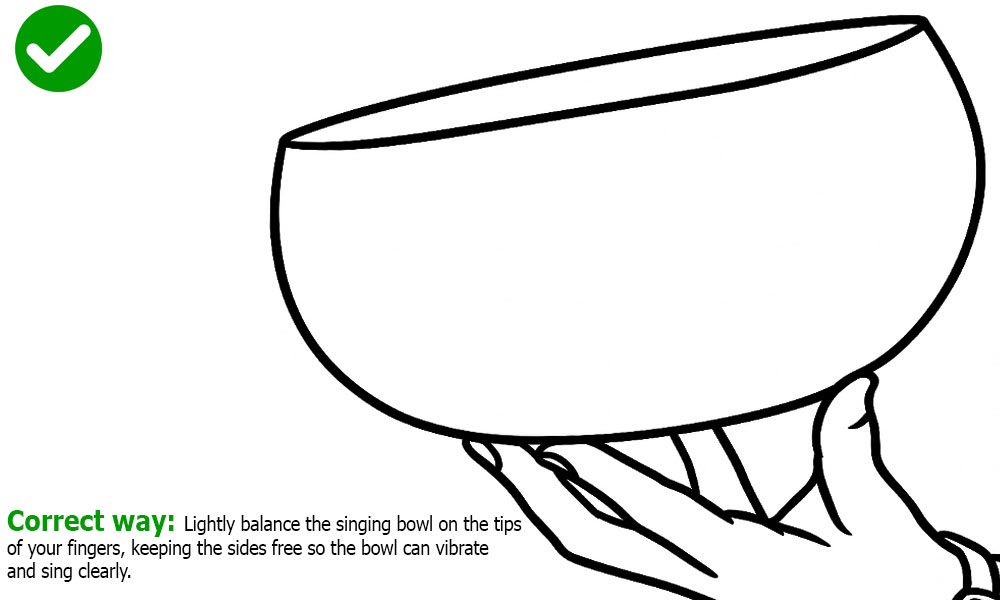
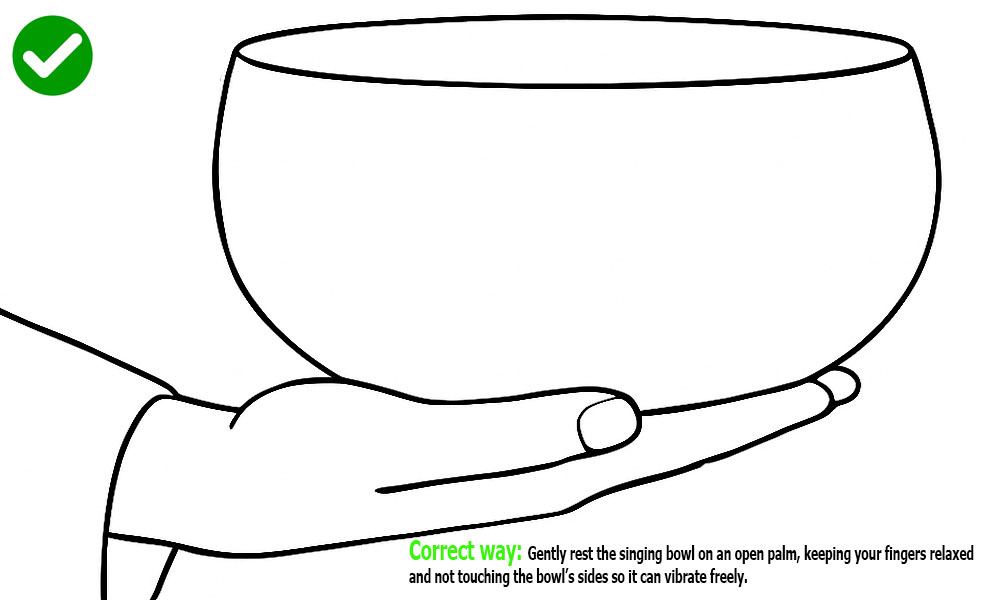
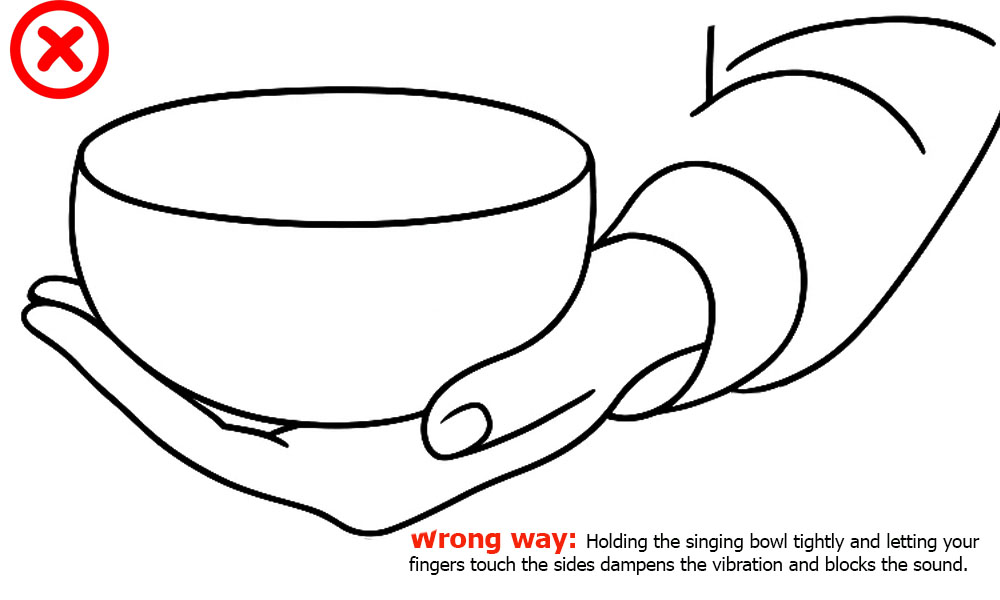
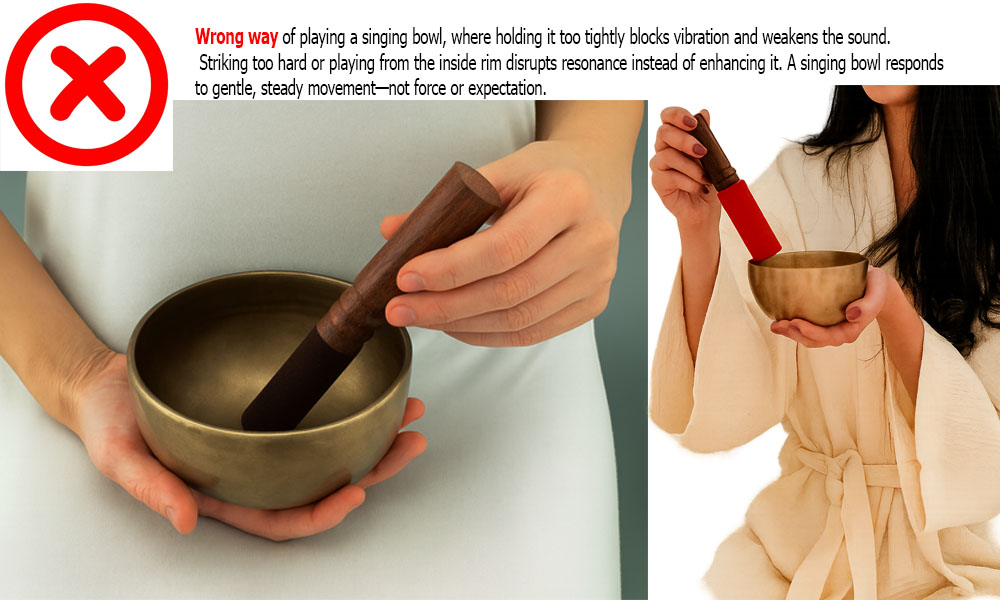
Place the bowl in your non-dominant hand. Let it rest on your open palm or gently on the tips of your fingers. Do not let your fingers touch the bowl’s sides.
Touching the sides absorbs vibration and weakens sound. A relaxed, supportive hand allows the bowl to resonate clearly and for longer.
Placing the Bowl on a Cushion
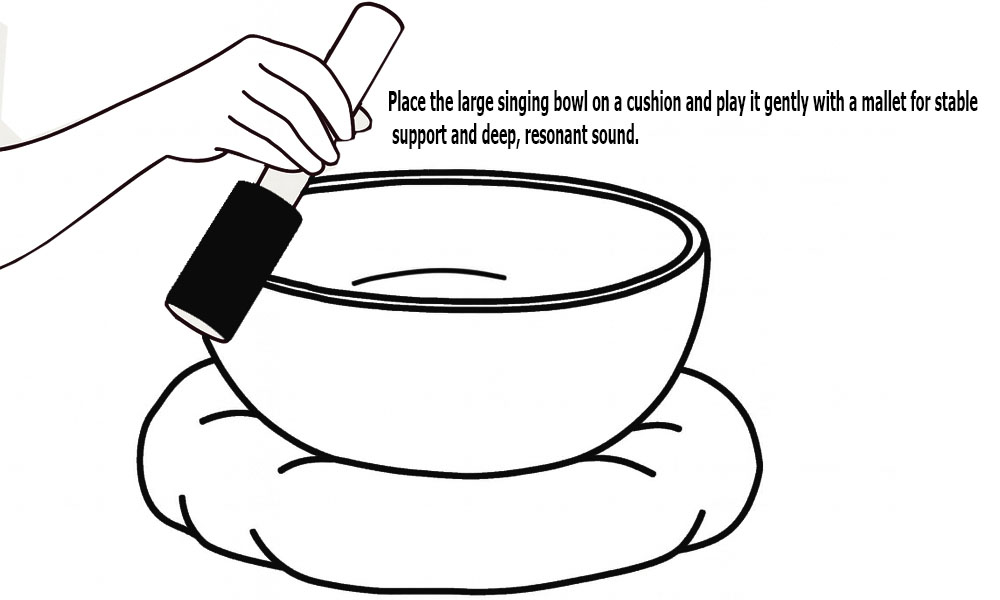
Large or heavy singing bowls should be placed on a cushion or rubber ring. This keeps the bowl stable while allowing full vibration. Many sound healers use this method during long sessions.
Choosing the Right Mallet
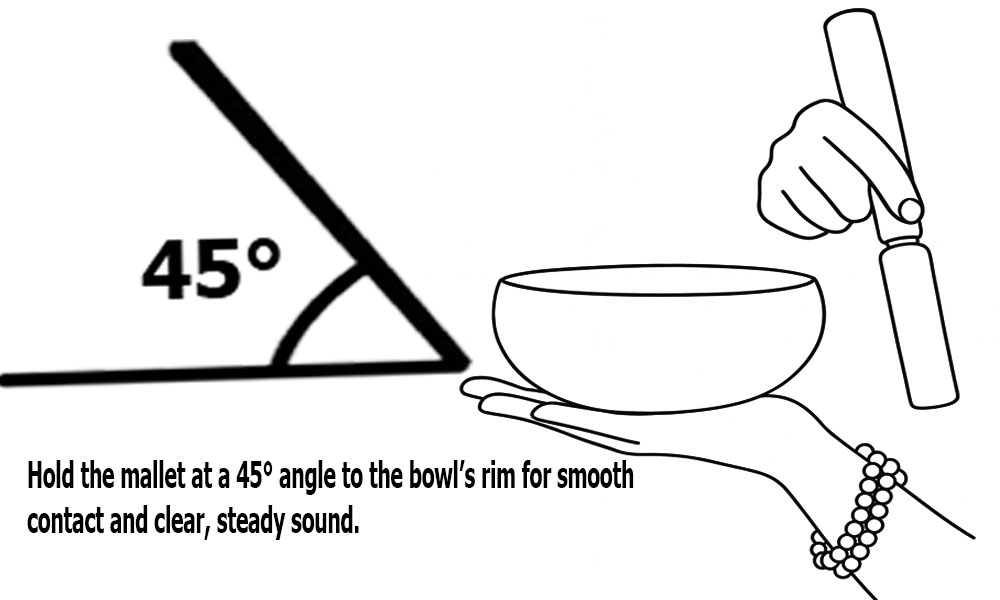
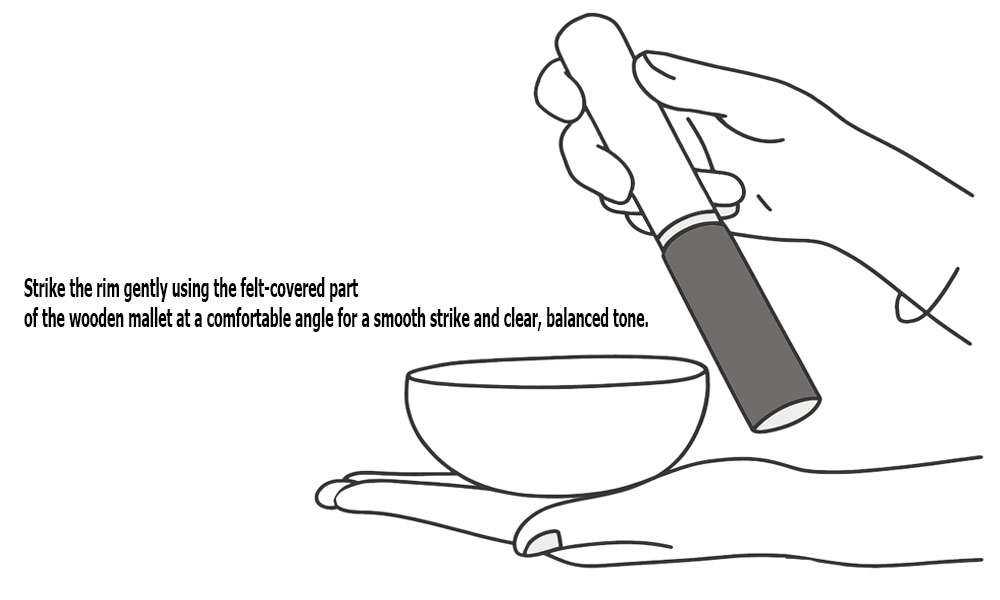
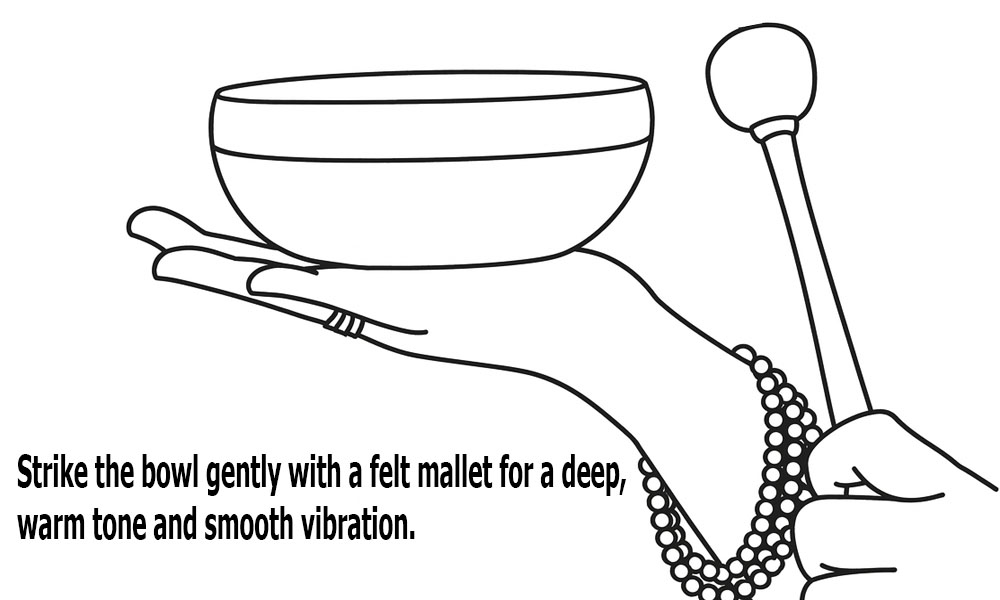
Most singing bowl mallets are double-sided. One end is for striking, the other for rim playing. A helpful guideline is the 45-degree rule—hold the mallet at a slight angle for smooth sound.
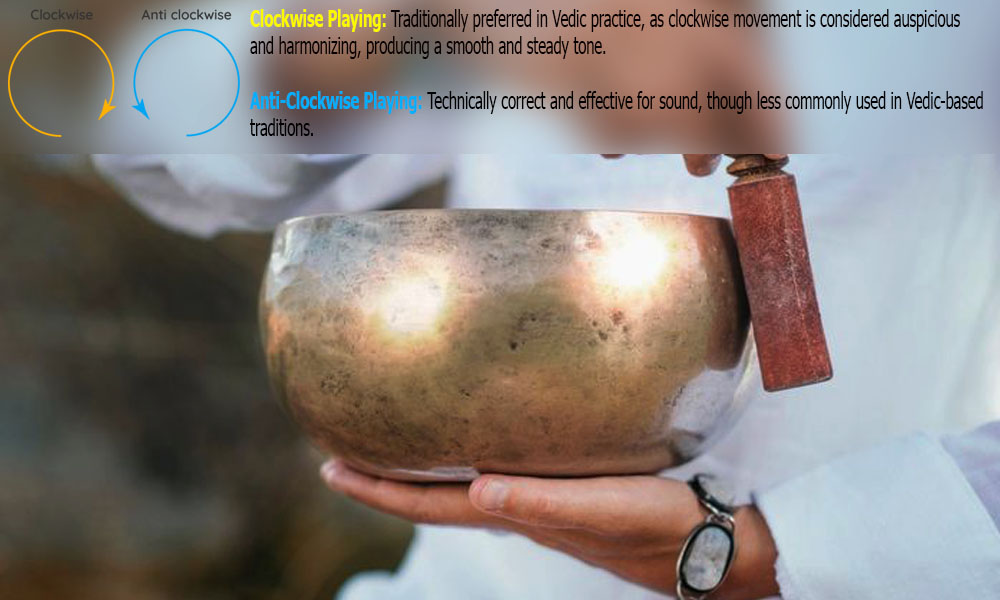
Clockwise vs Anti-Clockwise Singing Bowl Playing (Both Are Correct)
How to Make a Singing Bowl Sing
- Lightly strike the bowl to activate vibration
- Place the padded mallet on the outer rim
- Hold at a 30–45° angle
- Move slowly and evenly around the rim
Use your whole arm rather than just your wrist. Consistent pressure creates a stable singing tone.
Advanced Singing Bowl Techniques
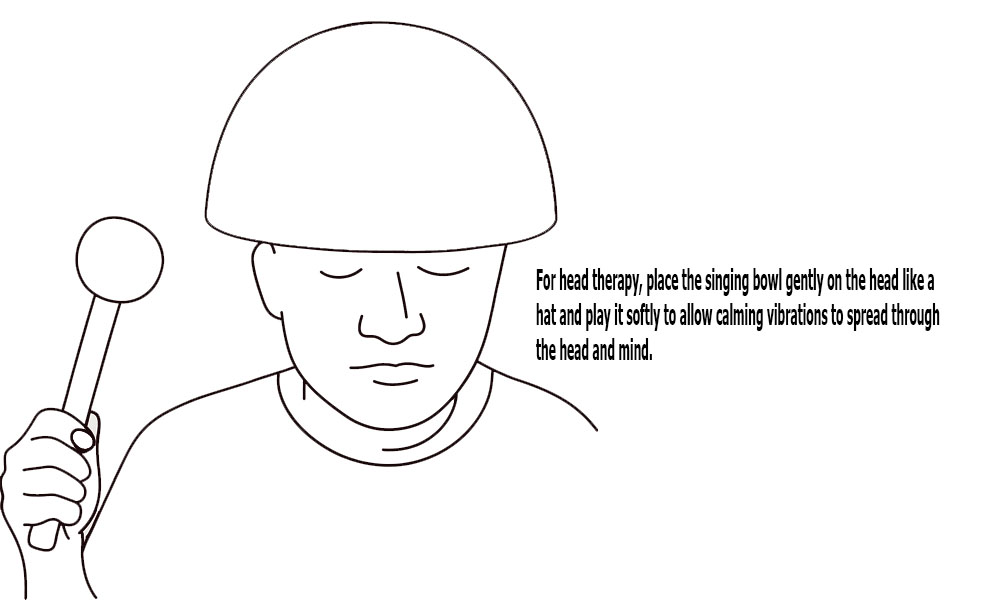
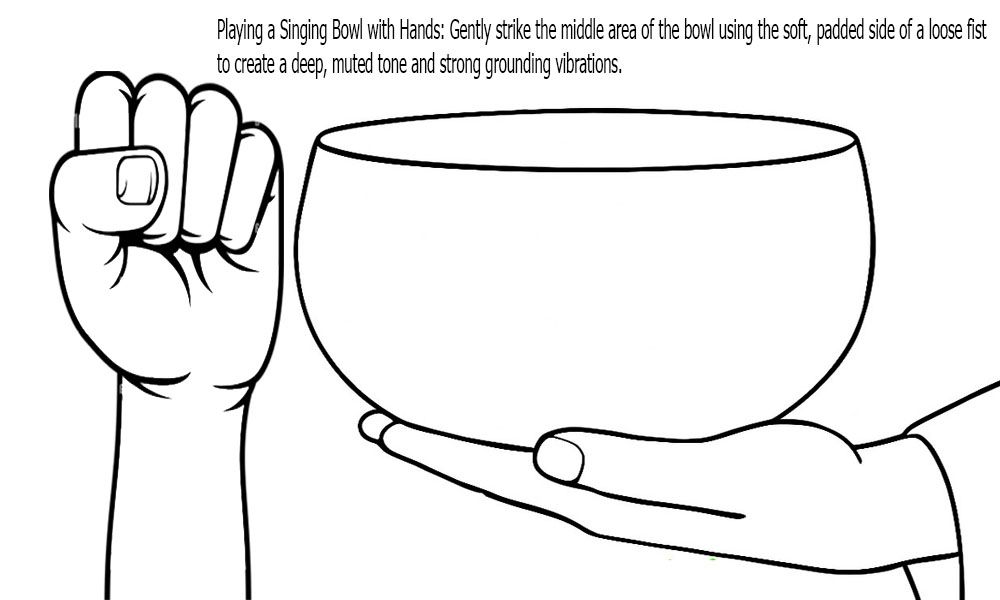
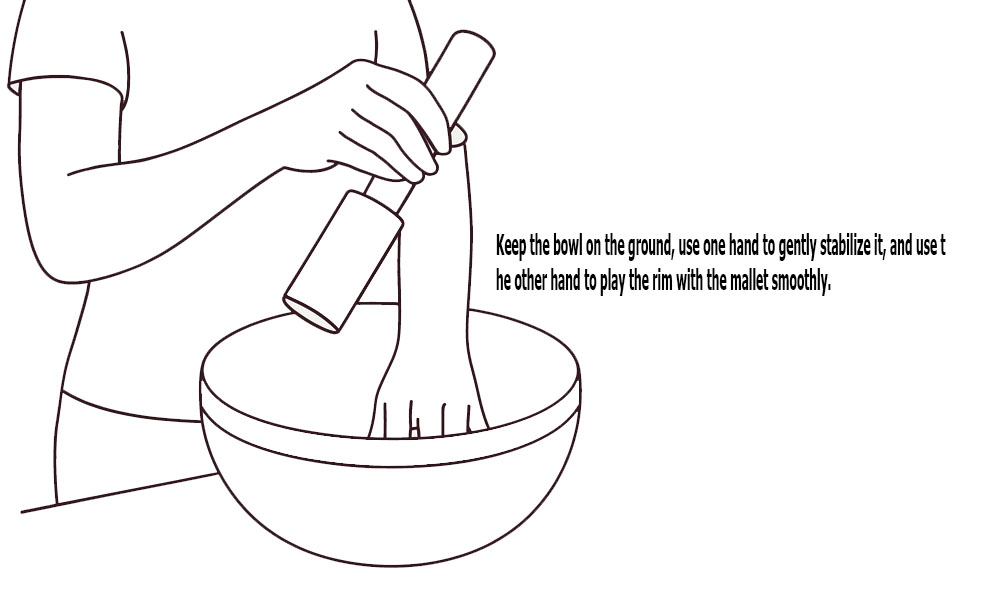
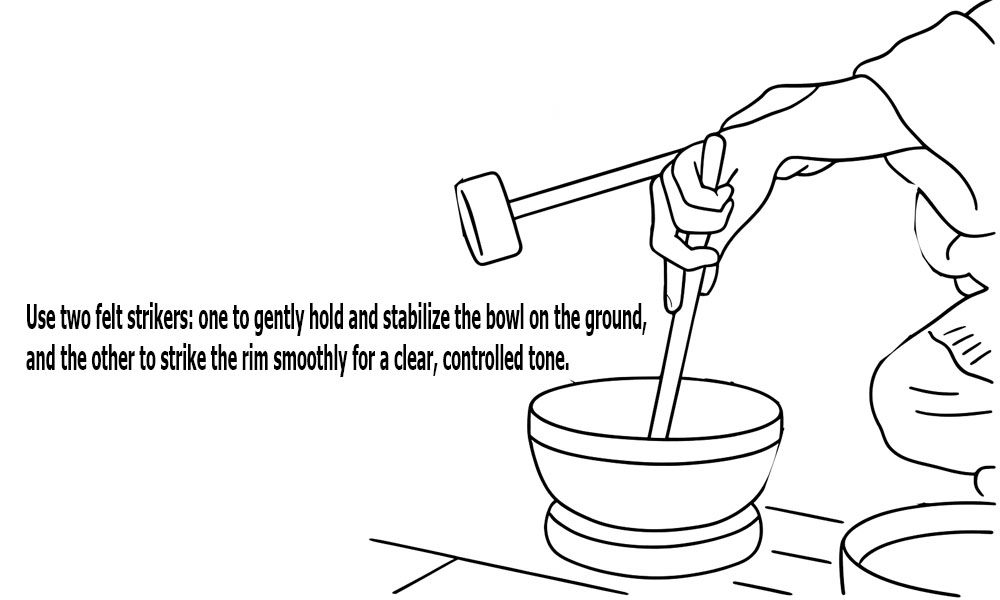
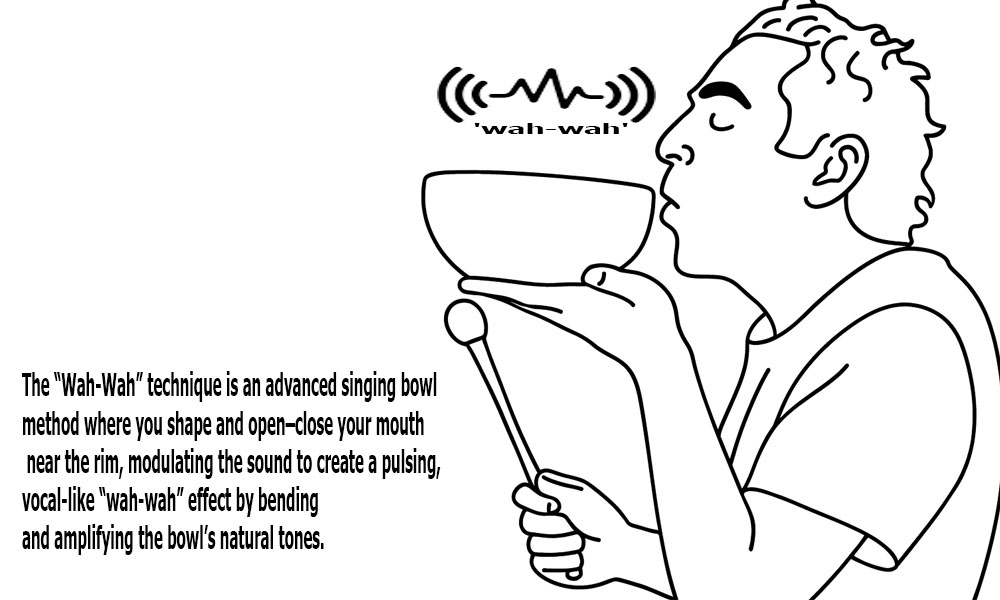
Advanced techniques allow you to shape vibration and overtones. These are commonly used in sound healing, therapy, and professional practice.
Common Misunderstandings and Incorrect Ways of Playing a Singing Bowl
Developing a Deep and Respectful Singing Bowl Practice
Learning how to play a singing bowl is not about force, speed, or perfection. It is about sensitivity, patience, and listening. When your body is relaxed and your movements are slow and intentional, the bowl responds naturally with richer and more stable sound.
With regular practice, you begin to understand how small changes in pressure, angle, and touch affect vibration. Over time, the singing bowl becomes more than a sound tool—it becomes a quiet companion that supports stillness, clarity, emotional balance, and mindful awareness in daily life.
Whether used for personal meditation, healing work, or professional practice, a singing bowl rewards calm attention and respect. The deeper you listen, the more the sound reveals.