





What Is a Tibetan Singing Bowl?
A Tibetan singing bowl is a metal bowl-shaped resonator, hand-forged in Nepal and the broader Himalayan region, that produces sustained sound when struck or when a mallet is moved around its rim. It is not a performance instrument designed for melody or rhythm. It is valued for resonance — sound that opens slowly, stays present, and fades naturally into silence.
Tibetan singing bowls are used in meditation, yoga, sound healing, and mindful awareness practice. Their tone is not just heard — it is often felt in the body. A well-made bowl produces a layered sound field: a main tone supported by shimmering overtones that together create warmth, texture, and depth.
Every bowl is individual. Hand-shaping, hammering patterns, wall thickness, rim profile, and alloy composition all influence how a bowl sounds. Two bowls of the same size can have completely different characters. This is why experienced practitioners choose bowls by listening, not by labels.

How a Singing Bowl Works: Vibration, Tone, and Overtones
Understanding how a singing bowl produces sound makes it easier to use one well and choose one wisely.
Striking: One Impact, One Tone
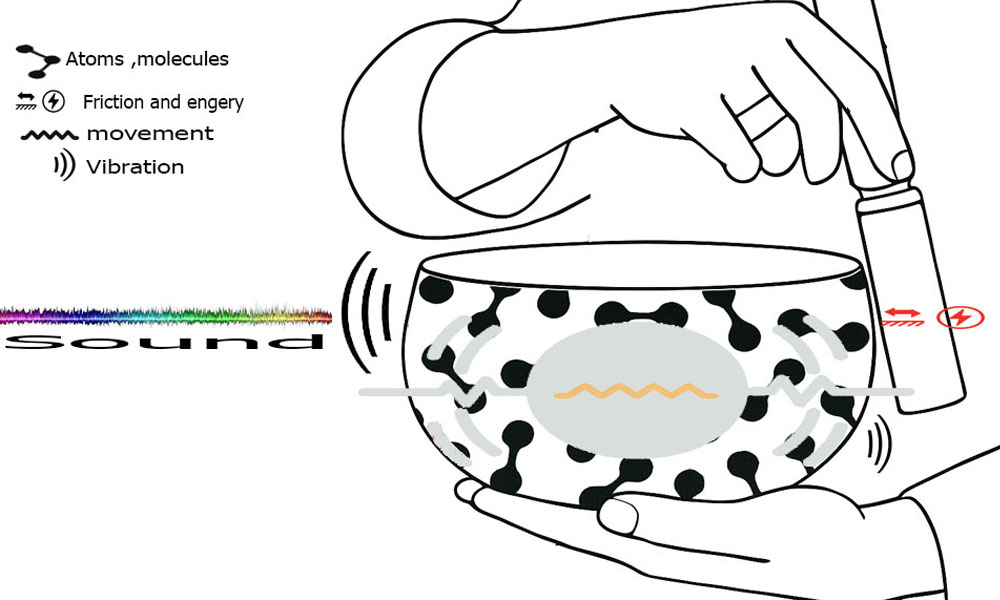
When you strike a singing bowl, you transfer energy into the metal. The bowl flexes microscopically and vibrates, pushing air outward in waves — that is the sound you hear. Because the bowl is a continuous curved form, it sustains vibration far longer than flat metal or most bell shapes.
Where you strike matters. A clean contact near the outer wall usually produces a clearer tone than striking the rim with force. The mallet matters too: felt produces a softer, warmer attack; wood produces a brighter, sharper one. Controlled striking reveals more harmonic depth than hard striking.
Rimming: Continuous Friction, Growing Tone
Rimming works through friction. Moving the mallet steadily around the rim creates a cycle of tiny sticking and slipping contacts — each one feeding a small pulse of energy into the bowl. This is why the tone can grow louder and more stable over time rather than fading immediately.
Speed and pressure are the most common mistakes. Too fast and the sound becomes scratchy. Too much pressure and the mallet drags, collapsing the tone. A steady, moderate pace with consistent light pressure creates the smoothest result. Each bowl has its own preference — learning it means stopping, listening, and adjusting.
Harmonics and Overtones: Why Singing Bowls Sound Three-Dimensional
Singing bowls rarely produce a single clean frequency. Alongside the main tone — the fundamental — multiple overtones appear. These are stable frequencies produced by different vibration modes within the metal body. They are not random noise; they are part of the bowl's acoustic structure.
This is why a good singing bowl feels three-dimensional. The ear hears a central pitch and a surrounding halo of higher tones that shimmer and layer above it. In the best bowls, overtones feel integrated — they blend rather than compete. This layered quality is one of the defining differences between a handmade Himalayan bowl and a mass-produced brass piece.
Tibetan Singing Bowl History and Origins
Singing bowls are closely associated with the Himalayan cultural region — particularly Nepal and Tibet — where metalworking, ritual sound, and spiritual life have long developed together. The Himalayas have a deep tradition of metal craft: bells, ritual implements, household vessels. Sound has always been part of spiritual environments through chanting, ceremonial instruments, and contemplative practice.
What many people misunderstand is that "Tibetan singing bowl" is a modern name. In Himalayan contexts, bowl-shaped metal vessels existed for practical and ritual purposes long before the term existed. Some were used as offerings, some in household settings, some within ceremonial spaces. Over time, certain bowls became valued specifically for their resonance and began to be used as sound tools in practice.
Unlike many historical objects documented in texts, the singing bowl tradition is largely transmitted through artisan lineages — knowledge passed from teacher to apprentice, family to family, workshop to workshop across Nepal and Tibet. This kind of history is real but not always written down.
The most honest way to speak about origins is not to claim a single date, but to recognise that singing bowls belong to a broader Himalayan world where craftsmanship, ritual, and sound-based practice developed together over centuries.

When Singing Bowls Became Known Globally
For most of their history, singing bowls were little known outside the Himalayan region. Their wider recognition began primarily in the mid-20th century as meditation and yoga expanded globally and interest in Tibetan culture grew alongside it.
As international travel, migration, and spiritual study increased, more people encountered Himalayan sound traditions. Singing bowls began appearing in meditation centres, then yoga and wellness spaces, where their sustained tone was appreciated for relaxation and mindfulness training.
This global exposure brought both benefits and problems. The benefit: more people learned to use sound as a support for calm and presence. The problem: bowls were sometimes surrounded by exaggerated claims or presented as "ancient secrets" without cultural nuance or accuracy.
Today, singing bowls are best understood in both contexts: rooted in Himalayan craft and contemplative culture, and also widely used modern tools for relaxation, mindfulness, and sound-based practice.
Singing Bowls and the Buddha: What the History Actually Shows
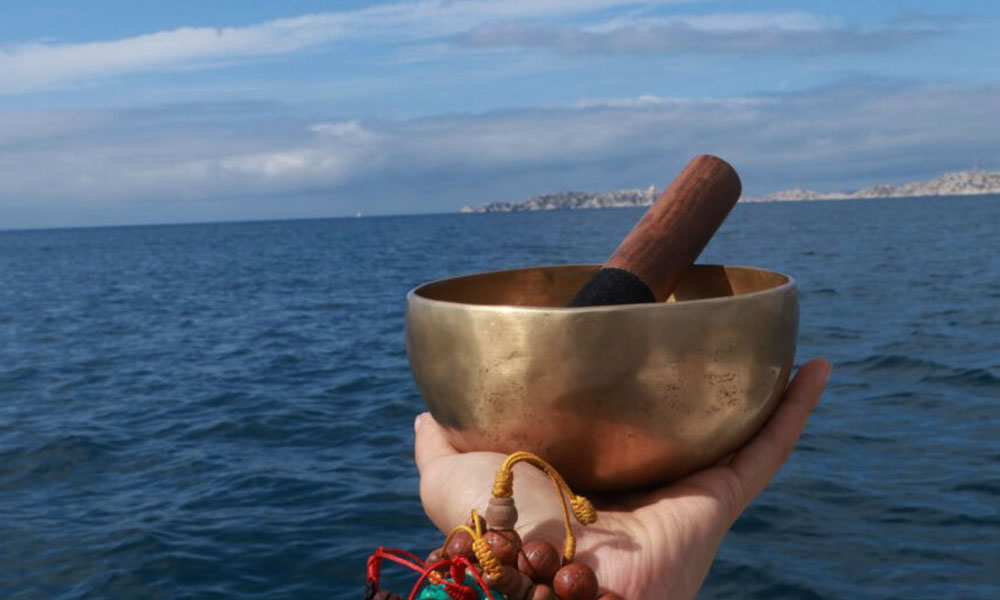
A common misconception is that the historical Buddha carried or used a singing bowl. There is no reliable historical or textual evidence for this.
In early Buddhist tradition, the Buddha is associated with an alms bowl used by monastics to receive food — a practical object symbolising humility, renunciation, and simplicity. It was not a sound instrument. The confusion often comes from modern imagery where a bowl-like object appears in artworks or statues near a Buddha figure. Because singing bowls are bowl-shaped and used in meditation settings today, the two are easily conflated. But the connection is symbolic and modern — not historical.
A respectful way to state it: singing bowls align naturally with meditative practice, but they are not documented artifacts from the Buddha's lifetime.
Singing Bowls and Tibetan Buddhism
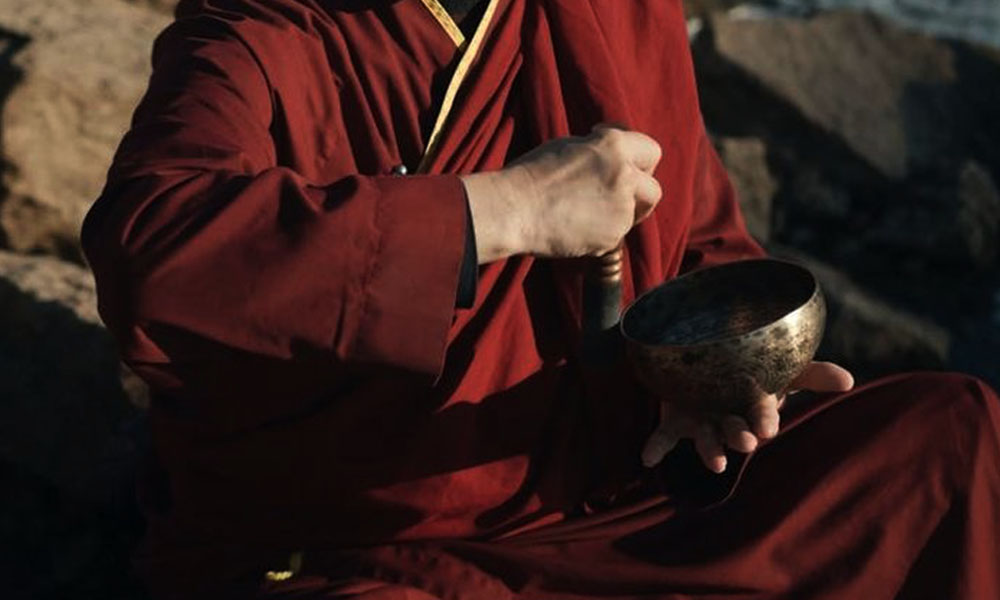
Tibetan Buddhism includes a rich sound culture: chanting, bells, drums, and ritual instruments used to support attention and mark stages of practice. In this tradition, sound is not entertainment — it is a method. It can steady the mind, establish rhythm for ritual, and embody teachings such as impermanence.
Singing bowls fit naturally into this environment because their tone encourages listening rather than thinking. The sound rises, stays present, and fades — mirroring the way experiences arise and pass. This makes the bowl a practical reminder of change and non-grasping.
It is important to be accurate: singing bowls are not central canonical objects of Tibetan Buddhism in the way the bell and vajra are. They are best understood as supportive tools — instruments many practitioners find useful for meditation space, mindful transitions, and listening-based practice. Used respectfully, a singing bowl does not replace Buddhist practice. It supports the conditions in which practice becomes easier: calm, attention, and presence.
Singing Bowls, Hinduism, and Yogic Philosophy
Hindu and yogic traditions place deep importance on sound. The concept of Nada — sacred sound — and the symbolism of Om reflect the understanding that vibration is fundamental to experience: something you can contemplate, refine, and use as a doorway to inner stillness.
Singing bowls, while not originally Hindu instruments in a strict sense, align easily with this worldview because they create a stable, continuous sound field that supports meditative attention. Nepal is culturally intertwined with both Hindu and Buddhist traditions, and in Himalayan life it is common for symbolism, craft, and ritual to overlap across both.
The key is sincerity and understanding: sound becomes meaningful not because a label is applied to it, but because it supports the discipline of attention.
How Singing Bowls Are Used in Yoga Practice
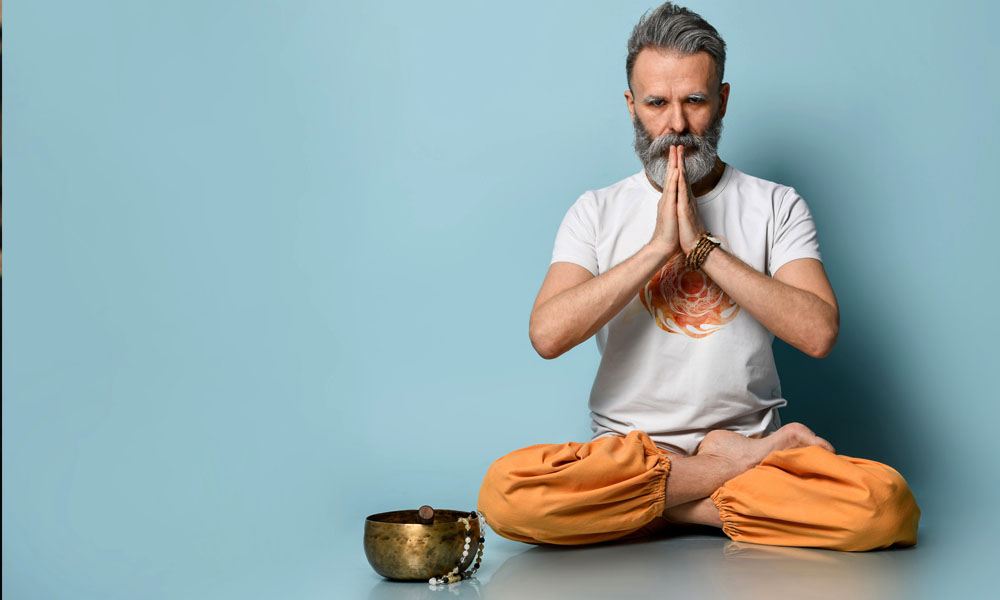
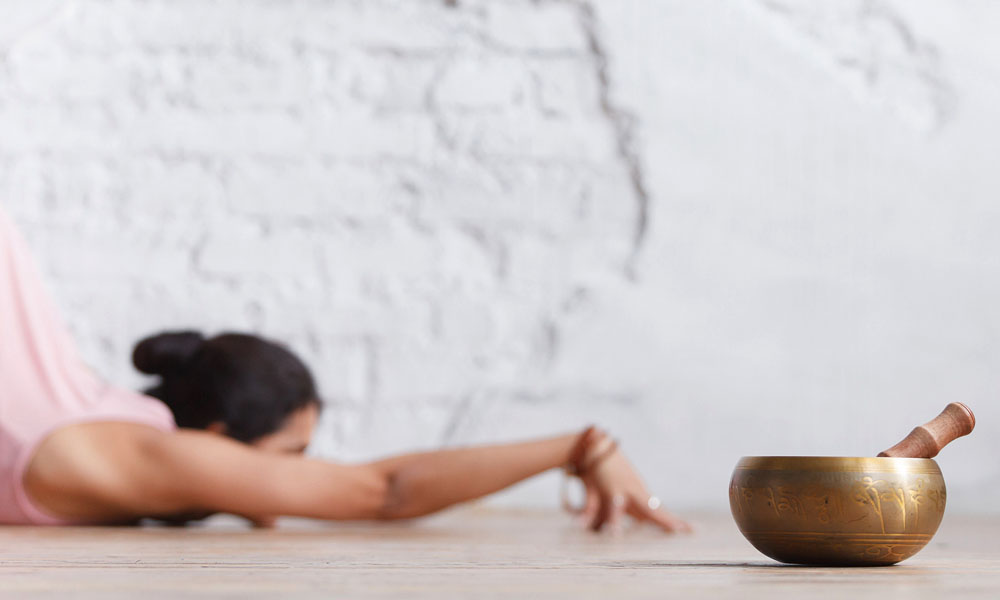
Yoga practice is not only physical posture. It includes breath regulation, sensory refinement, and the ability to rest attention without constant movement. Singing bowls are used in yoga environments because their tone supports nervous system settling — especially when the body transitions from effort into rest.
At the start of a session, a single clear strike can bring scattered attention into the room. At the end — especially during savasana — the sustained tone supports deeper relaxation without demanding mental work. It gives the mind something gentle to follow until it naturally quiets.
In slow or restorative styles of yoga, bowls can also help pace the practice. The sound creates a spacious rhythm that discourages rushing. Many practitioners notice that when sound becomes steady, breath becomes steady too. Used wisely, the bowl does not perform yoga — it supports the conditions yoga tries to cultivate: stability, softness, and presence.
How Singing Bowls Are Used in Meditation
Meditation often becomes difficult because the mind tries too hard. People strain for silence, then grow frustrated when thoughts appear. Singing bowls help because they offer a simple anchor that does not require mental effort.
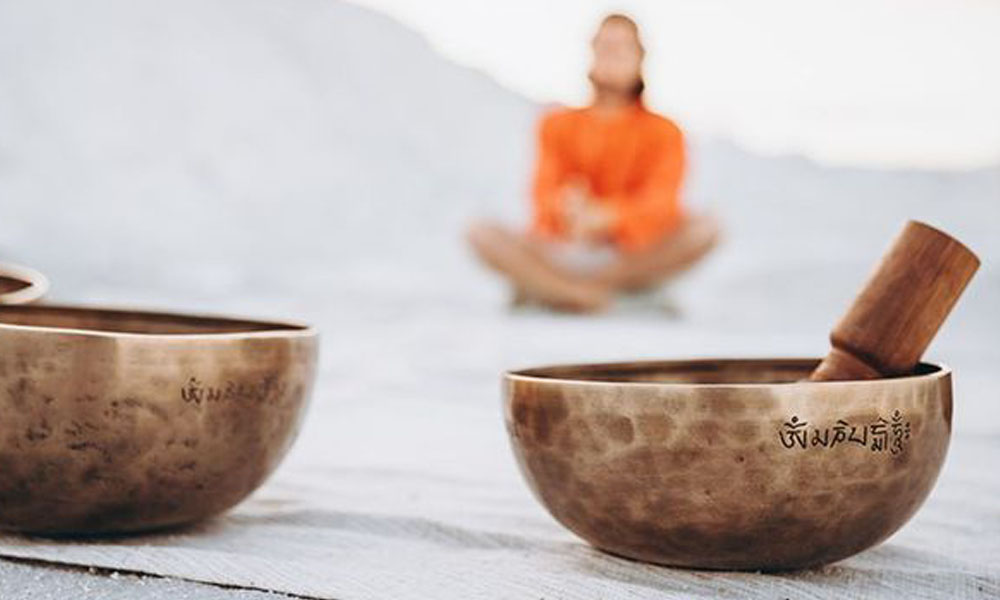
One of the most effective approaches is listening meditation: strike the bowl once and listen until the sound disappears completely. Notice the beginning, the fullness, the softening, and the final fade into silence. This trains attention without force. When thoughts arise, you do not fight them — you simply return to the sound. Over time, this builds a stable habit of returning, which is one of the core skills of meditation.
In group settings, bowls also help structure practice. They can mark the beginning and end of a session, creating a shared rhythm that reduces uncertainty and supports calm.
Singing Bowls and Mindfulness
Mindfulness is awareness of the present moment without judgment. Sound is one of the most direct ways to practise it because sound only exists now. You cannot hear yesterday's sound. You cannot hear tomorrow's sound. You can only hear what is happening.
With a singing bowl, mindfulness becomes simple: listen to what the sound is doing right now. Notice how it changes. Notice how it fades. Notice how silence feels after it ends. This is mindfulness training without philosophy.
Many people find that sound reduces mental narration. When the ear is fully engaged, the mind has less room to spin stories. In that space, awareness becomes clearer and more grounded. Mindfulness with a bowl is not about achieving a special state. It is about returning to direct experience — repeatedly, patiently.
What Science Says About Singing Bowl Effects
From a scientific perspective, singing bowls influence experience through resonance, frequency content, and sensory engagement. Sustained tones provide consistent auditory input, which can stabilise attention and reduce the brain's tendency to scan for new stimulation.
Sound also interacts with breathing. Humans often synchronise unconsciously with slow rhythmic cues. A singing bowl's steady sustain and predictable decay can encourage slower breathing and longer exhales — patterns associated with relaxation and parasympathetic nervous system activity.
Vibration is another key factor. Low and mid frequencies can feel physically present even without direct contact. This "felt sound" increases body awareness, pulling attention out of abstract thinking and into direct sensation. Science does not need mysticism to explain why bowls feel calming. Stable sensory input, breath influence, embodied attention, and a quiet environment together create conditions where the nervous system can settle.
What Can and Cannot Be Claimed Responsibly
- What can be said responsibly: singing bowls can support relaxation, reduce perceived stress, and help attention settle — especially in quiet, safe environments.
- What cannot be claimed responsibly: singing bowls cure illness, replace medical care, or guarantee specific health outcomes.
The strongest position is also the most credible: bowls are complementary tools. They support the conditions where well-being improves — calm breathing, steady attention, reduced stress — but they are not treatments in themselves. This honesty builds trust and protects the cultural integrity of the practice.
Therapeutic Use of Singing Bowls
Historically, singing bowls were not medical instruments. Their therapeutic value comes from how sustained sound influences relaxation, attention, and emotional regulation — areas that strongly affect overall well-being.
In modern settings, bowls are used in relaxation sessions because the body responds to stable sound fields. Many people naturally slow their breath while listening. When breathing slows and becomes smoother, the nervous system often shifts toward rest. This can reduce felt stress and help the body feel safer.
There is also a psychological dimension: sound gives the mind something to rest on. Many people struggle with silence because silence makes thoughts louder. A bowl offers gentle focus that reduces internal noise without demanding concentration. Therapeutic use is most responsible when framed correctly: bowls support calm and nervous system regulation, but they do not replace healthcare or treat disease.
The Seven Sacred Metals: Symbolism and Sound
The idea of seven sacred metals is part of Himalayan symbolic tradition. It reflects the belief that different metals carry different energetic qualities and that combining them creates rich, balanced resonance. This symbolic view is meaningful within a spiritual worldview.
From a practical standpoint, exact metal composition varies between workshops and artisans. Sound quality is shaped strongly by craftsmanship: thickness distribution, rim shape, hammering pattern, and finishing work. Two bowls with similar metal content can sound very different depending on how they were formed.
The most balanced understanding: symbolism and sound coexist. The tradition adds meaning; craftsmanship determines how the bowl actually behaves acoustically.
Why Singing Bowl Notes Are Discovered, Not Chosen
Traditional hand-forged singing bowls do not begin with a fixed musical note. Their final pitch emerges after the forging process is complete. A bowl's sound depends on many interacting factors: alloy composition, diameter, curvature, wall thickness, rim shape, and the internal tension created by hammering and heat cycles.
Even a small change — one more hammer strike in a particular area — can subtly shift the bowl's vibration pattern and alter the perceived pitch or overtone structure. This is why truly handmade bowls resist precise prediction. The note is not assigned; it reveals itself.
In Himalayan spiritual traditions, this process also carries meaning. It reflects the idea that harmony is not forced into existence — it arises when conditions are correct. The artisan listens, adjusts, and listens again. Forging becomes a dialogue with sound, not a mechanical process. This is one reason many people feel handmade bowls have more life: the sound is formed through craft and discovered through listening.
Common Misunderstandings About Singing Bowls
- "Every bowl is automatically linked to a chakra." Some teachers map sound to chakra systems, but this is not universal and should not be treated as fixed.
- "Bigger bowls are always better." Larger bowls often sound deeper, but a smaller bowl can be clearer, more responsive, and more practical for daily use.
- "Old bowls are always superior." Age alone does not guarantee sound quality. Craftsmanship, condition, and resonance matter more.
- "Belief is required." Many benefits come from attention and breathing patterns — practical effects that do not require any belief system.
Singing Bowls in Massage and Bodywork
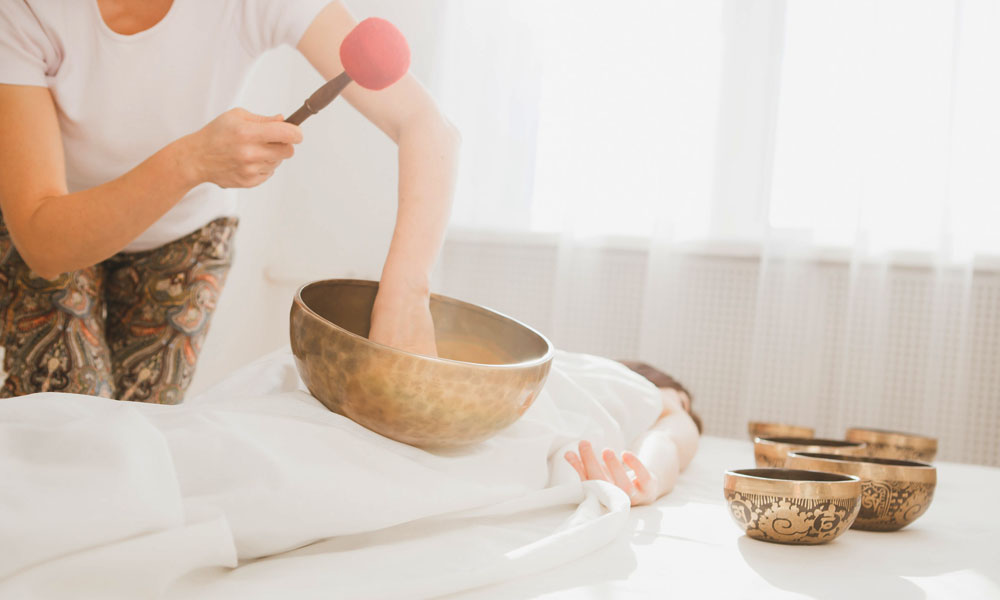
Singing bowls are used in massage and bodywork settings because their sustained vibration can support deep relaxation and body awareness. When played near the body — or carefully placed on the body by trained practitioners — the bowl's resonance can be felt as a gentle spreading sensation that encourages the nervous system to soften.
The benefit here is not force but steadiness. A stable tone can help slow breathing, reduce muscle guarding, and create a calm sensory focus that makes it easier to release tension. Many people describe the experience as grounding because attention naturally drops out of thinking and into direct sensation. Sound should never feel sharp, overwhelming, or stressful — comfort and restraint guide good practice.
How to Choose and Use a Singing Bowl
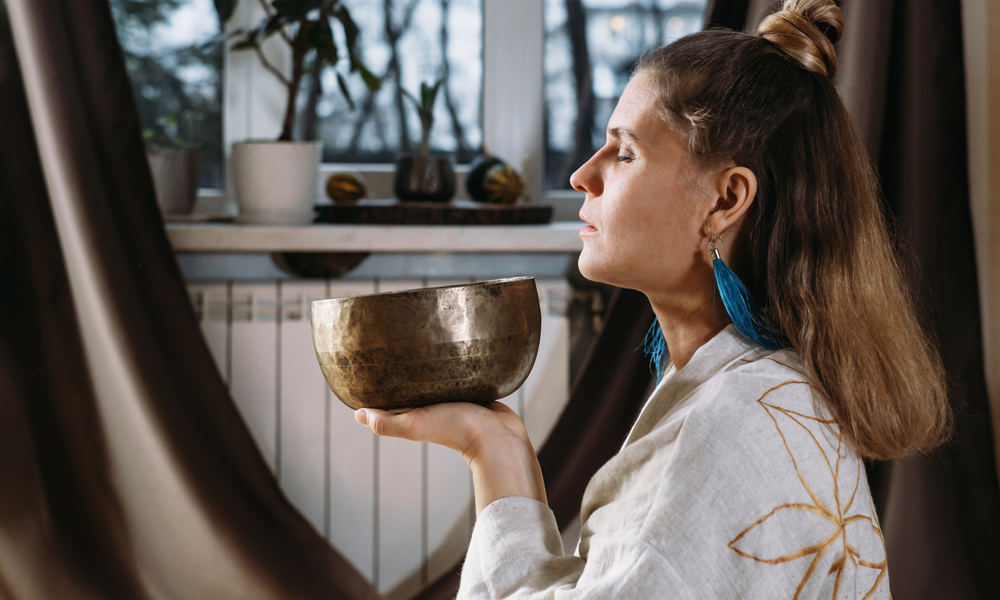
Choosing a singing bowl is best done with the ears and the body, not only with labels. A good bowl should feel stable, clear, and comfortable to listen to. The sound should not feel harsh or tiring. It should invite attention rather than demand it.
For daily meditation, many people prefer a bowl with a steady sustain and a gentle, natural fade. For relaxation spaces, some prefer deeper room-filling resonance. For mindfulness practice, clarity matters most — the sound should be easy to follow until silence. For dedicated chakra healing work, a set of seven tuned bowls aligned to each energy centre gives the most complete practice.
Using a bowl with awareness also means playing it with restraint. The most helpful bowls often speak clearly when played gently. If you use the bowl regularly, it becomes a familiar doorway into stillness — a small ritual that signals the nervous system to soften. The right bowl is the one that encourages consistency: a bowl you actually want to sit with again and again.
Sound as a Practice, Not a Belief
A singing bowl does not require belief, ritual identity, or spiritual background to be meaningful. Its value lies in direct experience. Sound arises, changes, and fades. The listener learns to stay present through those changes without chasing or resisting them.
This is why singing bowls fit naturally into many traditions. In Buddhism, the fading of sound reflects impermanence. In yogic philosophy, vibration supports inward attention. In mindfulness practice, sound becomes a simple anchor for the present moment. When approached this way, the bowl is not a symbol you must accept. It is a practice you can do: listen carefully, soften the breath, and let the mind settle where it is.
Over time, many people find that the deepest part of singing bowl practice is not the sound itself — but the silence it leaves behind.
Singing Bowls as Meaningful Home Objects
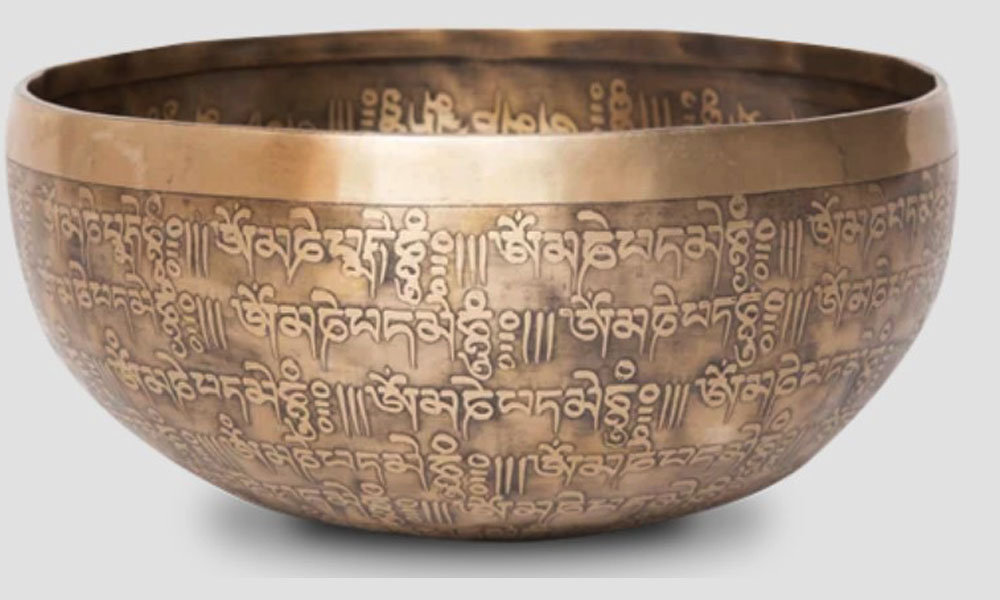
Beyond meditation and wellness, singing bowls are valued as meaningful objects in a home or studio. Many bowls feature hand-carved mantras, sacred geometry, Tibetan symbols, or deity figures — details that make a bowl visually powerful even when it is not being played.
Placed thoughtfully in a meditation corner, living space, or altar area, a singing bowl becomes a cultural and artistic object that reflects intention, calm, and respect for Himalayan craft traditions. For many people, simply seeing the bowl is a reminder to slow down, breathe, and return to awareness.
Each handmade bowl is also genuinely unique. Variations in hammering patterns, alloy behaviour, and engraving mean no two pieces feel exactly the same. When you choose a bowl that is both beautiful and resonant, you are choosing an object that holds artistic value alongside practical use.
A note on wellness and medical context: Singing bowls are commonly used to support relaxation, mindfulness, and contemplative practice. They are not medical devices and should not be considered a substitute for professional medical advice, diagnosis, or treatment.
To read about the spiritual and scientific benefits of singing bowls in more detail, see our article on Spiritual and Scientific Benefits of Singing Bowls.
Singing Bowl FAQ
Have questions about singing bowls? Learn how Tibetan singing bowls are made, how they are used, how to choose the right size, and what actually matters in real practice. Our FAQ page answers the most common questions clearly and honestly.
Explore the Singing Bowl FAQ