





Ritual Bells and Vajra Symbols in Religious Traditions
The bell and dorje (vajra) are ritual objects most closely associated with Tibetan Vajrayana Buddhism, yet their roots and uses extend beyond a single tradition. Bells have long been used in Hindu temple worship and other religious settings to mark sacred moments, while the vajra originated in ancient Indian religious thought as a symbol of power and indestructibility. Over time, these elements were adapted into different spiritual systems, each assigning them specific meanings and ritual roles.
This article explains the meaning, symbolism, and use of the bell and dorje in a neutral, reference-style manner. It covers shared origins, tradition-specific practices, and common misunderstandings, with the aim of helping readers understand how these objects function in religious life.
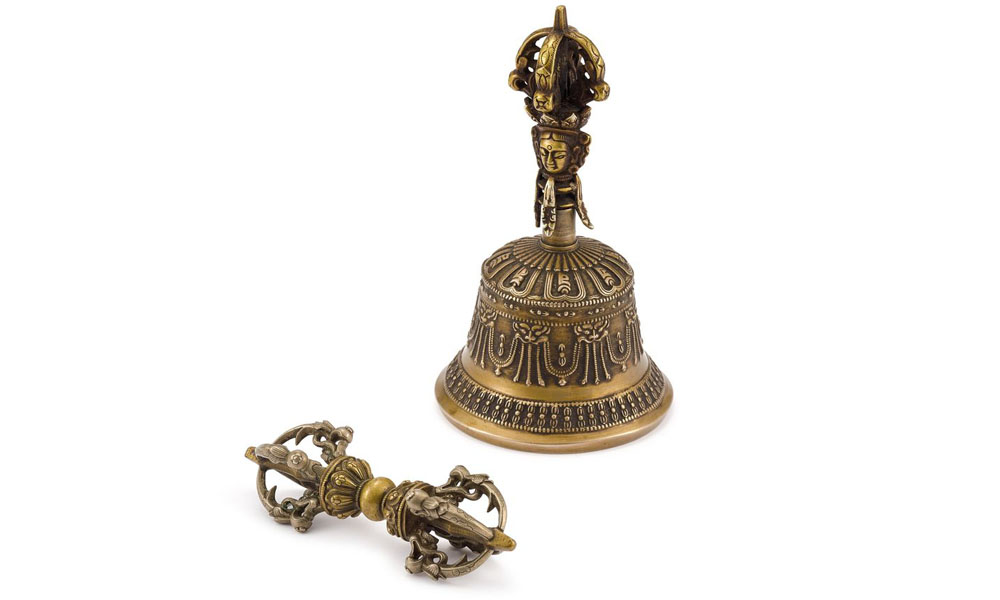
Definition and Basic Overview
A ritual bell is a hand-held bell used during prayer, worship, or meditation. Its purpose is not musical performance but focus: the sound helps establish attention and mark transitions within ritual.
The dorje, also called a vajra, is a symbolic ritual object shaped like a short scepter. It produces no sound and is not used as a tool in a physical sense. Instead, it represents abstract qualities such as strength, clarity, and stability.
Depending on the tradition, the bell and dorje may be used together or separately.
Historical Background and Origins
The vajra appears in early Indian religious texts as a sacred symbol associated with divine power. In Hindu tradition, it is linked to Indra, a Vedic deity connected with strength and authority. The vajra symbolized something unbreakable and decisive.
Bells were also present in early Hindu ritual practice, especially in temple worship. Ringing a bell marked the beginning of prayer and helped distinguish sacred activity from ordinary life.
As Vajrayana Buddhism developed in India and later spread to Tibet, Nepal, and the Himalayan regions, both the bell and vajra were incorporated into Buddhist ritual systems and given new philosophical interpretations.
The Use of Bells in Hinduism
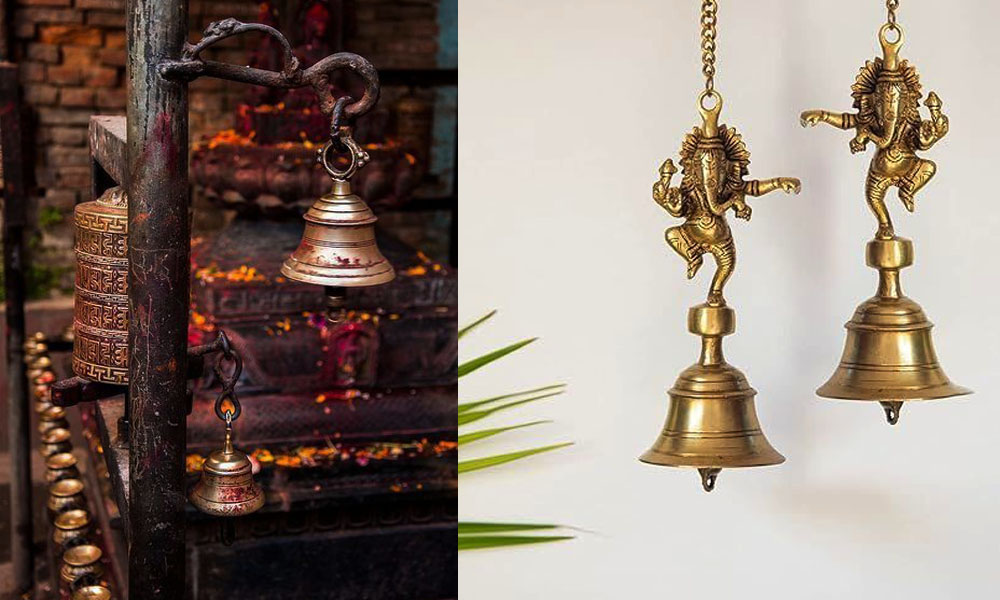
In Hindu practice, bells are commonly rung at temple entrances and during puja (ritual worship). The sound of the bell is used to draw attention, focus the mind, and signal reverence.
Hindu bells are usually rung with the right hand and are not paired with a vajra. They function independently as sound-based ritual objects. Bells may be simple or decorated with symbols and are typically made from bronze or brass.
In this context, the bell’s role is practical and symbolic rather than philosophical.
The Bell and Dorje in Tibetan Buddhism
In Vajrayana Buddhism, the bell and dorje are used together during rituals, chanting, and meditation. Each object represents a complementary principle.
The bell is traditionally held in the left hand and represents wisdom and awareness. The dorje is held in the right hand and represents method, often understood as compassionate or skillful action.
Their paired use emphasizes the idea that understanding and action must be developed together.
Symbolic Meaning of the Bell
Across religious traditions, the bell is associated with awareness and presence. Its sound arises, resonates, and fades, which many traditions interpret as a reminder of impermanence.
Rather than creating music, the bell’s sound serves as a call to attention, helping practitioners return to focus during ritual or prayer.
Symbolic Meaning of the Dorje (Vajra)
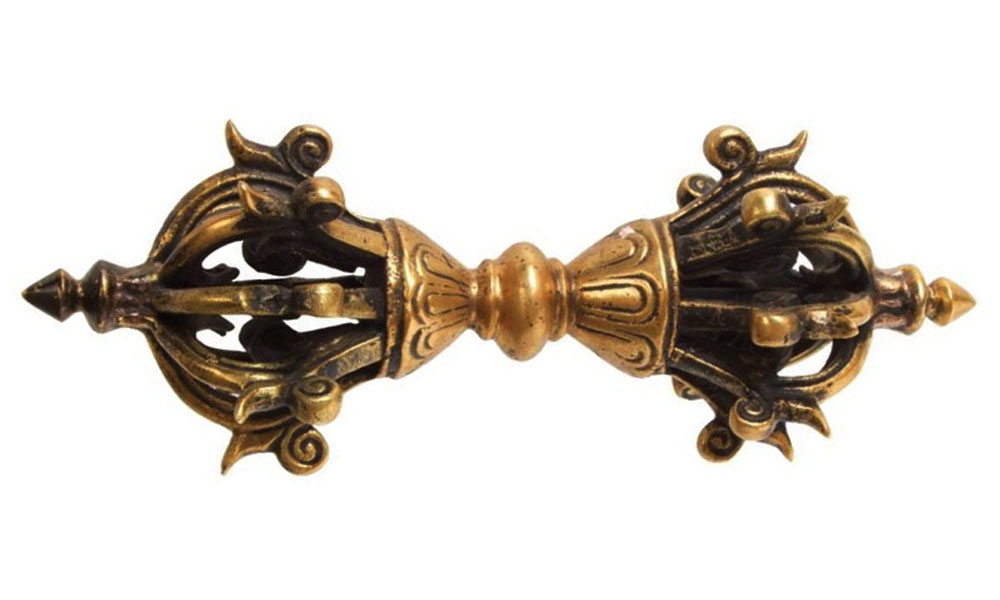
The dorje or vajra symbolizes strength, clarity, and indestructibility. In Hindu tradition, it represents divine authority and power. In Buddhist tradition, it represents the ability to act with clarity and compassion without being disturbed by confusion.
The symmetrical design of the dorje reflects balance and stability, reinforcing its symbolic meaning.
The Bell and Dorje as a Paired Practice
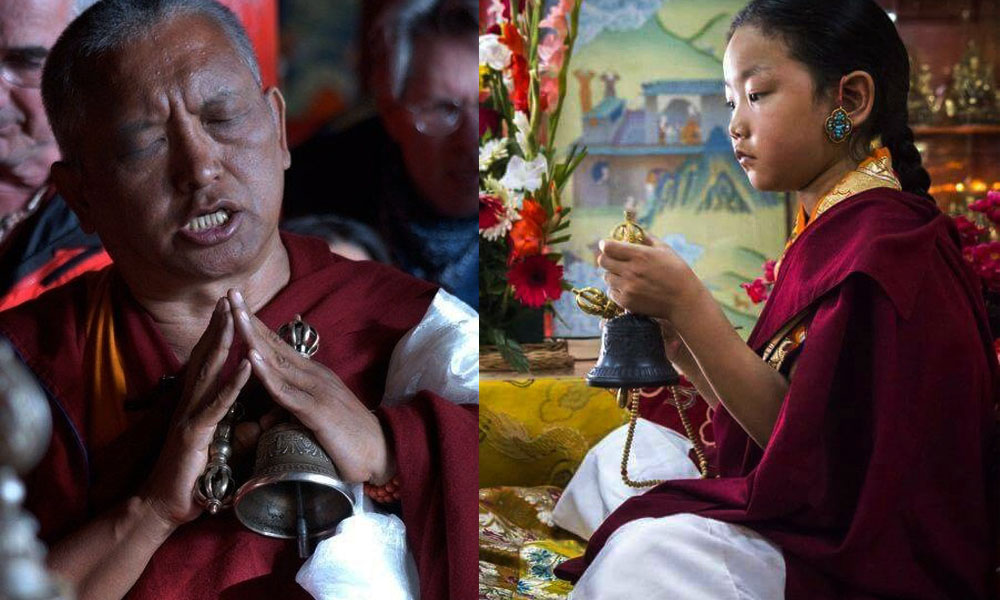
The pairing of the bell and dorje is specific to Vajrayana Buddhist practice. Together, they represent the union of wisdom (bell) and method (dorje).
This pairing is not used in Hindu ritual practice, where the bell functions independently.
Traditional Use in Ritual and Meditation
In Buddhist rituals, the bell is rung at specific moments to mark transitions or emphasize key points. The dorje is held steadily as a symbolic anchor rather than moved or struck.
In Hindu practice, bells are rung before or during prayer to establish focus. Bells may also be used in home shrines to open or close daily worship.
Physical Structure and Design
A ritual bell typically has a wide base and a handle. In Tibetan Buddhist bells, the handle is often shaped like a half-vajra, symbolically linking the bell to the dorje.
The dorje consists of a central sphere with symmetrical prongs extending from both ends. While designs vary slightly by region, the basic form remains consistent.
Materials and Craftsmanship
Bells are commonly cast from bronze or brass alloys. The quality of sound depends on shape, thickness, and casting technique.
Dorjes are usually cast from solid metal and designed to feel balanced and stable in the hand. Ornamentation varies, but functionality is symbolic rather than mechanical.
Types and Variations
Bells and dorjes come in different sizes and styles. Larger bells are often used in temples or formal ceremonies, while smaller ones are suitable for personal practice.
Hindu bells and Tibetan Buddhist bells differ slightly in form and decoration due to their distinct ritual contexts.
Cultural Context and Common Misunderstandings
Ritual bells are sometimes mistaken for musical instruments or decorative items. In religious contexts, they serve a specific ritual function.
The dorje is often misunderstood as an ornament rather than a symbolic object. Understanding the cultural and religious context helps prevent misuse.
Choosing a Bell or Dorje
When selecting a ritual bell or dorje, practitioners often focus on balance, sound quality, and comfort rather than appearance alone.
For Hindu worship, a bell by itself is sufficient. For Vajrayana Buddhist practice, a matched bell and dorje set is traditionally used.
Bell and Dorje as Living Ritual Objects
Across religious traditions, bells and vajra symbols continue to function as living ritual objects. They are not merely historical artifacts but tools used to mark sacred space and cultivate attention.
When used with understanding and respect, the bell and dorje serve as reminders of awareness, discipline, and balance in spiritual practice.
Explore Tibetan Bell and Dorje Sets
For those looking to use these ritual tools in personal practice or shrine settings, our collection of Tibetan bells and dorjes includes traditionally styled pieces chosen for balanced sound, solid casting, and respectful symbolism.