





Gong Types – Understanding Wind Gongs and Chau Gongs
Gongs are among the oldest sound instruments in the world, traditionally used across Asia in temples, ceremonies, meditation, and communal gatherings. Unlike melodic instruments, gongs are not designed to play fixed notes. Instead, they are valued for their vibration, resonance, and the way sound spreads and evolves in space.
For someone new to gongs, different types may look similar at first glance. However, the shape, thickness, and structure of a gong play a major role in how it sounds and how it is traditionally used.
Among the many styles of gongs, two of the most common and widely recognized types are the Wind Gong and the Chau Gong. Understanding these two provides a strong foundation before exploring other gong variations.
In simple terms:
- Wind Gongs create open, flowing sounds that change and evolve over time.
- Chau Gongs create strong, focused sounds with a clear center.
With this basic understanding, we can now explore each type in greater detail.
Wind Gong – Detailed Understanding
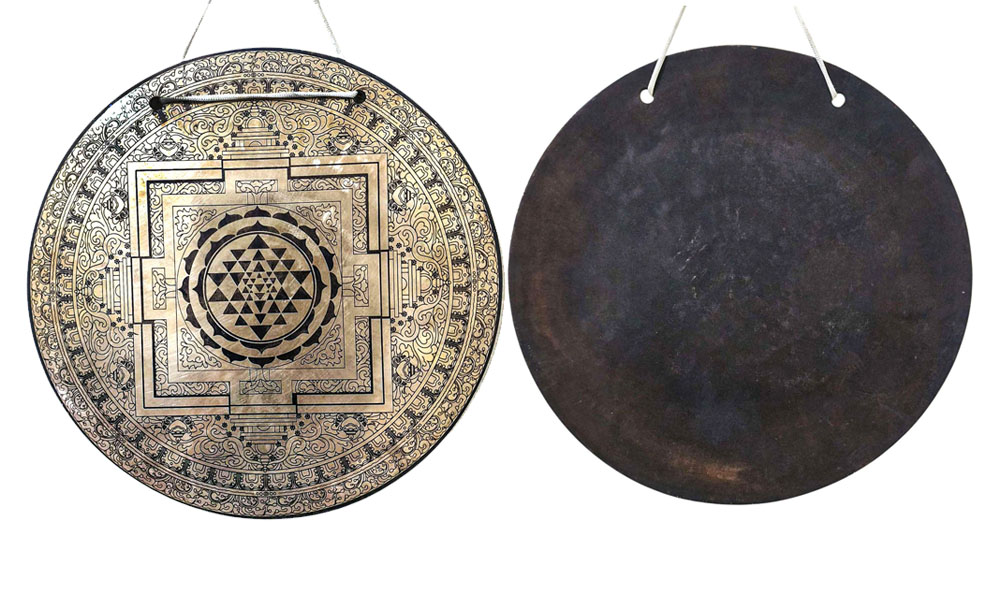
A Wind Gong is known for its expressive and constantly changing sound. It is usually flat or very gently curved and does not have a raised center. Because the entire surface of the gong is free to vibrate, the sound spreads evenly and produces many layers of overtones.
When a Wind Gong is struck, the sound does not remain fixed. It swells, fades, and shifts in waves, creating a sense of movement. This flowing quality is why it is often described as sounding like wind moving through open space.
The tone of a Wind Gong depends greatly on how it is played. A light strike produces a soft, airy shimmer. A stronger strike brings out deeper and more complex harmonics. There is usually no single dominant tone—rather, the sound evolves naturally as it resonates.
Because of this sensitivity, Wind Gongs are often used for listening-based practices rather than rhythmic playing. They encourage awareness, stillness, and immersion in sound.
Wind Gongs are commonly used for:
- Sound meditation and sound baths
- Creating immersive sound environments
- Opening or closing meditation sessions
- Marking transitions rather than keeping rhythm
Many practitioners value Wind Gongs for their ability to respond to intention and touch. Each strike produces a slightly different experience, inviting deep listening rather than control.
Key Characteristics of Wind Gongs:
- Flat or gently curved surface
- No raised center
- Shimmering, evolving harmonics
- Highly responsive to playing technique
- Atmospheric and expansive sound
Chau Gong – Detailed Understanding
The Chau Gong is one of the most traditional and historically significant gong types, especially in Chinese ceremonial use. Its most recognizable feature is the raised center, often called the boss.
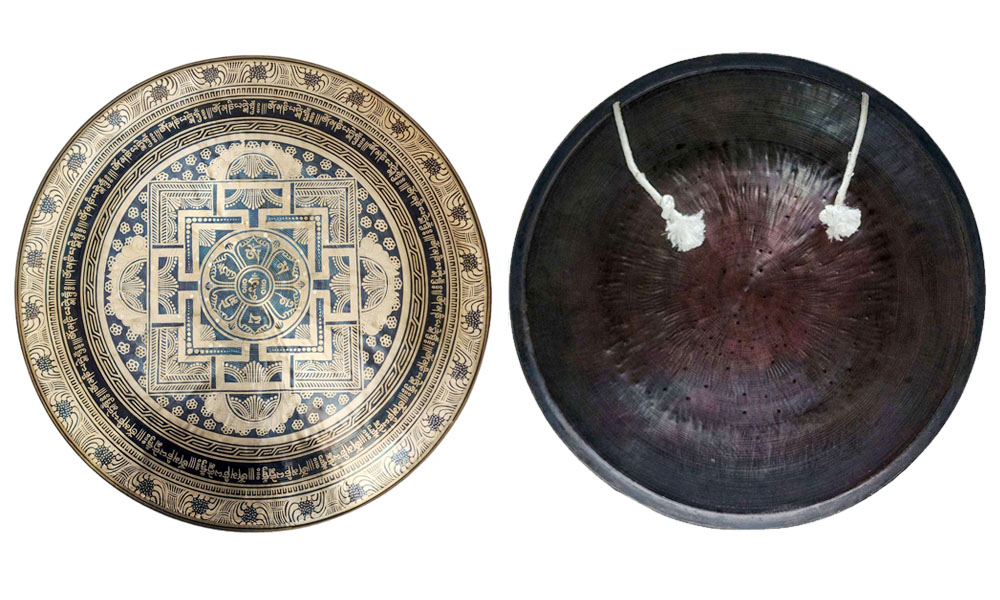
This raised center concentrates vibration, producing a strong, focused tone. When struck directly at the center, the Chau Gong creates a deep and powerful sound that feels grounded and intentional. When struck slightly off-center, additional harmonics appear, but the main tone remains clear.
Compared to a Wind Gong, the Chau Gong has a more predictable and controlled sound. The harmonics are present, but they do not shift as dramatically. This makes the Chau Gong easier to manage, especially for beginners.
Historically, Chau Gongs were used to signal important moments such as the beginning or ending of ceremonies, announcements, or communal gatherings. Their sound naturally draws attention and carries authority.
In modern practice, Chau Gongs are often chosen for situations where structure, grounding, and clarity are important.
Chau Gongs are commonly used for:
- Ceremonial and ritual settings
- Grounding and anchoring sound practices
- Structured meditation sessions
- Beginners learning gong technique
The focused nature of the Chau Gong allows practitioners to work with sound in a more deliberate and controlled way.
Key Characteristics of Chau Gongs:
- Raised central boss
- Strong and focused tone
- Clear, powerful sound
- More controlled harmonics
- Traditionally used for ceremonies and signaling
Wind Gong vs Chau Gong – Understanding the Difference
While both Wind Gongs and Chau Gongs are made using traditional metalworking techniques, their sound behavior is quite different.
A Wind Gong emphasizes movement, texture, and evolving resonance. It is ideal for immersive sound experiences where listening and awareness are the focus.
A Chau Gong emphasizes clarity, power, and stability. It is well suited for ceremonial use, grounding practices, and situations where a strong, intentional sound is needed.
Choosing between a Wind Gong and a Chau Gong depends on intention rather than quality. Neither is better than the other—they simply serve different purposes.
Many practitioners eventually use both, selecting the gong that best matches the mood, setting, or purpose of their practice.
Explore Traditional Tibetan Gongs
Tibetan gongs are valued for their deep resonance, evolving harmonics, and ceremonial presence. Traditionally used in meditation, rituals, and sound practices, each gong carries its own character shaped by hand-forging and traditional methods.
At DharmaTool, our collection of Tibetan gongs includes carefully selected wind gongs and chau gongs, suited for meditation spaces, sound practitioners, and ceremonial use.