





What Tibetan Prayer Wheels Are, How They Are Used, and Why They Matter
A Tibetan prayer wheel , also known as a Mani wheel, is a sacred Dharma tool used in Vajrayana Buddhism to support mantra practice, meditation, and compassionate intention. Inside the rotating cylinder are written or printed prayers and mantras, most commonly Om Mani Padme Hum. Turning the wheel with mindful intention is traditionally regarded as a form of mantra recitation.
This page serves as a complete reference guide to prayer wheels—covering their history, meaning, proper use, symbolism, and modern forms—so practitioners and learners can understand and use them with clarity and respect.
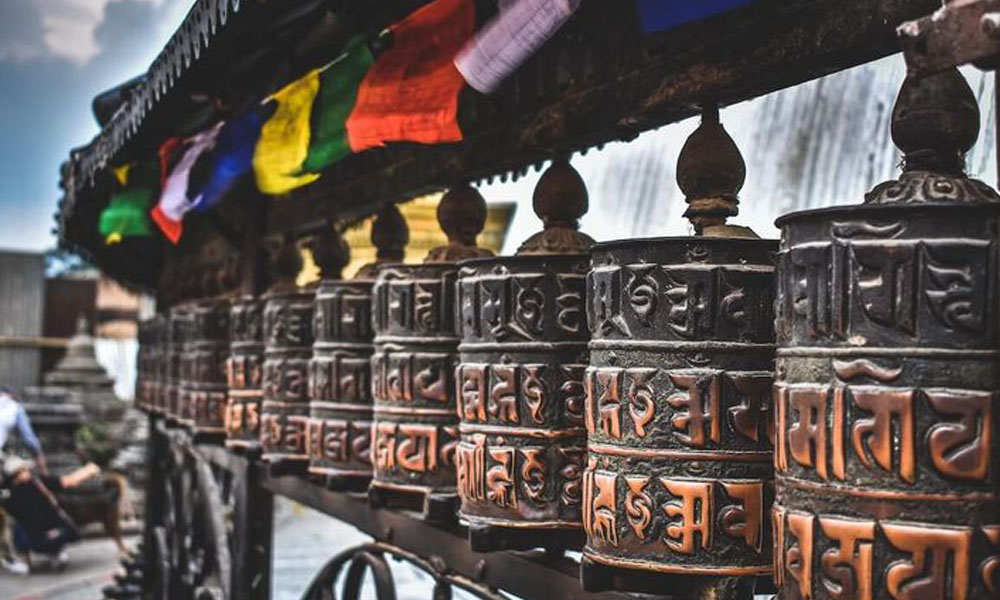
What Is a Tibetan Prayer Wheel?
A prayer wheel is a cylindrical object mounted on a spindle, designed to rotate clockwise. Inside the cylinder are tightly rolled mantra papers or prayers. In traditional understanding, each rotation represents the recitation of the contained mantras when turned with sincere intention.
Prayer wheels are widely used across Tibet, Nepal, Bhutan, Mongolia, and Himalayan Buddhist communities, both in monasteries and in daily household practice.
Historical Origins of Prayer Wheels
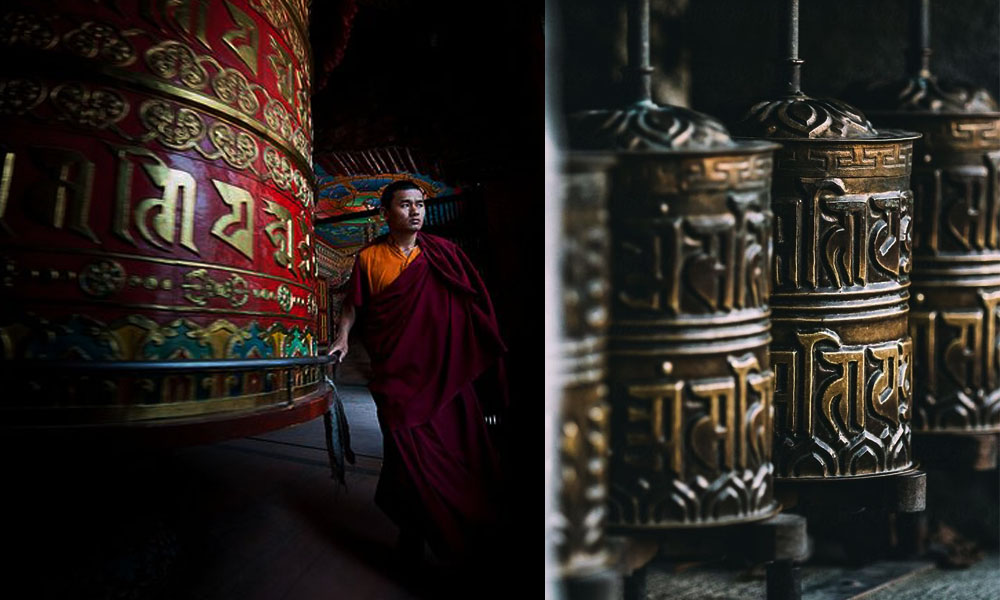
Prayer wheels developed within Vajrayana Buddhist traditions as a way to combine mantra, movement, and intention. Over centuries, they became part of daily spiritual life, used while walking, traveling, circumambulating temples, and practicing at home.
Large prayer wheels are commonly installed in temple corridors, where practitioners turn each wheel as they walk past, maintaining a rhythm of devotion and remembrance.
Spiritual Meaning of Turning a Prayer Wheel
The spiritual value of a prayer wheel does not come from speed or repetition alone. It comes from intention. Turning the wheel is a reminder to cultivate compassion, patience, and awareness.
- Supports mindfulness through gentle, repeated motion
- Reinforces compassion-centered intention
- Encourages continuity in daily spiritual practice
The Mantra Inside: Om Mani Padme Hum
Most Tibetan prayer wheels contain the mantra Om Mani Padme Hum, associated with Avalokiteshvara (Chenrezig), the bodhisattva of compassion. The mantra is traditionally understood as a path of transforming suffering into wisdom and compassion.
Some prayer wheels may also contain additional mantras, sacred syllables, or prayers depending on lineage and purpose. All contents are traditionally treated with respect.
Types of Tibetan Prayer Wheels
- Handheld prayer wheels – for walking, meditation, and daily use
- Tabletop or altar prayer wheels – for home shrines
- Wall-mounted prayer wheels – for corridors and entrances
- Standing prayer wheels – for focused practice spaces
- Temple prayer wheel rows – used during circumambulation
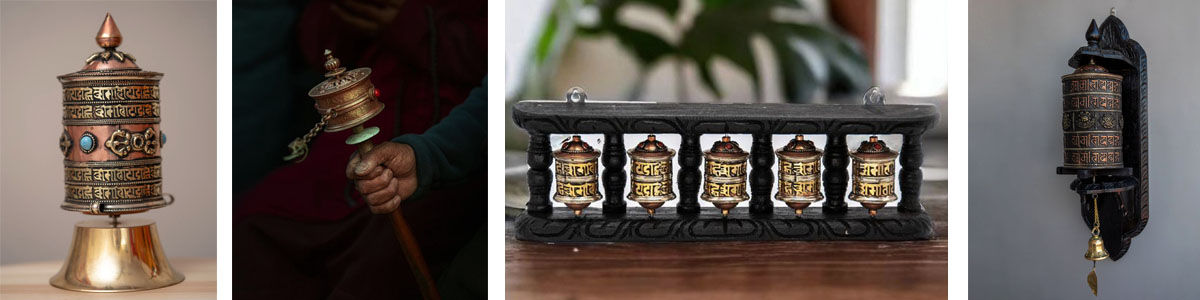
Materials and Traditional Craftsmanship
- Brass or copper cylinders engraved with mantras
- Wooden handles or frames for balance
- Carefully wrapped mantra paper rolls inside
- Traditional textiles, cords, or brocade details
A well-made prayer wheel should rotate smoothly and feel balanced during use.
How to Use a Tibetan Prayer Wheel Correctly
Direction
Prayer wheels are traditionally turned clockwise, the same direction used when circumambulating stupas.
Movement
Turn the wheel gently and steadily. Smooth motion supports calm awareness.
Intention
Silently reciting the mantra or holding compassionate intention deepens the practice.
Manual vs Automatic Prayer Wheels
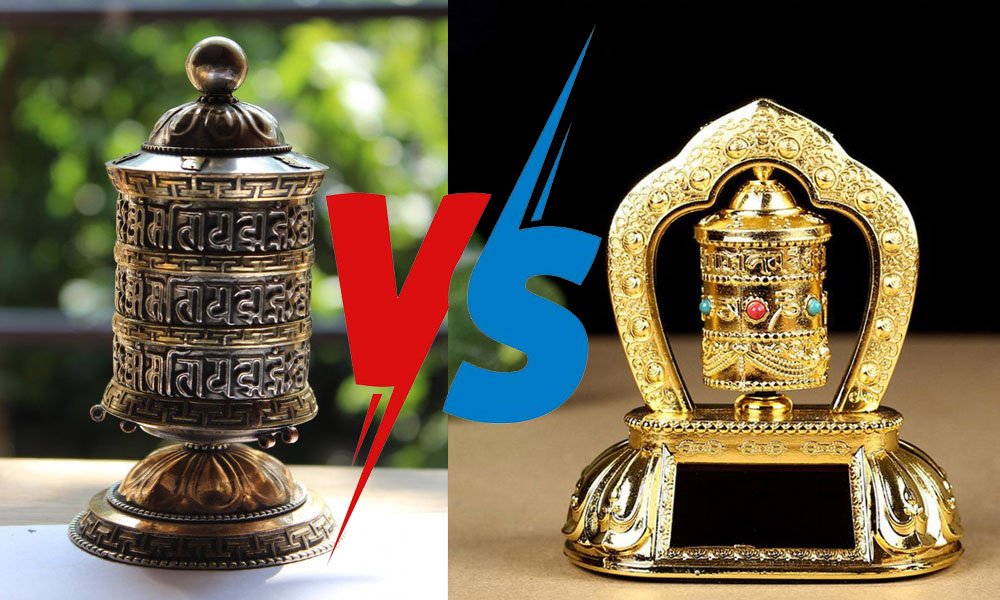
Manual Prayer Wheels (Traditional)
Manual prayer wheels are turned by hand and naturally integrate movement with mindfulness. They are traditionally preferred for daily practice.
Automatic Prayer Wheels (Solar or Electric)
Automatic prayer wheels rotate using solar power or electricity. They are commonly used on shrines or for accessibility, where intention remains central.
Cultural Respect and Common Misunderstandings
- Spinning faster does not increase spiritual benefit
- Prayer wheels are not decorative charms
- Respect for the mantra contents is essential
- Use is traditionally valued over display
Prayer Wheels as Living Dharma Tools
A prayer wheel becomes meaningful through sincere use. Whether turned briefly or regularly, it serves as a reminder to cultivate compassion, awareness, and ethical intention in daily life.
Explore Authentic Tibetan Prayer Wheels
Explore our curated collection of Tibetan prayer wheels, selected for real use, traditional symbolism, and respectful craftsmanship.
Browse Tibetan Prayer Wheels