





Sound Instruments Used in Ritual, Meditation, and Ceremonial Traditions
A gong is a circular metal percussion instrument used across many cultures for ritual, ceremonial, meditative, and signaling purposes. While gongs are often associated with East and Southeast Asia, their use extends across religious, cultural, and practical contexts worldwide.
In spiritual and contemplative settings, gongs are valued for their ability to produce deep, resonant sound that unfolds gradually. Rather than creating melody or rhythm, the gong’s sound is used to mark transitions, establish presence, and support awareness.
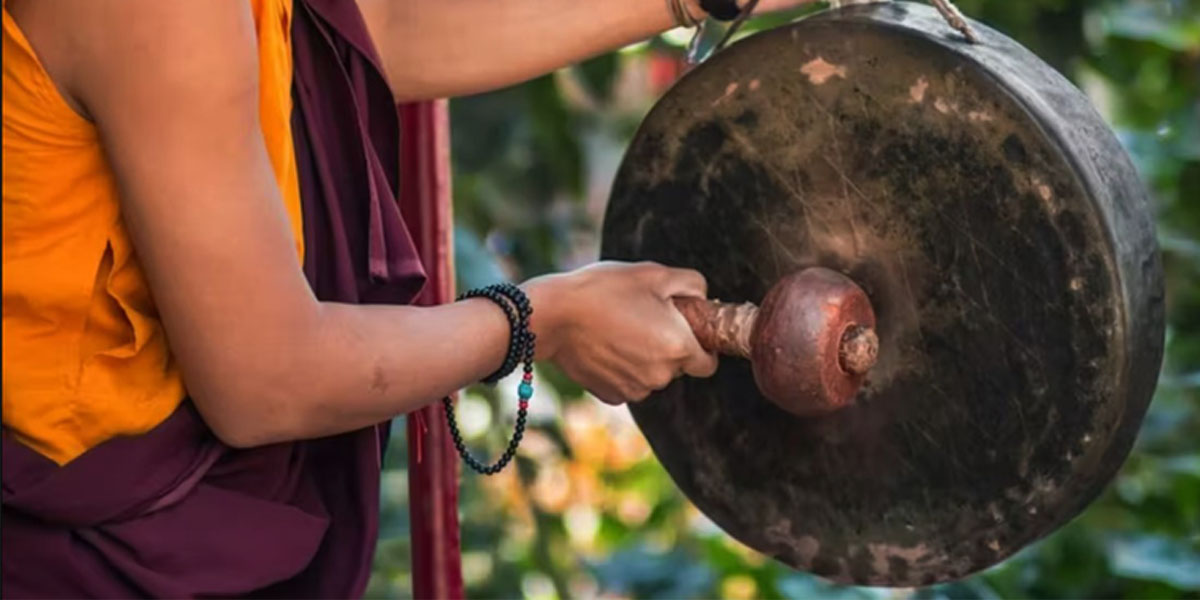
This article provides an informational overview of gongs, including their origins, symbolic meaning, materials, and how they are used in ritual, meditation, and contemporary practice.
Definition and Basic Overview
A gong is typically a flat or slightly convex metal disc suspended freely and struck with a mallet. When struck, it produces a complex range of tones rather than a single note.
Unlike musical instruments designed for precise pitch, gongs are valued for their evolving sound. The tone develops over time, creating layers of resonance that gradually fade.
Historical Background and Origins
The earliest known gongs originated in East and Southeast Asia, particularly in regions such as China, Vietnam, Indonesia, and surrounding areas. Historically, gongs were used in ceremonies, royal courts, temples, and for signaling events or announcements.
Over time, gongs spread across Asia and later to other parts of the world. Their role expanded beyond signaling to include ritual, religious, and artistic uses.
In spiritual contexts, gongs became associated with transitions, purification, and the marking of sacred space.
Gongs in Religious and Spiritual Traditions
Gongs appear in multiple religious traditions, often serving as sound markers rather than musical instruments.
- Buddhist traditions: Used in temples to mark meditation sessions, rituals, or ceremonial transitions
- Hindu contexts: Large metal sound instruments, including gongs and bells, are used in temple rituals to establish sacred atmosphere
- Taoist and East Asian traditions: Gongs are used in ceremonies and symbolic performances
Across these traditions, the gong’s role is consistent: to signal attention, presence, and transition.
Symbolic Meaning of the Gong
The gong is often associated with completeness, wholeness, and continuity. Its circular shape and expansive sound are commonly interpreted as symbols of unity and cyclical time.
In ritual use, the gong’s sound is not meant to convey information, but to shift awareness. The gradual rise and decay of sound encourages stillness and attentiveness.
Sound and Its Purpose
The sound of a gong is complex and layered. When struck, multiple frequencies emerge simultaneously, creating a rich sonic field.
This sound is commonly used for:
- Opening or closing meditation sessions
- Marking ritual transitions
- Establishing a contemplative atmosphere
- Encouraging focused attention
The fading of the sound is often treated as part of the experience rather than an end point.
Gongs in Meditation and Contemporary Practice
In meditation settings, gongs are usually struck sparingly. A single strike may be used to begin or end a session, allowing the sound to fully dissipate.
In modern contexts, gongs are also used in sound-based contemplative practices and group meditation environments. These uses focus on awareness and presence rather than musical performance.
Such practices are typically framed as experiential rather than therapeutic.
Physical Structure and Design
Gongs are typically circular and made from metal alloys. Some are flat, while others have a central raised area.
The surface may be plain or lightly textured. Unlike bells or cymbals, gongs rely on size, thickness, and alloy composition to shape sound rather than engraved detail.
Materials and Craftsmanship
Traditional gongs are made from bronze or mixed metal alloys. The exact composition affects resonance, sustain, and tonal complexity.
Handcrafted gongs may display subtle variations in surface texture and sound, which are often considered part of their character.
Types and Variations of Gongs
There are many types of gongs, differing in size, shape, and tonal behavior.
- Flat gongs with even resonance
- Bossed gongs with a raised center
- Large ceremonial gongs used in temples
- Smaller gongs used for personal or group practice
Despite variations, their purpose remains centered on sound and presence rather than melody.
How Gongs Are Used
Gongs are usually suspended so they can vibrate freely. They are struck with a padded mallet, allowing the sound to develop naturally.
Forceful striking is generally avoided in ritual or meditative settings, as it can overpower the space rather than support awareness.
Cultural Context and Common Misunderstandings
Gongs are sometimes misunderstood as dramatic sound effects or performance instruments. In ritual and contemplative traditions, their use is restrained and intentional.
Common misunderstandings include:
- Striking gongs repeatedly or aggressively
- Using them as musical instruments for rhythm
- Treating them as decorative objects only
Choosing a Gong for Practice
When selecting a gong, practitioners often consider size, tone, and how the sound interacts with the space.
Smaller gongs are suitable for personal or indoor use, while larger gongs are often used in ceremonial or group settings.
The Gong as a Living Sound Instrument
The gong continues to function as a living ritual and contemplative instrument. Its value lies not in decoration or performance, but in its ability to shape attention through sound.
Used with care and understanding, the gong serves as a tool for marking presence, transition, and stillness across many traditions.
Explore Tibetan Gongs
For those interested in using gongs in meditation, ritual, or ceremonial settings, our collection includes traditionally styled Tibetan gongs selected for balanced resonance, solid craftsmanship, and consistent tone.