




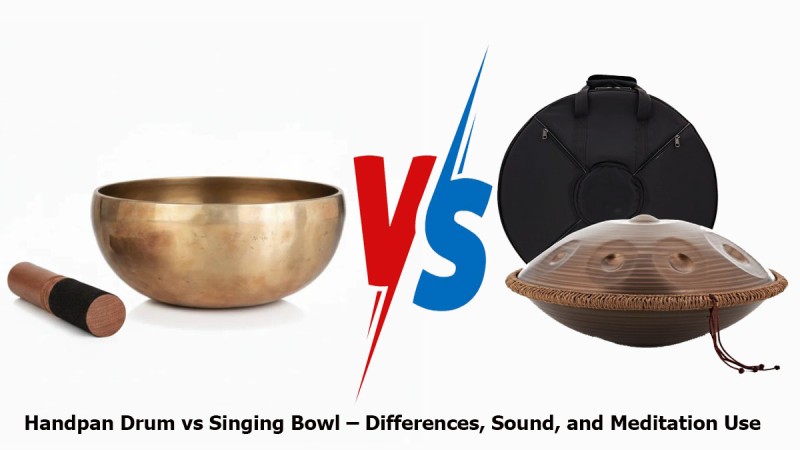
Handpan Drum vs Singing Bowl – Understanding Two Powerful Sound Instruments
Sound has always played an important role in meditation, spiritual traditions, and healing practices. Across different cultures, people have used resonant instruments to calm the mind, deepen meditation, and create peaceful environments. Two instruments that have gained global popularity in recent years are the Himalayan singing bowl and the handpan drum.
Although both produce soothing, resonant tones that can support meditation and relaxation, they are very different instruments in terms of origin, design, sound characteristics, and purpose.
This guide explores the key differences between singing bowls and handpan drums, how each instrument works, and which one may be better suited for meditation, sound healing, or musical practice.
The Himalayan Singing Bowl
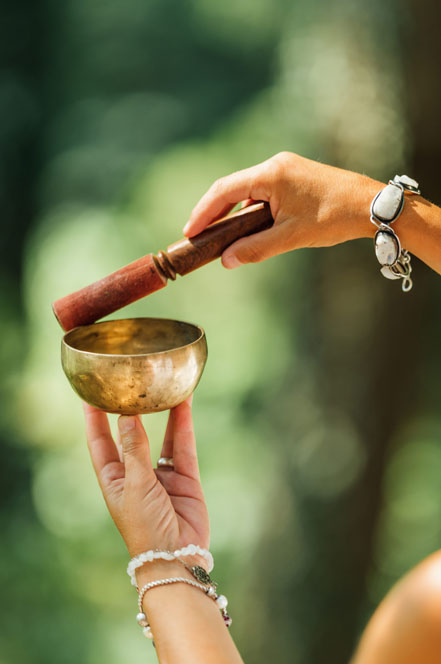
Singing bowls are traditional sound instruments that originate from the Himalayan regions of Nepal, Tibet, and India. These bowls have been used for centuries in meditation, ritual practices, and spiritual ceremonies.
Traditional singing bowls are typically hand-hammered from bronze, an alloy mainly composed of copper and tin. Skilled artisans shape and hammer the metal repeatedly to produce bowls capable of generating rich vibrations and harmonic overtones.
When a wooden mallet strikes the bowl or moves along its rim, the bowl begins to vibrate and produce a sustained singing tone. These vibrations are not only heard but also felt throughout the body, which is why singing bowls are widely used in sound therapy sessions.
Singing bowls are commonly used for:
- Meditation and mindfulness practice
- Sound healing sessions
- Yoga environments
- Stress relief and relaxation
- Spiritual rituals and ceremonies
In sound healing practices, practitioners often place bowls around the body or near the head and heart area. The gentle vibrations help create a calm environment that encourages deep relaxation.
The Handpan Drum
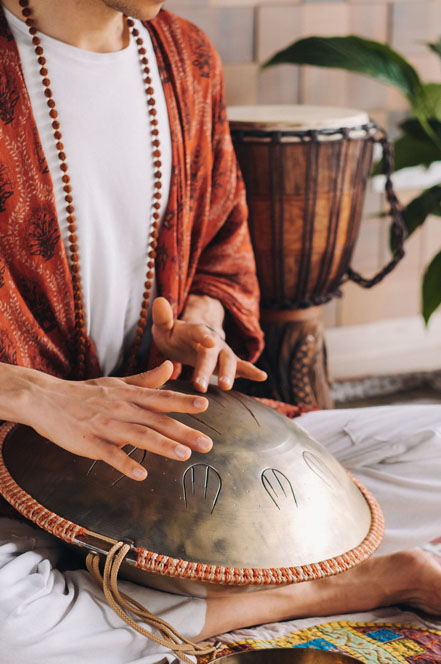
The handpan drum is a relatively modern musical instrument. It was first developed in Switzerland around the year 2000 by instrument makers experimenting with steel resonance and tuning techniques.
The instrument is made from two steel shells shaped like a flying saucer and fused together. On the top surface, several carefully tuned note areas are created. Each of these areas produces a specific musical note when tapped.
Players strike the instrument using their fingers and palms to produce melodic patterns, rhythms, and flowing soundscapes. Unlike singing bowls, which focus on continuous vibration, the handpan functions more like a melodic percussion instrument.
Handpans are widely used for:
- Ambient music performances
- Meditation music
- Street performance and busking
- Soundscape recordings
- Creative musical expression
Because each handpan is tuned to a specific scale, musicians can create beautiful melodic sequences that feel calming and hypnotic.
Key Differences Between Singing Bowls and Handpan Drums
| Feature | Singing Bowl | Handpan Drum |
|---|---|---|
| Origin | Ancient Himalayan tradition | Modern instrument invented in Switzerland |
| Material | Bronze or bell metal | Nitrided or stainless steel |
| Playing Method | Struck or rubbed with a mallet | Played with hands and fingers |
| Sound Type | Sustained vibration and harmonic resonance | Melodic notes and rhythmic patterns |
| Main Use | Meditation, therapy, and relaxation | Music creation and performance |
| Learning Difficulty | Very easy to learn | Requires musical practice |
| Typical Cost | $40 – $600+ | $1000 – $4000+ |
Sound and Vibrational Experience
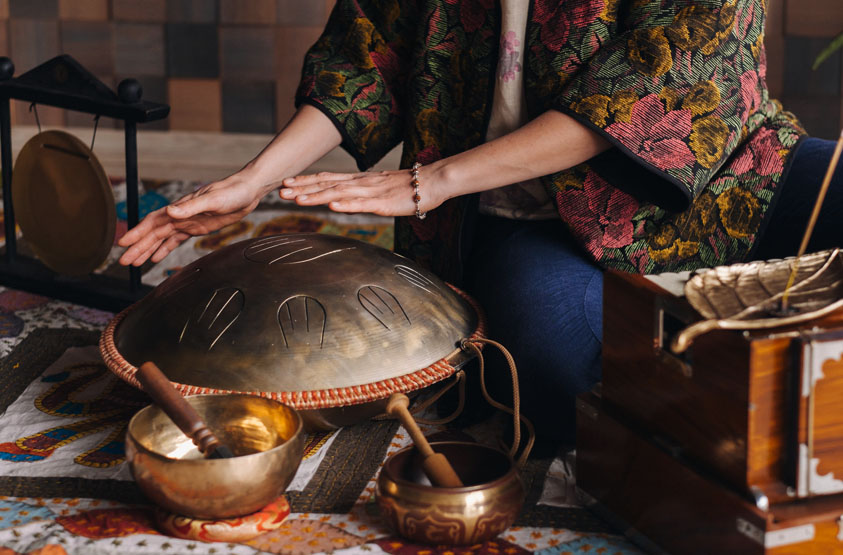
The most important difference between these instruments is how they produce sound and how that sound affects the listener.
Singing bowls generate long, sustained tones that slowly evolve through natural harmonics. These vibrations can last for many seconds and gradually fade, creating a deep sense of calm.
Handpan drums, on the other hand, produce individual notes that can be arranged into melodies and rhythms. While the sound is still soft and relaxing, it behaves more like music rather than a continuous vibration.
This difference explains why singing bowls are often used in sound therapy and why handpans are more commonly used for musical performance.
Which Instrument Is Better for Meditation?
Both instruments can support meditation, but they serve slightly different purposes.
Singing bowls are particularly effective for meditation because their sustained vibrations help the mind slow down. Many practitioners report that the steady tone helps them enter a calm state more quickly.
Handpan music can also support meditation, especially when played gently in the background. However, because it produces melodic patterns, it tends to guide attention rather than dissolve it.
For deep silence-based meditation, singing bowls are usually preferred.
Accessibility and Learning Curve
Singing bowls are extremely easy to play. Even beginners can produce a clear sound within minutes by gently striking the bowl or rotating a mallet around the rim.
Handpans require more practice. Players must learn proper hand techniques, rhythm control, and musical timing. While beginners can still produce pleasant sounds, mastering the instrument takes time.
Explore Authentic Himalayan Singing Bowls
Traditional Tibetan singing bowls are handcrafted instruments used for meditation, yoga, and sound healing practices around the world.
Browse Singing Bowl CollectionSinging bowls and handpan drums both produce beautiful, resonant sounds that can enhance meditation and relaxation. However, their purpose and experience are quite different.
Singing bowls focus on deep vibration and resonance, making them powerful tools for meditation and sound healing practices.
Handpan drums emphasize melody and rhythm, allowing musicians to create flowing ambient music.
For people seeking a simple instrument that supports meditation and relaxation, the Himalayan singing bowl remains one of the most accessible and meaningful sound tools available.
Frequently Asked Questions
Are singing bowls and handpans used for the same purpose?
No. Singing bowls are primarily used for meditation and sound therapy, while handpans are musical instruments designed for melody and performance.
Is a handpan better than a singing bowl?
Neither instrument is better; they serve different purposes. Singing bowls are better for meditation and healing practices, while handpans are better for musical expression.
Which instrument is easier to learn?
Singing bowls are easier to learn because they require only a simple striking or rubbing technique. Handpans require more coordination and musical practice.
Can handpan music be used for meditation?
Yes. Many people use handpan music for meditation and relaxation, especially as background sound during yoga or mindfulness practice.
Why are handpans so expensive?
Handpans require extremely precise tuning and shaping of steel surfaces, which makes the manufacturing process time-consuming and highly specialized.