





Essential Care Guidelines for Your Singing Bowl
Caring for a singing bowl is not complicated, but it does require gentleness, patience, and a little awareness. With simple daily habits and safe handling, your singing bowl can remain clear-sounding, beautiful, and reliable for many years of meditation, sound healing, and personal practice.
Important Care Notes Before First Use
Moisture, Smell, or Stickiness on a New Singing Bowl
When you receive your singing bowl, you may notice slight moisture, a mild smell, or a slightly sticky surface. This is completely normal. Singing bowls often travel long distances by air, passing through different climates and pressure changes. During this journey, temporary condensation can occur.
In some cases, natural packing materials or light protective residue from handling may also create a mild smell or slight stickiness. This does not affect the sound, quality, or durability of the bowl.
To resolve this, gently wipe the bowl with a clean, dry cloth, or a slightly damp soft cloth if needed. Let the bowl rest in a well-ventilated space. Avoid harsh chemicals or abrasive cleaners. These temporary conditions will fade naturally within a short time.
When Singing Bowls Are Nested or Temporarily Stuck Together

If you purchased a set or multiple singing bowls, they are often packed nested inside one another for safe transport. Occasionally, bowls may feel temporarily stuck together due to tight packing combined with changes in temperature and air pressure during shipping.
This situation is common and does not mean the bowls are damaged.
Safe way to separate nested singing bowls
- Place the bowls on a soft surface, such as a folded towel.
- Hold the outer bowl steady with one hand.
- Using a soft mallet (wood or leather), gently tap around the rim of the outer bowl.
- Move evenly around the rim and allow the vibration to release the inner bowl naturally.
What to avoid
- Do not pull or pry the bowls apart.
- Avoid oils, WD-40, dish soap, or chemical lubricants.
- Avoid extreme heat or cold, including boiling water or freezers.
- Do not use tools, metal objects, or compressed air.
Preventing bowls from sticking again
- Avoid nesting bowls of very similar sizes.
- If nesting is necessary, place a soft cloth between bowls.
- Store bowls separately on cushions or rings whenever possible.
How to Clean a Singing Bowl Properly
How often cleaning is needed
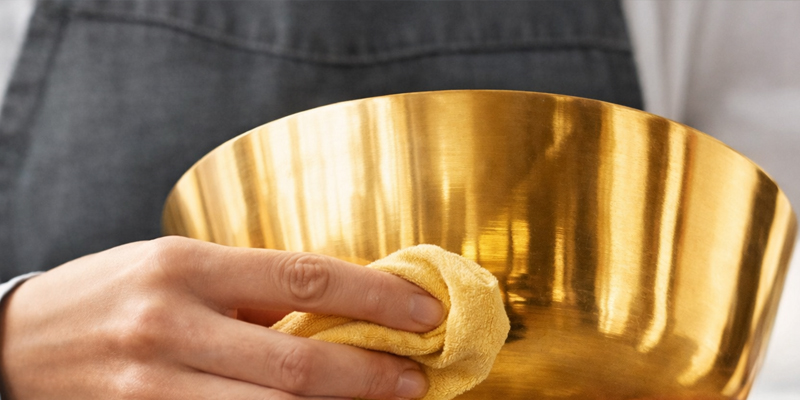
Singing bowls do not require frequent deep cleaning. A light wipe after use is usually enough. More thorough cleaning may be helpful after group sessions, sound baths, or when fingerprints and residue are visible.
Safe materials for cleaning
- Soft cotton or microfiber cloth
- Lukewarm water
- Mild dish soap (only if necessary)
Step-by-step cleaning process
- Wipe the bowl with a dry soft cloth to remove dust.
- If needed, clean gently with a slightly damp cloth.
- For deeper cleaning, use lukewarm water with a small amount of mild soap.
- Rinse thoroughly to remove any soap residue.
- Dry immediately with a soft cloth and allow the bowl to air dry.
Why You Should Avoid Chemical Cleaners on Singing Bowls
Chemical cleaners should never be used on a singing bowl. From a practical point of view, strong chemicals can react with the metal surface, especially on handmade bowls made from mixed alloys. Over time, this reaction can dull the finish, cause discoloration, or even affect the way the bowl vibrates and produces sound.
From a spiritual and traditional perspective, many practitioners believe that harsh chemicals can disturb the natural balance of the bowl. Singing bowls are often used for meditation and healing, and it is believed that chemical residues may interfere with the bowl’s energetic quality and the intention behind its use. For this reason, gentle cleaning with water and a soft cloth is always preferred.
Cleaning methods to avoid
- Abrasive pads or rough sponges
- Harsh chemicals, bleach, or metal polish
- Dishwashers or prolonged soaking
Safe Storage to Protect Your Singing Bowl

Best storage conditions
- Store in a dry, well-ventilated place.
- Avoid moisture and high humidity.
- Keep away from direct sunlight for extended periods.
Using cushions, rings, and protective supports
Cushions and rings help protect the bowl from scratches, dents, and slipping. They also keep the bowl stable during use and storage.
Storage for travel and long-term keeping
- Clean and dry the bowl before storing.
- Wrap it in a soft cloth or use a padded bag.
- Avoid tightly nesting bowls of similar sizes.
Using Your Singing Bowl Without Causing Damage
Proper handling techniques
- Lift the bowl gently with both hands.
- Place it on a cushion rather than directly on hard surfaces.
- Keep it away from table edges and high-traffic areas.
Mallet and striker care
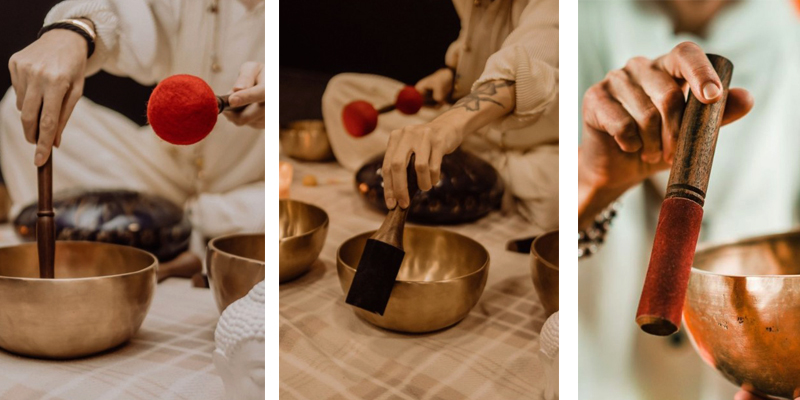
- Keep mallets clean and dry.
- Store leather-wrapped strikers away from moisture.
- Use the correct mallet size for your bowl.
Common mistakes to avoid
- Striking too hard.
- Using metal or improvised tools as strikers.
- Playing without a cushion on hard surfaces.
When a Singing Bowl Makes an Unusual or Distorted Sound
In rare cases, a singing bowl may produce a strange, uneven, buzzing, or distorted sound instead of a clear tone. If this happens and there is no visible crack on the surface, the cause may be an internal crack that cannot be seen from the outside.
Internal cracks can occur due to impact during shipping or sudden pressure changes. Unfortunately, this type of damage cannot be repaired and will permanently affect the bowl’s sound.
What to do if this happens
- Stop using the bowl.
- Inspect the surface carefully for visible damage.
- If the sound remains unusual with no visible crack, contact the seller.
- Request a replacement, as nothing can be done to restore a bowl with an internal crack.
Important note
A singing bowl with an internal crack cannot be fixed through cleaning, polishing, temperature changes, or playing techniques. Replacement is the only proper solution.
Simple Daily Care Habits
- Wipe the bowl lightly after each use.
- Store it safely on a cushion or cloth.
- Keep it dry and away from humidity.
- Handle it calmly and patiently.
Caring for a Singing Bowl Over Time

Caring for a singing bowl is not just about keeping it clean—it is about respecting an instrument meant to last. With gentle use, proper storage, and simple care, a well-made singing bowl can remain part of daily practice for decades.
Many people pass singing bowls down through families, from teacher to student or from one generation to the next. When cared for properly, a singing bowl does not wear out easily. It carries sound, memory, and purpose forward.
By caring for your singing bowl today, you are preserving it not just for yourself, but for anyone who may one day hold it, play it, and listen to its voice.