




Bridging Ancient Himalayan Lineages with Modern Sound Therapy
The global singing bowl community reflects a mature and deeply interconnected field—one where ancestral Himalayan knowledge, precise craftsmanship, and modern therapeutic understanding coexist. What was once confined to temples, monasteries, and family lineages has now entered hospitals, wellness centers, universities, and professional training institutions worldwide.
The masters shaping this era are not defined by popularity alone. They are recognized for lineage integrity, disciplined practice, international education, and ethical transmission of sound healing. Below are ten individuals whose influence continues to shape how singing bowls are forged, played, studied, and respected across cultures.
Peter Hess (Germany)
Founder of Peter Hess® Sound Massage
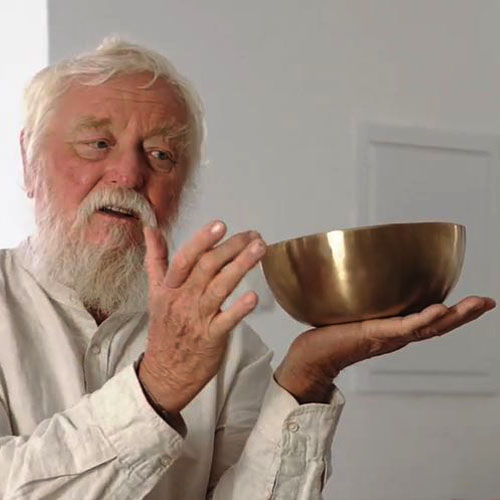
Peter Hess is widely known for shaping one of the most structured and internationally adopted approaches to singing bowl-based relaxation and therapeutic work. Coming from an engineering background, he applied analytical thinking to sound, helping transform intuitive bowl use into a methodical practice that could be taught consistently across cultures and professions.
The Peter Hess® Sound Massage method is built around carefully selected bowls placed on the clothed body and activated in a precise, gentle manner. This approach emphasizes safety, nervous system regulation, and deep relaxation rather than dramatic or forceful sound. Over time, the method has been refined into progressive training levels that allow practitioners to develop both technical skill and sensitivity.
Through a global network of instructors and training institutes, his work has helped establish sound therapy as a recognized complementary practice within education, wellness, and supportive care environments.
Master Santa Ratna Shakya (Nepal)
Inventor of Full Moon Singing Bowls | Lineage-Based Master Artisan
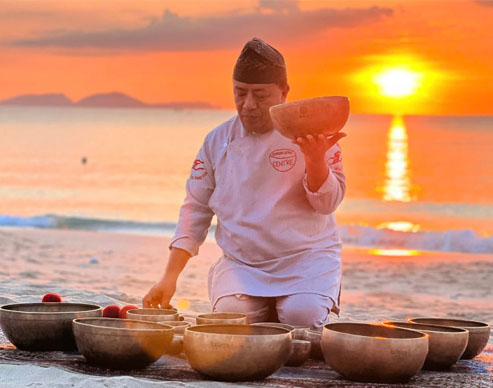
Master Santa Ratna Shakya is internationally respected as one of the most influential Himalayan singing bowl masters of the modern era. Rooted in a long-standing Newar metalworking lineage, his work represents a direct continuation of Nepal’s traditional forging and sound culture.
He is best known for introducing Full Moon Singing Bowls—bowls forged exclusively during full moon nights following lunar calendars. This process is understood as both symbolic and intentional, reflecting the belief that timing, awareness, and ritual conditions influence the final vibrational character of the bowl.
His bowls are valued for their rich harmonic layers, long sustain, and meditative depth, and they are widely used by advanced practitioners who seek instruments with strong energetic presence rather than decorative appeal.
Swami Chaitanya Krishna (Nepal)
Founder – Golden Temple Singing Bowls & Sound Healing Center, Patan
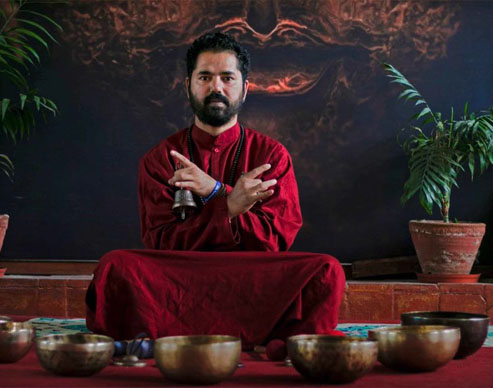
Swami Chaitanya Krishna is a third-generation master who integrates traditional Himalayan sound practices with broader spiritual and therapeutic disciplines. Based in Patan, his center functions as both a crafting space and a learning environment for sound healing students from around the world.
His approach emphasizes the relationship between bowl, body, and awareness. Training often focuses on correct placement, subtle listening, and understanding how vibration interacts with breath, posture, and mental state. Rather than performance-oriented sound work, his teachings highlight grounded, inward-focused practice.
Students drawn to his work often value the immersive Nepal-based learning environment, where bowls, culture, and teaching are experienced together rather than separated.
Suren Shrestha (USA / Nepal)
Founder – Atma Buti Sound & Vibrational School
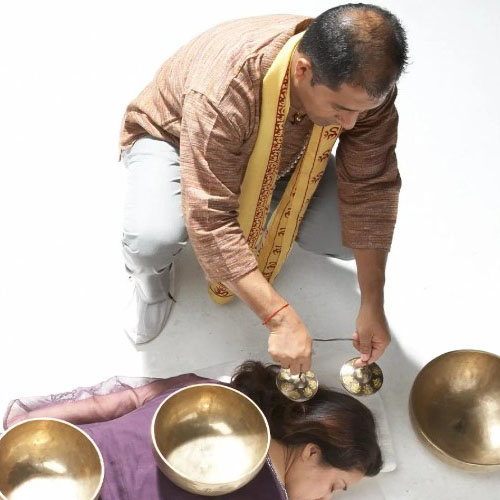
Suren Shrestha is widely recognized for bringing authentic Himalayan sound healing into Western professional settings. Through Atma Buti, he developed a structured educational system that presents singing bowl therapy as a disciplined practice rather than a casual wellness trend.
His work emphasizes practitioner responsibility, ethical use of sound, and consistency in session structure. Training programs are designed to help students understand not only how to play bowls, but how to work with intention, sensitivity, and awareness of client needs.
By translating traditional Himalayan sound knowledge into a modern educational framework, his work has helped thousands of practitioners integrate singing bowls into professional wellness and therapeutic practices.
Sajan Thapaliya (Nepal)
Creator of the OM Sajan Classical Series
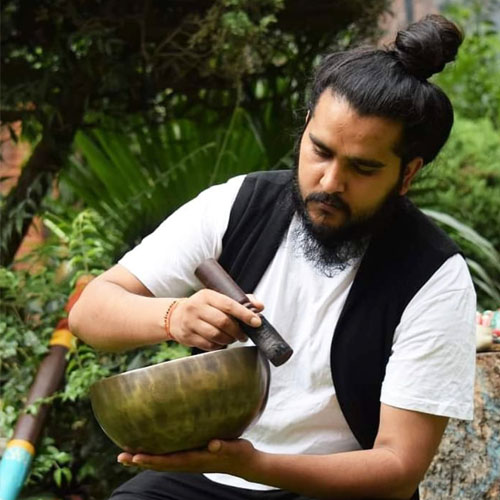
Sajan Thapaliya is known for combining deep craftsmanship knowledge with practical therapeutic application. His OM Sajan Classical Series was developed specifically for sound therapists who require reliable resonance, stable pitch behavior, and balanced vibrational response.
In addition to crafting bowls, he is actively involved in practitioner education, focusing on how to select bowls, pair harmonics, and structure sound sessions responsibly. His teaching style emphasizes precision, listening skills, and consistency rather than improvisation.
For many professional therapists, his work represents a balance between traditional Himalayan forging and modern clinical usability.
Mangal Man Maharjan (Nepal)
Founder – Himalayan Singing Bowl
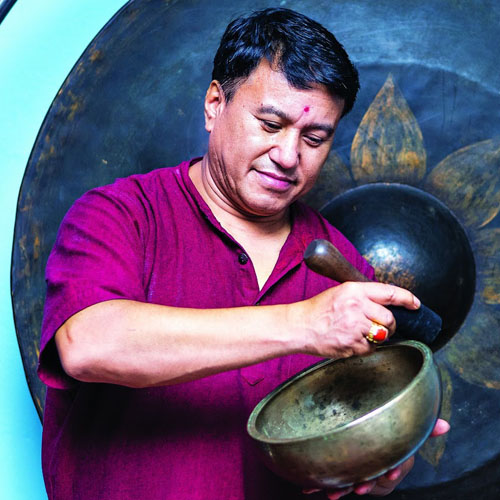
Mangal Man Maharjan is regarded as a senior master whose influence extends beyond bowl making into teaching, mentorship, and cultural preservation. His work is rooted in long-term practice and community leadership rather than commercial exposure.
He is widely respected for maintaining traditional alloy knowledge and for guiding younger generations of practitioners and artisans. His approach emphasizes patience, continuity, and respect for sound as a serious discipline.
Within the Himalayan sound healing community, he is often viewed as a stabilizing presence—someone who helps ensure that rapid global interest does not erode foundational values.
Akash Banjara (Hong Kong / Nepal)
Founder – Akash Handicraft Limited | Singing Bowl Master
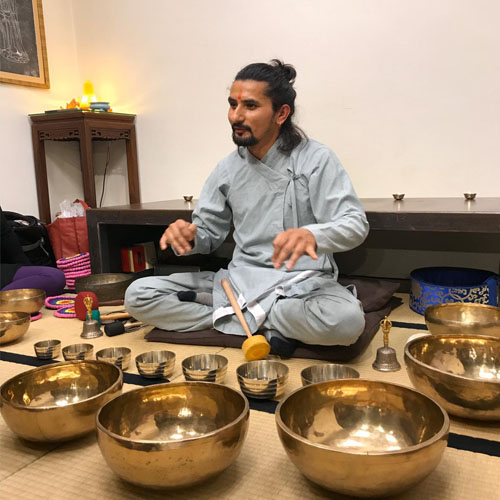
Akash Banjara has played a significant role in expanding professional singing bowl education across Asian urban centers, particularly in Hong Kong. His work focuses on creating structured learning environments that allow students to train locally while remaining connected to Himalayan tradition.
Through practitioner courses and training programs, he has helped establish consistent teaching standards in regions where sound healing has grown rapidly. His approach balances accessibility with respect for lineage and proper instruction.
His influence is best understood as regional and educational—supporting the development of skilled practitioners across Asia.
Alberto Parmigiani (Italy / Germany)
Founder – Klangact Studio
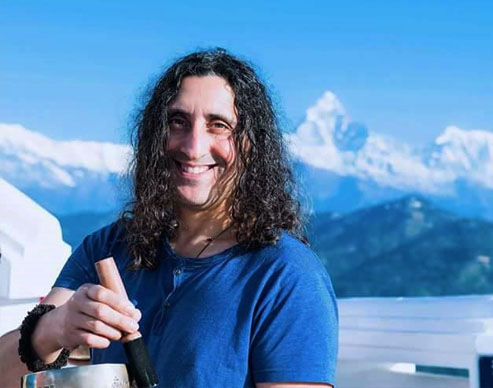
Alberto Parmigiani brings a musician’s depth and a healer’s sensitivity into the singing bowl field. His work spans therapeutic sound sessions, live performances, and recorded soundscapes designed for deep listening and nervous system regulation.
Rather than treating singing bowls purely as instruments, his work explores how sound interacts with space, silence, and attention. Collaborations with Himalayan masters have played an important role in grounding his artistic work in authentic tradition.
His contribution demonstrates how sound healing can expand artistically without losing respect for its origins.
Shree Krishna Shahi (Nepal)
International Sound Therapy Educator | “Son of Light”
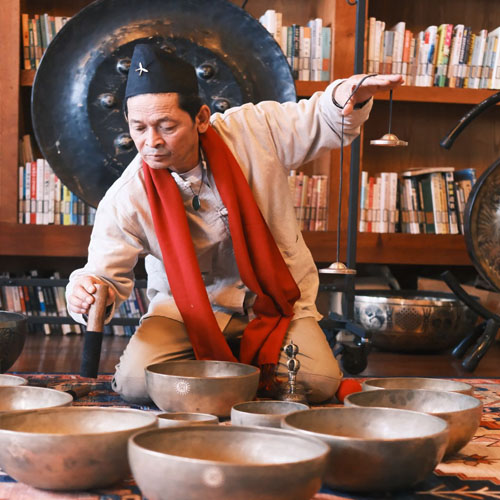
Shree Krishna Shahi is a veteran sound healer known for decades of international teaching, workshops, and performances. His work emphasizes experiential learning—guiding students to develop sensitivity, presence, and restraint through direct interaction with sound.
He has been closely associated with the global spread of Nepali singing bowl practice and is respected for maintaining depth and discipline as sound healing gained popularity.
His teachings often focus less on technique and more on the internal qualities required to work with sound responsibly.
Sunita Poudel (Nepal)
Founder & Owner – Dharmatool.com | Singing Bowl Healer
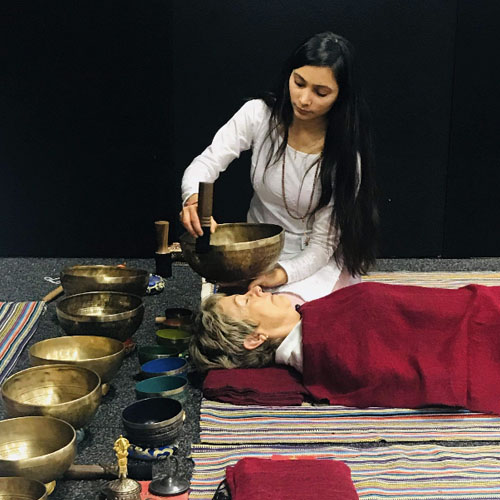
Sunita Poudel is a Nepal-based singing bowl healer and the founder and owner of Dharmatool.com. She represents a new generation of practitioners working at the intersection of traditional Himalayan sound healing and modern wellness education.
She has completed formal singing bowl healing instructor training, Reiki training, and holds a certified yoga trainer license. Her multidisciplinary background allows her to approach sound healing with both experiential depth and structured practice.
In addition to her healing work, she is actively involved in exploring the scientific and therapeutic applications of singing bowls, including their effects on relaxation, mindfulness, and nervous system regulation. While pursuing scientific understanding, she remains committed to honoring traditional Himalayan knowledge and responsible transmission of sound healing practices.
Honoring the Healer Behind the Sound
A singing bowl does not heal by itself. It responds to the hands, awareness, discipline, and integrity of the person who plays it. The masters recognized here are not defined solely by lineage or reputation, but by decades of listening, learning, and responsibility carried in service to others.
Their work reminds us that sound healing is not about volume or spectacle—it is about presence. By honoring these healers, we acknowledge that the depth of resonance arises from the depth of the practitioner, and that true sound healing remains inseparable from humility, training, and respect.
Note: The individuals and practitioners mentioned in this article represent a wide spectrum of experience, background, and contribution to the global singing bowl and sound healing community. Inclusion is based on publicly known work, teaching activity, craftsmanship, and influence within the field. This content is provided strictly for educational and informational purposes.
This website does not claim ownership of, affiliation with, or rights to any individual, brand name, company name, trademark, or organization referenced. All names and entities are mentioned solely for educational context and public awareness.
Sound healing practices may vary widely depending on training, cultural context, and personal approach. Readers are encouraged to conduct their own research and seek qualified practitioners or teachers when exploring singing bowl therapy or related practices.