




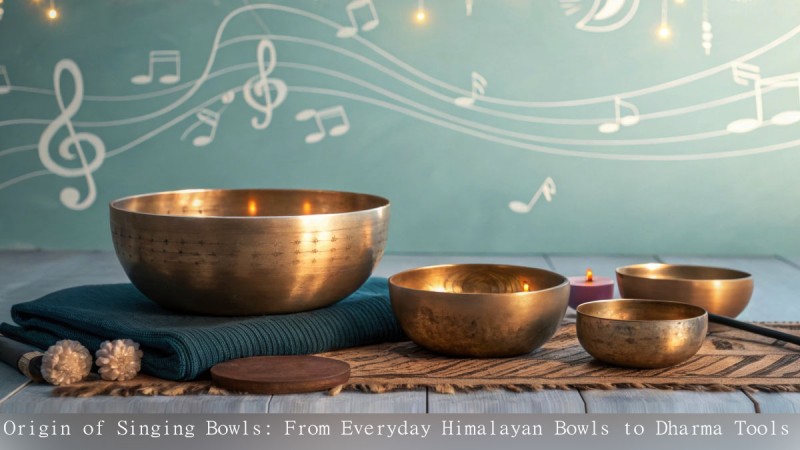
Understanding the Origin Before the Meaning
Today, singing bowls are often introduced through meditation, yoga, and healing practices. Because of this, many people assume that these bowls were originally created as spiritual or sound-based tools.
To understand what a singing bowl truly is, it is necessary to look at its origin before any meaning was added. Only by starting with everyday human use can we clearly see how an ordinary metal bowl gradually came to be understood as a Dharma tool.
Before Singing Bowls: A Utensil
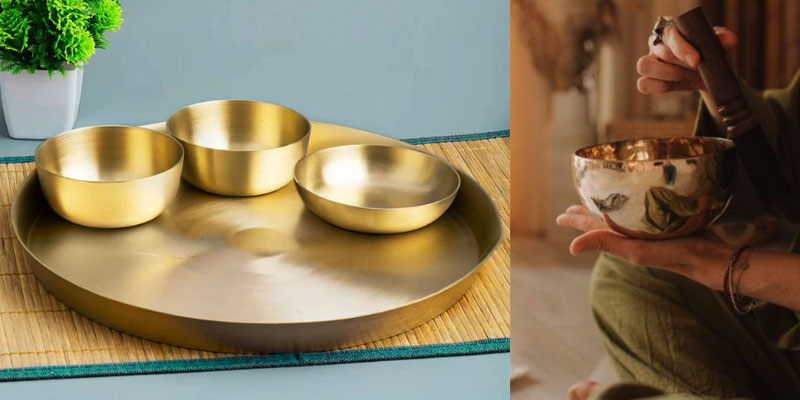
Before the term singing bowl existed, these objects were simply metal utensils used in daily life. Across Nepal, Tibet, and surrounding Himalayan regions, metal bowls were common household items.
They were used for practical purposes such as eating food, drinking soup, tea, and traditional fermented beverages like chyang. At this stage, the bowl had no spiritual, musical, or healing identity. It was valued for durability, practicality, and ease of use.
The Sound Was Always There
The sound did not appear later. The sound was always there.
Metal naturally vibrates. When a bowl is struck, rubbed during cleaning, stacked, or placed on a hard surface, it produces resonance. This is not a special feature added to the bowl—it is a natural physical property of metal.
Through everyday use, people repeatedly encountered this sound. Over time, some noticed that certain bowls held tone longer and that the vibration felt calming rather than disturbing. This awareness came from observation, not belief.
Singing Bowls Are Not Invented, They Are Discovered
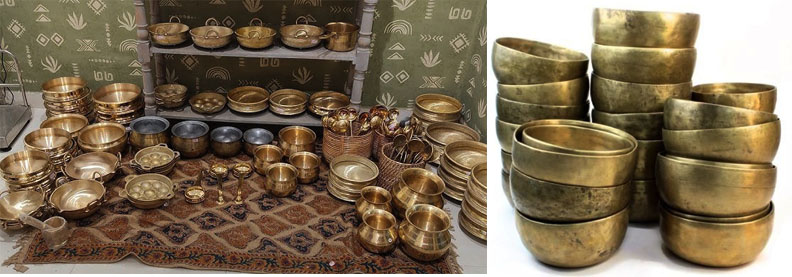
There is no inventor of the singing bowl.
No reliable historical record shows a monk, healer, or culture inventing the singing bowl as a musical or spiritual instrument. The utensil existed first. The sound was noticed later.
This discovery happened gradually through repeated daily interaction. As people began to intentionally repeat the sound by striking or rubbing the bowl, the bowl slowly gained a new role. The singing bowl was discovered through use, not created by design.
From Utensil to Dharma Tool
As awareness of sound deepened, the relationship between people and the bowl changed. What began as a kitchen utensil started to be used intentionally during moments of quiet and attention.
In Dharma practice, tools are not important because they are mystical, but because they support awareness. A bowl used in this way can help mark the beginning or end of meditation, support focus, or invite stillness.
From a healer’s perspective, the same bowl may be used gently to support relaxation and grounding. The value lies not in claiming special power, but in how sound and vibration can help the nervous system slow down when used with care.
How “Tibetan Singing Bowl” Became “Himalayan Singing Bowl”
This is where many people get confused, because the bowl is often treated as if it belongs to one place. In reality, the bowl’s everyday life was spread across the Himalayan world, and the name changed mainly because of where people noticed the bowl and how the bowl moved across regions.
In Tibetan settings, metal bowls were commonly used as daily utensils for soup, tea, and drinks like chyang. When outsiders encountered these bowls in Tibet, the label “Tibetan bowl” became a convenient way to describe what they saw.
But Himalayan life has never been sealed by borders. People traveled between Nepal and Tibet for work and trade, and everyday items—including metal bowls—moved with them. Bowls that were seen in Tibetan daily life were also brought into Nepalese homes and markets, and similar bowls were produced and circulated across the region. Over time, it became clearer that the most honest description is broader than one country name.
That is why many people now prefer the term “Himalayan singing bowl”. It includes Nepal, Tibet, and the wider Himalayan belt without forcing the bowl into a single identity. In simple terms: “Tibetan” became the popular label, but “Himalayan” became the more complete description.
Did the Buddha Carry a Singing Bowl?
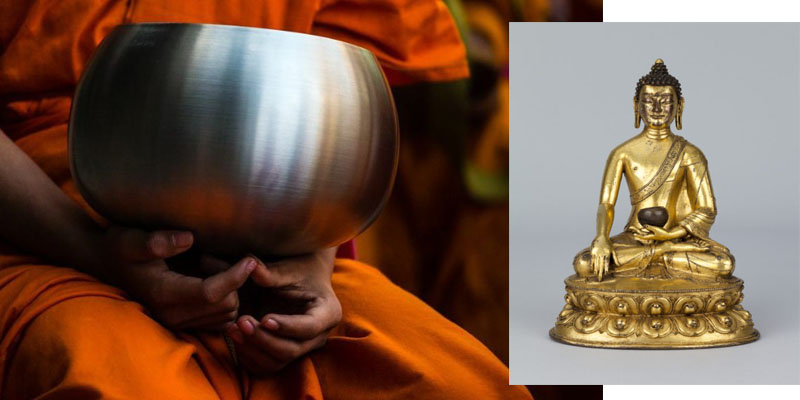
This is a common belief, but it is not historically accurate.
In traditional depictions, the Buddha is shown carrying an alms bowl. This bowl was used to receive food during daily alms rounds. It was a begging utensil symbolizing simplicity and discipline, not a sound-producing or meditative object.
There is no reliable evidence that the Buddha used a bowl for sound practice or that the alms bowl was intended to function as a singing bowl. The similarity lies in shape only, not in purpose.
The Buddha carried a bowl for food, not a singing bowl for sound.
Why Different Names Exist
The bowl itself did not change. The names did.
As the bowl moved from everyday use to intentional practice, different names emerged based on culture, context, and modern interpretation.
- Singing bowl – a modern term focusing on sound
- Tibetan singing bowl – a cultural label based on where many people first encountered these bowls
- Himalayan singing bowl – a broader term acknowledging regional reality
- Yoga bowl, chakra bowl, and similar names – modern usage-based terms
These names describe how people understand or use the bowl today. They do not indicate different origins or different objects.
Returning to the Bowl Before the Meaning
Singing bowls did not begin as spiritual objects, healing tools, or musical instruments. They began as simple metal utensils used in everyday life for eating, drinking soup, tea, and traditional beverages such as chyang.
The sound associated with singing bowls was always present as a natural property of metal. Through daily use, people gradually noticed this sound and began to engage with it intentionally. The singing bowl was not invented for sound—it was discovered through ordinary life.
An Everyday Utensil, Seen Differently Over Time
When modern labels are set aside, the origin of the singing bowl becomes clear. Before any spiritual interpretation, before any healing system, and before any musical use, the bowl was simply a utensil.
As human attention shifted, the role of the bowl shifted. What changed was not the object itself, but the way people listened to it. Later names—such as singing bowl, Tibetan singing bowl, Himalayan singing bowl, yoga bowl, or chakra bowl—reflect changing contexts of use, not different origins.
At its core, the singing bowl remains an ordinary metal bowl, understood more deeply through sound, awareness, and intention.
Explore Our Tibetan Singing Bowls
If you’re ready to experience the bowl beyond the story, explore our collection of Tibetan singing bowls—handmade pieces chosen for their tone, feel, and everyday usability in sound, meditation, and wellness practice.
Browse Tibetan Singing BowlsRequest a Custom Singing Bowl
Looking for a bowl with a specific sound, size, look, or purpose? Send a custom request and we’ll help you find the right match—whether it’s for meditation, yoga, sound practice, or gifting.
Custom Singing Bowl Request