




How to Make a Balanced 7 Chakra Singing Bowl Set for Meditation & Wellness
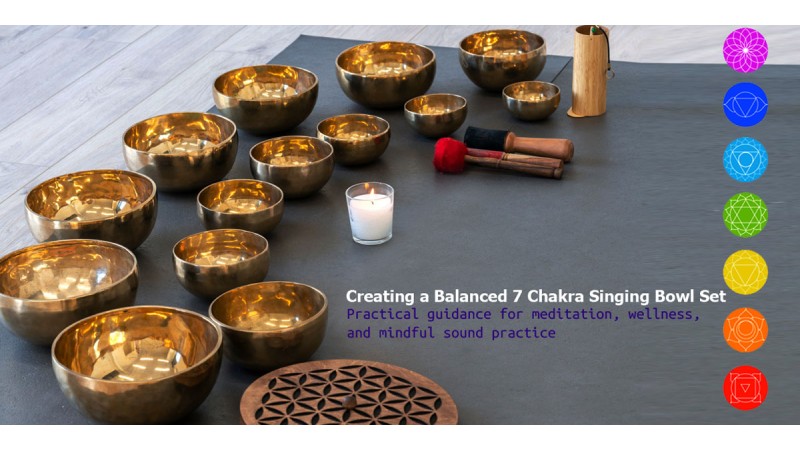
A 7 chakra singing bowl set is not about chasing perfect frequencies or exact musical notes. In authentic practice, it is about creating a balanced progression that supports meditation, wellness sessions, and long-term spiritual discipline.
This guide explains how professional practitioners approach chakra singing bowl sets, how different chakra systems influence interpretation, how bowl size and progression matter in real use, and how to understand notes and frequency without making the practice feel artificial.
If you are new to Tibetan bowls, read this first: Tibetan Singing Bowl Information. If you want deeper chakra meanings, keep that in one place here: Chakra & Note Information.
Quick Overview: What Makes a 7 Chakra Set Feel Complete
| Key Element | Professional Focus |
|---|---|
| Progression | Natural movement from grounding to openness |
| Bowl Size | Larger bowls for lower chakras, smaller for upper |
| Sound Use | Support for awareness, not forced claims |
| Chakra System | Interpreted through multiple traditions |
| Consistency | Usable across repeated sessions |
Understanding Chakra Systems: Tibetan, Vedic, and Western Approaches
One of the biggest mistakes people make is assuming there is only one chakra system. In reality, chakras are interpreted differently across traditions. A professional approach is to understand the frameworks clearly and use singing bowls as supportive tools rather than forcing one system to “prove” another.
The Vedic Chakra System (Classical Yogic Tradition)
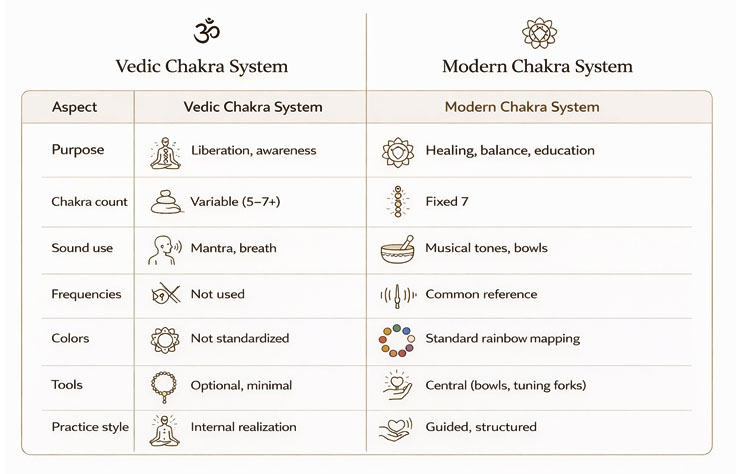
The Vedic or yogic chakra system originates from Indian spiritual philosophy and later tantric traditions. In this system, chakras are understood as centers of awareness and consciousness, not physical organs and not fixed sound frequencies.
Sound is traditionally used through mantra, breath, and meditation rather than musical tuning. When singing bowls are used within a Vedic-informed practice, they support stillness and attention rather than acting as measurement tools.
For deeper context and associations, refer to: Chakra & Note Information.
The Tibetan Chakra System (Himalayan & Vajrayana Influence)
Tibetan and Himalayan spiritual traditions often approach energy differently from the modern seven-chakra model. Some Tibetan systems work with fewer primary centers, while others emphasize channels (nadis) and wind (lung) rather than chakra labels.
Tibetan singing bowls are not traditionally assigned to specific chakras. They function as standing bells used to support meditation, ritual space, grounding, and transitions. When Tibetan bowls are used in chakra-based practice today, it is often a modern integrative approach — combining Himalayan instruments with broader yogic or wellness frameworks.
The Western Chakra System (Modern Wellness Framework)
The Western chakra system is a modern synthesis that combines yogic ideas, musical notes, psychology, and therapeutic language. This is the system most people encounter today when learning about chakras and sound-based meditation.
In this framework, chakras are often mapped to musical notes and approximate frequency ranges. These mappings can be useful for learning, but they are not universal standards. Different teachers and schools use different charts.
If you want to explore tonal relationships for learning purposes, use our educational tool here: Singing Bowl Frequency & Notes Analyzer.
The Real Goal of a Chakra Singing Bowl Set
Across all systems, the practical goal remains the same: a clear low-to-high progression that supports the flow of meditation and wellness sessions.
A well-built chakra set should feel like one continuous journey — from grounded presence to open awareness — rather than seven unrelated bowls.
Bowl Size and Chakra Progression in Practice
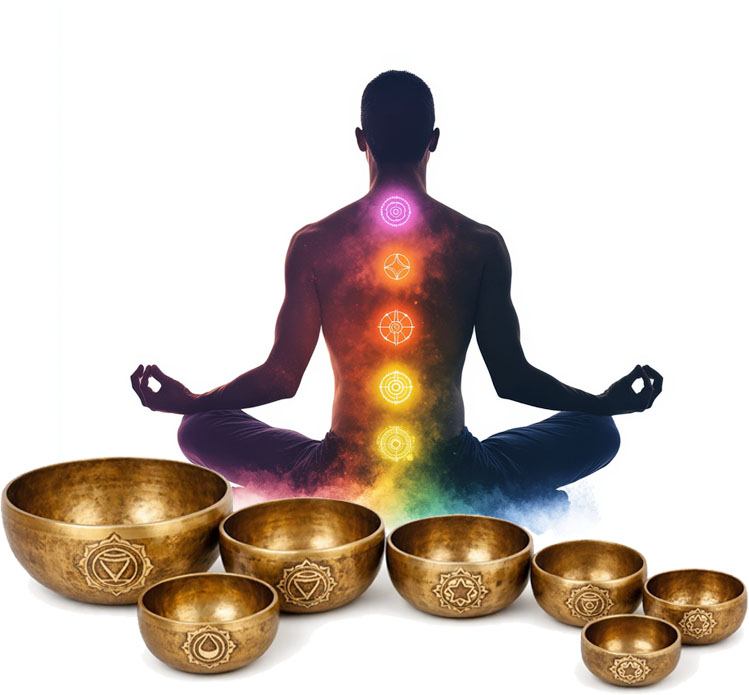
In real-world use, bowl size matters more than labels. Practitioners often choose bowl sizes that reflect the direction of the practice. This is not a rigid rule, but it is a reliable way to build a set that feels balanced and usable.
| Chakra Range | Practice Focus | Typical Bowl Choice |
|---|---|---|
| Lower Chakras (Root, Sacral) | Grounding, stability | Larger, heavier bowls |
| Middle Chakras (Solar Plexus, Heart) | Balance, transition | Medium-sized bowls |
| Upper Chakras (Throat, Third Eye, Crown) | Clarity, subtle awareness | Smaller, lighter bowls |
This approach helps your set feel coherent, especially if you are not publishing sound clips. A chakra set should be built for consistent practice, not for marketing claims.
Chakras, Musical Notes, and Frequency Ranges (Modern Reference)
In traditional Vedic and Tibetan practices, chakras are not defined by fixed musical notes or exact frequencies. However, in modern Western wellness and sound-education systems, chakras are often mapped to musical notes and approximate frequency ranges.
This system is best understood as a learning and reference framework, not a strict rule. Different schools and teachers use slightly different charts. The table below reflects the most commonly used modern reference.
For deeper chakra meaning and context, refer to: Chakra & Note Information.
Modern Chakra–Note–Frequency Reference Table
Swipe horizontally to view the full table on mobile.
| Chakra | Common Note Reference | Approximate Frequency Range (Hz) | Typical Bowl Size Direction | Primary Practice Use |
|---|---|---|---|---|
| Root (Muladhara) | C | 256 – 396 Hz | Largest / Heaviest bowl | Grounding, stability, presence |
| Sacral (Svadhisthana) | D | 288 – 417 Hz | Large bowl | Emotional balance, flow |
| Solar Plexus (Manipura) | E | 320 – 528 Hz | Medium-large bowl | Confidence, inner strength |
| Heart (Anahata) | F | 341 – 639 Hz | Medium bowl (center of the set) | Balance, compassion, openness |
| Throat (Vishuddha) | G | 384 – 741 Hz | Medium-small bowl | Expression, clarity |
| Third Eye (Ajna) | A | 426 – 852 Hz | Small bowl | Awareness, intuition |
| Crown (Sahasrara) | B | 480 – 963 Hz | Smallest / Lightest bowl | Stillness, spacious awareness |
Important Notes for Practitioners
- These frequency ranges are approximate, not exact targets.
- Handmade Tibetan singing bowls naturally produce multiple overtones.
- A bowl does not need to match a frequency perfectly to support chakra-based practice.
- Progression, intention, and consistency matter more than chasing numbers.
If you want to learn tonal relationships without turning practice into a math problem, use: Singing Bowl Frequency & Notes Analyzer.
When a Complete Chakra Singing Bowl Set Makes Sense
A chakra singing bowl set is most useful when you want structured sessions and repeatable flow. Many facilitators and serious practitioners choose a complete set for:
- Guided chakra meditation moving root to crown
- Yoga or studio sessions where sequencing matters
- Group practice where one bowl feels limited over longer sessions
- Wellness facilitators who want consistency across clients or classes
Explore ready-made options here: 7 Chakra Singing Bowl Sets.
Single Singing Bowl vs Complete Chakra Set
A single singing bowl can be enough for daily meditation, grounding, or simple mindfulness practice. Many practitioners build real depth with one bowl before expanding to a full chakra set.
A complete chakra singing bowl set becomes valuable when you want structured progression, teaching consistency, or full-session range — from deeper grounding tones to lighter, higher tones.
Standing Bowls, Therapy Bowls, and Large Floor Bowls
Larger standing singing bowls are commonly used in spacious environments, group sessions, or sound-based meditation settings. These bowls are typically placed on cushions or stands and are approached differently from smaller handheld bowls.
They are not required for chakra practice, but some facilitators use them to create depth and presence in larger spaces.
Symbols, Mantras, and Etching
Mantras and sacred symbols can support intention for spiritual practitioners, especially in chakra-based meditation. Some prefer chakra symbols or mantras to help focus the mind. Others prefer plain bowls to keep practice simple and open.
Both approaches are valid. Symbols should support awareness — not replace it.
Words from the Professional Healer – Sunita Poudel
“A chakra set is not built to impress the ear. It is built to support practice. When the progression feels balanced, the mind settles naturally. Sound supports awareness, but awareness is what transforms the practice.”
Why Choose 7 Chakra Singing Bowl Sets from Dharma Tool
Dharma Tool curates balanced 7 chakra singing bowl sets designed for real practice — meditation, yoga sessions, and wellness spaces. Each set supports progression, usability, and consistent presence rather than exaggerated claims. Explore our selection and choose the set that aligns with your practice intention:
Browse 7 Chakra Singing Bowl Sets
Singing Bowl Octaves Explained – Find Your Perfect Healing Sound
Not sure which singing bowl note is right for you? Understand octaves, sound frequency, and how to choose the perfect Tibetan singing bowl for meditation and healing.
Read Full Guide