




Meditation, Mindfulness, and the Human Search for Inner Calm
Many people come to meditation and mindfulness for the same simple reason: life can feel loud, even when the room is quiet. Thoughts stack up. The body holds tension. The mind replays conversations, rewrites the past, and rehearses the future. Inner calm can start to feel like something “out there,” reserved for people with more time, fewer responsibilities, or a perfectly peaceful environment.
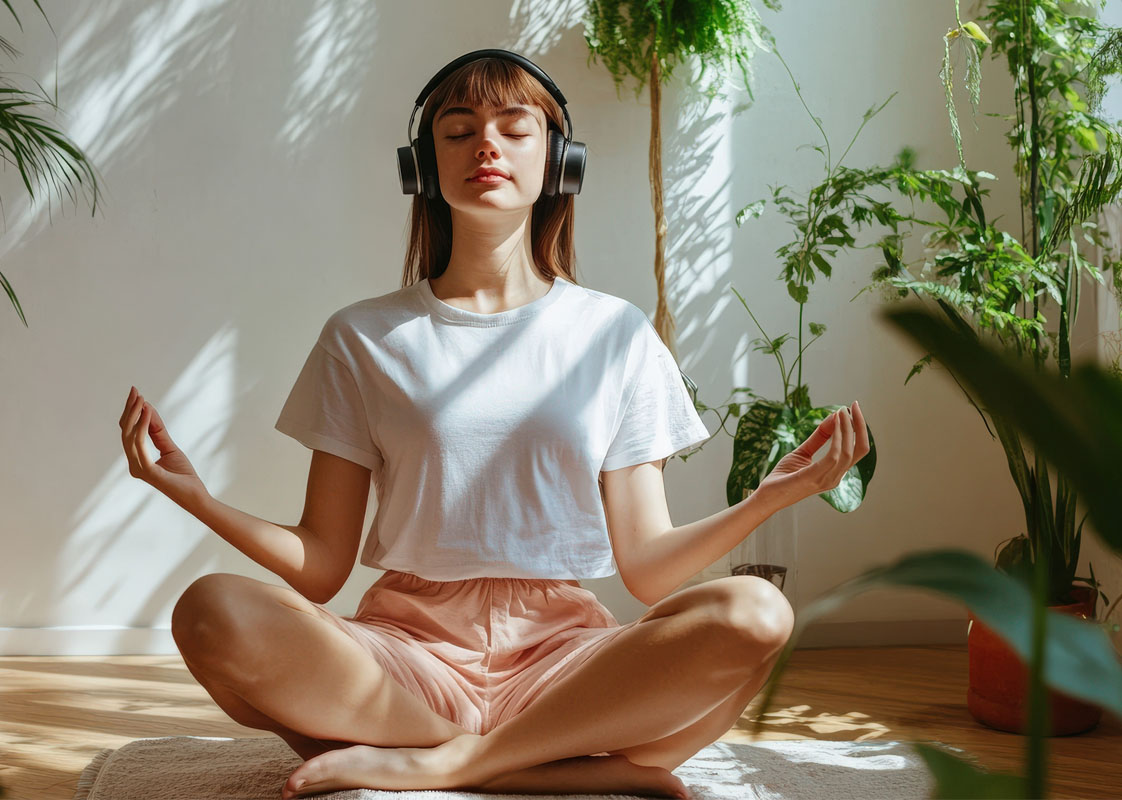
But calm is not a special destination. It is a quality we learn to recognize—sometimes for a few seconds at first, then a few minutes, then more often. Meditation is often described as learning to rest attention on something stable (breath, body, sound, or awareness itself). Mindfulness is the everyday expression of that skill: noticing what is happening, without being pulled away by it.
For many people, sound becomes an unexpected ally. Not because sound “creates” peace, but because it can gently guide attention back to the present—again and again—until the mind remembers how to soften.
Is True Meditation About Complete Silence?
A common belief is that meditation requires total silence. This idea sounds logical at first: if we want a quiet mind, shouldn’t we remove every sound? Yet most people quickly discover a problem—silence is hard to control. A dog barks. A car passes. A neighbor talks. Even in a quiet room, the mind is still noisy.
When we treat silence as a requirement, meditation becomes fragile. The moment sound appears, we assume we failed. But the purpose of meditation is not to control the environment. The purpose is to relate to experience differently—more gently, more clearly, and with less inner struggle.
In many traditions, sound has never been considered “the enemy of meditation.” Instead, sound is used as a doorway. Some practices use silence. Others use bells, chanting, rhythm, or resonant instruments. The question is not “Is there sound?” The question is “Can I be present with what is here?”
Why Sound Has Always Been Part of Mindful Practices
Across cultures and centuries, sound has played a quiet but meaningful role in contemplative practice. People have used chanting to stabilize attention, bells to mark transitions, drums to support rhythm, and natural soundscapes to cultivate listening. In many lineages, the beginning and end of a meditation session are marked with a clear tone—not for decoration, but to shape intention.
Sound can do something that words often cannot: it reaches us immediately. A single tone is felt in the body before the mind has time to argue with it. This is why sound can help create a sense of “arriving”—as if the mind has finally caught up to the moment.
Importantly, mindful sound is not about stimulation. It is not background noise meant to distract. It is the opposite: sound used with care, to support awareness, steadiness, and gentleness.
How Sound Helps the Mind Settle and Stay Present
The mind naturally looks for something to hold. If there is no clear anchor, attention drifts to worries, planning, scrolling, or mental stories. Sound offers a simple anchor that does not require effort. You do not have to “do” anything to hear. Listening happens by itself.
When sound is gentle and intentional, three helpful things often occur:
- Attention becomes simpler. The mind has one clear object: this tone, this resonance, this fading ring.
- Breath naturally steadies. Without forcing the breath, the body often softens and lengthens exhalation.
- Thoughts lose momentum. Not because thoughts disappear, but because sound interrupts the habit of chasing them.
In mindfulness, we do not fight thoughts. We notice them, and we return. Sound can make returning feel kinder—less like discipline, more like remembrance.
Natural Sounds and Environmental Awareness in Mindfulness

Some of the most beautiful sound-based mindfulness practices do not require any instrument at all. They begin with the environment: wind, birds, distant traffic, rain, the hum of a room, even the sound of your own breathing. Listening to ordinary sound can become a powerful meditation because it trains the mind to be here without needing everything to be perfect.
Many people love wind chimes for this reason. Wind chimes do not “perform.” They arrive when the wind arrives. Their unpredictability teaches a gentle lesson: you can listen without controlling, and you can relax even when sound changes.
If you want to try this practice, keep it simple:
- Sit comfortably for 3–5 minutes.
- Let your attention rest on whatever sound is most present.
- When the mind wanders, return to listening without judgment.
- Notice: sound comes and goes, and awareness remains.
This is mindfulness in its pure form—soft attention, steady presence, and a relaxed relationship with change.
Sustained Sounds for Deeper Meditation States
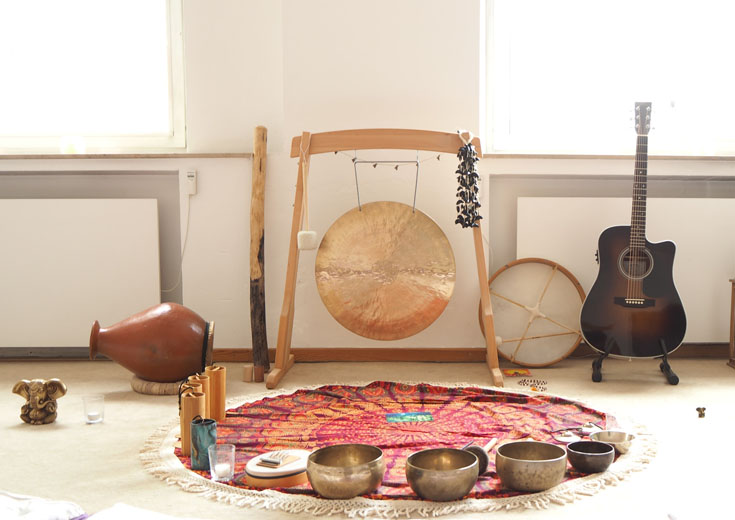
Some people find that brief sounds (like a bell) help them begin, but sustained sound helps them stay. Continuous tones create a gentle “field” that supports longer meditation sessions. Ocean waves, low drone sound, and steady resonance can be especially supportive when the mind feels busy.
In traditional practice and modern sound meditation, instruments such as singing bowls and gongs are often used in this way:
- Singing bowls tend to offer calm, steady resonance—supportive for breath awareness, relaxation, and quiet focus.
- Gongs can create a deeper, more immersive sound space—often experienced as spacious, releasing, and full-body.
If you are exploring sustained sound tools, you may enjoy starting with a gentle, steady instrument like a singing bowl. For deeper immersion and longer sound waves, many people explore a gong.
A simple way to practice with sustained sound is to treat it like a “soft horizon.” You are not trying to analyze the tone. You are simply resting attention on it, the way you might rest your eyes on a distant mountain. If thoughts arise, you do not push them away—you return to the sound the way you return to the breath.
Clear Tones to Mark the Beginning and End of Meditation
Short, clear tones serve a different purpose from sustained resonance. Bells, tingsha, chimes, and similar instruments are often used to begin or end a meditation session. These sounds act like gentle thresholds: they help the mind transition from “doing mode” into “being mode,” and then return again without abruptness.
You will often see this in meditation groups and yoga studios: a chime or bell at the start, silence or steady practice in the middle, and a closing tone at the end. The tone is not decoration—it is a cue for attention, like a soft bow to the moment.
Traditional Tibetan bells and dorje are also used in many lineages. Even when used simply—with one bell ring to begin and one to close—they can bring clarity and a sense of intention to practice.
Try a very simple “start and end” ritual:
- Ring a bell or chime once to begin.
- Sit for 5–10 minutes with breath or listening.
- Ring once again to close.
- Pause for three slow breaths before standing.
This structure is small, but powerful. It teaches the nervous system that you can enter calm, stay, and return.
Prayer Beads, Mantras, and Rhythmic Focus
Not all meditation support comes through sound. Sometimes the most helpful anchor is rhythm—steady repetition that keeps attention from wandering too far. This is why many people use prayer beads (malas). Beads give the hands a quiet task while the mind rests on mantra, breath counting, or simple presence.
Prayer beads are often used for:
- Mantra repetition: repeating a word or phrase with each bead.
- Breath counting: one full inhale-exhale per bead for steady focus.
- Grounding: using touch and repetition to calm nervous energy.
In a practical mindfulness sense, beads are not only religious objects. They can also be tools for concentration—especially for people who find sitting still difficult. If this approach speaks to you, prayer beads can support focus in a quiet and respectful way.
One gentle beginner practice is “ten-bead breathing”:
- Hold the first bead and take one slow breath.
- Move to the next bead with the next breath.
- Continue for ten breaths, then rest.
This practice is small enough to do daily, and consistent enough to build real steadiness over time.
Other Tools and Simple Practices That Support Mindfulness
Sound-based meditation is wide and inclusive. People use many different tools depending on culture, personality, and lifestyle. Some prefer nature. Some prefer instruments. Some prefer almost no sound at all.
Here are a few additional approaches often used in mindful practice:
- Guided meditation: a calm voice can help beginners stay anchored.
- Breath sound awareness: listening to the natural sound of inhale and exhale.
- Humming: gentle humming can calm the body and deepen presence.
- Walking meditation: using footsteps as a rhythmic anchor.
- Soft drumming or clapping: in some traditions, rhythm supports steadiness and community practice.
The common thread is not the tool—it is the attitude. Mindfulness is less about creating a perfect experience, and more about meeting experience with clarity and kindness.
Blending Sound, Silence, and Breath in Daily Practice
Most practitioners eventually discover that meditation is not “either sound or silence.” It is both, depending on the day. Some days, silence feels supportive. Other days, silence feels too exposed, and a sound anchor makes practice gentle again.
A simple blended routine might look like this:
- Begin: one bell, chime, or tingsha tone to set intention.
- Middle: breath awareness, or sustained sound from nature, a bowl, or a gentle soundscape.
- Close: one clear tone, then three quiet breaths.
This kind of structure is especially helpful for busy people. It reduces decision-making and makes meditation feel approachable—something you can return to daily, even when life is full.
Choosing What Supports Your Own Inner Calm
There is no universal method for meditation. Some people love continuous resonance. Some love short tones. Some feel most at home with beads and repetition. Some prefer silence. Often, your needs will change over time.
If you are exploring, keep it gentle and simple. Try one approach for a week:
- Listen to nature for five minutes each morning.
- Use a chime or bell to begin and end a short session.
- Try ten breaths with beads when your mind feels restless.
- Explore sustained sound when you want deeper calm.
Let your nervous system be your guide. The right practice is the one that helps you become more present, more patient, and more at ease with life as it is.
Inner Calm Is Not the Absence of Sound, but the Absence of Inner Noise
Inner calm does not require a perfectly quiet environment. It arises when the mind stops fighting experience and learns to rest in awareness. Sound, when approached gently and intentionally, can become a companion rather than an obstacle.
Whether through wind and rain, chimes in a garden, a clear bell tone, the steady rhythm of beads, or the resonance of bowls and gongs, sound can support mindfulness in a deeply human way. It helps us remember something simple: peace is not somewhere else. It is here—whenever we return.