




Can Christians Use Tibetan Singing Bowls for Meditation, Mindfulness, and Calm?
Many Christians today ask a simple but important question: is it okay to use a singing bowl? This concern often comes from seeing Tibetan singing bowls or Himalayan singing bowls in meditation spaces or around Eastern spiritual imagery. Because of that, some people assume a singing bowl belongs to a specific religion. But to answer this properly, we need to separate the object itself from how it is used.
What a Singing Bowl Really Is
A singing bowl is a handcrafted metal instrument that produces sound and vibration when struck or played around the rim with a mallet. Whether it is called a Tibetan singing bowl, a Himalayan singing bowl, a meditation bowl, or a handmade singing bowl from Nepal, its basic purpose is the same. It creates a sustained sound that helps the mind slow down, settle, and focus.
At its core, it is no different from a bell, a chime, or another musical tone instrument. There is nothing in the bowl itself that defines a religion. It is simply a sound tool. Like many musical instruments, its meaning depends on the person using it and the purpose behind it.
Why Some Christians Feel Unsure About Singing Bowls
The concern is understandable. Many Christians have seen singing bowls used alongside practices, symbols, or teachings that do not reflect their own faith. Because of that, the bowl can appear religious even when the object itself is simply an instrument.
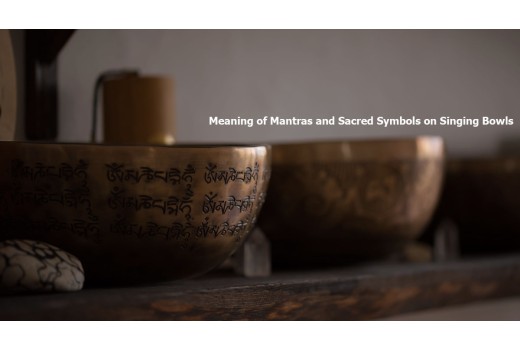
This hesitation usually comes from three main concerns: its association with Buddhism or spiritual imagery, the presence of symbols or mantras on some handmade Tibetan singing bowls, and the fear of mixing beliefs. These concerns are valid and should not be dismissed. But they are mostly about context, not about the bowl itself.
What Real People Commonly Say
When people discuss this question in everyday conversations, one idea comes up again and again: a singing bowl is just a musical instrument. Many compare it to a guitar, a bell, a drum, or church chimes. Others say that sound itself is part of creation and can be used peacefully, reverently, and meaningfully.
This real-world perspective matters because it reflects how ordinary people understand singing bowls in practice. Most do not see a Tibetan singing bowl or Himalayan singing bowl as a religious object on its own. They see it as a tool that produces calming sound.
Tibetan Singing Bowls as Tools for Meditation, Mindfulness, and Calm
Today, Tibetan singing bowls and Himalayan singing bowls are used across the world for practical and personal reasons. People use them during meditation, mindfulness practice, quiet reflection, stress relief, sleep routines, yoga sessions, and peaceful pauses during the day.
The reason is simple. The tone of a handmade singing bowl gives the mind something gentle to follow. Instead of chasing many thoughts at once, a person can listen to one fading sound, breathe more slowly, and become more present.
That does not make the bowl a religion. It makes it a sound tool for attention, calmness, and stillness. This is why many people see a singing bowl from Nepal as both a beautiful handcrafted instrument and a useful aid for mindfulness and relaxation.
What Christianity Teaches About Sound
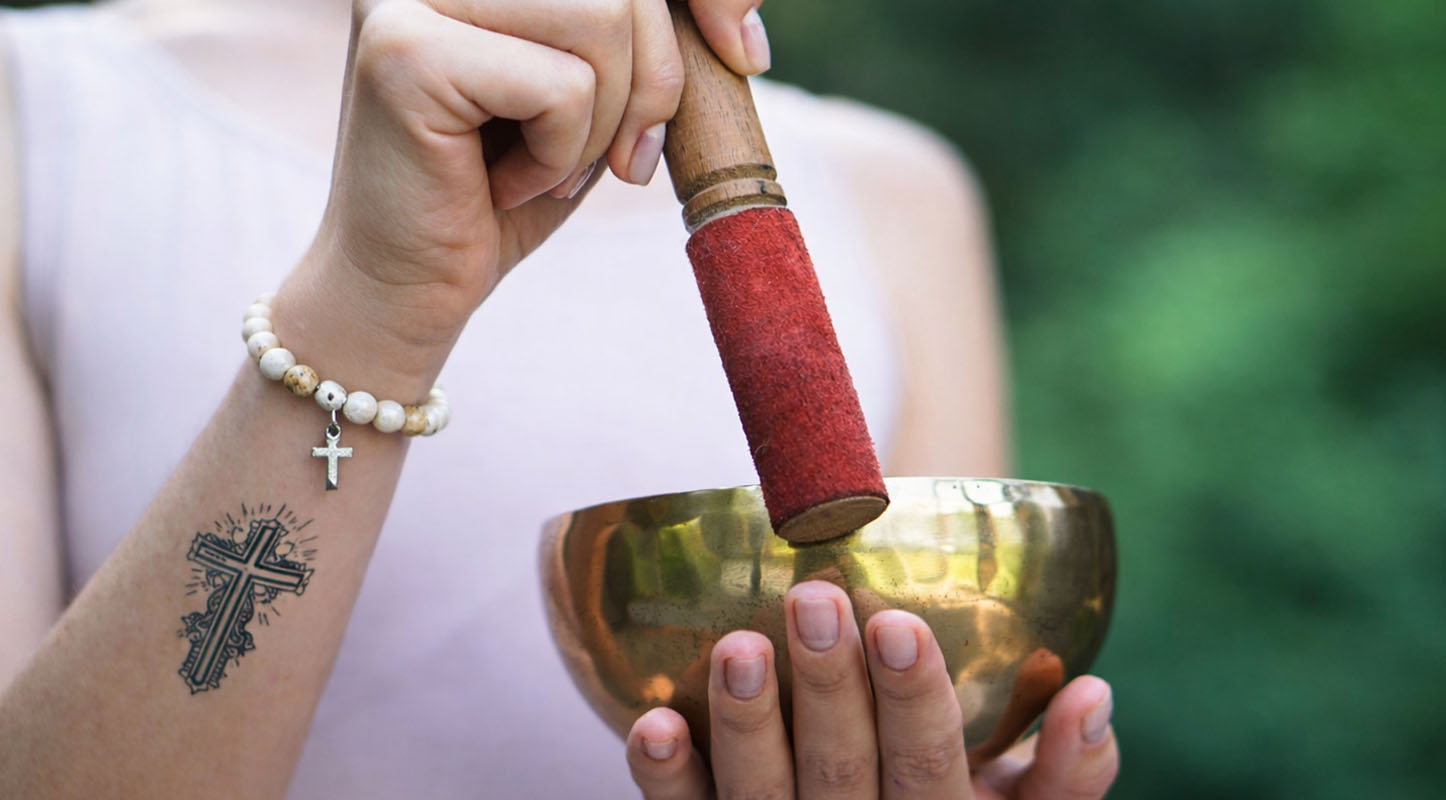
A Christian woman gently plays a Tibetan singing bowl while wearing a cross bracelet and Christian cross tattoo, showing how a handmade Himalayan singing bowl can be used for meditation, mindfulness, prayerful quiet, and calm reflection.
Sound has long had a place in Christian life. Bells, hymns, harps, cymbals, and trumpets have all been used to gather attention, mark sacred moments, and create an atmosphere of worship and reflection. Sound itself is not the issue.
What matters is the purpose behind it. A peaceful sound can be part of prayer, contemplation, and rest. In that sense, a Tibetan singing bowl can be understood in the same way many Christians already understand instrumental music, church bells, or other calming sounds used during quiet time.
Can Christians Use a Handmade Singing Bowl?
For many Christians, the answer comes down to intention. If a singing bowl is treated as a source of spiritual power, a replacement for God, or part of a belief system that conflicts with Christianity, then many believers will understandably feel uncomfortable with it.
But if it is used simply as a sound tool for calmness, mindfulness, quiet reflection, or preparing the mind before prayer, then it becomes no different from other peaceful aids. In that case, it is not being used as a religious object. It is being used as an instrument.
Anyone Can Use a Singing Bowl from Nepal
One of the reasons handmade Tibetan singing bowls are now appreciated around the world is because sound is universal. People from many backgrounds use them, including Christians, non-religious individuals, therapists, yoga practitioners, meditation beginners, and people who simply want a peaceful moment in a noisy world.
You do not need to belong to a specific religion to appreciate a calming sound. You do not need to adopt a new belief to use a handmade Himalayan singing bowl that creates a clear tone. In this way, a meditation bowl is open to anyone who wants to use sound for focus, calm, rest, or mindfulness.
The Most Important Truth: Intention Matters
A singing bowl does not carry a belief system on its own. It becomes meaningful through use. If someone uses it for relaxation, it becomes a relaxation tool. If someone uses it for mindfulness, it becomes a mindfulness aid. If someone uses it before prayer, it becomes part of a quiet and reflective environment.
For Christians, faith remains centered on God, not on the instrument. The bowl does not define belief. The heart, purpose, and intention of the user do.
Looking for a Handmade Tibetan Singing Bowl for Calm, Meditation, or Quiet Reflection?
Explore authentic Tibetan singing bowls and Himalayan singing bowls selected for rich tone, peaceful vibration, meditation, mindfulness, relaxation, and daily spiritual calm.
Sound Is Universal, Not Religious
A singing bowl should not automatically be seen as belonging to one religion. A Tibetan singing bowl or Himalayan singing bowl is, at its core, a musical sound tool that can be used by anyone for meditation, mindfulness, relaxation, and calm. For Christians, the real question is not fear of the instrument itself, but clarity about how it is being used.
When used simply as a peaceful sound aid, a handmade singing bowl can support stillness without replacing faith. In the end, it is not the bowl that matters most. It is the purpose, the intention, and the peace a person is seeking.
Frequently Asked Questions
Is it okay for Christians to use Tibetan singing bowls?
Many Christians are comfortable using Tibetan singing bowls when they are treated as musical tools for calmness, mindfulness, or quiet reflection rather than as objects of worship or spiritual authority.
Are Tibetan singing bowls religious objects?
A Tibetan singing bowl itself is a sound-producing instrument. While some bowls may be used in religious or cultural settings, the bowl itself is not limited to one religion.
Can a Himalayan singing bowl be used during Christian prayer time?
Some Christians use a Himalayan singing bowl before prayer to create a quiet atmosphere and settle the mind. In that case, it functions much like soft instrumental music or a church bell.
Are handmade singing bowls good for meditation and mindfulness?
Yes. Many people use handmade singing bowls for meditation, mindfulness, breathing exercises, stress relief, and calming the mind because the sound helps create focus and stillness.
Do you need to follow Buddhism to use a singing bowl from Nepal?
No. Singing bowls from Nepal are used by people from many backgrounds. Anyone can use them as sound tools for calmness, focus, relaxation, and mindfulness.
Why do some Christians feel unsure about handmade Tibetan singing bowls?
The concern usually comes from seeing singing bowls connected with spiritual imagery, symbols, or practices from other traditions. In most cases, the hesitation is about context and interpretation, not the sound instrument itself.