




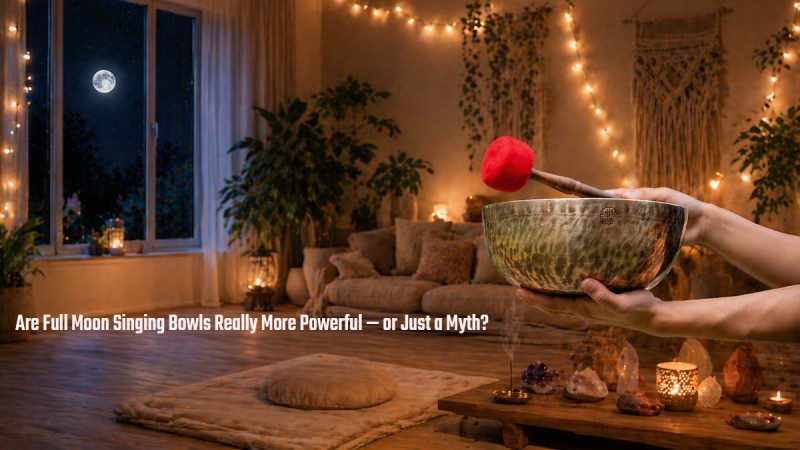
A Question Worth Asking Honestly
If you have spent any time exploring Tibetan singing bowls, you have almost certainly come across the term full moon singing bowl. And if you are the kind of person who thinks carefully before spending money on something meaningful, you have probably asked yourself: is this genuinely different — or is it simply a better story wrapped around the same object?
It is a fair question. A good one, even. The world of spiritual tools is not immune to marketing language, and distinguishing authentic tradition from commercial embellishment requires exactly the kind of honest inquiry that a thoughtful buyer brings.
So here is what the tradition actually says, what the artisans in Kathmandu actually do, what science can and cannot explain about it, and what experienced sound healers and practitioners have consistently observed across years of working with both full moon and standard bowls. Read all of it — and then decide for yourself.
What Is a Full Moon Singing Bowl — The Actual Definition
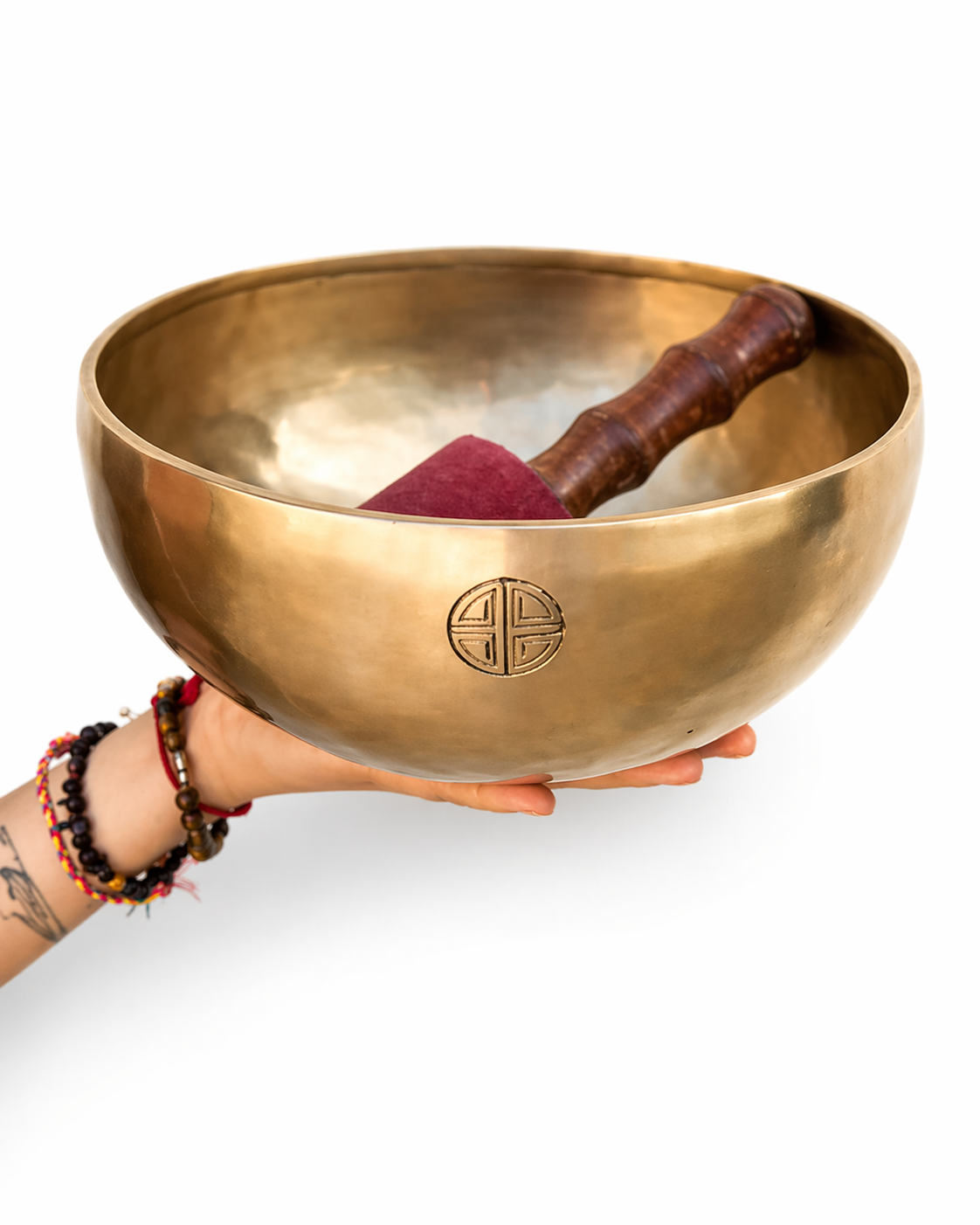
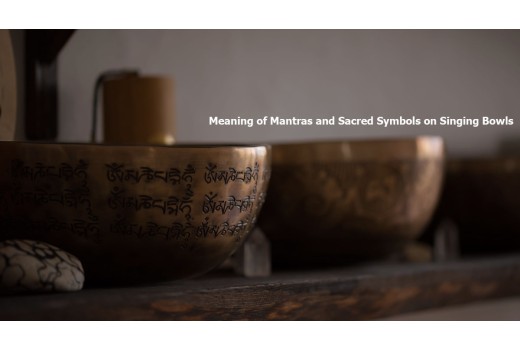
A full moon singing bowl is a Tibetan singing bowl that is hand-hammered by artisans specifically on the night of the full moon — beginning the forging and shaping process under the light of Purnima, the full moon as it is known in the Himalayan tradition. This is not a finishing touch or a branding exercise applied after the bowl is made. The physical creation of the bowl — the hammering of the seven-metal alloy into shape — takes place during this specific lunar window.
In the workshops of Thamel, Kathmandu, this practice has been observed for generations. Artisan families who have passed down bowl-making traditions for centuries understand the full moon night not as a marketing concept but as a condition of the work itself — the same way a farmer understands when to plant, or a brewer understands when to draw from a particular spring. The timing is part of the craft, not separate from it.
The seven-metal alloy used — gold, silver, copper, iron, tin, mercury, and lead, each associated in Himalayan cosmology with a planetary body — is believed to be at a heightened state of receptivity during the full moon, when the moon's gravitational and electromagnetic influence on earth's materials is at its peak. The bowl, as it is formed, is understood to absorb and retain that heightened state.
The Science Behind the Moon and Metal — What We Actually Know
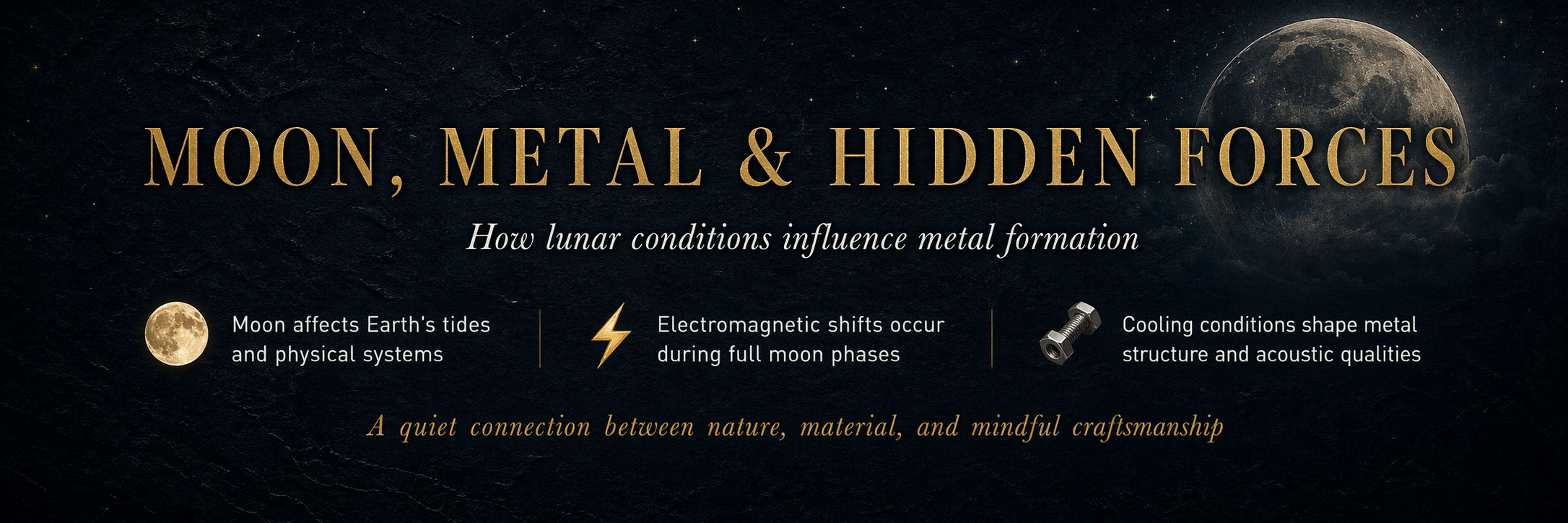
Before dismissing the lunar influence as mythology, it is worth understanding what science genuinely does confirm about the full moon's effect on physical matter — because the answer is more interesting than most people expect.
Gravitational Pull and Water Content in Materials
The moon's gravitational force measurably affects the earth's tidal systems — not only ocean tides but what geologists call earth tides, the subtle but real expansion and contraction of the earth's crust itself by several centimetres twice daily. This gravitational pull affects all matter that contains water or fluid components. Metal alloys, while solid, are not entirely without internal moisture during the forging process — and the molten or semi-molten state of metal during casting is particularly susceptible to environmental forces.
Electromagnetic Environment During the Full Moon
Scientific studies have documented measurable changes in the earth's electromagnetic field during the full moon period. Research published in peer-reviewed geophysics journals confirms that lunar cycles correlate with variations in the ionosphere and geomagnetic field. These electromagnetic fluctuations interact with conductive materials — and metal alloys are highly conductive. Whether this interaction affects the crystalline structure of a cooling metal alloy in ways that influence its acoustic properties is a question that has not been studied directly — but the electromagnetic influence on metal during formation is not, in itself, a fringe claim.
The Water Crystallography Argument
Research into how environmental conditions affect the crystalline structure of water — particularly work exploring how intention, sound, and environmental factors influence ice crystal formation — has generated significant discussion in alternative healing communities. While this research remains contested in mainstream science, what is not contested is that the conditions under which metal alloys cool and crystallise do affect their final molecular structure, density distribution, and acoustic properties. Environmental temperature, humidity, and electromagnetic conditions at the time of cooling are all genuine variables in metallurgy.
None of this proves that full moon bowls are energetically superior to other bowls. But it does establish that the full moon environment is a physically distinct environment — and that the conditions under which metal is formed can measurably affect the properties of the final object.
What the Himalayan Tradition Actually Claims — and What It Does Not
It is important to represent the tradition accurately, because exaggeration in either direction — claiming too much or dismissing too readily — does a disservice to the genuine knowledge held in Himalayan craft lineages.
The tradition does not claim that a full moon bowl will automatically produce deeper meditation, cure illness, or guarantee any specific outcome. What it claims is more nuanced and more interesting: that the full moon night is a time of heightened spiritual energy, when the veil between the material and the subtle is thinner, when practitioners are more open, when prayers and intentions carry more weight — and that a bowl forged at such a time absorbs the quality of its moment of creation.
This is consistent with a broader principle found across Tibetan Buddhist and Hindu Himalayan practice: that objects are not spiritually neutral. The conditions of their creation, the intention of the artisan, the materials used, and the moment of their making all contribute to what the object carries into the world. A bowl made with care, skill, and intention during a spiritually significant time carries something different from a bowl pressed from a mould in a factory with no awareness of its purpose.
That principle — that objects are not neutral, that conditions of creation matter — is not unique to Himalayan tradition. It appears in traditions of sacred craftsmanship across virtually every culture in human history.
What Sound Healers and Practitioners Consistently Report
Beyond tradition and science, there is a third source of evidence that deserves serious consideration: the consistent, repeated observations of experienced sound healers who work with large numbers of bowls across many years.
Practitioners who use both standard handmade bowls and full moon bowls in their work — and who are not financially motivated to prefer one over the other — consistently describe several differences that they observe with enough regularity to consider meaningful:
Richer Harmonic Complexity
Full moon bowls are consistently described as producing a more layered sound — more overtones audible simultaneously, sustaining for longer, and interacting with each other in ways that create what practitioners describe as a more "living" or "breathing" quality of resonance. This is not a subjective impression only: overtone richness is a measurable acoustic property, and differences in metal density, crystalline structure, and wall thickness distribution all affect it.
Greater Sensitivity to the Room and the Practitioner
Experienced healers note that full moon bowls seem more responsive to their environment — changing subtly in character depending on the space, the people present, and the intention of the session. Standard bowls tend to produce a more consistent, predictable sound regardless of context. Whether this reflects a genuine difference in the bowl's acoustic sensitivity or a difference in the practitioner's relationship to an object they consider more sacred is genuinely difficult to determine — but the observation is reported consistently enough to be worth noting.
Deeper Practitioner and Client Response
Sound healers report that both they and their clients tend to drop into deeper states of relaxation and presence more quickly when working with full moon bowls. Sessions feel — in their words — more fluid, more complete, more connected. Again, the contribution of belief and intention to this experience cannot be separated cleanly from any physical properties of the bowl. But the consistent direction of the observation across practitioners with no shared financial incentive is notable.
Full Moon Bowls vs Standard Handmade Bowls — The Honest Comparison
Both full moon singing bowls and standard handmade singing bowls from Dharma Tool are made by the same skilled artisans in Kathmandu, from the same seven-metal alloy, using the same hand-hammering techniques. The fundamental quality of craftsmanship is the same. The difference lies specifically in the timing and intention of the forging — and in the additional layer of meaning that the full moon context carries for both the artisan and the practitioner.
- For daily personal meditation: A quality standard handmade bowl is a powerful, genuine instrument and a meaningful choice. The full moon distinction matters more the deeper one goes into a committed practice.
- For professional sound healing: Most experienced sound healers who work with clients intentionally choose full moon bowls for their primary instruments, citing the richer harmonic profile and the deeper client response they consistently observe.
- For ceremonial or ritual use: Full moon bowls are the traditional choice — their creation during a spiritually elevated time makes them particularly appropriate for use in significant rituals, healing ceremonies, and sacred space altars.
- As a meaningful gift: A full moon bowl, particularly one custom-engraved with the recipient's birth date or a significant full moon date, carries a layer of personalised meaning that a standard bowl cannot replicate.
The Jhumka Full Moon Bowl — A Distinct Category Worth Understanding
Within Dharma Tool's full moon collection, the Jhumka full moon bowl deserves specific mention as a distinct category. Jhumka bowls are characterised by their thick walls — significantly thicker than standard full moon bowls of the same diameter. This additional wall mass has measurable acoustic consequences:
- Longer sustain: The greater mass vibrates for longer after being struck, producing a tone that can sustain for 45 seconds or more in a quality piece.
- Deeper fundamental tone: Thicker walls shift the primary resonant frequency downward, producing a fuller, more grounding bass-register sound even in smaller bowl sizes.
- More powerful physical vibration: The thicker wall transmits more energy as physical vibration — making Jhumka bowls particularly valued for body placement work in therapeutic settings, where the bowl is placed directly on or near the body during a session.
For practitioners working in sound therapy or somatic healing contexts, the Jhumka full moon bowl represents the most therapeutically intense instrument in the Dharma Tool collection.
Explore Full Moon Singing Bowls — forged under Purnima in Kathmandu
From palm-size 4-inch bowls at $64.99 to large 12-inch head therapy bowls, the Dharma Tool full moon collection includes standard full moon bowls, thick-walled Jhumka bowls, custom date-engraved pieces, and a 7-Chakra Full Moon Set — all hand-hammered during the full moon by traditional Nepali artisans.
How to Identify an Authentic Full Moon Bowl — What to Look and Listen For
Because the full moon designation carries a premium, it is worth knowing how to distinguish a genuine full moon bowl from a standard bowl marketed with the label. Several markers are worth understanding:
Provenance and Transparency
Authentic full moon bowls come from suppliers who can speak specifically about the artisans who made them, the lunar calendar dates on which they were forged, and the tradition within which the practice sits. Vague claims of "made under moonlight" with no specific cultural or craft context should be treated with caution. Dharma Tool's full moon bowls are sourced directly from artisan workshops in Thamel, Kathmandu, with full transparency about their making.
Acoustic Quality
A genuine high-quality full moon bowl — struck gently on its side and then on its rim — should produce multiple audible overtones simultaneously, a sound that evolves and shifts over the duration of its sustain rather than fading in a simple linear decay. If the sound feels flat, quick to fade, or one-dimensional, the bowl's quality — regardless of its label — is not at the level of an authentic healer-selected full moon piece.
Physical Weight and Wall Consistency
Quality full moon bowls have a weight and wall consistency that reflects careful hand-hammering rather than casting. The surface will show the characteristic hammer marks of hand-forging — not a perfectly smooth machine finish. The weight should feel substantial relative to the bowl's size.
The Custom Full Moon Bowl — A Category Unique to Dharma Tool
One of the most meaningful offerings in the Dharma Tool collection is the custom full moon singing bowl — a bowl hand-hammered on a specific full moon date of your choosing, with that date engraved on the bowl itself. This option allows practitioners to commission a bowl forged on:
- Their own birth date's corresponding full moon
- A significant full moon in their personal history — a moment of transformation, healing, or beginning
- The upcoming full moon, for a bowl that carries the energy of the present moment
- A meaningful date for a gift recipient — a birthday, an anniversary, a memorial
No other product in the singing bowl market offers this combination of traditional craft, lunar timing, and personalised provenance. It is genuinely unique — and it is the kind of object that carries meaning for decades.
Commission a bowl forged on your chosen full moon date — engraved and blessed in Nepal
Choose your full moon date, your bowl size, and your finish. Dharma Tool's artisans in Kathmandu will hand-hammer your bowl during that lunar window, engrave the date, and ship it to you directly from Nepal with DHL express delivery worldwide.
So — More Powerful, or Just a Myth?
The honest answer is: both questions contain a false assumption.
Asking whether full moon bowls are "more powerful" implies that power is a single measurable quantity that one bowl has more of than another. That is not how sound healing instruments work. A full moon bowl does not guarantee a better meditation session any more than a handmade mala guarantees a deeper mantra practice. The instrument meets the practitioner. What the practitioner brings — attention, intention, consistency, openness — determines what the instrument does.
But asking whether the full moon distinction is "just a myth" dismisses something real: a thousand-year-old tradition of intentional craft, the measurable physical distinctness of the lunar environment, the consistent observations of experienced practitioners, and the meaning that sacred timing carries for both the maker and the receiver. That is not nothing. It is, in fact, quite a lot.
What is true is this: a full moon singing bowl made by skilled hands in Kathmandu during the Purnima night, from seven sacred metals, selected by a healer for tonal quality, and placed in your hands with full awareness of what it is — that object carries something different from a mass-produced bowl sold online with a lunar label and no lineage behind it. The difference is real. Whether you call it power, intention, craftsmanship, or tradition is a matter of the language you prefer.
Choose the language that serves your practice. Choose the bowl that calls to you. And trust that the call itself is information.
Frequently Asked Questions
What makes a full moon singing bowl different from a regular handmade singing bowl?
A full moon singing bowl is hand-hammered by artisans specifically on the night of the full moon — Purnima in Himalayan tradition — when lunar energy is believed to be at its peak. The timing is not a label applied after the fact; it is part of the physical making of the bowl. Both types use the same seven-metal alloy and the same hand-forging techniques, but the full moon context adds a layer of intentional timing, traditional significance, and — according to many experienced practitioners — a richer harmonic quality that results from the distinctive electromagnetic and gravitational conditions of the full moon environment.
Is there any scientific basis for full moon singing bowls being different?
Science confirms that the full moon creates measurable changes in the earth's gravitational field, electromagnetic environment, and tidal forces — affecting all physical matter, including metals during formation. Whether these environmental differences produce acoustically measurable differences in a finished singing bowl has not been studied directly. However, the broader principle — that the conditions under which metal cools and crystallises affect its final acoustic properties — is well established in metallurgy. The full moon's influence on metal during forging is a scientifically plausible mechanism, even if it has not been directly measured in this specific context.
What is a Jhumka full moon singing bowl and why is it different?
A Jhumka full moon bowl is a full moon bowl with significantly thicker walls than a standard full moon bowl of the same diameter. The additional wall mass produces a longer sustain, a deeper fundamental tone, and more powerful physical vibration — making Jhumka bowls particularly valued for therapeutic body-placement work in sound healing sessions. They are the most physically intense instruments in the full moon collection and are especially suited to professional practitioners and experienced meditators.
Are full moon singing bowls worth the higher price?
This depends entirely on your intended use. For daily personal meditation, a quality standard handmade bowl is a fully meaningful instrument. For professional sound healing, ceremonial use, sacred space altars, or as a personalised meaningful gift, the full moon distinction adds genuine value — in traditional significance, in the richer harmonic profile consistently described by experienced practitioners, and in the care and intentionality of the making process. Most experienced sound healers who work with both types choose full moon bowls for their primary therapeutic instruments.
Can I get a full moon singing bowl made on a specific date?
Yes. Dharma Tool offers custom full moon singing bowls commissioned for a specific full moon date of your choosing — with that date engraved on the bowl. This allows you to own a bowl forged during a personally meaningful lunar moment: your birth date's full moon, a significant date in your history, or the upcoming full moon. It is one of the most unique and meaningful offerings in the Himalayan singing bowl market and is available exclusively through Dharma Tool's custom bowl programme.
How do I choose the right full moon singing bowl for my practice?
For solo meditation in a personal sacred space, a standard full moon bowl of 5–7 inches is ideal — warm, contained resonance that fills a room without overwhelming it. For sound healing with clients, a larger bowl of 8–12 inches or a Jhumka bowl provides the depth and sustained vibration needed for therapeutic work. For chakra balancing practice, the 7-Chakra Full Moon Set covers the full energetic spectrum with bowls professionally tuned to each chakra note. For a deeply personal gift, the custom date-engraved full moon bowl is unmatched in meaning and provenance.