




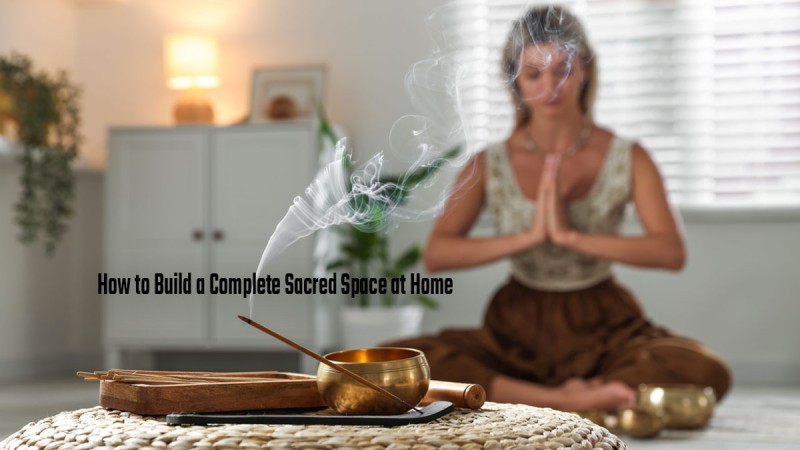
Why Your Environment Is the First Step in Any Spiritual Practice
You cannot meditate in a warzone. Not literally — but the principle holds everywhere. The space around you speaks to your nervous system before a single thought arises. It signals: relax or perform, go inward or stay on guard. Most people try to force a peaceful inner state while surrounded by digital noise, clutter, and the ambient stress of modern life — and then wonder why meditation feels impossible.
A sacred space solves this at the root. It is not a luxury or a religious requirement. It is a practical tool — an environment deliberately designed to make stillness the path of least resistance. When you enter it, your body already knows what to do.
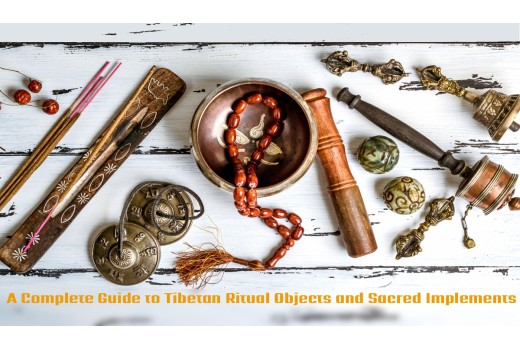
Himalayan practitioners have understood this for over a thousand years. The objects they placed in their ritual spaces — singing bowls, incense, statues, tingshas, prayer beads — were not decorations. Each served a precise sensory and energetic function. Together, they created a field that supported the mind in doing what it struggles most to do on its own: arrive fully in the present moment.
This guide shows you exactly how to build that space at home — using authentic Tibetan dharma tools, step by step, regardless of your religion, your budget, or the size of your room.
Step 1 — Choose and Prepare Your Space
The most powerful sacred space is not the largest one — it is the most consistent one. A corner of a bedroom, a quiet shelf, a dedicated windowsill: any of these will transform into a genuine anchor for your practice if you return to it daily with intention.
What to Look For
- Quietness over size. A small corner you can reach in two steps beats a large room you never enter. The goal is friction-free access.
- Separation from work and entertainment. Do not place your sacred space beside your desk or facing a television. The mind associates areas with activities — keep this area associated with only one thing.
- Natural light when possible. Morning light carries a quality that supports alertness without agitation — ideal for practice. East-facing placement is traditional in Himalayan settings for this reason.
- A surface at a respectful height. Tibetan tradition places sacred objects higher than floor level — on a shelf, low table, or raised platform — so they sit above the level of the feet when you sit.
Before placing anything, clean the space completely. Wipe down the surface, remove everything that does not belong, and spend one minute simply sitting with the empty space. This act of clearing is itself a ritual — an intention that says: this place is set apart from everything else.
Cover your surface with a clean natural cloth. Silk, cotton, or brocade work beautifully. Traditional Himalayan altar cloths are often deep red, saffron, or gold — but choose a colour that feels calm and intentional to you.
Step 2 — The Singing Bowl: The Voice of Your Practice
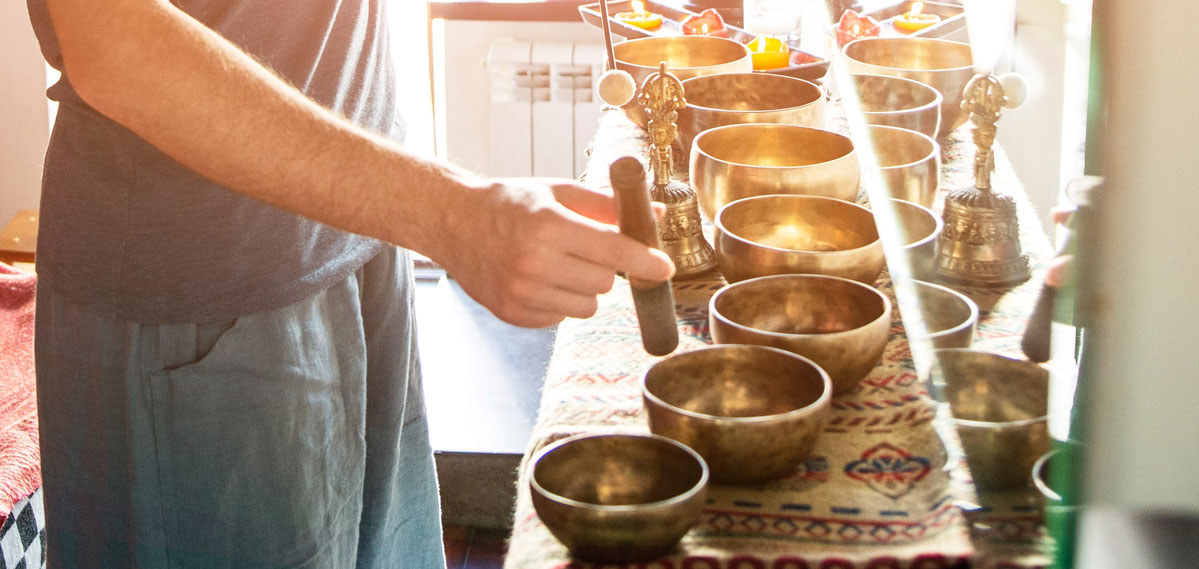
If a sacred space has a heartbeat, the Tibetan singing bowl is it. No other object combines sound, vibration, and ritual function in quite the same way. Struck once at the opening of a session, the bowl's resonance fills the room and the body simultaneously — signalling to the nervous system, with more authority than any thought, that it is time to settle.
The physics behind this is straightforward. A genuine handmade singing bowl — cast from a traditional seven-metal alloy of gold, silver, copper, iron, tin, mercury, and lead — produces not just a single tone but a complex web of harmonics that sustain for 30 seconds or longer. These overlapping frequencies interact with the auditory cortex in ways that support a shift toward alpha brainwave states: the relaxed, open awareness associated with deep meditation and creative insight. No app or recording replicates this, because no recording carries the physical vibration of the bowl's resonance moving through the air of your specific room.
Choosing the Right Bowl for Your Space
- Personal meditation space (1–2 people): A medium handmade bowl of 5–7 inches produces a warm, contained resonance ideal for solo practice. The tone is full enough to fill a room without overwhelming it.
- Sound healing or group use: A large standing bowl of 9 inches or more creates a deeper, longer-sustaining sound that envelops a space and multiple bodies simultaneously.
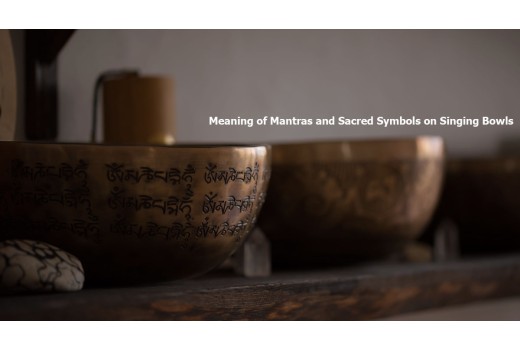
- Mantra-carved bowls: If visual intention matters to you, a bowl engraved with Om Mani Padme Hum or other sacred symbols adds a layer of meaning — the mantra continues to resonate silently even when the bowl is still.
- Full Moon bowls: Cast during the full moon according to traditional Himalayan practice, these bowls carry heightened lunar energy and are among the most sought-after for healing and ceremonial use.
Place your bowl on a cushion ring at the centre of your sacred surface — never directly on wood or stone, which dampens vibration. Keep the mallet beside it. The bowl and mallet together are one instrument; they belong together visually as well as functionally.
Find your singing bowl — healer-selected, crafted in Kathmandu
Every bowl is hand-hammered from a seven-metal alloy, individually tested for tone, and chosen by experienced sound healers before it reaches you. Full Moon bowls, Chakra sets, Mantra-carved pieces — all shipped worldwide via DHL express.
Step 3 — The Statue: A Focal Point for the Wandering Eye
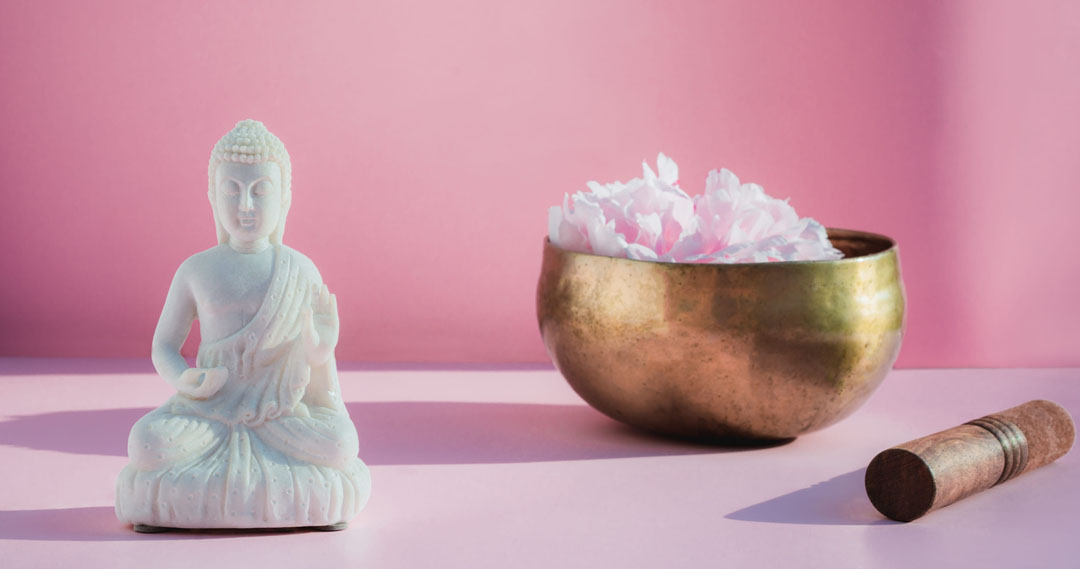
The mind needs somewhere to land. During meditation, when thoughts pull awareness outward, a physical focal point gives the eyes — and through them, the mind — a place to return. A handmade Tibetan statue serves this purpose with a depth that a photograph or printed image simply cannot match.
In Himalayan tradition, a statue is not considered decorative. It is a representation of a quality — an embodied symbol of something the practitioner is cultivating in themselves. Every figure, every gesture, every element of the iconography carries specific meaning. Choosing your statue consciously — based on what quality you most wish to develop — transforms it from an object into a living part of your practice.
Common Statues and Their Meanings
- Shakyamuni Buddha — the historical Buddha, seated in earth-touching mudra. Represents the path of awakening available to all human beings regardless of background or belief. The most universal choice for a home sacred space.
- Green Tara — the goddess of compassionate action, depicted with one foot extended and ready to move. Invoked for protection, removing obstacles, and swift response to need. Particularly meaningful during difficult life transitions.
- Medicine Buddha — the Buddha of healing, deep blue in colour, holding a medicine bowl. Traditionally called upon for healing of both physical and mental suffering. A powerful addition to any healing-oriented practice space.
- Chenrezig (Avalokiteshvara) — the bodhisattva of compassion with multiple arms extending to help all beings. Associated with the mantra Om Mani Padme Hum. Particularly suited to practices centred on compassion and loving-kindness meditation.
Place your statue at the highest point of your sacred surface — slightly elevated if possible, so your gaze naturally lifts when you look at it. A handmade statue from Nepal, cast by traditional artisans using lost-wax techniques and finished with hand-applied gilding, carries a quality of presence that mass-produced replicas do not. Authenticity is not merely aesthetic — it is energetic.
Step 4 — Tibetan Incense: The Scent That Bypasses the Thinking Mind
Of all the senses, smell has the most direct pathway to the limbic system — the brain's emotional and memory centre. This is why walking into a temple and smelling incense can produce a feeling of peace immediately, even if you have never been to that temple before. The scent bypasses rational thought entirely and speaks directly to the body.
This is why Tibetan incense is one of the most powerful — and most underestimated — tools in a sacred space. Genuine Himalayan incense is made without synthetic fragrances or chemical binders. It uses traditional herbs, barks, resins, and flowers — juniper, cedar, spikenard, nagi, rhododendron — ground and hand-rolled using formulas passed down through generations of Tibetan apothecaries.
How to Use Incense in Your Sacred Space
- Light one stick before you sit — not during your practice. Let the scent fill the space as you settle in, so it becomes associated with the act of arriving.
- Use a proper incense holder that catches ash safely and allows the smoke to rise freely. Rising smoke carries symbolic meaning in Himalayan tradition — prayers and intentions moving upward.
- Choose scents with intention: juniper-based blends are clearing and purifying; sandalwood is grounding and centring; floral blends are heart-opening; resin-based incense is deeply focusing and sacred in character.
- Be consistent. Over weeks of daily practice, the scent alone will begin to trigger your body's relaxation response before you have taken a single conscious breath. This is the power of ritual — the environment doing the work for you.
Step 5 — Tibetan Tingsha: The Sound That Clears Everything
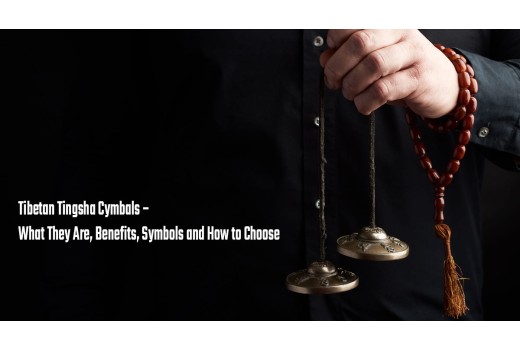
If the singing bowl is a long exhale, the tingsha is a snap of the fingers that says: here, now, this moment. These two small metal cymbals, connected by a leather cord and struck together at their edges, produce one of the most piercing and pure sounds in the entire tradition of Himalayan instruments.
The frequency of an authentic tingsha — typically above 2,000 Hz — is high enough to cut through mental noise in a way that lower-frequency instruments cannot. Neuroscientifically, this sharp auditory stimulus interrupts the brain's default mode network: the system responsible for rumination, anxiety spirals, and the endless loops of unhelpful thought. One strike of a well-made tingsha can shift the quality of a room — and a mind — faster than almost any other intervention.
How to Use Tingshas in Your Sacred Space
- Opening ritual: Strike the tingshas together gently as you enter your space. Hold them loosely so the edges meet and the cymbals are free to vibrate apart. Follow the sound with your full attention until it fades completely into silence. This single act clears the mental residue of whatever preceded your practice.
- Space clearing: Walk slowly through your room, striking the tingshas every few steps and allowing the sound to dissipate fully before striking again. In Himalayan tradition this is understood as dispelling stagnant or negative energy — in practical terms, it is a powerful mindfulness anchor that brings full presence to the physical space.
- Closing ritual: Strike once at the end of your session. Follow the sound to silence. This marks the completion of practice as clearly as the opening marked the beginning — giving the session a defined container.
Traditional tingshas are hand-cast from bronze alloys and adorned with sacred symbols — the Eight Auspicious Signs (Ashtamangala), dragons, the Om Mani Padme Hum mantra, or zodiac animals. The engravings are not decorative; each symbol carries a specific intention that the artisan embeds into the instrument as it is made.
Explore tingshas hand-cast in Kathmandu — from $34.99
From 2.5-inch Ashtamangala and Mantra designs to premium 3-inch Full Moon and Dragon-embossed cymbals — every pair is hand-cast by traditional Nepali artisans and tested for clarity and sustain of tone.
Step 6 — Prayer Beads (Mala): An Anchor for the Hands
While the eyes rest on the statue and the ears follow the sound of the bowl, the hands need their own anchor. A Tibetan mala — a string of 108 beads used for mantra counting — gives them one. The act of moving one bead per breath or per mantra repetition creates a physical rhythm that synchronises the body with the practice, drawing restless energy downward and inward.
The number 108 appears across multiple ancient traditions — Vedic, Buddhist, and Jain — as a number of cosmological completeness. In Tibetan practice, a full round of 108 beads represents one complete cycle of mantra recitation. The larger guru bead at the junction marks the turning point — the practitioner does not cross it but reverses direction, continuing without interruption.
Choosing Your Mala
- Rudraksha seeds — the most traditional choice in both Hindu and Buddhist practice. Said to carry a naturally calming energy that supports focus and groundedness.
- Sandalwood — warm, naturally fragrant, and deeply associated with purification and calm. The scent fades over time but the bead retains its quality for years.
- Turquoise or lapis lazuli — gemstone malas associated with protection (turquoise) and wisdom and truth (lapis). Beautiful as objects and meaningful as practice tools.
- Bone or yak bone — traditional in Vajrayana practice, representing the contemplation of impermanence. Deeply meaningful for those drawn to this teaching.
When not in use, drape your mala over your singing bowl or hang it near your statue. It should be the first thing your hand reaches for when you sit.
Step 7 — Prayer Wheel and Bell and Dorje: Completing the Altar
Tibetan Prayer Wheel
A Tibetan prayer wheel contains a tightly wound scroll of mantras — most commonly Om Mani Padme Hum — and is spun clockwise as a form of mantra practice. Each rotation is considered equivalent to reciting the mantra once. For a home sacred space, a tabletop or wall-hanging prayer wheel works beautifully — present as a visual object of intention and available to spin during opening or closing rituals.
Tibetan Bell and Dorje
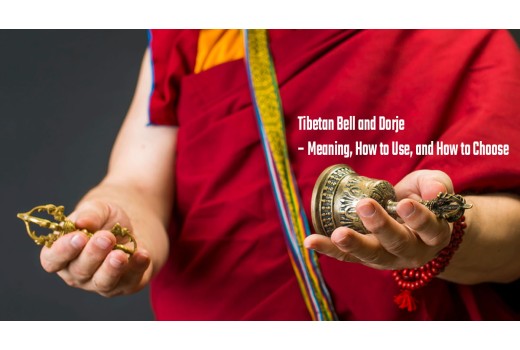
The bell (drilbu) and dorje (vajra) are always used as a pair. The bell represents wisdom; the dorje represents compassionate method — the union of the two is understood in Vajrayana Buddhism as the foundation of awakening. Ringing the bell at the opening of practice produces a sound quite different from the bowl or tingsha: higher, more delicate, with a crystalline quality that cuts through distraction with precision.
A Daily Ritual That Takes Five Minutes
The sacred space only becomes powerful through consistent use. A five-minute opening ritual — practised daily — builds a neurological association between the space and the state of deep presence. Over weeks, you will find that simply entering the space begins to shift your state before you have done anything at all.
Opening Ritual
- Enter your space and sit down quietly.
- Strike your tingshas together once — follow the sound to complete silence.
- Light one stick of incense and set it in the holder.
- Take your mala in your hands and rest them in your lap.
- Strike your singing bowl once — follow the sound completely to silence.
- Begin your practice: meditation, breathwork, mantra, or simply sitting.
Closing Ritual
- Strike your singing bowl once more and follow the sound to silence.
- Strike your tingshas to close the session.
- Bow gently toward your space — a moment of gratitude for the time you gave yourself.
- Leave the space exactly as you found it, ready for tomorrow.
What Should Never Enter Your Sacred Space
The power of a sacred space depends equally on what you keep out. Protect it by keeping the following away:
- Phones and screens — even face-down, they carry the energy of urgency and interruption. Leave them outside.
- Work objects — notebooks, laptops, bills, anything associated with productivity or stress does not belong here.
- Clutter — fewer objects placed with care always create more energetic clarity than many objects placed casually.
- Objects that carry negative associations — anything that reminds you of conflict, unresolved tension, or difficult situations does not serve this space.
Why Authenticity Changes the Entire Experience
There is a meaningful difference between a singing bowl made by a skilled artisan in Kathmandu — hammered by hand, cast from seven traditional metals, selected by a healer for tonal quality — and a machine-made replica purchased from a mass-market supplier. The difference is audible. It is also, for many practitioners, felt.
Authentic Tibetan dharma tools carry the energy of their origin: the artisan's hands, the tradition of their making, the materials sourced from the Himalayan region. When you build a sacred space with genuine tools, you are not just assembling objects. You are placing yourself in relationship with a lineage of practice that stretches back centuries.
Dharma Tool sources every piece directly from skilled artisans in Thamel, Kathmandu — the traditional centre of Himalayan craftsmanship. Each item is healer-selected for quality and authentic provenance, and delivered worldwide via DHL express from Nepal to your door.
Every dharma tool you need — sourced directly from Thamel, Kathmandu
Singing bowls, tingshas, handmade statues, Tibetan incense, prayer beads, prayer wheels, and bell and dorje sets — all handcrafted by traditional Nepali artisans and delivered worldwide with DHL express shipping.
The Space That Makes the Practice Possible
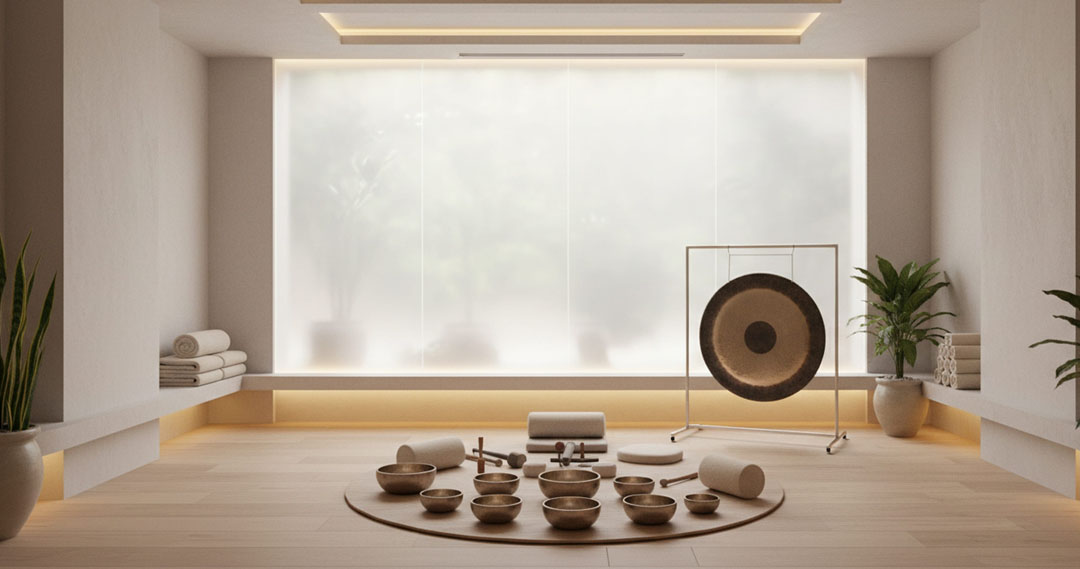
You do not need to be a Buddhist. You do not need a dedicated room. You do not need every object described here. Begin with one — a singing bowl, a stick of incense, a small statue — placed with genuine care and returned to daily. The space will grow as your practice grows, and your practice will grow because the space holds and honours it.
This is the oldest technology for inner life: a corner of the world, set apart, that reminds the mind what it is actually capable of when it stops rushing. Build yours. Return to it. Let it do what it was made to do.
Frequently Asked Questions
Do I need to be Buddhist to build a sacred space with Tibetan dharma tools?
Not at all. While Tibetan dharma tools originate in Buddhist practice, people across all backgrounds — and with no religious affiliation — use them for meditation, sound healing, and creating a calm home environment. The singing bowl, incense, and tingsha work through sound, vibration, and scent — mechanisms that are physiological, not religious. Approach them with respect and genuine intention and they will serve you regardless of your belief system.
How much space do I actually need for a home sacred space?
Very little. A surface as small as 30 cm wide is enough to hold a singing bowl, a small statue, and an incense holder. Many practitioners maintain powerful, consistent practices from a dedicated shelf or a bedside corner. The quality of the space comes from consistency and intention — not from its physical dimensions.
What is the best Tibetan singing bowl for a home meditation space?
For solo home meditation, a handmade singing bowl of 5–7 inches is ideal. This size produces a warm, full tone that sustains well without being overwhelming in a small room. A Full Moon singing bowl offers particularly rich harmonics. If chakra balancing is part of your practice, a 7-piece chakra set covers the full energetic spectrum. The most important factor is that the bowl is genuinely handmade — machine-cast bowls lack the harmonic complexity of hand-hammered instruments.
Where should I place my sacred space in my home?
Choose a quiet area away from your work desk and television — ideally a corner that does not serve any other function. East or north-facing placement is traditional in Himalayan practice, though this is a guideline rather than a rule. Consistency of use matters far more than compass direction.
What is the difference between a tingsha and a singing bowl for meditation?
A singing bowl produces a long, warm, sustained resonance that invites the mind to soften and expand — ideal for the body of a meditation session. A tingsha produces a sharp, penetrating, high-frequency ring that commands immediate attention — ideal for opening and closing practice and clearing a space. Used together, they create a complete sound environment for meditation.
How do I choose a Tibetan statue if I am not familiar with the iconography?
Start with what resonates. Look at the main figures — Shakyamuni Buddha (awakening), Green Tara (compassion and removing obstacles), Medicine Buddha (healing), Chenrezig (loving-kindness) — and notice which draws your gaze. The draw itself is meaningful information. Authentic handmade statues from Nepal carry more presence than mass-produced replicas regardless of which figure you choose.