




You Downloaded the App. You Used It for Three Weeks. Then You Stopped.
If that sounds familiar, you are not unusual. Meditation apps — Calm, Headspace, Insight Timer, and hundreds like them — have collectively been downloaded over 300 million times. Calm alone has been downloaded 140 million times since launch. And yet Calm's subscriber base fell by 500,000 between 2024 and 2025. Headspace has seen consistent download declines since 2018. A significant portion of people who download these apps stop using them within weeks.
This is not a failure of the apps. Headspace and Calm are genuinely well-built products backed by real research. A 2024 study of over 21,000 Headspace users found that 23% reported lower perceived stress. Apps work — for the people they work for. The problem is that a meaningful percentage of people try them, get stuck, quietly conclude that they are simply "not a meditation person," and move on.
Those people are not broken. They have not failed at meditation. They encountered a specific mechanism that does not match how their nervous system operates in that moment — and they never discovered that a completely different mechanism exists.
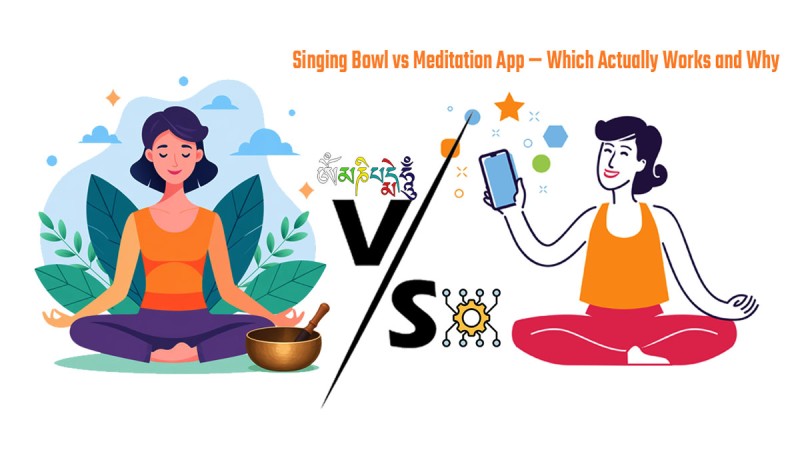
A handmade Tibetan singing bowl is that different mechanism. This article explains exactly why — with honesty, with science, and without dismissing either side.
What Meditation Apps Actually Do — and Why They Work for Some People
Before comparing anything, it is worth understanding what a meditation app genuinely provides — because it is real and it matters.
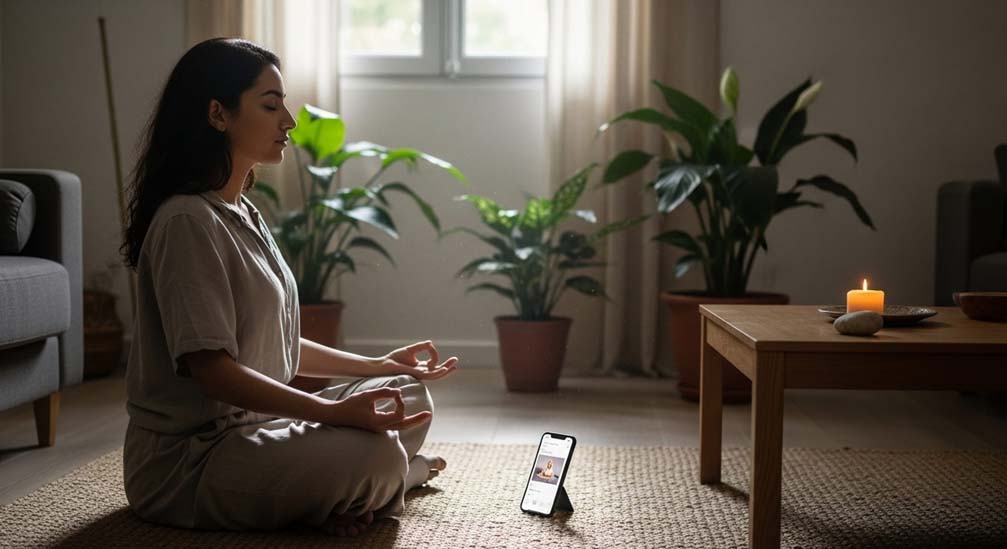
A meditation app delivers guided instruction, structure, and accountability. It teaches you how to direct attention — how to notice when the mind has wandered and how to return it to the breath, the body, or a chosen point of focus. This is a genuine skill, and apps teach it effectively for people who are able to engage with the learning process.
The research confirms this. Studies show that app-based mindfulness meditation can reduce anxiety, improve sleep, and build attention regulation skills over an 8-week training period. The mechanism is cognitive and educational: you learn to observe your mental activity without being controlled by it. Over time — weeks, sometimes months — the skill builds, and with it comes a meaningful reduction in stress and rumination.
Apps also offer something the singing bowl cannot: portability, variety, a community of practitioners, progress tracking, and guided sessions for every conceivable need from sleep to focus to grief to sports performance. For people who respond to instruction and enjoy structured learning, an app is a powerful tool.
The limitation is equally real. The discipline model requires you to do the hard thing first — to direct a dysregulated mind using the very systems that are most dysregulated. In the early weeks of app-based practice, you are asking your mind to control itself. For people whose mental hyperactivity is acute, or whose nervous system is running at high alert, the gap between where they are and where the practice requires them to be can be wide enough that the practice does not stick. The app sits unused. The subscription lapses. The mental loops continue.
What a Tibetan Singing Bowl Actually Does — and Why the Mechanism Is Completely Different
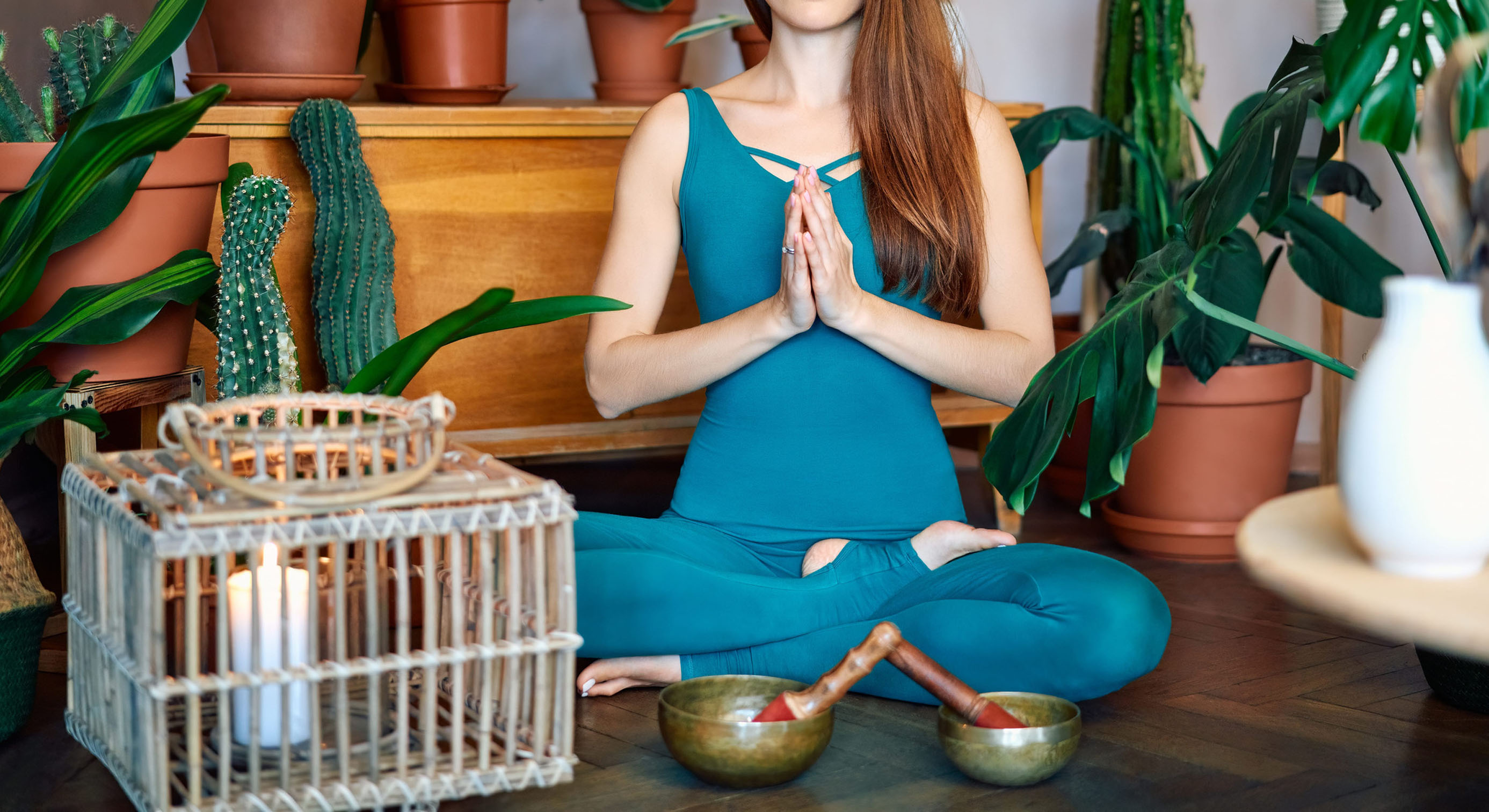
A handmade Tibetan singing bowl does not teach you anything. It does not ask you to direct your attention, notice your thoughts, or practice any technique. It bypasses the cognitive mind almost entirely — and goes directly to the body and nervous system through sound and vibration.
This is not a spiritual claim. It is acoustics and neuroscience.
The Overtone Effect and the Default Mode Network
A genuine handmade singing bowl — cast from a traditional seven-metal alloy and shaped by hand-hammering — produces a spectrally complex sound. Unlike a piano note or a synthesised tone, the overtones of a handmade bowl are not mathematically predictable. They are irregular, overlapping, and continuously evolving as the sound decays. This is the direct acoustic consequence of the asymmetries introduced by hand-hammering: no two strikes produce exactly the same acoustic environment.
Your auditory cortex continuously generates predictions about incoming sound. When those predictions fail — as they do continuously with a handmade bowl — the cortex generates what neuroscientists call prediction errors that demand processing resources. The brain becomes occupied with tracking the sound. And while it is occupied, the Default Mode Network — the neural system responsible for rumination, self-referential thought, anxiety, and mental looping — is suppressed. Not through effort. Not through technique. Through acoustic saturation.
The mind stops narrating because it runs out of processing capacity. This is precisely why people describe the experience of a singing bowl as immediately quieting — the busy mind is not managed, it simply has somewhere better to go.
Physical Vibration and the Parasympathetic Nervous System
A meditation app delivers sound through a phone speaker. The sound enters through the ears and is processed by the auditory system. A singing bowl does something additional: it delivers physical vibration through the air and, when placed near or on the body, directly through tissue and bone. This distinction is fundamental.
Research into vibroacoustic therapy — the therapeutic application of low-frequency vibration to the body — consistently shows that frequencies in the 30 to 120 Hz range activate the parasympathetic nervous system, reducing cortisol levels, lowering heart rate and blood pressure, and shifting brainwave activity from beta (stressed, active) toward alpha (relaxed alertness) and theta (deep meditative rest). These are not effects that require the person to practice anything. They are physiological responses to physical stimulation — the same way the body responds to warmth or touch.
A phone speaker cannot replicate this. No recording of a singing bowl, however high-quality, carries the physical vibration of the actual instrument resonating in the air of your specific room. The app delivers information about the sound. The bowl delivers the sound itself — and the vibration it produces.
The Presence of an Object in the Space
There is a third difference that is rarely discussed but consistently reported by practitioners: the psychological and environmental effect of a physical object in your space. A meditation app lives on the device that also carries your emails, your social media, your work messages, and your notifications. Even in Do Not Disturb mode, the psychological association remains. The phone is the instrument of modern anxiety as much as it is the instrument of modern meditation.
A singing bowl has one purpose. It sits on its cushion on your altar or your desk and it does nothing else. Its presence is itself a reminder — an anchor in the environment that says: this is the time and place to be still. Over weeks and months of daily use, the bowl becomes what psychologists call a context cue — the mind begins to settle in its presence even before it is played.
The Honest Comparison — Side by Side
Where Apps Are Stronger
- Portability: An app works anywhere — on a train, in a hotel, during a lunch break. A singing bowl requires a settled space and a degree of quiet.
- Instruction: Apps teach technique. If you want to understand what you are doing and why, an app gives you a framework. A singing bowl gives you an experience — the understanding must come from elsewhere.
- Variety: Apps offer thousands of guided sessions across sleep, focus, anxiety, relationships, and more. A singing bowl does one thing with extraordinary depth.
- Cost of entry: Most apps offer free content. A quality handmade singing bowl requires an upfront investment. The value over time is different — a bowl lasts decades with no subscription — but the initial barrier is real.
- Community and accountability: Apps track streaks, offer community features, and send reminders. A bowl does not follow up.
Where a Singing Bowl Is Stronger
- No technique required: You do not need to learn anything. You do not need to be a "meditation person." You strike the bowl, follow the sound, and the nervous system responds — because that is simply what nervous systems do with this kind of acoustic input.
- Works when apps don't: For people whose mental hyperactivity is too acute to engage with instruction-based meditation, the bowl provides an alternative entry point. The sound does the work that the mind cannot yet do for itself.
- Physical vibration: Apps cannot replicate the physiological effect of actual vibration moving through the body. This is the core difference for therapeutic application — and it is not a small one.
- No phone required: The bowl is entirely separate from the digital environment. This separation is increasingly valuable as the association between phones and stress becomes more deeply embedded in modern nervous systems.
- Immediate effect: The shift in nervous system state that a singing bowl produces happens within seconds of a single strike. The equivalent shift from app-based meditation typically takes weeks of consistent practice to achieve reliably.
- Longevity and authenticity: A handmade Tibetan singing bowl from Nepal, crafted from seven-metal alloy by skilled artisans, is an object that will outlast any subscription service. It carries the energy of its making, the tradition of its origin, and the physical warmth of something made by human hands.
Find your singing bowl — no subscription, no screen, no technique required
Every Dharma Tool singing bowl is hand-hammered by skilled artisans in Kathmandu from a traditional seven-metal alloy, individually selected by an experienced sound healer for tonal quality and resonance. From Full Moon bowls to Chakra sets, Mantra-carved pieces and custom date-engraved bowls — one object, decades of practice.
Why the App Works for Some People and the Bowl Works for Others — The Nervous System Explanation
The most useful frame for understanding this comparison is not "which is better" but "which mechanism matches this nervous system at this moment in time."
App-based meditation is a cognitive, top-down intervention. It trains the prefrontal cortex — the brain's executive function centre — to regulate the more reactive limbic system. This works well when the prefrontal cortex is sufficiently online to engage with the training. For people in moderate states of stress with enough baseline stability to follow instruction, the discipline builds over time and becomes deeply effective.
Singing bowl therapy is a sensory, bottom-up intervention. It bypasses the cognitive mind and speaks directly to the body's autonomic nervous system through sound and vibration. This works particularly well when the prefrontal cortex is too overwhelmed or dysregulated to engage with instruction — when the person most needs help is precisely when they are least able to follow a guided meditation.
This is why many experienced meditators who already have a strong app-based or sitting practice describe the singing bowl as deepening their practice significantly — adding a dimension of somatic and acoustic experience that purely cognitive methods do not access. And it is why many people who failed repeatedly with apps find that a singing bowl works immediately, without any of the struggle they expected.
The two are not competitors. They are different tools for different moments — and knowing which one you need is itself a form of wisdom.
What the Research Actually Says — No Overclaiming
It is worth being honest about where the research stands, because honesty builds more trust than overclaiming.
For meditation apps, the research base is substantial. A 2020 review examining 28 randomised controlled trials concluded that app-based mindfulness meditation produced moderate positive effects on attention regulation, decentering, and reduction of repetitive negative thinking — with effects persisting 2 to 6 months after the intervention period. A 2024 study of 21,000 Headspace users found 23% reported lower perceived stress. Apps are genuinely evidenced tools for wellbeing.
For singing bowls, the research base is smaller but meaningful. A 2016 study published in the Journal of Evidence-Based Complementary and Alternative Medicine found significant reductions in tension, anxiety, and physical pain following singing bowl sessions — with effects that persisted beyond the session itself. Multiple studies on vibroacoustic therapy confirm the parasympathetic activation effects of low-frequency vibration applied to the body. The acoustic mechanism — how complex harmonic sound suppresses Default Mode Network activity — is grounded in established neuroscience, even if singing bowls specifically have not been the subject of large-scale randomised trials.
Neither the app nor the bowl is a medical treatment. Both are genuine tools for supporting wellbeing, stress reduction, and the cultivation of inner quiet — working through entirely different mechanisms, serving people in different ways.
A Practical Guide — Which One Is Right for You Right Now
Rather than choosing one or the other permanently, consider where you are right now and what you actually need.
Choose an App if:
- You are drawn to structured learning and want to understand the principles of mindfulness meditation
- You travel frequently and need a practice that works in any environment
- You have the bandwidth to follow guided instruction and build a consistent daily habit over weeks
- You want to address specific mental health goals — sleep, anxiety, focus — through a structured programme
- You are on a tight budget and want to begin exploring before making a larger investment
Choose a Singing Bowl if:
- You have tried apps and found that the mental busy-ness makes following instruction difficult or frustrating
- You want an immediate, reliable shift in nervous system state without needing to practice anything first
- You are drawn to a physical, sensory practice rather than a screen-based one
- You want to create a dedicated practice space at home — a corner of your environment that carries meaning and supports stillness
- You are a yoga teacher, sound healer, therapist, or practitioner who wants to deepen the experiential quality of your work with others
- You want a practice tool that does not require a monthly subscription, does not need charging, and will not be discontinued when a company changes direction
Use Both if:
Many of the most consistent meditators use both. The app builds the cognitive framework and the daily habit. The bowl provides the somatic anchor and the immediate sensory entry point. They complement each other more powerfully than either does alone — the bowl can open the space that makes the app's instruction easier to receive, and the app's framework can deepen the understanding of what the bowl is doing.
The singing bowl that works when apps do not — hand-forged, healer-selected, shipped worldwide
Dharma Tool's full moon singing bowl collection includes sizes from 5 inches to 13 inches, Jhumka thick-walled bowls for deep vibroacoustic therapy, custom date-engraved pieces, and professionally tuned 7-Chakra sets. All hand-hammered during Purnima by traditional artisans in Thamel, Kathmandu. DHL express worldwide delivery.
The One Thing Apps Will Never Replicate
Calm has 140 million downloads. Headspace has been downloaded 80 million times. Both generate hundreds of millions of dollars in revenue each year. And both are quietly losing subscribers as their growth plateaus and their downloads decline.
The reason is not that apps are failing. The reason is that an app, however well designed, is software running on a device. It can deliver information, instruction, and recorded sound. It cannot deliver the physical presence of a handmade object — the weight of it in the palm, the warmth of the metal, the particular resonance of this bowl made by these hands in this city in the Himalayas.
A quality singing bowl from Nepal will still be producing the same sound in fifty years. The artisan who made it may well have passed the craft to their children by then. The seven metals will still be vibrating in the same ancient ratios. No update required. No subscription. No algorithm deciding what content serves you best today.
That is not nostalgia. That is a genuinely different relationship with a tool for inner life — one that the app economy, for all its reach and all its research, has not yet found a way to replicate.
Frequently Asked Questions
Is a singing bowl better than a meditation app?
Neither is universally better — they work through completely different mechanisms and serve different people in different moments. A meditation app teaches mindfulness skills through guided instruction, building cognitive regulation over weeks of consistent practice. A singing bowl delivers immediate nervous system regulation through acoustic complexity and physical vibration, requiring no technique or practice. For people who struggle to engage with instruction-based meditation, a singing bowl often works when apps do not. For people who want structured learning and portability, an app is a powerful tool. Many experienced practitioners use both.
Can a singing bowl replace a meditation app?
It can replace the need for an app for many people — particularly those who want an immediate, practice-free route to inner quiet. A singing bowl does not provide guided instruction, progress tracking, or the variety of content an app offers. What it provides is a direct physiological shift in nervous system state through sound and vibration — something no app can replicate regardless of audio quality. Whether it replaces or complements an app depends entirely on what you need from your practice.
Why do meditation apps stop working for some people?
Apps ask you to use your mind to regulate your mind — a top-down cognitive approach that works well when the nervous system has enough baseline stability to engage with instruction. For people experiencing acute stress, mental hyperactivity, or states of high overwhelm, the gap between where they are and where the practice requires them to be can be too wide to bridge. This is not a personal failure. It is a mechanism mismatch. A singing bowl offers a bottom-up alternative — working through the senses and the body rather than through cognitive effort, making it effective precisely when instruction-based methods are hardest to engage with.
Does a recording of a singing bowl in an app have the same effect as a real bowl?
No — and the reason is acoustic, not spiritual. A recording captures the sound of a singing bowl but not its physical vibration. The therapeutic benefits of a singing bowl include not only the auditory experience but the actual vibration moving through the air and, when the bowl is near or on the body, through tissue and bone. This vibroacoustic component activates the parasympathetic nervous system in ways that listening alone cannot achieve. Additionally, a recording compresses and standardises a sound that in reality is constantly evolving and acoustically irregular — it is precisely this irregularity that engages the brain's prediction systems and suppresses rumination.
What is the best singing bowl for someone who has been using meditation apps?
For someone coming from app-based meditation who wants to add a physical, somatic dimension to their practice, a medium handmade singing bowl of 5 to 7 inches is an excellent starting point. It produces a warm, sustained tone that complements a sitting practice without requiring any new technique. A Full Moon singing bowl in this size range offers the richest harmonic profile. For practitioners who want to go deeper into body-based vibroacoustic work, a larger bowl of 9 to 13 inches — including the Jhumka thick-walled range — produces significantly deeper physical vibration suited to more intensive therapeutic practice.
Do I need to choose between a singing bowl and a meditation app?
Not at all. The most effective approach for many people is to use both: the app for building the cognitive framework and daily consistency, and the singing bowl for the sensory, somatic entry point that makes the app's instruction easier to receive. Begin a session with the bowl — one clear strike, followed in silence — and then move into guided meditation. The bowl opens the space. The app provides the structure. Together they create a practice that is both grounded and progressive.