




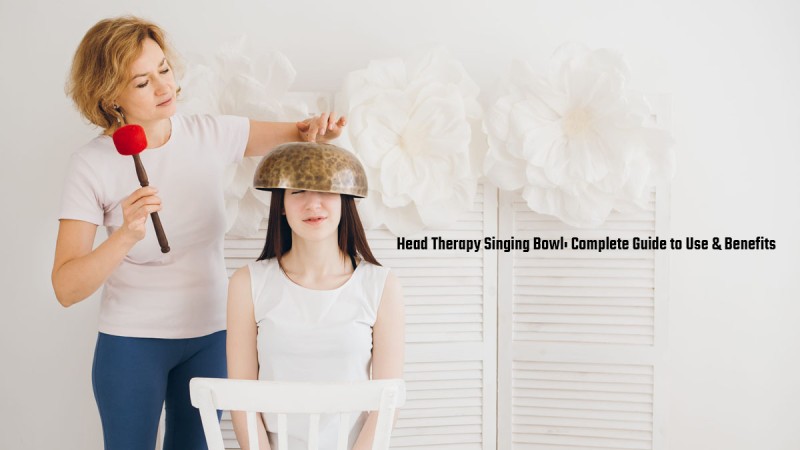
When the Mind Carries More Than It Was Built to Hold
There is a specific kind of exhaustion that no amount of sleep fixes. The body rests, but the mind does not. The head carries the weight of every unresolved thought, every unanswered question, every tension the day left behind — and by morning, it has barely moved. Millions of people recognise this experience. Far fewer know that there is a tool, rooted in over a thousand years of Himalayan healing practice, that addresses it directly: the head therapy singing bowl.
This is not a metaphor. The head therapy singing bowl is a specific category of large, thick-walled Tibetan singing bowl — selected and sized precisely for placement on or near the head and upper body during a sound healing session. When struck and placed correctly, the bowl's deep low-frequency vibration travels through the skull and into the brain itself, producing measurable physiological changes in the nervous system that no amount of conscious effort can replicate.
This guide covers everything — what a head therapy bowl is, how it works, the science behind it, how to use one correctly, who it is designed for, and how to choose the right size and finish for your practice. Whether you are a sound healing professional, a yoga teacher, or someone who simply wants to understand what this instrument can do for them — read this fully before making any decision.
What Is a Head Therapy Singing Bowl — The Exact Definition
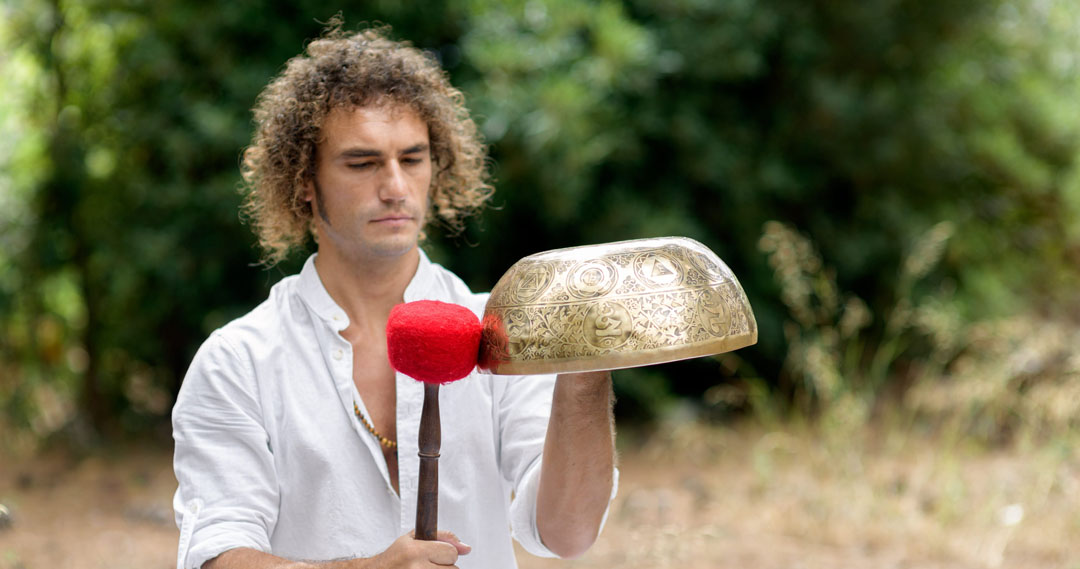
A head therapy singing bowl is a large-diameter Tibetan singing bowl — typically 11, 12, or 13 inches — crafted from a traditional seven-metal alloy and selected specifically for its ability to produce deep, sustained low-frequency vibrations suited to cranial sound therapy. The bowl is either placed directly on top of the head (when the recipient is seated) or held close to the head and struck, allowing the vibration to enter through the cranium and resonate through the skull, jaw, neck, and upper spine.
The term "head therapy" in this context refers to the bowl's therapeutic application — not simply that it is played near the head, but that its specific acoustic profile is calibrated to interact with the structures of the head, neck, and upper nervous system in ways that smaller bowls cannot achieve. The size determines the depth of the fundamental frequency. The wall thickness determines the intensity and duration of the vibration. Both must be right for the therapy to work as intended.
At Dharma Tool, head therapy bowls are offered in 11, 12, and 13-inch diameters, in three finishes — Golden (DIM), Antique (Tiger Eye), and Full Moon — with individual chakra note selection across all seven chakras. This level of specificity is itself meaningful: it reflects the depth of the tradition from which these instruments come.
The Science — Why Vibration Applied to the Head Works
To understand why head therapy singing bowls produce the effects they do, it helps to understand what the head actually is from a vibrational perspective — and why it is uniquely receptive to sound therapy.
The Skull as a Resonance Chamber
The human skull is not a solid mass. It is a complex, multi-layered structure of bone plates, fluid-filled cavities, sinuses, and membrane systems — the dura mater, arachnoid, and pia mater — that surround and protect the brain. This architecture makes the skull an exceptional resonance chamber. Sound vibrations that enter through the cranium do not simply stop at the bone — they travel through the cerebrospinal fluid that bathes the brain and spinal cord, creating a whole-system vibratory experience that practitioners describe as feeling the sound from the inside out.
Vibroacoustic Effect on the Nervous System
Research into vibroacoustic therapy — the therapeutic application of sound vibration directly to the body — has produced consistent findings across multiple studies. Low-frequency vibrations in the range of 30 to 120 Hz have been shown to activate the parasympathetic nervous system, reducing cortisol levels, lowering heart rate and blood pressure, and shifting brainwave activity from beta (active, stressed) toward alpha (relaxed awareness) and theta (deep meditative and pre-sleep) states. A 2016 study published in the Journal of Evidence-Based Complementary and Alternative Medicine documented significant reductions in tension, anxiety, and physical pain following singing bowl sessions — with participants noting effects that persisted well beyond the session itself.
A large head therapy singing bowl, struck and placed near or on the head, delivers vibration at exactly the frequencies most associated with these parasympathetic responses. The skull's direct conduction of sound to the cerebrospinal fluid amplifies this effect beyond what simple listening to the bowl's sound achieves.
The Crown and Third Eye Chakra Connection
In Tibetan healing tradition, the head is the seat of the Crown Chakra (Sahasrara) and the Third Eye Chakra (Ajna) — the two energy centres associated with spiritual connection, intuition, mental clarity, and the integration of higher awareness into lived experience. These are also the chakras most commonly blocked or overactivated in people experiencing mental fatigue, anxiety, overthinking, disconnection from purpose, and what modern psychology calls rumination.
Head therapy with a singing bowl tuned to the A note (Third Eye) or B note (Crown) is understood in Himalayan practice as directly addressing the energetic root of these experiences — not symptom by symptom, but at the level of the energy centre itself. The vibrational frequency of the bowl resonates with the specific frequency of the chakra, encouraging it to return to its natural, balanced state.
Who Is a Head Therapy Singing Bowl For
The head therapy singing bowl is a professional-grade instrument with a wide range of legitimate applications. Understanding whether it is the right tool for your situation is important before investing in one.
Sound Healing Practitioners and Therapists
For professional sound healers, the head therapy bowl is often the most transformative instrument in their collection. Placed on a seated client's head or held just above the crown during a lying-down session, the bowl's vibration penetrates deeply into the cranial structure, producing states of profound relaxation that clients consistently describe as unlike anything they have experienced before. Many practitioners report that a single well-executed head therapy session with a quality 12 or 13-inch bowl produces deeper shifts than entire sound bath sessions using smaller instruments.
Yoga Teachers and Meditation Facilitators
For yoga teachers who incorporate sound healing into their classes — particularly during savasana — a head therapy bowl provides an anchor point for the closing practice that goes beyond atmosphere. The deep vibration at the end of a physical practice, when the body is already open and receptive, creates conditions for integration of the session at a cellular level that students carry with them long after leaving the studio.
Personal Practice — Dedicated Meditators
For experienced individual practitioners, a head therapy bowl used in solo practice — struck and held near the crown while seated in meditation — creates an immediate deepening of the meditative state that would otherwise take considerably longer to achieve through breath and stillness alone. It is particularly effective for practitioners who struggle with the mental hyperactivity that makes entering deep meditation difficult.
Wellness Professionals — Reiki, Massage, Craniosacral Therapists
Practitioners of Reiki, craniosacral therapy, and somatic bodywork increasingly integrate head therapy singing bowls into their sessions, using the vibration to complement their hands-on work. The bowl's ability to directly address the cranial system makes it a natural partner for therapies that already work with the head, neck, and cerebrospinal fluid systems.
How to Use a Head Therapy Singing Bowl — Step by Step
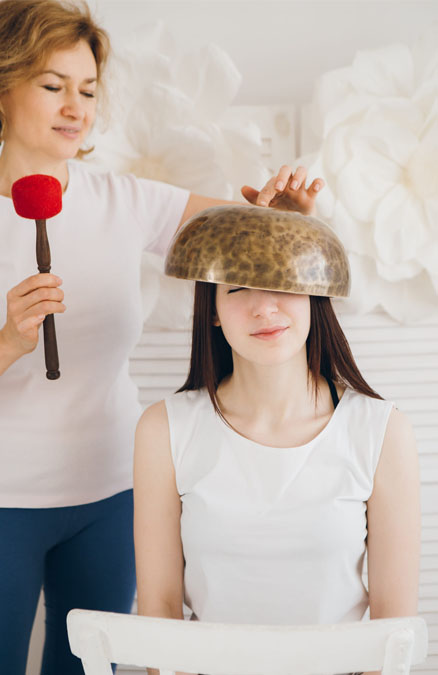
Correct technique is essential with a head therapy bowl — not because incorrect use is dangerous, but because the bowl's full therapeutic potential is only realised when it is used with precision and awareness.
For Seated Head Placement — Practitioner to Client
- Position the recipient comfortably seated in a chair with an upright but relaxed spine. Their shoulders should be dropped and their jaw soft. Ask them to close their eyes and take three slow breaths before you begin.
- Hold the bowl with your non-dominant hand using a flat, open palm beneath the base. Never grip the sides of the bowl — this dampens vibration significantly. The bowl should rest entirely on your palm.
- Strike the bowl once on its side with the padded mallet before placing it, allowing the recipient to hear and feel the vibration approaching. This prepares the nervous system to receive rather than react.
- Lower the bowl gently onto the crown of the head — flat base down, with your palm still beneath it for additional cushioning. The bowl should rest with its full weight on the head, supported by your palm from below.
- Strike again gently once the bowl is placed. The vibration will move directly through the skull. Observe the recipient's breathing and expression — most people immediately deepen their breath as the vibration enters.
- Allow full sustain before striking again. A quality 12-inch head therapy bowl will sustain for 30 to 45 seconds or more. Do not rush. Strike again only when the vibration has almost fully faded.
- Three to five strikes is typically sufficient for a single head placement. Then lift the bowl slowly, allow one full breath of silence, and move to the next position — shoulders, upper back, or back to sound bath work.
For Solo Personal Practice
- Sit comfortably in meditation posture — cross-legged or in a chair, spine upright.
- Hold the bowl on your flat palm beneath the base.
- Strike once and bring the bowl slowly toward the crown of your head without placing it — hold it approximately 5 to 8 centimetres above the crown and allow the vibration to radiate downward into the skull.
- Follow the sound completely to silence before striking again.
- After three to five strikes, lower the bowl to your lap and sit in the silence that follows. This silence is as important as the sound itself — it is the space in which the nervous system integrates what it has received.
11, 12 and 13-inch head therapy bowls — choose your size, finish, and chakra note
Dharma Tool's Master Healing Head Therapy Bowl is available in Golden (DIM), Antique (Tiger Eye), and Full Moon finishes. Select your diameter, your chakra note from Root to Crown, and optional carry bag. Hand-crafted in Kathmandu from seven-metal alloy. From $214.99 with worldwide DHL express delivery.
Choosing the Right Size — 11, 12, or 13 Inches
The size of the head therapy bowl is not a matter of preference — it directly determines the frequency range and physical intensity of the vibration. Choosing correctly requires understanding what each size produces and who it is best suited for.
11-Inch Head Therapy Bowl
The 11-inch bowl produces a rich, deep tone that is powerful enough for effective head therapy while remaining accessible for practitioners who are newer to working with large bowls. The vibration is strong and sustained without being overwhelming — making it an excellent entry point for therapists beginning to integrate head therapy into their practice, and the most comfortable size for clients who are sensitive or new to body-placement sound work. Priced from $199.99.
12-Inch Head Therapy Bowl
The 12-inch bowl represents the sweet spot of the head therapy range — deep enough to produce significant physical vibration through the cranial structure, large enough to cover the crown with its rim, and manageable enough to hold steadily for the duration of a full session. Most experienced sound healers who work with clients regularly choose the 12-inch as their primary head therapy instrument. The sustain is longer, the harmonic complexity is greater, and the depth of client response is consistently more pronounced than with the 11-inch. From $214.99 to $229.99 depending on finish.
13-Inch Head Therapy Bowl
The 13-inch bowl is the most powerful instrument in the head therapy range — producing the deepest fundamental frequency, the longest sustain, and the most intense physical vibration of the three sizes. It is the instrument of choice for experienced practitioners working with clients who have high levels of physical tension, chronic stress, or who require the deepest possible therapeutic impact. It requires a steady, experienced hand to use correctly, and its size makes it less practical for practitioners who travel between locations. From $239.99.
Understanding the Three Finishes — Golden, Antique, and Full Moon
The finish of a head therapy bowl is more than aesthetic — each finish reflects a distinct making process that influences both the visual character of the bowl and, according to Himalayan tradition, the energetic quality it carries.
Golden Finish (DIM)
The DIM finish produces a warm, golden surface that reflects light with a soft lustre. This finish is achieved through a traditional polishing process that gives the bowl a clean, contemporary appearance while maintaining the acoustic integrity of the handmade instrument. It is the most visually neutral of the three finishes — allowing the bowl's sound and size to speak for themselves without additional symbolic layering. A strong choice for practitioners who work in modern clinical or therapeutic settings where an understated aesthetic is appropriate.
Antique Finish (Tiger Eye)
The Tiger Eye finish gives the bowl a richly textured, aged surface — darker in tone, with the natural variation of a bowl that appears to carry the patina of long use. This finish is achieved through a traditional process that creates depth and visual warmth in the surface of the metal. Many practitioners find that the Antique finish creates a stronger sense of connection to the Himalayan tradition — the bowl looks and feels like an instrument with history. A natural choice for practitioners who work in sacred or spiritual healing contexts where the depth of the tradition is part of the therapeutic experience.
Full Moon Finish
The Full Moon head therapy bowl adds an additional $20 to the base price and represents the highest tier of the range. As with all Dharma Tool full moon bowls, this version is hand-hammered specifically on the night of Purnima — the full moon — when Himalayan tradition understands the metal to be at its most receptive to the lunar energy present at that time. Experienced practitioners who work at the deepest levels of sound healing consistently choose the Full Moon finish for their primary head therapy instrument, citing the richer harmonic complexity and the deeper client responses they observe compared to standard finish bowls of the same size.
Chakra Note Selection — Which Note Is Right for Head Therapy
One of the distinctive features of the Dharma Tool head therapy bowl is the ability to select your bowl's tuned note from across all seven chakra frequencies. This allows practitioners to choose the specific energetic intention of their bowl — not just a generic "large bowl" but an instrument calibrated to a specific energy centre.
- A note — Third Eye Chakra (Ajna): The most commonly chosen note for head therapy. Associated with intuition, mental clarity, insight, and the quieting of mental hyperactivity. Directly addresses the most common presenting challenges in modern sound healing clients — overthinking, anxiety, mental fatigue, and disconnection from inner knowing.
- B note — Crown Chakra (Sahasrara): The highest note in the chakra system, associated with spiritual connection, transcendence of ego, and the integration of higher awareness. Chosen by practitioners who work with clients at the deepest levels of spiritual healing or transformation.
- G note — Throat Chakra (Vishuddha): Sometimes chosen for head therapy work that also addresses the neck, jaw, and throat — areas where chronic tension is commonly held. The G note's vibration in a large bowl creates strong resonance through the jaw and neck structures that can release physically held tension in these areas.
- F note — Heart Chakra (Anahata): An unexpected but increasingly popular choice for head therapy, particularly for practitioners working with grief, emotional closure, or the integration of emotional experience. The heart chakra note in a large head therapy bowl creates a quality of warmth and openness that clients consistently describe as deeply comforting.
Explore the complete full moon collection — including the 12-inch full moon head therapy bowl
From palm-size 4-inch bowls to large 12-inch full moon head therapy bowls and the 7-Chakra Full Moon Set — every bowl is hand-forged during Purnima by traditional artisans in Kathmandu and shipped worldwide via DHL express.
Important Contraindications — When Not to Use a Head Therapy Bowl
A head therapy singing bowl is a powerful vibrational instrument. Used correctly, it is deeply beneficial. Used without awareness of contraindications, it can cause discomfort or be inappropriate for certain individuals. Any responsible practitioner must be aware of the following:
- Epilepsy or seizure disorders: The strong vibrational stimulation of a head therapy bowl should not be used with clients who have epilepsy or a history of seizure disorders. The cranial vibration can in rare cases trigger neurological responses in sensitive individuals.
- Recent head injury or concussion: Allow a minimum of six to eight weeks recovery after any head injury before using a head therapy bowl. The cranial structures are still healing and additional vibrational stimulation is contraindicated during this period.
- Metal implants in the head or neck: Plates, screws, or other surgical implants in the cranial or cervical region are a contraindication for direct bowl placement. Sound bath work at a distance remains appropriate.
- Severe tinnitus: The high volume and strong vibration of a large head therapy bowl near or on the head can temporarily exacerbate tinnitus in sensitive individuals. Screen for this condition before proceeding and use only at a distance if present.
- Pregnancy: While sound bath work is generally considered safe during pregnancy, direct head placement with a large bowl should be avoided due to the strong physical vibration it produces.
- Active migraines: A head therapy bowl should never be used during an active migraine episode. Wait until the episode has fully resolved before offering any form of cranial sound therapy.
Caring for Your Head Therapy Bowl
A quality head therapy singing bowl, properly cared for, will serve your practice for decades. The care it requires is simple and takes less than two minutes after each session.
- Clean after each use: Wipe the interior and exterior of the bowl with a soft, dry cloth after each session — particularly if the bowl has been placed on the head, where natural oils from the hair and scalp will transfer to the metal. This prevents tarnish and preserves both the appearance and the acoustic quality of the surface.
- Store on its cushion ring: Never store the bowl directly on a hard surface. The cushion ring that comes with the bowl protects the base and prevents vibration-damping contact with hard surfaces.
- Avoid sudden temperature changes: Do not move the bowl from a cold environment to a hot one rapidly. Metal expands and contracts with temperature — sudden changes can stress the alloy over time.
- Handle the mallet with care: The padded mallet is as important as the bowl itself. Keep it clean and dry. Replace it when the padding begins to compress or harden — a degraded mallet produces inferior sound and transmits less vibration.
- Never use chemical cleaning products: Water and a soft cloth are all that are needed. Chemical cleaners can damage the metal's surface and alter its acoustic properties.
The Bowl That Works While the Mind Rests
There is something quietly extraordinary about the head therapy singing bowl — the fact that it does what it does without requiring anything from the recipient except the willingness to receive. No focus required. No technique to learn. No belief system to adopt. The vibration enters through the bone, travels through the fluid, moves through the tissue, and the nervous system responds — because that is simply what nervous systems do when they encounter the right frequency delivered in the right way.
This is ancient knowledge expressed through a very old craft. The artisans who hammer these bowls in Kathmandu — working the seven-metal alloy into shape with hands that have done this work for years, in some cases for a lifetime — understand what they are making. Not just a musical instrument. Not just a decorative object. A therapeutic tool of genuine power, designed to meet the mind at its most burdened and offer it something it cannot give itself.
That is worth understanding before you choose. And once understood, worth choosing well.
Frequently Asked Questions
What is a head therapy singing bowl and how is it different from a regular singing bowl?
A head therapy singing bowl is a large-diameter Tibetan singing bowl — typically 11, 12, or 13 inches — specifically selected for its ability to produce deep, sustained low-frequency vibrations suitable for placement on or near the head during sound healing sessions. Unlike smaller bowls used for meditation or chakra balancing, head therapy bowls are calibrated for direct cranial application — their size, wall thickness, and tonal depth are chosen to transmit vibration through the skull and into the cerebrospinal fluid system, producing a whole-system neurological response that smaller instruments cannot achieve.
Is it safe to place a singing bowl directly on the head?
Yes — when done correctly and with awareness of contraindications. The bowl is placed flat-base-down on the crown of the head, supported by the practitioner's palm beneath it. The vibration that travels through the skull is gentle and deeply beneficial for the vast majority of people. However, head therapy bowls should not be used with clients who have epilepsy, recent head injuries, metal cranial implants, severe tinnitus, active migraines, or who are pregnant. For all other individuals, the therapy is considered safe and deeply restorative when practised with proper technique.
Which size head therapy singing bowl should I choose — 11, 12, or 13 inches?
The 11-inch bowl is best for practitioners new to head therapy and clients who are sensitive to strong vibration. The 12-inch is the most versatile and most commonly chosen by experienced sound healers — deep enough for significant therapeutic impact, manageable enough for extended use. The 13-inch produces the deepest fundamental frequency and most intense vibration, suited to experienced practitioners working with clients who require the maximum therapeutic depth. If you are unsure, the 12-inch is the strongest recommendation for most practice contexts.
Which chakra note should I choose for a head therapy singing bowl?
The A note (Third Eye Chakra) is the most commonly chosen for head therapy — it directly addresses mental clarity, intuition, and the quieting of mental overactivity. The B note (Crown Chakra) is chosen for the deepest spiritual work. The G note (Throat Chakra) is effective when the session also addresses jaw and neck tension. The F note (Heart Chakra) is increasingly chosen by practitioners working with grief and emotional integration. Your choice should reflect the primary intention of your work with clients.
What is the difference between the Golden, Antique, and Full Moon finishes?
The Golden (DIM) finish is clean and contemporary — warm in tone, understated in appearance, suited to modern therapeutic settings. The Antique (Tiger Eye) finish is richly textured and aged in character — deeply connected visually to the Himalayan tradition, suited to sacred or spiritual healing contexts. The Full Moon finish adds $20 to the base price and represents the highest tier — the bowl is hand-hammered specifically on the night of the full moon, a practice believed in Himalayan tradition to imbue the instrument with heightened lunar energy and resulting in a richer harmonic profile consistently noted by experienced practitioners.
Can I use a head therapy bowl for personal meditation without a practitioner?
Yes. For solo practice, hold the bowl on your flat palm, strike it once, and hold it approximately 5 to 8 centimetres above the crown of your head while seated in meditation — allowing the vibration to radiate downward through the skull without resting the full weight of the bowl on your head. Follow the sound to complete silence before striking again. Three to five strikes, followed by a period of still silence, constitutes a complete solo head therapy practice. It is one of the most effective tools available for deepening meditation and quieting mental hyperactivity.