




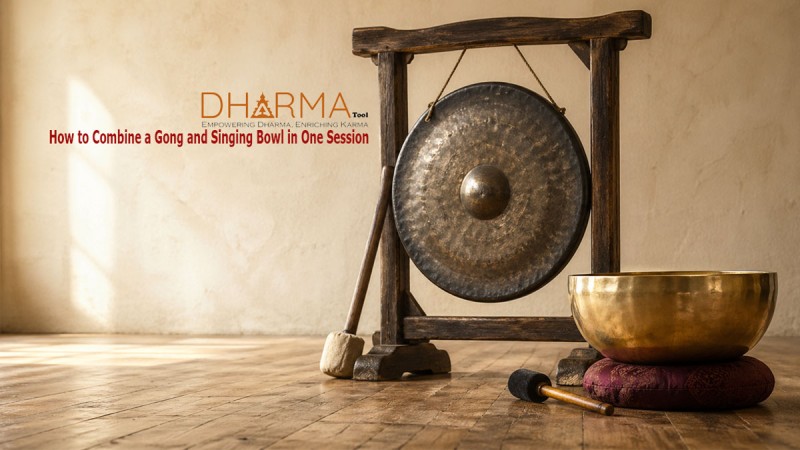
Two Instruments. One Session. A Completely Different Experience.
A singing bowl and a Tibetan gong are not the same instrument played at different volumes. They are fundamentally different sound tools — working through different acoustic mechanisms, reaching the nervous system through different pathways, and producing different physiological and energetic effects on the people in the room. Used separately, each one is powerful. Used together in the same session, with the right sequence and the right understanding of what each instrument does, they create a sound environment that neither can produce alone.
This is the guide that most practitioners never find — not because the knowledge does not exist, but because it lives inside professional training programmes that cost thousands of dollars and require attendance in person. The principles of combining a Tibetan gong and a singing bowl effectively are not secrets. They are practical, learnable, and available to any practitioner willing to understand why each instrument does what it does before deciding how to use them together.
This guide covers the acoustic difference between the two instruments, the specific role each plays in a combined session, the sequence and timing that experienced practitioners use, how to set up your space for both instruments simultaneously, and the complete session structure — from opening to closing — for both one-to-one therapeutic work and group sound baths. Whether you are a professional sound healer building your practice or a serious practitioner deepening your personal work, this is the guide you have been looking for.
Why These Two Instruments Work So Well Together — The Acoustic Explanation
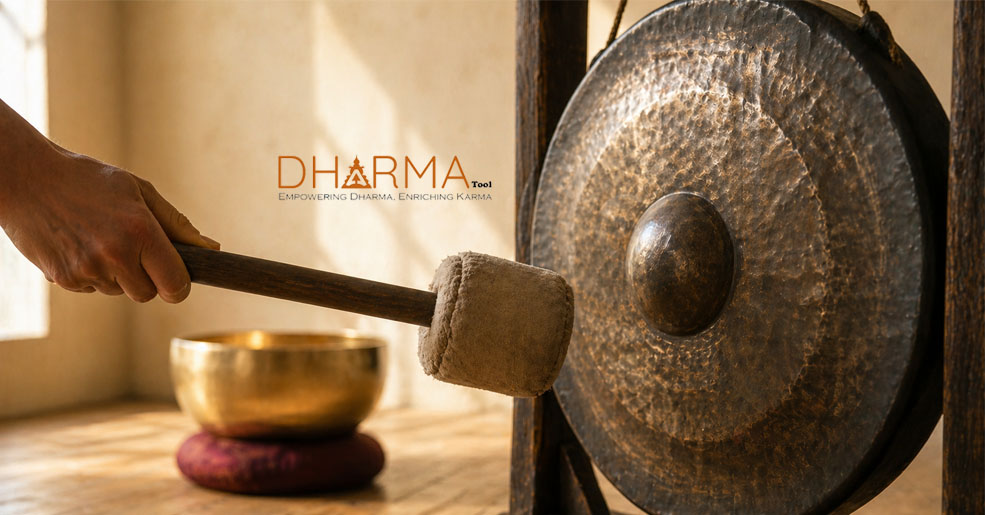
Before understanding how to combine a gong and a singing bowl, it is essential to understand why they complement each other so specifically. The answer is acoustic — and once understood, it makes every practical decision about combining them feel obvious rather than arbitrary.
What a Singing Bowl Does Acoustically
A handmade Tibetan singing bowl produces a focused, sustained, harmonically complex tone. When struck, it generates a fundamental frequency — the primary note the bowl is tuned to — plus a series of overtones that rise simultaneously and evolve as the sound decays. These overtones are not mathematically predictable because the hand-hammering process introduces asymmetries into the metal that create acoustic irregularity. The result is a sound that the brain's auditory cortex keeps tracking — keeps being surprised by — through the entire duration of the sustain.
The singing bowl's acoustic signature is specific, directional and focused. It rises from a single point, fills the space with a cone of complex harmonics, and fades in a controlled, predictable arc. Its primary effect on the nervous system is through sustained, layered acoustic engagement — the brain tracks the sound, the Default Mode Network quiets, and the parasympathetic system activates. The singing bowl produces a state of meditative absorption — the mind has something rich enough to rest in.
What a Gong Does Acoustically
A Tibetan gong works in a completely different way. Where the singing bowl produces a focused, rising tone that decays gradually, the gong produces an expanding wave of broad-spectrum sound that begins complex and becomes more complex as it develops. The gong's initial strike is not its full statement — the sound grows after the mallet contact, expanding outward in concentric waves of frequency that fill the room not from a single point but from every direction simultaneously as the sound reflects off walls, floor and ceiling.
The gong's frequency range is much broader than a singing bowl — spanning multiple octaves simultaneously rather than the singing bowl's focused fundamental with its specific overtone series. This broad-spectrum quality means the gong reaches multiple body systems at once — different frequencies resonating with different organs, tissue types, and energy centres simultaneously. The gong does not ask the mind to track something. It overwhelms the analytical mind entirely — creating what practitioners describe as a sonic immersion that bypasses conscious processing and speaks directly to the body and the deeper nervous system.
Why Together They Create Something Neither Does Alone
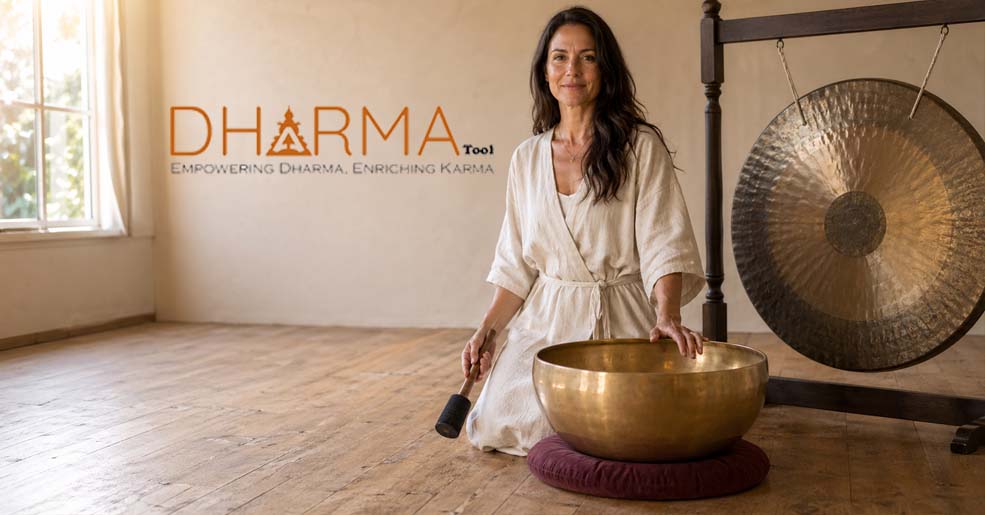
The singing bowl focuses. The gong saturates. The singing bowl produces sustained meditative absorption — a specific quality of inner quiet achieved through acoustic engagement. The gong produces dissolution — the collapse of ordinary mental processing under a wave of broad-spectrum sound that is too large and too complex for the analytical mind to track.
In a well-structured combined session, the singing bowl creates the conditions of receptivity — opens the nervous system into a state of parasympathetic relaxation and meditative focus — and the gong then works within that already-open state to produce its deeper effects. The bowl prepares the ground. The gong works the ground. The bowl then closes the space — returning the nervous system to a state of integrated calm rather than leaving it in the open, expanded state the gong creates.
This is the fundamental sequence logic of every well-designed combined session: bowl — gong — bowl. Open, immerse, close. Prepare, transform, integrate.
Understanding the Role of Each Instrument in a Combined Session
With the acoustic logic understood, the practical roles of each instrument in a combined session become clear and specific.
The Singing Bowl — Three Distinct Roles
In a combined session, the singing bowl serves three distinct functions depending on where in the session it is used:
Opening role — space preparation and nervous system entry: The singing bowl at the opening of a session is the instrument of invitation. Its focused, sustained tone creates the first acoustic environment of the session — establishing the quality of sound the participants will inhabit and signalling the transition from ordinary activity to sacred or therapeutic space. The bowl's tone is specific enough for the mind to settle into — unlike the gong, which at the opening of a session would be overwhelming rather than inviting. Three to five slow, deliberate strikes of the bowl, with full sustain between each, create the container within which the rest of the session will unfold.
Transition role — between instruments and states: During the session, the singing bowl functions as a bridge — the instrument played in the spaces between gong sections to allow the nervous system to process what it has received, to settle the expanded state the gong creates into something more focused and integrated, and to re-establish the quality of conscious presence before the next wave of gong sound arrives. A practitioner who moves directly from one gong strike to the next without singing bowl intervals creates a session that can become overwhelming — the nervous system needs moments of focused, specific sound to process the broad-spectrum immersion of the gong.
Closing role — integration and return: The singing bowl at the close of a session is the most important use of all. The gong leaves the nervous system in an open, expanded, somewhat undefined state — participants are deeply relaxed but not yet fully integrated. The singing bowl's focused tone draws the expanded awareness back to a specific point — provides something for the returning consciousness to land on. Three slow strikes of the singing bowl, followed by complete silence, followed by three more — this closing sequence is the difference between participants who leave a session feeling integrated and grounded and those who leave feeling floaty or disoriented.
The Gong — The Central Transformative Instrument
The gong in a combined session is the central transformative instrument — the element that produces the deepest shift in nervous system state, the most significant energetic clearing, and the experience participants most commonly describe as the defining moment of the session. It is not played continuously. It is used deliberately and sparingly — with long silences between strikes to allow the full acoustic expansion of each wave to develop and fade before the next is introduced.
A common practitioner error is to play the gong too continuously — to fill the silence with sound rather than allowing the silence itself to be part of the instrument's effect. The gong's silence after a strike is as important as the strike itself. The sound expands, reaches its peak complexity, and then fades — and as it fades, something happens in the nervous system that the sound itself only initiates. The integration happens in the silence. A practitioner who plays the next gong strike before the previous one has fully resolved is cutting short the most important part of the instrument's effect.
Buddha Carved, Dragon Etched, Green Tara, Chau Gong, Flower of Life and Extra Large Temple Gong — all handmade in Kathmandu
Every Tibetan gong in the Dharma Tool collection is hand-forged by skilled artisans in Thamel, Kathmandu from the traditional seven-metal alloy. Each design carries specific symbolic meaning — from the Buddha Carved gong for compassion-centred healing to the Dragon Etched gong for transformation and the Extra Large Temple Gong for ceremonial and retreat use. Custom gongs also available. DHL express worldwide delivery direct from Nepal.
Setting Up Your Space for Both Instruments
The physical arrangement of gong and singing bowl in the session space is not a minor detail — it directly affects how the sound from each instrument moves through the room and reaches the participants.
Positioning the Gong
The gong should be positioned at one end of the session space — typically behind the practitioner's primary working position — and suspended freely from a stand that allows the full disc to vibrate without dampening contact with any surface. The height of the gong should allow the practitioner to strike it comfortably at the centre without extending or bending — a natural, relaxed striking arm position produces the most controlled and intentional strike.
The gong faces the participants — its open face directed into the room so the expanding wave of sound travels directly toward those lying or seated in the session. Placing the gong to the side or with its face directed away from participants significantly reduces the directional quality of the sound and wastes the acoustic energy of each strike.
Positioning the Singing Bowls
In a combined session, the practitioner typically works with two to four singing bowls — a primary large bowl (10 to 13 inches) for opening and closing the session, and one or two medium bowls (7 to 9 inches) for transition work between gong sections. The bowls should be placed on their cushions within easy reach of the practitioner's working position — close enough that moving between gong and bowl does not require significant physical repositioning, which interrupts the flow of the session.
For group sound baths, a large standing singing bowl (15 inches and above) placed at the front of the session space beside the gong creates a powerful paired presence — both instruments visible to participants before the session begins. The visual presence of the instruments before sound is introduced sets the energetic intention of the space.
The Practitioner's Position
The practitioner should be able to move between gong and singing bowl without turning their back on participants. A semicircular arrangement — gong behind and to one side, bowls in front and to the other side — allows this movement naturally. The practitioner faces participants throughout the session, reading their state and adjusting the sequence accordingly.
The Complete Combined Session — Structure and Timing
The following session structure is appropriate for both one-to-one therapeutic work and group sound baths of up to twenty participants. Timing is approximate and should be adjusted based on the practitioner's reading of the room — the depth of relaxation visible in participants is always the primary guide.
Pre-Session — Space Preparation (5 minutes before participants arrive)
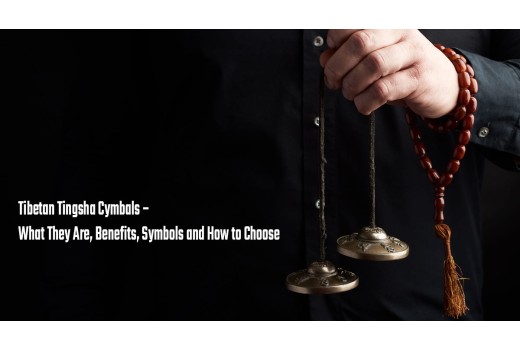
Before any participant enters the session space, the practitioner strikes the gong once — lightly, with a soft mallet — and allows the sound to fill and clear the room. This is not a therapeutic strike. It is a space-clearing strike — the gong's broad-spectrum vibration moving through the room to shift the acoustic and energetic quality of the space from ordinary to sacred. A single strike of a tingsha at each corner of the room can follow — the tingsha's bright, penetrating tone clearing residual energy from the edges of the space. Allow the room to settle into silence before participants enter.
Opening — Singing Bowl Only (5 to 8 minutes)
Participants are settled — lying on mats in a sound bath, or seated in a one-to-one session. The practitioner strikes the primary large singing bowl once. No instruction. No narration. Simply the sound, filling the space, inviting the nervous system to begin its shift.
Allow complete sustain — the full decay of each tone before the next strike. In a group session, observe the collective breathing of participants. The moment breathing begins to slow and deepen across the group is the signal that the nervous system has begun its shift into parasympathetic mode. This typically occurs within three to five strikes of a quality large singing bowl. Do not rush this phase. The opening bowl work creates the receptive state that makes everything the gong does more effective. A session that moves to the gong before this receptive state is established will produce a more jarring, less integrated experience for participants.
After five to eight minutes of bowl work — typically eight to twelve slow strikes with full sustain between each — allow thirty seconds of complete silence. This silence is the threshold. On the other side of it, the gong begins.
First Gong Section — Arrival (8 to 12 minutes)
The first gong section is the arrival — the introduction of the gong's broad-spectrum sound into the receptive space the singing bowl has created. The first strike should be gentle — lighter than the practitioner's instinct suggests. The nervous systems in the room have been softened by the bowl work. A sudden, heavy gong strike at this point would be a shock rather than an invitation.
Begin with soft, slow strikes — allowing each wave to fully expand and fade before introducing the next. Gradually increase strike intensity over the first three to four minutes as the room deepens into the gong's sound. By the midpoint of this section, the strikes can be full and deliberate — the full weight of a padded mallet contacting the centre of the gong disc and allowing the arm to follow through without pulling back.
The gong mallet technique matters enormously. A strike that pulls back immediately produces a bright, somewhat thin tone. A strike that follows through — allowing the mallet to rest momentarily against the disc after contact before withdrawing — produces a fuller, deeper tone with more sustained low-frequency content. Experienced gong practitioners develop a feel for this contact point — the specific moment of mallet-to-disc contact that produces the richest possible activation of the instrument.
Allow sixty to ninety seconds between strikes throughout this section. The temptation to fill silence with more sound is the practitioner's most common error in gong work. The silence is not empty. It is full of the processing that the nervous system is doing with what it has just received.
Singing Bowl Transition (3 to 5 minutes)
After the first gong section, the practitioner moves to the singing bowl — a medium bowl in the 7 to 9-inch range. Three to five slow strikes. The contrast between the gong's broad saturation and the bowl's focused specificity is immediately felt in the room. Participants who have been immersed in the gong's expanding wave will feel the bowl's tone as a gathering — a drawing together of the expanded awareness into a more specific point of focus. This transition is not a rest. It is an integration — the nervous system processing and absorbing what the first gong section initiated.
Second Gong Section — Deepening (10 to 15 minutes)
The second gong section is where the deepest therapeutic work of the session occurs. Participants have been prepared by the opening bowl work, immersed by the first gong section, and partially integrated by the transition bowl work. They are now in the most receptive state they will reach in the session.
The practitioner has full range of gong technique available in this section — from the softest brushing stroke of the mallet across the disc surface (producing a shimmering wash of high-frequency sound) to the heaviest deliberate strike of the full session (producing the deepest low-frequency wave). Varying technique within this section — alternating between soft and firm, between centre strikes and edge strokes — creates a dynamic acoustic environment that continuously shifts and surprises the nervous system, preventing it from habituating to the sound and beginning to re-engage analytical processing.
Watch participants throughout. Deeply relaxed, integrated participants will show specific physical signs — jaw softened and dropped, hands open and loose, breath slow and even, eyes still beneath closed lids. A participant who is frowning, whose hands are clenched, or whose breathing is shallow and fast has not yet surrendered to the sound. Softer, slower gong work for such participants — the nervous system is resisting, and more intensity will increase resistance rather than dissolve it.
Singing Bowl Transition (3 to 5 minutes)
A second transition bowl section — slightly longer than the first — brings the session toward its close. The practitioner uses the primary large singing bowl now, not the medium bowl. The larger bowl's deeper, more grounded tone begins drawing the expanded awareness downward — from the open, expanded state the gong has produced toward the body, the floor, the physical present moment. This is the beginning of the return.
Closing — Singing Bowl and Silence (5 to 8 minutes)
The closing section of a combined session is entirely singing bowl — no more gong. Three slow strikes of the large bowl. Silence. Three more strikes. Silence. Allow the final tone to decay completely and remain in the silence for at least sixty seconds before speaking or moving. This closing silence is held by the practitioner with full attention and intention — a quality of presence that participants feel even without seeing it.
The practitioner's first words after this silence should be soft, unhurried, and practical — an invitation to begin returning to the room, to move fingers and toes, to take a deeper breath. Not a directive. Not a rush. The words are the final instrument of the session — and their quality should match the quality of everything that preceded them.
Tibetan gongs and singing bowls — both handmade in Nepal, both available from Dharma Tool direct
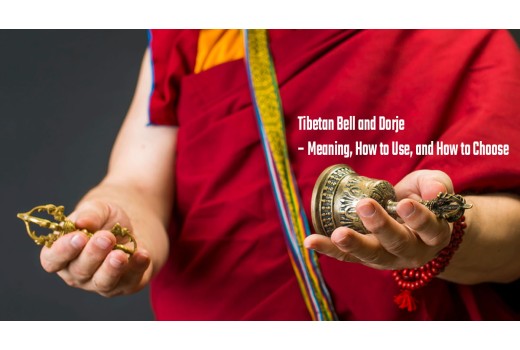
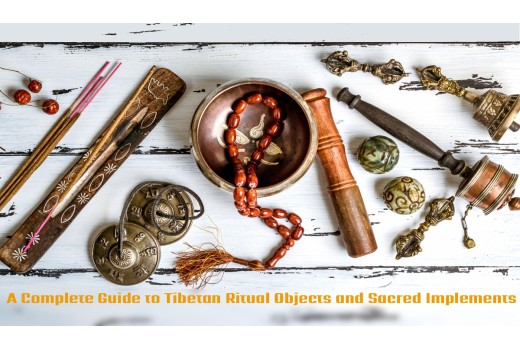
Dharma Tool is one of the few sources where both Tibetan gongs and singing bowls are available from the same Nepal-based supplier — hand-forged by artisans in Thamel, Kathmandu, individually selected for tonal quality and shipped worldwide via DHL express. Add a tingsha for space clearing and a bell and dorje for ceremonial opening and closing — the complete sound healing toolkit from one source.
Adapting the Structure — One-to-One vs Group Sessions
One-to-One Therapeutic Sessions
In a one-to-one session, the practitioner has direct access to the specific needs and responses of a single client. The combined gong and singing bowl session can be adapted more fluidly — with the practitioner reading the client's nervous system state moment by moment and adjusting instrument, intensity, and timing accordingly.
For one-to-one work, the head therapy singing bowl can be incorporated into the session — placed near or on the crown during the singing bowl sections to deliver direct cranial vibration while the gong work opens the broader energy field. This combination — gong for full-field clearing, head therapy bowl for focused cranial vibroacoustic work — produces a depth of therapeutic effect that neither instrument achieves in isolation.
The timing of gong sections in one-to-one work is typically shorter than in group sessions — five to eight minutes per section rather than ten to fifteen. The proximity of a single client to the gong means the acoustic intensity is significantly higher than in a group setting, and the nervous system reaches its maximum receptive state more quickly.
Group Sound Baths
Group sound baths present the practitioner with the challenge and the privilege of working with multiple nervous systems simultaneously — each at a different baseline, each responding at a different rate. The session structure described above is designed for groups — with longer sections, more gradual intensity build, and extended transition periods to allow the full range of nervous system states in the room to settle before the next section begins.
For groups larger than fifteen participants, a second singing bowl — ideally a large standing singing bowl of 15 inches or above — placed at the far end of the room from the gong creates a more even distribution of singing bowl vibration across the entire session space. The practitioner alternates between the two bowls during transition sections — the combined effect of two large bowls resonating simultaneously producing a fuller, more room-filling harmonic environment than a single bowl can achieve.
Choosing the Right Gong and Bowl Combination
Not all gongs and singing bowls work equally well together. The relationship between the two instruments' tonal centres — not necessarily tuned to the same note, but harmonically related — determines whether the combined sound feels integrated or discordant. Here is practical guidance on choosing instruments that complement each other:
- Size relationship: The gong should be at least twice the diameter of the primary singing bowl used in the same session. A 20-inch gong paired with a 10-inch singing bowl creates a natural acoustic contrast — the gong's broad saturation and the bowl's focused specificity are clearly differentiated, and the two instruments occupy distinct acoustic spaces rather than competing. A gong and bowl that are too similar in size produce sounds that blur together rather than complementing each other.
- Tonal relationship: A gong and singing bowl do not need to be tuned to the same note — in fact, an exact match can create an uncomfortable acoustic interference. The most effective pairings are instruments whose tonal centres sit a perfect fourth or fifth apart — musically harmonious intervals that create a sense of resolution when heard together. If you are purchasing both instruments from the same source, ask specifically about harmonic compatibility.
- The Buddha Carved Gong with a Full Moon singing bowl: One of the most frequently chosen combinations by Dharma Tool practitioners — the Buddha Carved Gong carries the intention of compassion and awakening, while the Full Moon singing bowl carries the lunar ceremonial energy of Purnima forging. Together they create a session environment that is both deeply therapeutic and symbolically coherent.
- The Extra Large Temple Gong with an antique Jambati bowl: For experienced practitioners working at the deepest levels of sound healing, this combination — a large ceremonial gong paired with a genuine antique Jambati singing bowl — produces the most acoustically mature and therapeutically profound combination available. Both instruments carry centuries of tradition in their metal. The session they create together cannot be replicated with newly made instruments of equivalent size.
Common Mistakes — What Experienced Practitioners Avoid
- Moving to the gong too quickly: The singing bowl opening section is not optional. Practitioners who are excited about the gong — who want to get to the main event — skip or rush the bowl opening and find that the gong's effect is less deep, less integrated, and more jarring for participants. The bowl creates the receptivity that makes the gong work. Give it the time it needs.
- Playing the gong continuously: The silence between gong strikes is not dead time. It is processing time. Filling it with more sound prevents integration and eventually overwhelms the nervous system to the point of distress rather than deepening. Sixty to ninety seconds between strikes is a minimum, not a maximum.
- Forgetting the closing bowl work: A session that ends with the gong leaves participants in an open, undefined state. Some will find this pleasant. Many will find it disorienting. The closing singing bowl section is the most important professional courtesy a practitioner can offer — it brings the expanded awareness back to a specific, grounded point before the session ends.
- Striking the gong at maximum intensity from the first strike: The gong's power is cumulative. Beginning at full intensity from the first strike has nowhere to go — the session peaks immediately and the rest of it is maintenance rather than progression. Beginning softly and building gives the session arc, direction, and the quality of journey that participants remember and return for.
- Neglecting the practitioner's own state: Both the gong and the singing bowl respond to the quality of attention with which they are played. A distracted strike produces a different sound from a fully intentional one — measurably so. The practitioner's own nervous system state in the session directly affects the quality of the sound they produce and the quality of the healing environment they create. Arriving at a session in a regulated, grounded, present state is not a spiritual luxury. It is a professional requirement.
Frequently Asked Questions
Do I need a specific type of gong to combine with a singing bowl?
Any genuine handmade Tibetan gong can be combined with a singing bowl effectively — the key is the size relationship and tonal compatibility between the two instruments. The gong should be significantly larger than the primary singing bowl (at least twice the diameter) so the two instruments occupy distinct acoustic spaces rather than competing. Within the Dharma Tool collection, the Buddha Carved Gong, Dragon Etched Gong and Green Tara Carved Gong all work exceptionally well alongside the Full Moon singing bowl range — their broad-spectrum tonal quality complements the singing bowl's focused harmonics naturally.
What size singing bowl works best alongside a gong?
For combined gong and singing bowl sessions, the most effective bowl sizes are 9 to 13 inches for the primary opening and closing bowl, and 7 to 9 inches for transition work between gong sections. The larger bowl's deep, sustained tone creates the most effective contrast with the gong's broad saturation and is the most grounding instrument for the closing section of the session. The medium bowl's brighter tone during transitions helps re-engage focused awareness without the heaviness of the large bowl.
How long should a combined gong and singing bowl session be?
A complete combined session — opening bowl work, first gong section, transition, second gong section, transition, closing bowl work — runs approximately 45 to 75 minutes. Shorter sessions of 30 to 45 minutes are appropriate for one-to-one therapeutic work where the practitioner has direct control of pacing. Group sound baths benefit from the longer format — 60 to 75 minutes — which allows the full session arc to develop without rushing any section. Sessions shorter than 30 minutes do not allow sufficient time for the complete bowl-gong-bowl sequence to be effective.
Can I use multiple singing bowls alongside the gong?
Yes — and in professional sound bath settings, multiple singing bowls used during the opening, transition and closing sections significantly enrich the harmonic environment. A chakra set of singing bowls, played sequentially from root to crown during the opening section, creates a complete energetic preparation before the gong begins. Two large bowls during the closing section — played in alternation — produces a fuller, more room-filling harmonic field than a single bowl can achieve. The gong section itself remains singular — one gong, played with full attention — the multiple bowls are used before and after.
Is there a risk of overwhelming clients with both instruments in one session?
The risk of overwhelm comes from poor sequencing rather than from the instruments themselves. A session that moves to the gong before the singing bowl has established parasympathetic receptivity, or that plays the gong too continuously without integration pauses, can be overwhelming for sensitive clients. Following the bowl-first, silence-between-strikes structure described in this guide eliminates this risk for the vast majority of participants. For clients with a history of trauma, sensory sensitivity, or strong anxiety, begin with a singing bowl-only session and introduce the gong in subsequent sessions once trust and nervous system safety are established.
What is the difference between using a gong and a large singing bowl for the same purpose?
A large singing bowl and a gong both produce deep, room-filling sound — but through fundamentally different acoustic mechanisms with different therapeutic effects. A large singing bowl produces a focused fundamental tone with evolving overtones that create meditative absorption — the mind has something specific to rest in. A gong produces a broad-spectrum expanding wave that overwhelms analytical processing and creates sonic immersion — the mind cannot track the sound and surrenders to it. For space clearing and energetic clearing, the gong is more effective. For focused meditation and chakra work, the singing bowl is more precise. In a combined session, each does what the other cannot.