




Why Water Moves in a Singing Bowl
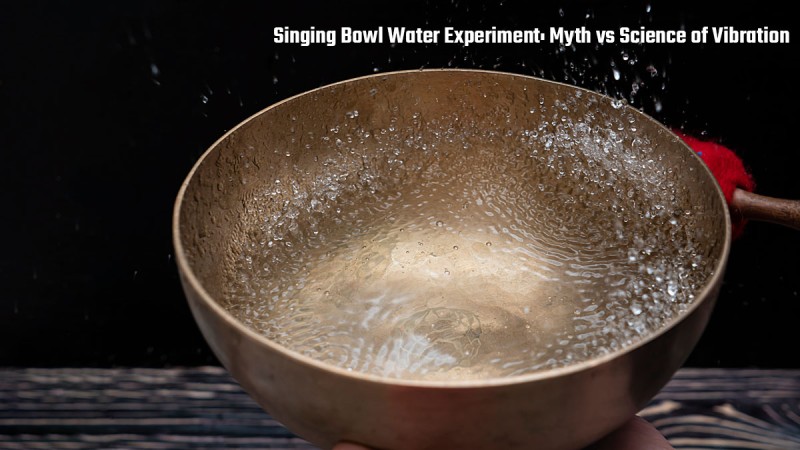
The singing bowl water experiment has become a popular demonstration in meditation centers, yoga studios, and online videos. When a small amount of water is placed inside a singing bowl and the bowl is played with a mallet, the water begins to ripple, vibrate, and sometimes even jump out of the bowl. To many viewers this looks mysterious, and some believe it is a spiritual or mystical reaction.
In reality, the movement of water inside the bowl is a fascinating example of vibration and resonance. The bowl’s metal body vibrates when it is struck or rubbed with a mallet, and these vibrations transfer directly into the water. The water simply makes the invisible vibrations visible.
This is one of the reasons why Tibetan singing bowls continue to captivate people around the world. They do not only produce calming tones used in meditation and yoga, but they also demonstrate how vibration moves through matter.
What Is the Singing Bowl Water Experiment?
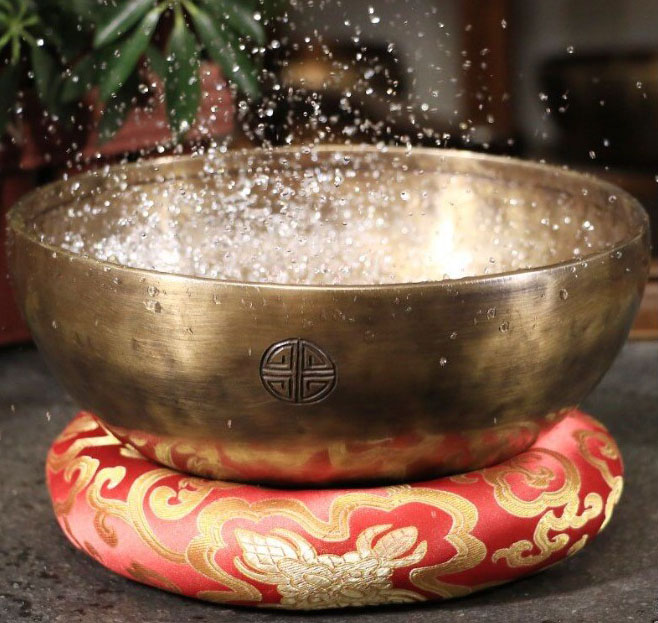
The experiment itself is very simple. A small amount of water is poured into a singing bowl. The bowl is then played either by striking it or by running a mallet around the rim. As the bowl begins to resonate, the water surface starts forming gentle ripples.
If the bowl is played with steady pressure and the vibration becomes stronger, the ripples grow into larger wave patterns. Eventually, tiny droplets may jump upward or splash against the rim. This dramatic effect is what makes the demonstration so popular.
The Myth: Water Reacts to Spiritual Energy
Many explanations online suggest that the water is responding to spiritual energy or healing frequencies produced by the singing bowl . Some people claim the experiment proves how sound healing affects the body’s energy field or chakra system.
While singing bowls are indeed used in meditation, mindfulness practices, and sound therapy sessions, the visible movement of water in this experiment is not caused by mystical forces. The effect can be fully explained through the physical process of vibration.
The Science: Vibration and Resonance
When a singing bowl is struck or played with a mallet, the metal begins to vibrate. These vibrations create waves that travel through the bowl and into anything touching it. When water is inside the bowl, the vibration transfers directly into the liquid.
This interaction creates patterns and waves on the water’s surface. As the vibration becomes stronger, the water receives more energy and begins to move more dramatically. In some cases, droplets are pushed upward by the vibrating surface of the bowl.
This process is known as resonance. The bowl vibrates at specific frequencies, and those vibrations push and pull on the water surface, producing the visible movement.
Why the Water Sometimes Jumps
The famous jumping water effect depends on several factors. Not every bowl will produce the same dramatic movement. The result depends on how the bowl is played and the physical characteristics of the bowl itself.
- The strength of the vibration created by the player
- The size and thickness of the singing bowl
- The amount of water placed inside the bowl
- The playing technique used while circling the rim
- The type of mallet used
Larger bowls with strong resonance often produce more dramatic water movement, while smaller bowls may create only gentle ripples.
Does Water Change the Sound of the Bowl?
Adding water slightly changes the tone of a singing bowl. Water absorbs some of the vibration, which can soften the sound and slightly alter the pitch. Because of this, most meditation practitioners prefer to play singing bowls without water during sound healing sessions.
The water experiment is mainly used as a demonstration because it allows people to see how vibration behaves.
A Beautiful Demonstration of Invisible Energy
The singing bowl water experiment shows something remarkable: vibration can shape and move matter. Normally we can hear vibration but cannot see it. The water simply reveals what is already happening inside the bowl.
For many people, this demonstration deepens their appreciation for singing bowls. It shows that these ancient instruments are not only tools for meditation but also fascinating examples of how vibration works in the physical world.
Frequently Asked Questions
Why does water move in a singing bowl?
Water moves in a singing bowl because of vibration. When the bowl is struck or played around the rim, the metal vibrates. These vibrations transfer into the water, creating ripples, waves, and sometimes droplets that jump upward.
Is the singing bowl water experiment spiritual?
The visible movement of water is explained by physics and vibration. However, many people still use the demonstration symbolically during meditation or sound healing to illustrate how vibration can influence the body and mind.
Can any singing bowl create the jumping water effect?
Not every singing bowl will produce dramatic water movement. The result depends on the bowl’s size, thickness, playing technique, and the amount of water inside the bowl. Larger bowls with strong resonance tend to create stronger water movement.
Does water change the sound of a singing bowl?
Yes. Adding water slightly dampens the vibration of the bowl and can soften or lower the tone. Because of this, most meditation practitioners prefer to play singing bowls without water during sound healing sessions.
How much water should be used in the experiment?
Only a small amount of water is needed—usually enough to cover the bottom of the bowl. Too much water will reduce the vibration and prevent the water from moving dramatically.
What type of mallet works best for the water experiment?
A wooden or leather-covered mallet usually works best. These mallets help create strong and steady vibrations, which are necessary to produce visible water movement.