





Fact Check: How Do Pets React to Singing Bowl Sound and Vibration?
Singing bowls are widely used for meditation, relaxation, and sound healing. Their deep, resonant tones are known to create a calming atmosphere for people—but what about pets?
Many pet owners notice their dogs or cats becoming calm, curious, or quietly attentive when a singing bowl is played. Some pets move closer, while others simply rest nearby. But is this a real reaction, or just something we assume?
In this fact-check article, we explore how pets actually react to singing bowl sound and vibration, what may influence their response, and how to use a singing bowl around animals in a safe and thoughtful way.
Explore Handmade Tibetan Singing Bowls
If you are looking for authentic handmade singing bowls for meditation, relaxation, and daily practice, explore our collection of Tibetan singing bowls made in Nepal.
Do Pets Like Singing Bowl Sounds?
Some pets do seem to respond positively to the gentle tones of singing bowls. They may relax, sit quietly, or observe the sound with curiosity. In calm surroundings, the steady resonance may appear soothing.
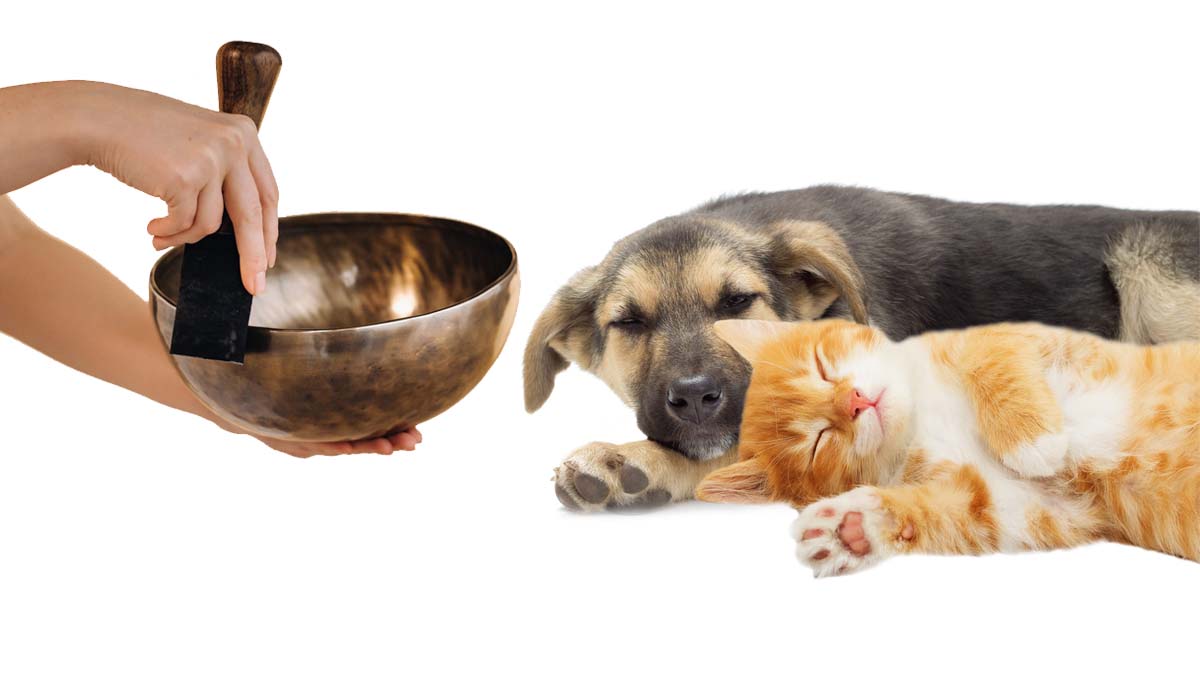
However, not all pets react the same way. While some seem comfortable with the sound, others may ignore it or move away. Their response can depend on personality, hearing sensitivity, environment, and how the sound is introduced.
How Pets React to Singing Bowl Sound and Vibration
Animals, especially dogs and cats, have much more sensitive hearing than humans. This means they may not only hear a singing bowl more intensely, but also notice the vibration more strongly.
Singing bowls produce both audible sound and subtle resonance. These vibrations move through the air and nearby surfaces, which may explain why some pets become alert, curious, or calm when a bowl is played softly.
At the same time, a pet’s stronger hearing also means that a sound humans find gentle may still feel too sharp or unusual to them. That is why their body language matters more than assumptions.
Dogs and Cats May Respond Differently
Dogs often respond with curiosity. If the sound is soft and steady, they may remain nearby, lie down, tilt their head, or quietly observe what is happening. Some dogs seem more relaxed when the environment is peaceful and predictable.
Cats are usually more selective. Some may approach the bowl out of curiosity, especially if it is played softly. Others may leave the room if the vibration feels unfamiliar or too strong. This difference does not mean one species likes singing bowls more than the other—it simply shows that each animal has its own comfort threshold.
When Singing Bowls Can Feel Calming to Pets
Singing bowls are most likely to feel calming when they are played gently, in a quiet room, and from a respectful distance. A low, smooth tone may blend into the environment rather than dominate it.
Pets that already feel safe in their space may respond more calmly than pets that are anxious, overstimulated, or startled by new sounds. Familiarity also matters. A pet that hears the bowl occasionally and in a peaceful context may be more comfortable than one exposed to it suddenly or at close range.
Create a Personalized Singing Bowl Inspired by Your Pet
You can make your singing bowl even more meaningful by requesting custom engraving. Add your pet’s name, a symbolic design, or even a special image inspired by your companion to create a bowl that feels truly personal.

A personalized singing bowl can become more than a meditation tool—it can be a tribute, a memory, or a calming object that reflects the bond you share with your pet.
When Singing Bowl Sounds May Cause Stress
Not every reaction to a singing bowl is positive. If the bowl is struck too hard, played too close, or produces a sharp high tone, some pets may become uncomfortable.
Common signs of stress may include moving away, flattening ears, pacing, hiding, barking, or showing agitation. These responses are important signals that the sound may be too intense for that particular animal.
If a pet chooses to leave, that should be respected. A singing bowl should never be forced into a pet’s environment in a way that removes their sense of choice.
How to Use a Singing Bowl Safely Around Pets
If you want to use a singing bowl around your pet, begin gently. Keep the volume low, maintain some distance, and avoid striking the bowl suddenly near the animal.
Let your pet decide whether to stay or move away. Watch their body language closely. Calm curiosity is a good sign, while tension or avoidance suggests the session should stop or be adjusted.
The safest approach is to treat singing bowl sound as part of the shared environment, not as something directed at the pet.
So, Do Pets Really Like Singing Bowl Sounds?
Some pets do seem to enjoy the soft, calming atmosphere created by gentle singing bowl sounds, while others may feel neutral or uncomfortable. There is no universal reaction.
The most accurate answer is that pets respond individually. A singing bowl can feel soothing to some animals when played softly and respectfully, but it can also feel overstimulating if introduced the wrong way.
The best approach is simple: observe your pet, keep the sound gentle, and let their response guide the experience.
Frequently Asked Questions
Do pets like singing bowl sounds?
Some pets appear to enjoy soft singing bowl sounds, especially in calm environments. Others may ignore the sound or move away. Their reaction depends on their personality, sensitivity, and comfort level.
Can singing bowls calm dogs and cats?
They can help create a peaceful atmosphere, and some dogs or cats may seem calmer when the sound is gentle. However, not every pet responds the same way.
Why do pets react strongly to singing bowls?
Dogs and cats have much more sensitive hearing than humans. They may detect both the tone and the vibration more intensely, which can make their reaction more noticeable.
Can singing bowl vibration bother pets?
Yes. If the sound is too loud, sharp, or close, some pets may feel stressed or uncomfortable. That is why it is important to keep the sound soft and observe their behavior.
Is it safe to use a singing bowl near pets?
Yes, if it is done gently. Keep the sound low, allow distance, and let your pet choose whether to stay nearby. Never force them to listen.
Can I personalize a singing bowl with my pet’s name or image?
Yes. A personalized singing bowl can be engraved with your pet’s name, a meaningful symbol, or a custom image, making it a special piece for meditation, memory, or personal connection.