




How to commission a singing bowl, and what to decide before you do
Most people buy a singing bowl the way they buy anything else: they look at what is in stock and pick the one they like.
There is another way, and it is older. You decide what you want the bowl to be — its note, its size, its finish, what is written on it — and someone in Kathmandu hammers it for you. It takes longer, and the result is a bowl that exists because you asked for it.
This is a guide to making those decisions well, whoever you eventually commission it from.
What does a custom singing bowl actually mean?
It means the bowl does not exist yet.
An artisan begins with a disc of the seven-metal alloy, heats it, and hammers it into shape — hundreds of blows, checking the tone by ear as the walls thin. The note emerges from the shaping rather than being applied afterwards.
That is why a commissioned bowl takes weeks rather than days, and why the person making it needs to know your note before they start. You are not choosing from a shelf; you are giving instructions to a smith.
Which note should you choose?
This is the decision that matters most, and there are two sensible ways to make it.
If this is your first bowl, choose A or B. In this tradition those two are the universal bowls — playable for any person and any chakra, which is why healers keep them for general work. Our lesson on the universal bowls explains why, and it is the safest first commission by a wide margin.
If you already know what you are working on, choose that chakra. Root C for grounding, sacral D for creative and emotional flow, solar plexus E for confidence, heart F for compassion, throat G for expression, third eye A for insight, crown B for stillness.
If you are unsure, the chakra quiz takes two minutes, and the chakra and note reference lists every note with its frequency.
Not sure yet? The free course covers all seven notes, what each is for, and why A and B are treated differently — before you commit to a commission.
Does size change the note?
Yes, and this is the part people are rarely told.
A bigger bowl gives a lower, longer note. A smaller bowl gives a higher, brighter one. The wall length and mass decide the pitch, which is why the root bowl in any chakra set is the largest and the crown bowl is the smallest.
So when you choose a six-inch bowl in C and a fourteen-inch bowl in C, you are not choosing the same note in two sizes. You are choosing C in two different octaves. Both are correct, and they sound very different — the small one bright and quick to fade, the large one deep and long.
If you want the low, room-filling C that people imagine when they think of a root bowl, you need size as well as note. That is worth knowing before you order a six-inch bowl and wonder why it sings higher than you expected.
Which size should you choose?
| Diameter | Character | Best for |
|---|---|---|
| 5–8 inches | Clear and bright, shorter sustain | Personal meditation, altar work, small rooms, travelling, work near the head |
| 9–11 inches | Balanced, good sustain | Yoga, chakra practice, one-to-one sessions, most home use |
| 12–15 inches | Deep and immersive, long sustain | Sound baths, group sessions, floor placement, sound massage |
A practical note: a large bowl is heavy, and it is not one you will carry to a class. Many practitioners end up with one large bowl that stays at home and one small bowl that travels.
Does the finish change the sound?
Barely. Finish is mostly a visual decision, and anyone telling you a polished bowl sounds meaningfully different from a matte one is overstating it.
What it changes is how the bowl looks in your room, which matters more than people admit — an instrument you like looking at is one you pick up more often.
- Golden or dim finish — softly textured and matte, the most traditional look.
- Antique or tiger-eye finish — hand-aged to earth tones, so a new bowl that looks old.
- Shining finish — polished and reflective, which brings out the hammer marks. Studio and ceremonial spaces suit this best.
What is a full moon singing bowl?
A bowl forged on the night of a full moon, which happens once a lunar cycle.
The tradition holds that lunar energy at that time gives the metal a purer resonance. We are not going to tell you the moon changes the alloy — that is not a claim anyone can support, and this site has made a habit of not making claims it cannot support.
What is true is more interesting than that. The bowl was made on a particular night, in a particular place, by people who treated the making as a ceremony rather than a shift. Meaning attaches to objects through what we know about them, and knowing when yours was made is not nothing.
If that speaks to you, it is a good reason to choose one. If it does not, an ordinary commissioned bowl will sound just as good — and you should not be talked into paying for a story you do not believe.
What is the full moon date engraving?
This is the version we find most defensible, because it turns the story into a record.
The exact lunar date the bowl was forged is engraved into the metal. Not a decoration — a provenance mark, of the kind you would expect on any handmade instrument. It states when the thing was made, and it can be checked.
Because forging happens once a cycle, if your size and note are not in stock the bowl is made on the next full moon and engraved with that date. You wait for the moon, which is an unusual thing to do in a world of next-day delivery, and probably good for you.
Should you have it blessed by a monk?
That depends entirely on what you believe, and we are not going to make the case either way.
The blessing involves mantra recitation, incense and intention-setting before the bowl is dispatched. For some people it is the reason they are buying at all. For others it is an add-on they will never think about again.
Our honest suggestion: choose it if it means something to you, and skip it if it does not. A blessed bowl does not sound different, and nobody should feel they are getting a lesser instrument without it.
What can you have engraved on it?
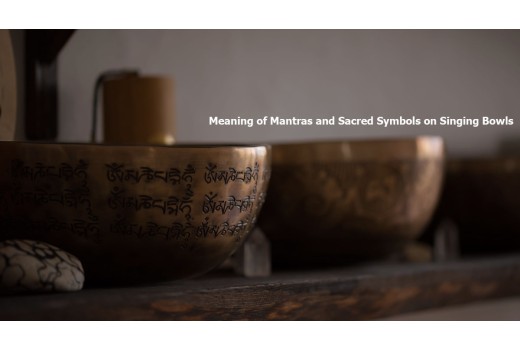
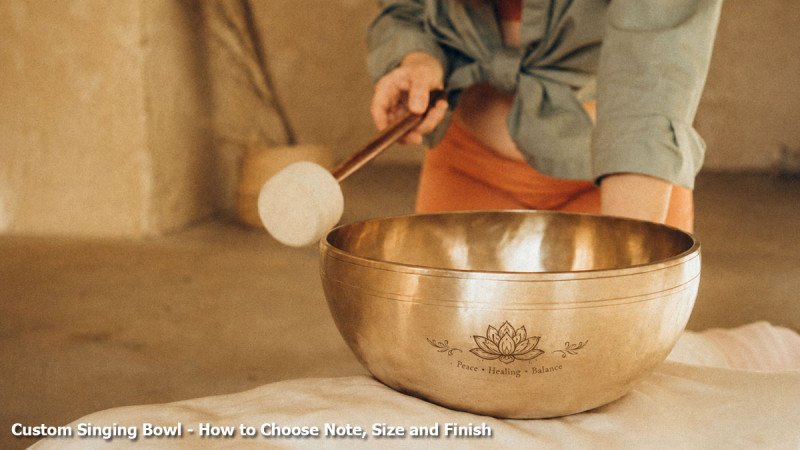
A name, initials, a short message, a date, a mantra. Some workshops will also engrave an uploaded logo or image.
The engravings that seem to matter most are the ones tied to a moment — a birth date, an anniversary, the day someone qualified, the name of a person no longer here. A bowl is an unusual object to carry that: it is not decorative, it gets used, and it makes a sound. People come back to it.
Keep it short. There is not much room on a rim, and a long message shrinks the lettering.
Which one should you choose?
Three routes, depending on what you are actually after.
| Route | Choose it if |
|---|---|
| Custom singing bowl from $69.99, 6–15 inches |
You want full control — three finishes, any of the seven notes, sizes up to fifteen inches. The most flexible route and the one most people should take. |
| Custom full moon bowl from $79.99, 6–15 inches |
The full moon forging matters to you, and you want the antique-style surface rather than a polished one. |
| Full moon, date engraved from $84.99, 5–12 inches |
You want the making date recorded on the bowl itself, in a polished finish, and you do not need the larger sizes. Comes with a seven-chakra stone bracelet. |
All three are hand-hammered from the seven-metal alloy in Kathmandu, all three let you choose your chakra note, and all three offer the monk blessing, the padded carry bag and engraving. If none of them is quite it, there is a fully bespoke route where you describe what you want and the workshop quotes for it.
What comes with a commissioned bowl?
A leather-wrapped wooden striker and a ring cushion, as standard — you need both, and a bowl sold without them is not really usable.
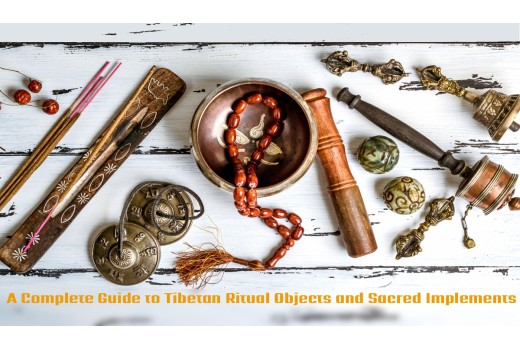
The padded carry bag is worth adding if you will ever take the bowl anywhere. Bronze marks easily and a bowl rattling loose in a rucksack will not stay beautiful for long. Everything else you might want later — spare mallets, larger cushions, stands — sits in the accessories.
What if you do not want to wait?
Then commissioning is not for you, and that is a perfectly reasonable conclusion.
The handmade bowls are in stock and ship immediately, the chakra sets are already graded and matched, and our guide to choosing a singing bowl covers the decisions in the same detail as this page.
Commissioning suits people who know what they want, or who want the waiting to be part of it. It does not suit everyone and it should not.
Learn to play it before it arrives
Here is the thing worth doing while you wait.
Our free sound healing course is thirty-six lessons transcribed from the handwritten training notebook of Nepali healer Sunita Poudel. Course One covers how to hold, strike and rim a bowl, why most bowls that will not sing are a hand problem rather than a bowl problem, and a complete first session.
It costs nothing, it needs no account, and it takes about two hours. By the time your bowl arrives you will know what to do with it — which is a better preparation than watching the tracking page.
Commission a bowl that is yours from the start. Choose the note, the size, the finish and the engraving, and we will have it hammered in Kathmandu.