



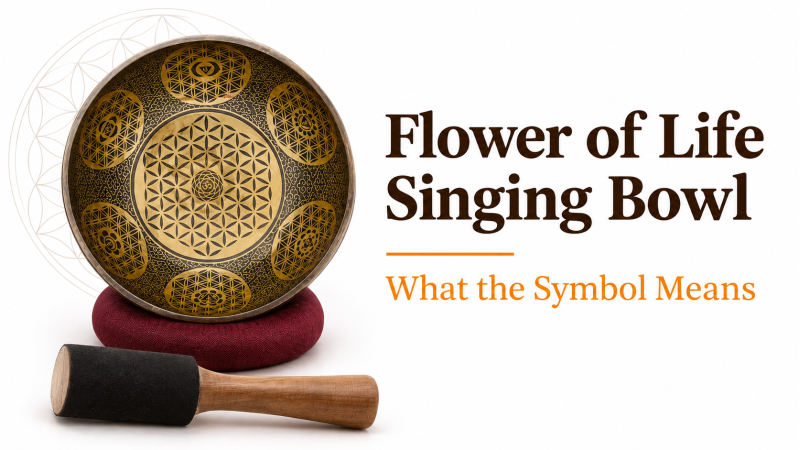
Flower of Life Singing Bowl - What the Symbol Means
The Flower of Life is a pattern of equal circles, each centred on the edge of the others, that overlap to form rows of six-petal flowers. On a singing bowl it is read as a sign of unity and connection, and it gives the eyes a calm point of focus while the bowl rings. It is not a traditional Tibetan Buddhist symbol: the pattern is ancient and found across many cultures, while the name Flower of Life is modern.
Like any sound practice, a Flower of Life bowl supports relaxation and focus, and does not treat any condition. The symbol adds meaning and beauty; the sound comes from the bowl itself.
Key takeaways
- Overlapping circles: seven circles form the core, and 19 inside a ring make the classic Flower of Life.
- Ancient pattern, modern name: the oldest known example is an Assyrian palace floor from about 645 BCE.
- What it means today: unity, connection, creation and balance.
- On Himalayan bowls: etched, carved or painted, alone or with Tibetan mantras and the Ashtamangala.
What is the Flower of Life?
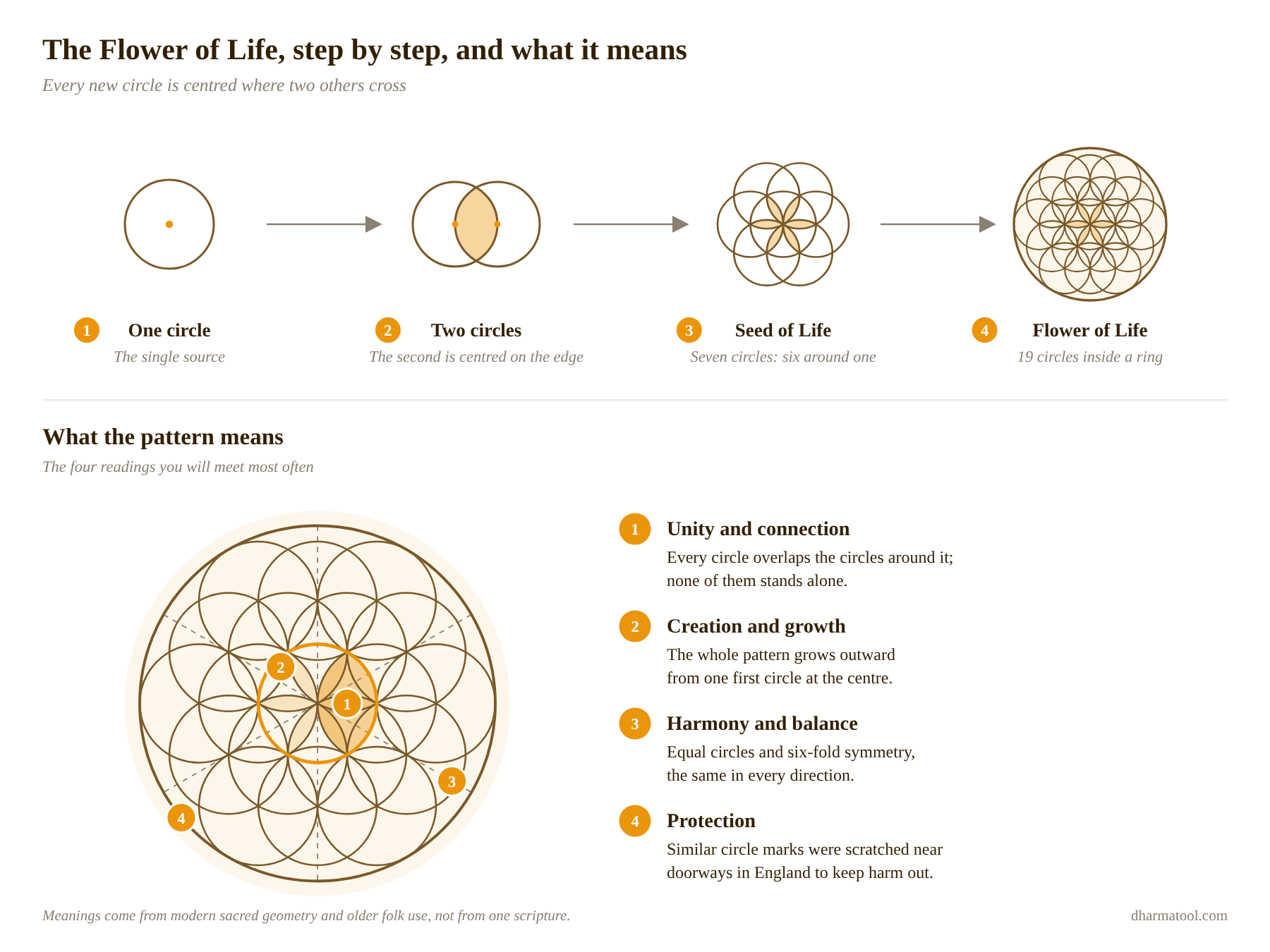
The Flower of Life is drawn with a compass. The first circle is drawn, the next is centred on its edge, and every circle after that is centred where two others cross. Six circles meeting around a seventh form a six-petal rosette at the heart of the pattern.
In modern sacred geometry, this seven-circle core is often called the Seed of Life. Carried outward in rings, the same pattern grows to 19 circles, usually framed by a larger circle, and that is the classic Flower of Life you see on singing bowls.
Where does the Flower of Life come from?
The pattern has no single origin. It turns up in palaces, temples, floors and notebooks across thousands of years, as Wikipedia's history of the overlapping circles grid records.
| Where | When | What was found |
|---|---|---|
| Assyrian palace of Ashurbanipal, northern Iraq | About 645 BCE | A carved stone floor decoration, the oldest known example |
| Herod's palace, Judea | About 2,000 years ago | A mosaic floor in a bathhouse |
| Hadrian's Villa, Italy | Roman era | A black and white mosaic pavement |
| Temple of Osiris, Abydos, Egypt | Probably Roman times or later | Red ochre drawings on granite columns, added long after the temple was built |
| Westminster Abbey, London | 1200s | Patterns in the Cosmati stone floor |
| Leonardo da Vinci's notebooks | Late 1400s to early 1500s | Studies of the pattern's proportions |
| Forbidden City, Beijing | Imperial China | The pattern on the ball under a guardian lion |
The name Flower of Life is much newer. It comes from the New Age movement and was popularised by Drunvalo Melchizedek's book The Ancient Secret of the Flower of Life, published in 1999.
What does the Flower of Life symbol mean?
No single scripture fixes the Flower of Life meaning, so it comes from the pattern itself and from how people have used it. These are the readings you will meet most often.
| Reading | Why people see it in the pattern |
|---|---|
| Unity and connection | Every circle shares its edge with the circles around it; none stands alone |
| Creation and growth | The whole pattern grows outward from a single first circle |
| Harmony and balance | Equal circles and six-fold symmetry, the same in every direction |
| Protection | Similar circle marks were scratched near doorways in England to keep harm out |
On a singing bowl, most people hold the first two readings: one source, and everything connected to it. That is why the symbol is so often chosen for daily meditation and for gifts.
Is the Flower of Life a Tibetan Buddhist symbol?
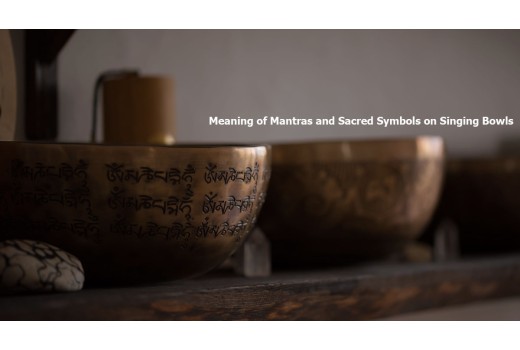
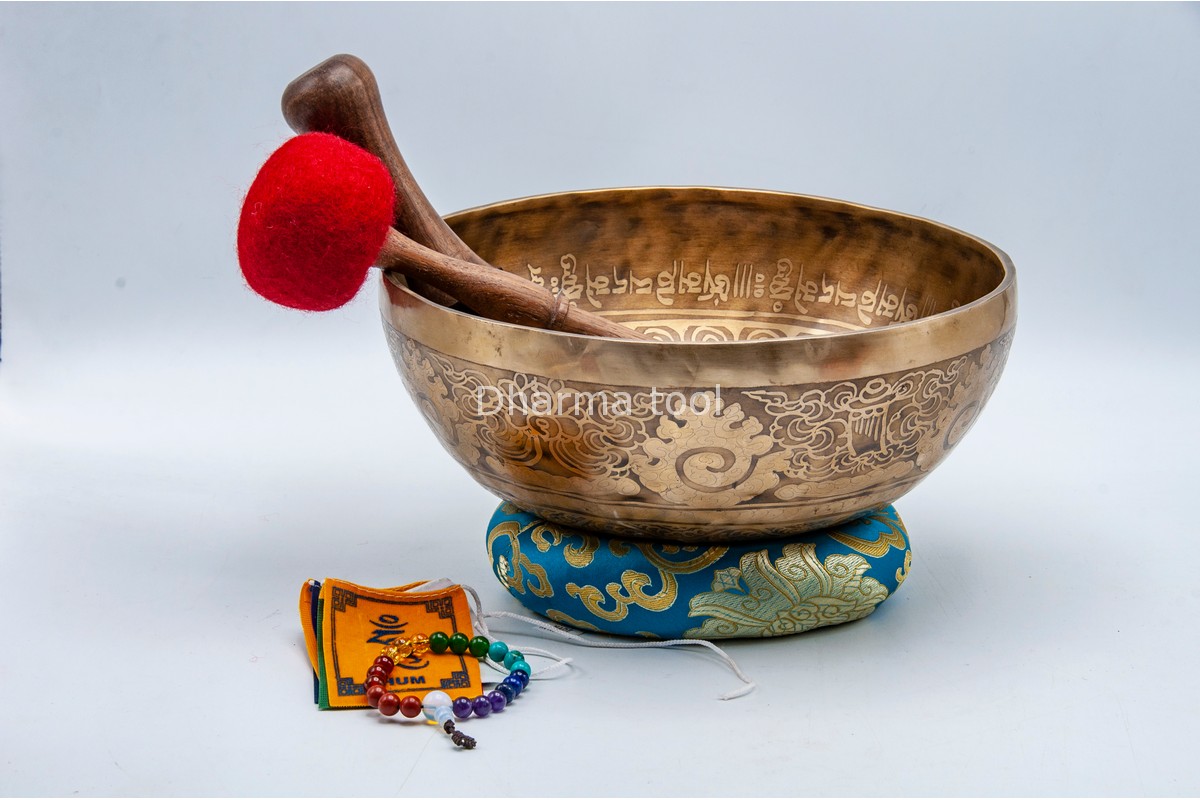
No. The traditional Tibetan symbols on singing bowls are mantras such as Om Mani Padme Hum, the eight auspicious symbols and figures of the Buddhas. Our guide to singing bowl symbols and mantras explains each one.
The Flower of Life comes from a wider world of sacred geometry. Workshops in Nepal now etch it on bowls, often together with a Tibetan mantra or the eight auspicious symbols, so one bowl can carry both traditions.
Why the Flower of Life suits a singing bowl
- Circle within circle: the round pattern echoes the round rim, and its rings spread from one centre the way a tone spreads from the point you strike.
- A point of focus: while the tone fades, the centre of the pattern gives the eyes somewhere soft to rest.
- Open to everyone: the symbol belongs to no single religion, so it suits any practice.
The design sits on the surface, while the tone comes from the bowl's shape, wall thickness and metal. If you wonder whether a design changes the tone, our guide to whether etching changes a singing bowl's sound explains it.
Flower of Life singing bowls and gongs
Our Flower of Life bowls are in the carved and etched singing bowls collection, and every one is played and selected by Sunita for each order before it leaves Kathmandu. Ready-made bowls are dispatched within 3 to 4 business days by DHL Express.
| Design | Look at |
|---|---|
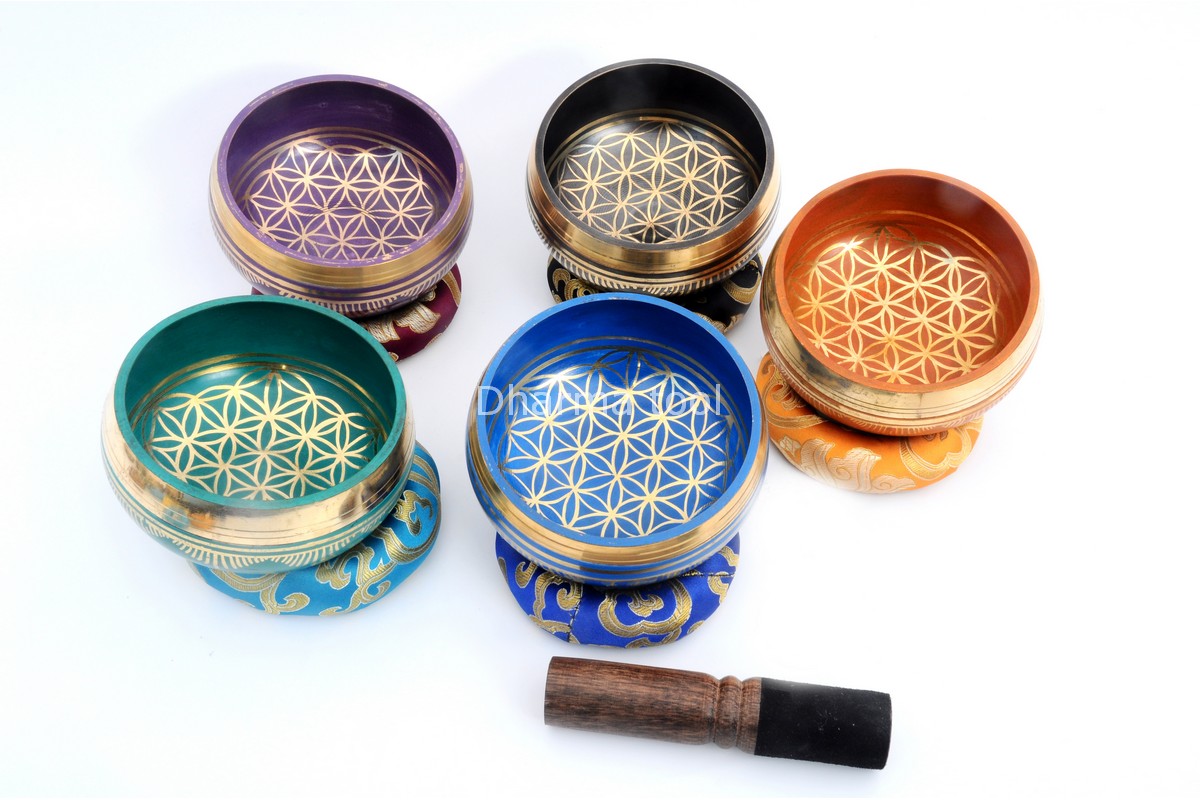
| Flower of Life etched inside and under the base, hand-painted in five colours | 6 inch Flower of Life singing bowl |
| Black exterior with the Flower of Life etched in gold | Black and gold Flower of Life bowl |
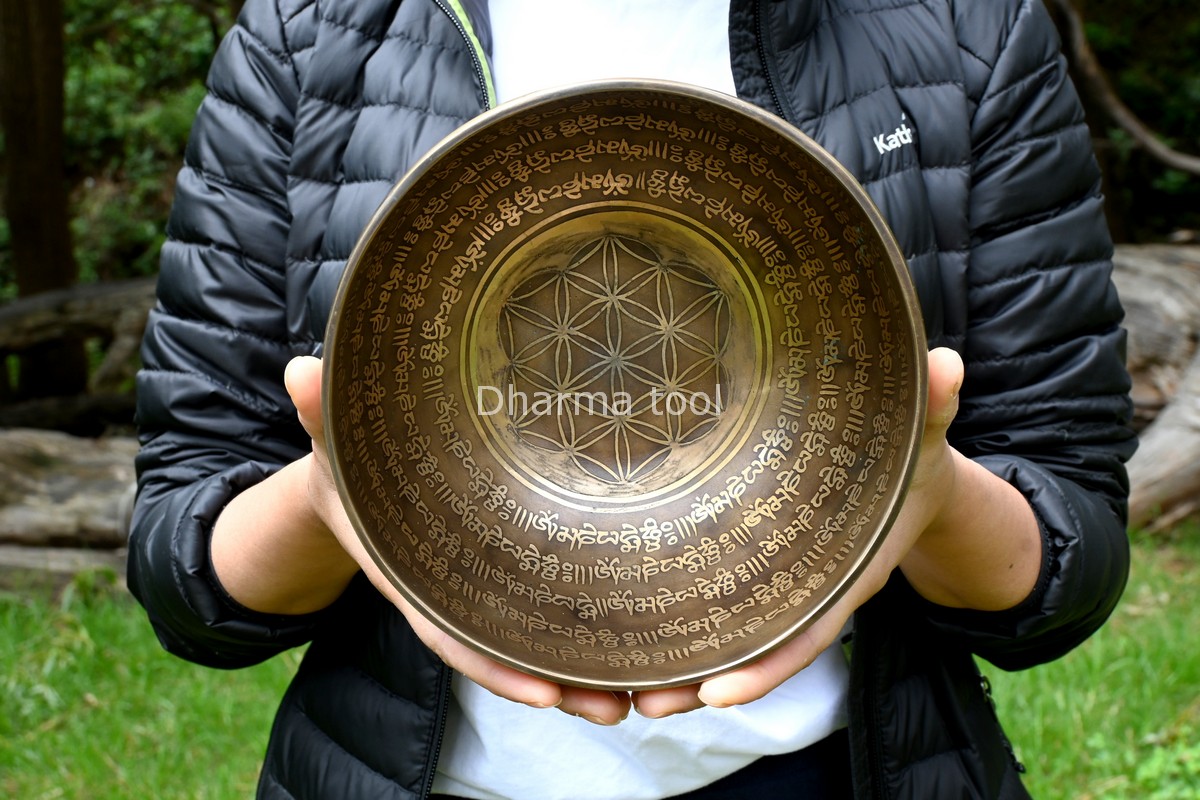
| Flower of Life in the centre, Ashtamangala around the wall, mantra under the base | Flower of Life Ashtamangala mantra bowl |
| Flower of Life etched on an antique copper finish | Antique copper Flower of Life bowl |
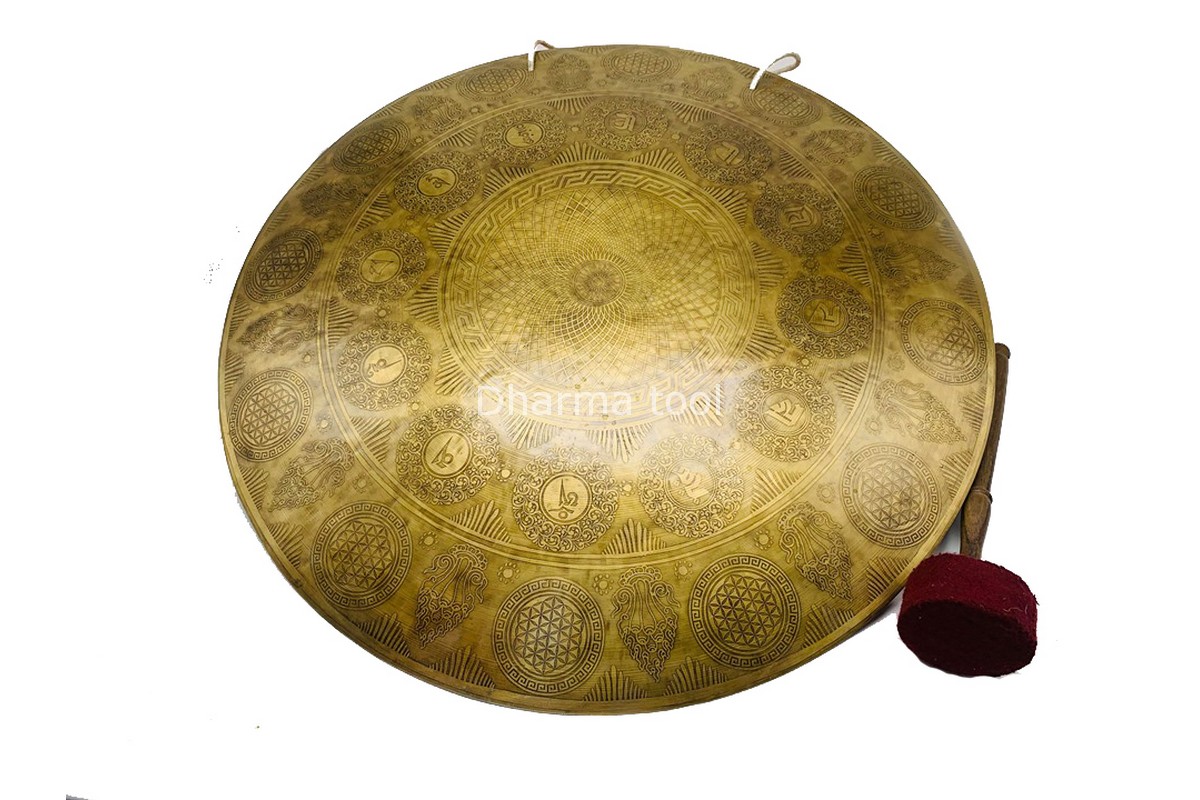
| Flower of Life carved with Tibetan mantras on a gong | Flower of Life Tibetan gong |
The same symbol is carved on our larger Tibetan gongs, where it is surrounded by Tibetan mantras.
How to choose a Flower of Life bowl
- For meditation in the hand: a bowl of 5 to 7 inches rests on the palm; larger bowls sit on a ring cushion.
- For colour: a painted bowl shows the pattern clearly from across a room.
- For both traditions: choose a bowl that pairs the Flower of Life with a Tibetan mantra or the Ashtamangala.
- For a gift: the symbol suits people of any faith or none; our guide to the meaning of a singing bowl as a gift has more ideas.
Design your own Flower of Life singing bowl
If you want the Flower of Life your own way, our custom singing bowl service makes it for you by hand in Nepal. Choose an etched bowl, upload your own Flower of Life drawing or a photo of the design you love, and we etch it for you.
- Your design: the Flower of Life alone, or with a Tibetan mantra, a yantra or a mandala.
- Your words: a name, a date or your own mantra engraved on the bowl.
- Your bowl: the size you want, a chakra note, a ring or square cushion in one of seven colours, and a wooden mallet or felt striker.
- Blessed if you wish: you can ask for the bowl to be blessed by monks.
- Your approval: you see photos or a video of the finished bowl before it leaves Kathmandu.
Custom bowls are usually made in 5 to 7 days. Our team replies to every request with the options and the making time.
Make your own Flower of Life bowl
Send us your design, and we will make it by hand in Nepal, with your mantra, name or date.
Learn more, free
Our free singing bowl healing course is designed from Sunita's own notebook. It takes you from your first strike to full sessions, one short lesson at a time.
Find your Flower of Life bowl
Hand-etched and carved singing bowls from Nepal, played and selected by a sound healer before they leave Kathmandu.
Frequently asked questions
What does the Flower of Life symbol mean?
It is most often read as a sign of unity and connection, because every circle overlaps the circles around it. Many also see creation in it, as the whole pattern grows from one first circle.
Is the Flower of Life a Buddhist or Tibetan symbol?
No. It is an ancient geometric pattern found in many cultures, and the name Flower of Life is modern. Nepal workshops etch it on singing bowls, often alongside Tibetan mantras and the Ashtamangala.
How old is the Flower of Life?
The oldest known example is a carved floor decoration from an Assyrian palace, dated about 645 BCE. The name Flower of Life was popularised much later, by a New Age book published in 1999.
What is the difference between the Seed of Life and the Flower of Life?
The Seed of Life is the core of seven circles: six around one in the centre. The Flower of Life continues the same pattern outward, usually to 19 circles inside a larger ring.
Does the Flower of Life change how a singing bowl sounds?
The design sits on the surface, while the tone comes from the bowl's shape, wall thickness and metal. Fine etching makes little difference to the sound.
Where is the Flower of Life on a singing bowl?
It depends on the bowl. It may be etched in the centre of the inside, under the base, or around the outside wall, sometimes with a mantra or the eight auspicious symbols.
Can I use a Flower of Life bowl for meditation?
Yes. Strike the bowl, rest your eyes softly on the centre of the pattern, and follow the tone until it fades.
Can I order a custom Flower of Life singing bowl?
Yes. Choose an etched bowl on our custom singing bowl page, upload your Flower of Life design and add a mantra, a name or a date. You approve photos or a video before it ships.
Is a Flower of Life singing bowl a good gift?
Yes. The symbol is not tied to one religion, so it suits people of any faith or none, and the design is beautiful on a shelf or altar.
Learn from Sunita's notebook, free
From your first strike to a full session, with the free singing bowl healing course.