




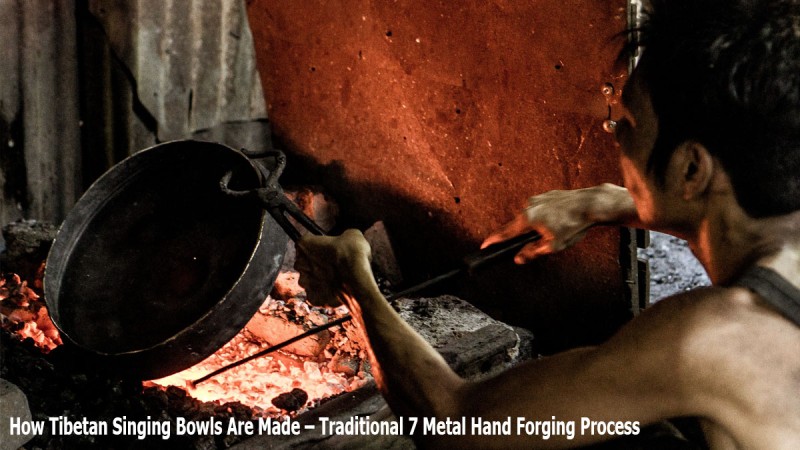
More Than Metal – A Bowl Shaped by Hands and Time
Tibetan singing bowls, also known as Himalayan singing bowls, are not simply manufactured. They are slowly brought to life through heat, hammering, patience, and the skilled hands of artisans. What begins as raw metal becomes something that carries tone, presence, and a deep sense of calm.
In the traditional workshops of Nepal, this process remains deeply human. Every handmade singing bowl is shaped through effort, rhythm, and experience. No two bowls are ever exactly the same, because each one carries the mark of the hands that created it.
The Traditional Mixture of 7 Metals
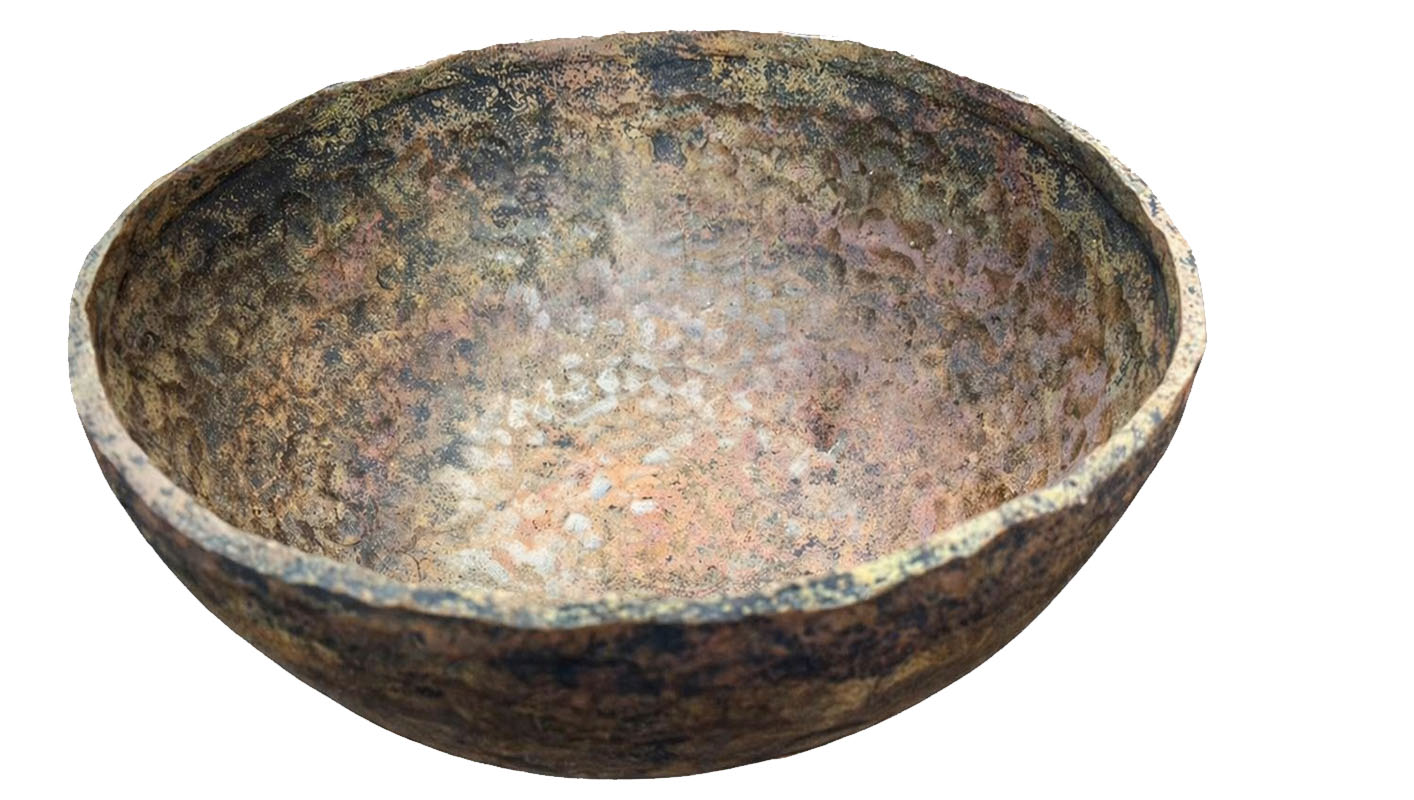
Traditionally, Tibetan singing bowls are associated with a blend of seven metals—gold, silver, copper, iron, tin, lead, and mercury. These metals are believed to connect with celestial elements such as the sun, moon, and planets, symbolizing balance and harmony.
In modern practice, most Himalayan singing bowls are primarily made from bronze, using copper and tin as the base. The inclusion of other metals may vary depending on the maker. While the story of seven metals carries deep meaning, the true quality of a bowl comes from how it is forged by hand.
Melting the Metals in Fire
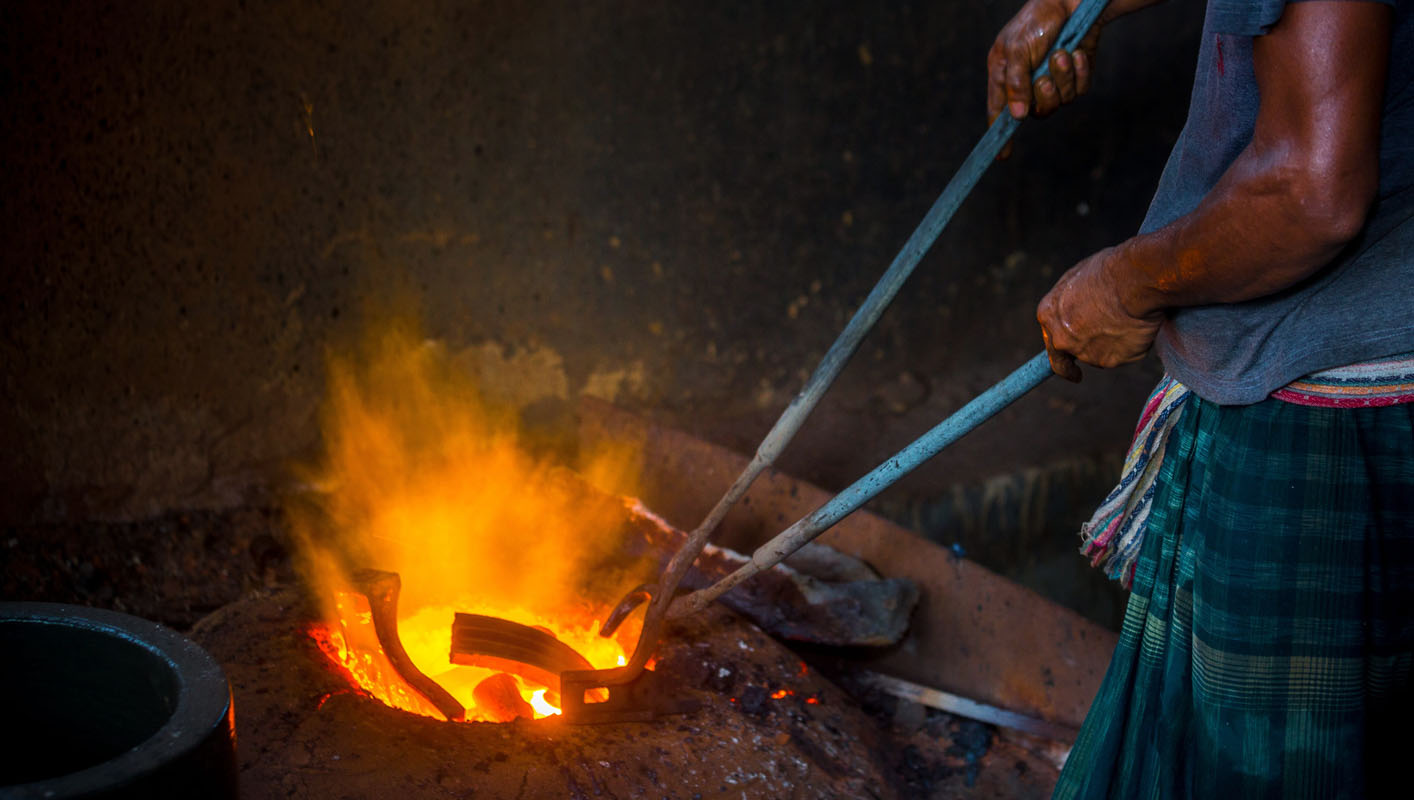
The journey begins in fire. The selected metals are placed into a furnace and heated until they melt into a glowing liquid. At this stage, all elements lose their individual form and become one unified mixture.
This molten metal holds the full potential of the bowl. It has no shape yet, but it carries everything needed to become one.
Casting the First Solid Form
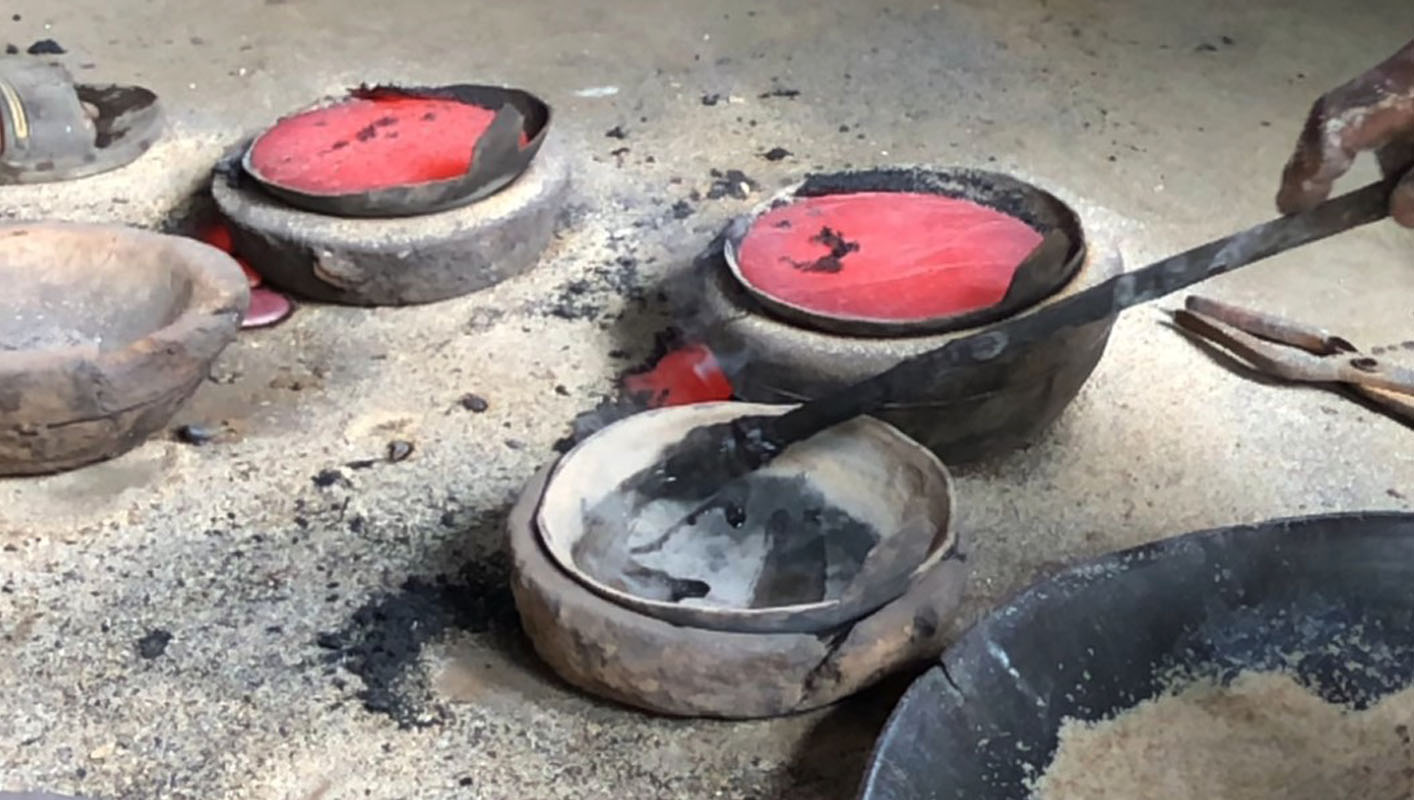
The molten metal is poured into a flat mold to create a thick circular disc. Once cooled, it becomes solid, heavy, and rough. At this point, it does not resemble a singing bowl at all.
This disc is the foundation from which the bowl will be formed through hand forging.
Reheating for Transformation
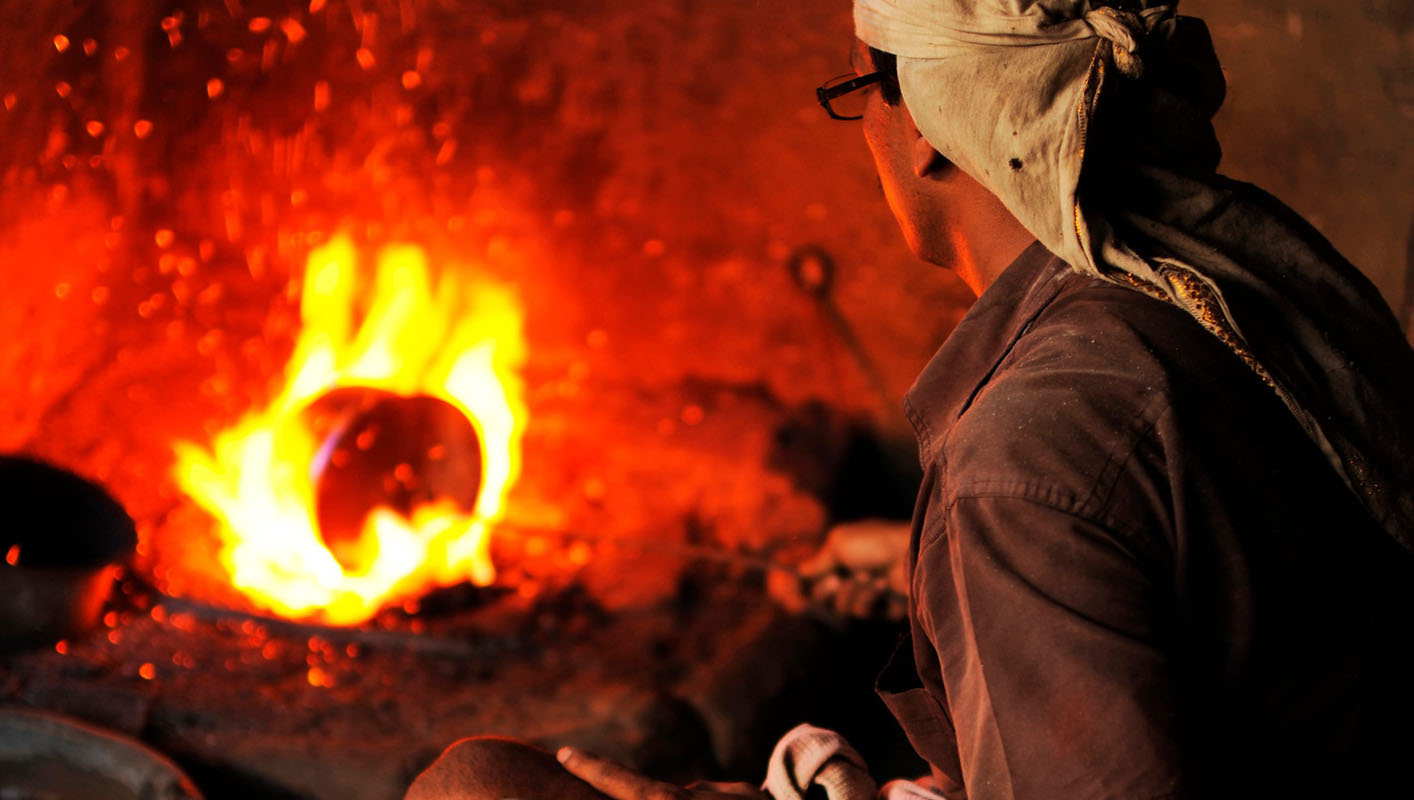
The metal disc is reheated until it becomes red hot. This softens the material, allowing it to be shaped without cracking. Fire returns again and again throughout the process, preparing the metal for each stage of transformation.
Hand Hammering – The Heart of the Process
The heated disc is placed on an anvil and hammered repeatedly by hand. This is the most important stage of the process. Often, multiple artisans work together, striking the metal in rhythm.
Heat → Hammer → Reheat → Hammer
With each cycle, the flat disc slowly begins to curve. The sides rise, the depth increases, and the form of the bowl begins to emerge. The sound of hammering fills the workshop long before the bowl itself begins to sing.
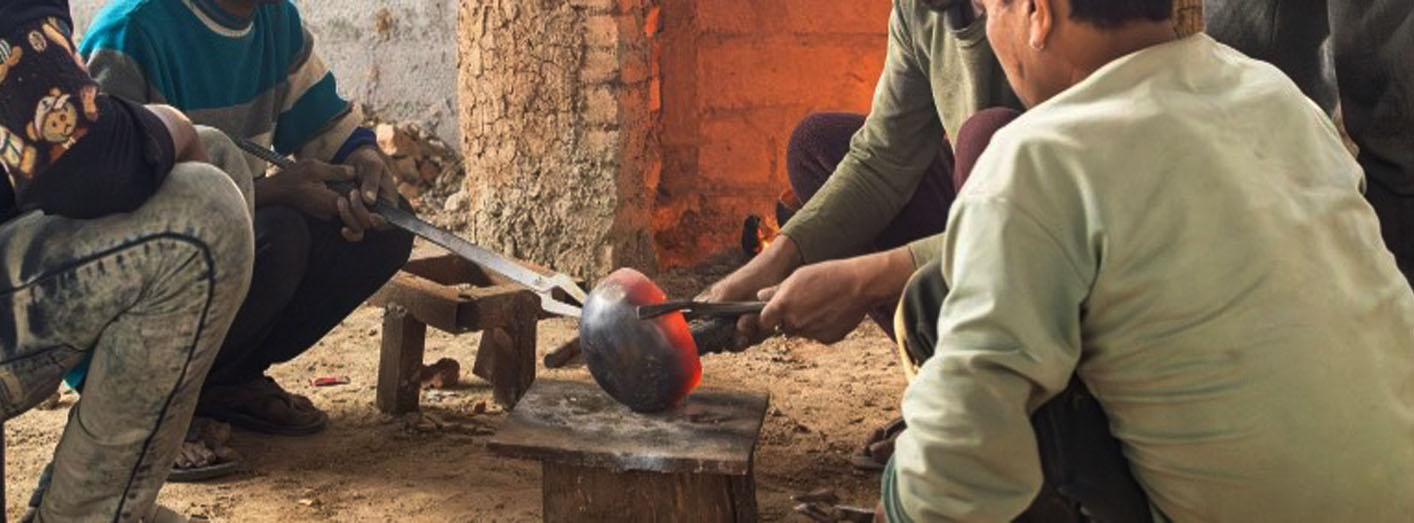
Shaping the Bowl by Experience
There are no machines controlling this process. The artisans rely on years of experience, shaping the bowl by eye and feel. The base is stabilized, the rim is defined, and the structure takes its final form.
Each handmade singing bowl develops its own identity during this stage. Slight variations in shape and thickness make every piece unique.
Balancing Form and Structure
As the bowl takes shape, the thickness and weight are carefully balanced. These details influence how the bowl vibrates and resonates when played.
This is not about forcing a perfect frequency, but about allowing the bowl to naturally develop a clear and stable sound.
Smoothing and Refinement
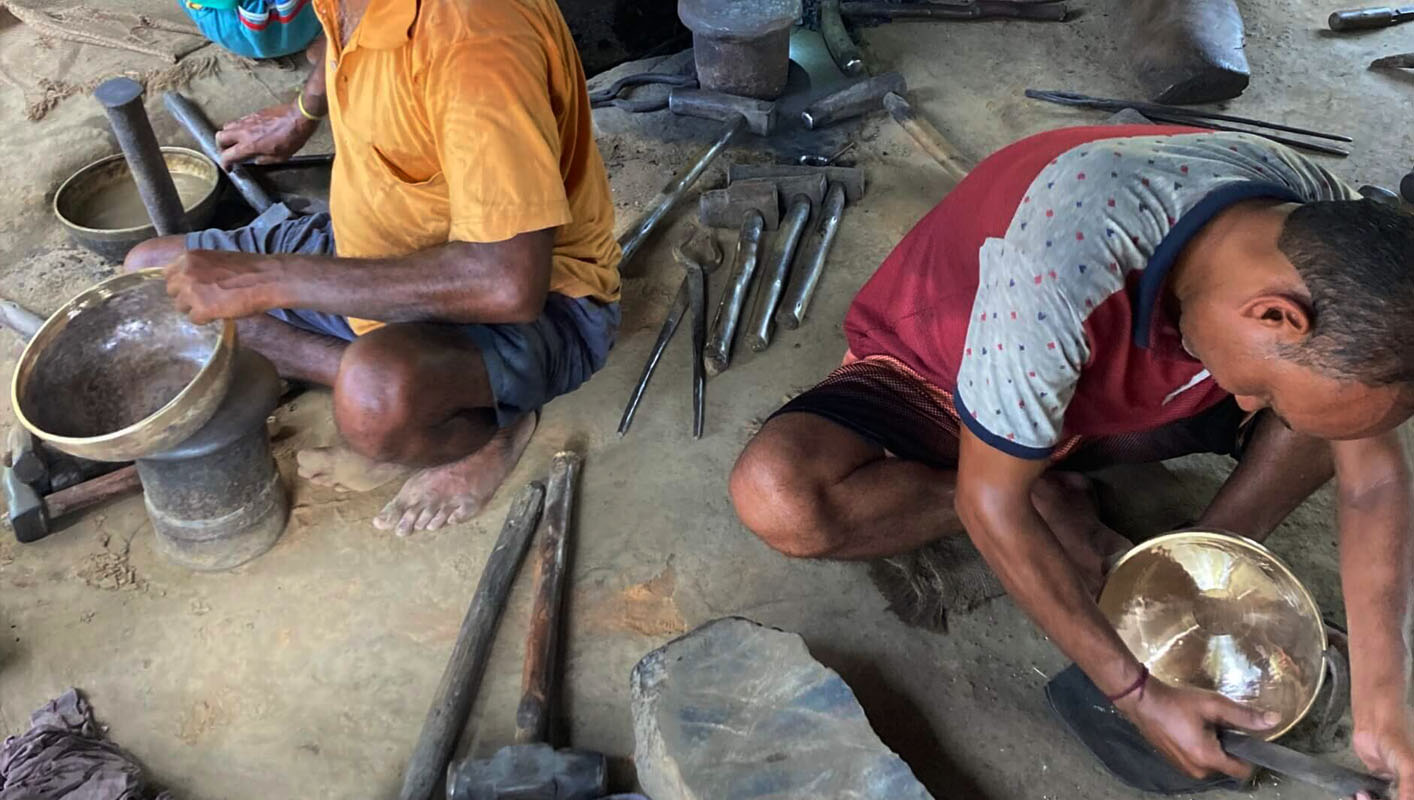
Once the structure is complete, the surface is refined. Rough edges are smoothed, and the bowl is cleaned. Some hammer marks are intentionally preserved, showing the authenticity of hand forging and the journey the metal has taken.
Finishing the Bowl
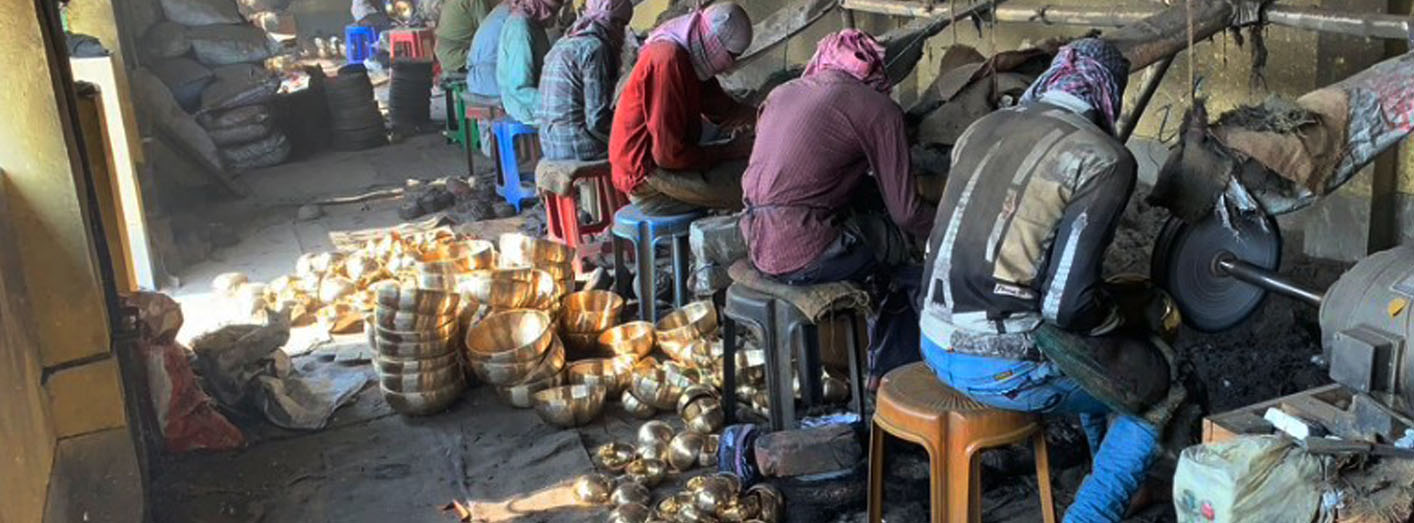
The bowl may be left with a raw hammered texture or polished for a smoother and more reflective finish. A raw finish highlights the strength of the forging process, while a polished finish offers a more refined appearance.
Optional Hand Engraving
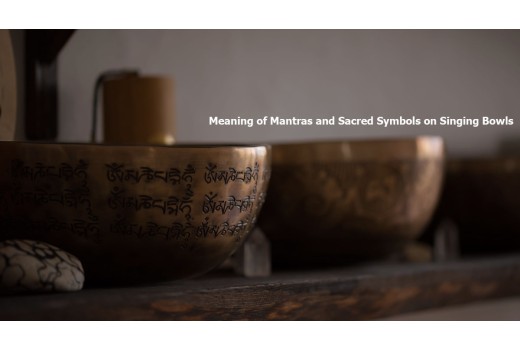
Some bowls are engraved with mantras, sacred symbols, or traditional designs. These engravings add visual and spiritual meaning, but the essence of the bowl remains in its form and sound.
The First Sound
When the bowl is complete, it is played for the first time. A gentle strike or movement of the mallet reveals its voice. The artisan listens for clarity, balance, and resonance.
This moment marks the transformation—from raw metal to living sound.
Tibetan, Himalayan, and Handmade Singing Bowls – What They Really Mean
The terms Tibetan singing bowl, Himalayan singing bowl, and handmade singing bowl are often used interchangeably. Most authentic bowls are made in Nepal using traditional hand-forging techniques.
“Tibetan” reflects the spiritual tradition, “Himalayan” reflects the region, and “handmade” or “hand forged” reflects the process itself.
What truly matters is not the name, but how the bowl is made. The craftsmanship defines the quality.
How Full Moon Singing Bowls Are Made
Full moon singing bowls follow the same traditional process—melting metal, casting, heating, and hand hammering. The materials and craftsmanship remain unchanged.
The difference lies in timing and intention.
These bowls are forged during the night of a full moon. In some workshops, artisans work under the calm presence of moonlight, believing it brings a sense of balance, focus, and mindfulness to the process.
The technique does not change, but the atmosphere does.
“A full moon bowl is made in the same way, but with a different state of mind. It is not only the metal that is shaped, but also the intention behind it.” – Healer Sunita
For many, this connection adds emotional depth and meaning to the bowl.
Fire, Metal, and Hand to Hand – Forged for Mindfulness
The making of a singing bowl is a journey from fire to form, from metal to meaning, and from one pair of hands to another.
Each strike of the hammer carries intention. Each stage reflects patience. What is created is not just a tool, but something that can return calm and awareness to the person who uses it.
“A singing bowl is shaped through mindful work so it can bring mindfulness to others.” – Healer Sunita
What begins in fire ends in stillness.
Explore and Create Your Own Singing Bowl
Each singing bowl carries its own story, shaped through traditional craftsmanship. You can explore our collection of handmade Tibetan and Himalayan singing bowls here:
Explore Tibetan Singing Bowls Collection
If you are looking for something more personal, you can request a custom singing bowl made with your own intention:
Complete Process Flow
Seven Metal Mixture → Melting → Casting → Reheating → Hand Hammering → Shaping → Refining → Finishing → Final Sound Check
From fire, metal, and human hands, a singing bowl is formed—crafted not just for sound, but for mindfulness, balance, and presence.