




Singing Bowl on the Body - Where to Place Bowls and Where Not To
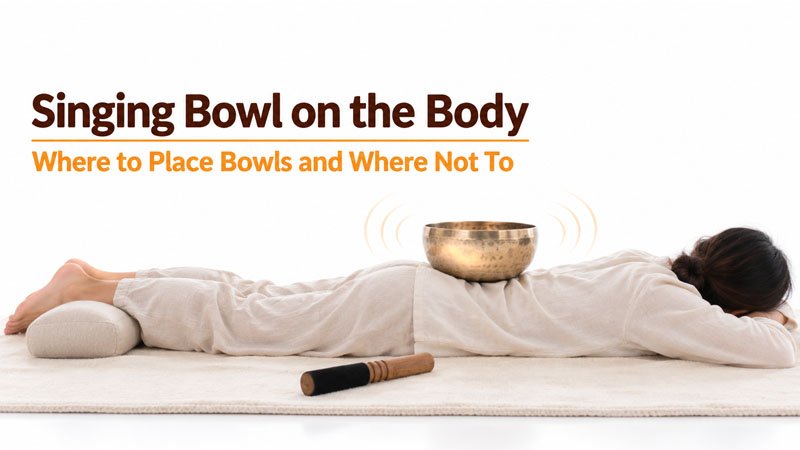
A singing bowl can rest on flat, soft parts of the back of the body: the sacrum, the lower and middle back beside the spine, the backs of the thighs and the calves. It never goes on the head, the neck, the bones of the spine, the abdomen or a joint.
Key takeaways
- Yes: sacrum, back beside the spine, backs of the thighs, calves.
- Never: head, neck, spine bones, abdomen, joints.
- Strike softly: a bowl on the body passes on far more than in the air.
- Ask first, every time, and stop if anything feels wrong.
Where can a bowl rest on the body?
In the method I teach, the person lies face down and the work begins at the sacrum, the flat bone at the base of the spine. It is broad, flat and central, so a bowl sits there steadily.
From there the work moves up the back towards the shoulders, returns to the sacrum, and then goes out to the hips, the legs and the feet.
Where should a bowl never go?
| Place | Bowl on it? | Why |
|---|---|---|
| Sacrum, back beside the spine | Yes | Flat and steady |
| Backs of the thighs, calves | Yes | Soft and broad |
| Feet | Beside, not on | Play the bowl next to the soles |
| Bones of the spine | No | The bowl rocks and presses on bone |
| Head and neck | No | Too sensitive; the head has its own method |
| Abdomen | No | Soft organs, no bone beneath |
| Joints, backs of the knees | No | Uneven and sensitive |
The head is worked with a bowl made for it, played around the head, not set on it. Our head therapy singing bowl guide explains that method.
Who should not have a bowl on the body?
- Pregnancy: never on the abdomen or lower back. Read our pregnancy guide.
- Pacemaker or implant: never on or near it, and never on the chest.
- Recent operation, fracture, wound or injury: never over that area.
- Anyone who has not clearly said yes.
A bowl on the body supports relaxation. It does not treat any condition, and anyone unsure should ask a doctor first. Our guide to sound healing contraindications gives the full list.
Looking for a bowl to use on the body?
A heavier bowl with a broad, flat base sits steadily. See our large singing bowls. A mallet and cushion come with every bowl.
How do you place and play a bowl on someone?
- Ask: "May I rest a bowl on your back?" before every placement.
- Place it with two hands, slowly, and let go only when it is steady.
- Strike very softly: a strike that is pleasant across the room can be startling through the ribs.
- Check once: "Is that comfortable?" Then watch the hands and jaw.
- Lift it with two hands. Sliding a bowl off someone is unpleasant.
- A cushion under the ankles makes lying face down easier.
"Pleasant" is the word you want to hear. "Fine" means go softer.
Which bowl works best on the body?
| If you want | Look at |
|---|---|
| A bowl for the back | 9 inch therapy singing bowl |
| A smaller bowl for the legs | 8 inch therapy singing bowl |
| A choice of sizes in one finish | Matte finish therapy bowl |
| A bowl for head therapy | Master healing head therapy bowl |
| A bowl made your way | Custom singing bowl |
Choose a bowl with a broad, flat base. A narrow-based bowl tips and digs in.
What are the common mistakes?
- Striking at your usual strength: on the body, much softer.
- Placing on bone or joints: flat and soft places only.
- A light or narrow bowl: it tips and feels unpleasant.
- Starting at the feet: the method I teach starts at the sacrum.
- Assuming yes: ask before every placement.
- A bowl with water on the body: water bowls stay on a table, as in warm water singing bowl therapy.
What should you do next?
- Read the full lesson: sound massage, from our free course.
- Read about massage: see singing bowls and massage therapy.
- Learn the healing methods: take the free singing bowl healing course.
Frequently asked questions
Where can I place a singing bowl on the body?
On flat, soft, central places: the sacrum at the base of the spine, the lower and middle back beside the spine, the backs of the thighs and the calves. The person lies face down and the bowl rests flat.
Where should a singing bowl never be placed?
Never on the head, the neck, the bones of the spine, the abdomen or any joint, such as the backs of the knees. Never on anyone who has not clearly agreed.
Can I put a singing bowl on my chest?
The method I teach works on the back, with the person face down. Never place a bowl on the chest of anyone with a pacemaker or other implant.
Who should not have a bowl placed on the body?
Anyone pregnant, anyone with a pacemaker or implant, and anyone with a recent operation, fracture, wound or injury in that area. If unsure, ask a doctor first.
How hard should I strike a bowl on the body?
Much more softly than in the air. A bowl resting on the body passes on far more vibration, so aim for a feeling the person calls pleasant, not just fine.
Where does a sound massage start?
At the sacral area, the flat bone at the base of the spine. The work moves up the back towards the shoulders, returns to the sacrum, then goes to the hips, legs and feet.
What kind of bowl is best for the body?
A heavier bowl with a broad, flat base, so it sits steadily and does not tip. A narrow-based bowl rocks and digs in.
Learn sound massage properly
Course three of our free singing bowl healing course covers sound massage, placement and safety, step by step.