




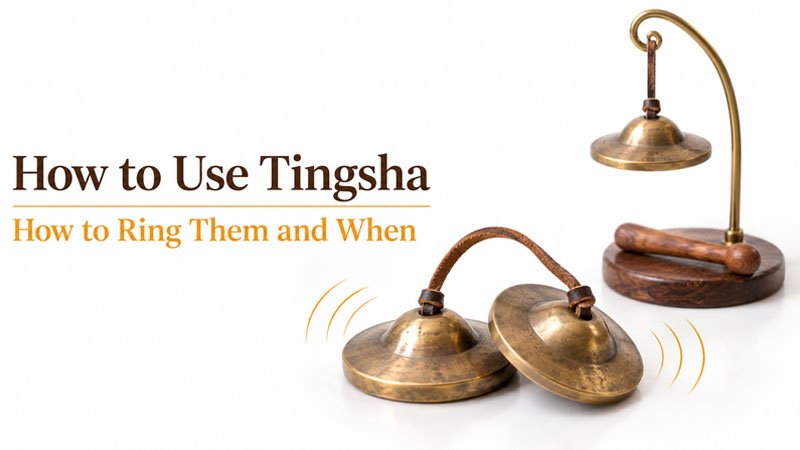
How to Use Tingsha - How to Ring Them and When to Use Them
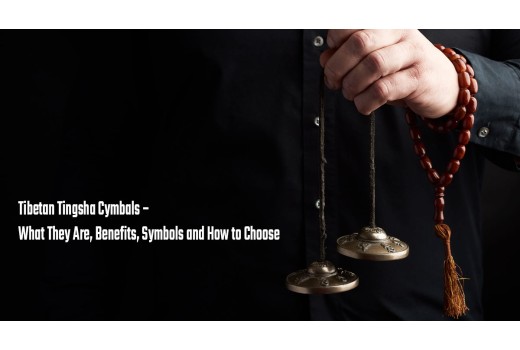
To use tingsha, hold the leather strap close to each cymbal, one in each hand, and let only the two edges meet with a light touch, then let them ring apart. Use them to mark a beginning, an ending or a pause: the start and end of a meditation, a singing bowl session or a yoga class, clearing a room, or a quiet moment in the day. One clear ring is usually enough.
Key takeaways
- Hold: the strap, close to each cymbal, never the metal.
- Ring: edge to edge, lightly, then let them swing apart.
- Stop: touch the cymbals to your palm or a cloth.
- When: at beginnings, endings and pauses.
- Less is more: one ring, then silence.
What are tingsha?
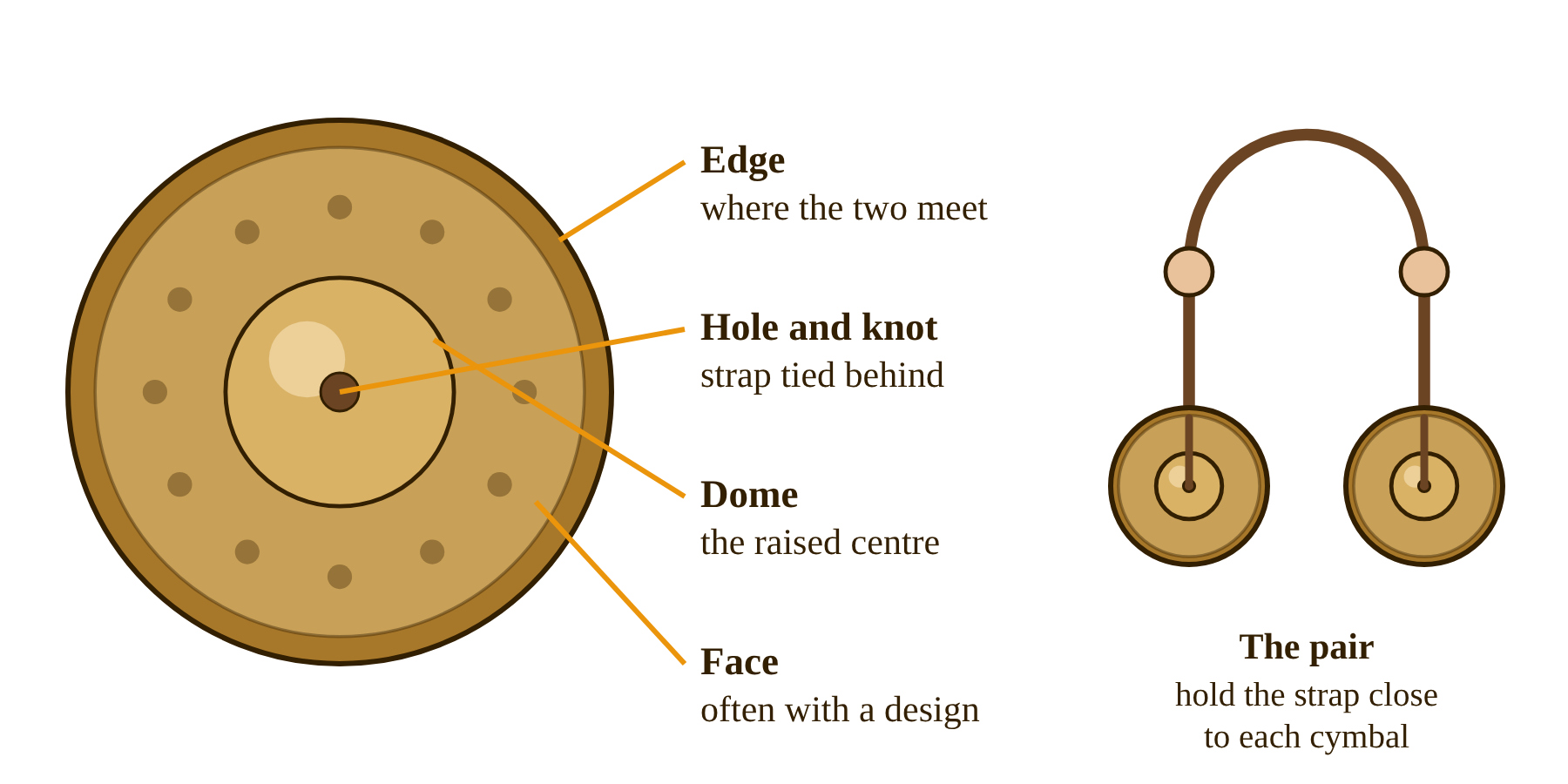
Tingsha are two small, thick cymbals joined by a leather strap. Tibetan Buddhists ring them in prayer and ritual, and today they are just as often used in meditation, yoga and sound sessions. Their ring is high, clear and long, quite unlike the deep hum of a singing bowl, which is why one ring is enough to mark a moment.
For the history and making of tingsha, see our Tibetan tingsha guide and the tingsha information page.
How do you hold tingsha?
- One cymbal in each hand: pinch the strap between your thumb and fingers.
- Hold the strap close to each cymbal, so they do not swing about.
- Keep your fingers off the metal: a fingertip on the face or edge stops the ring.
- Stay relaxed: the cymbals should hang free from a light grip.
How do you ring tingsha?
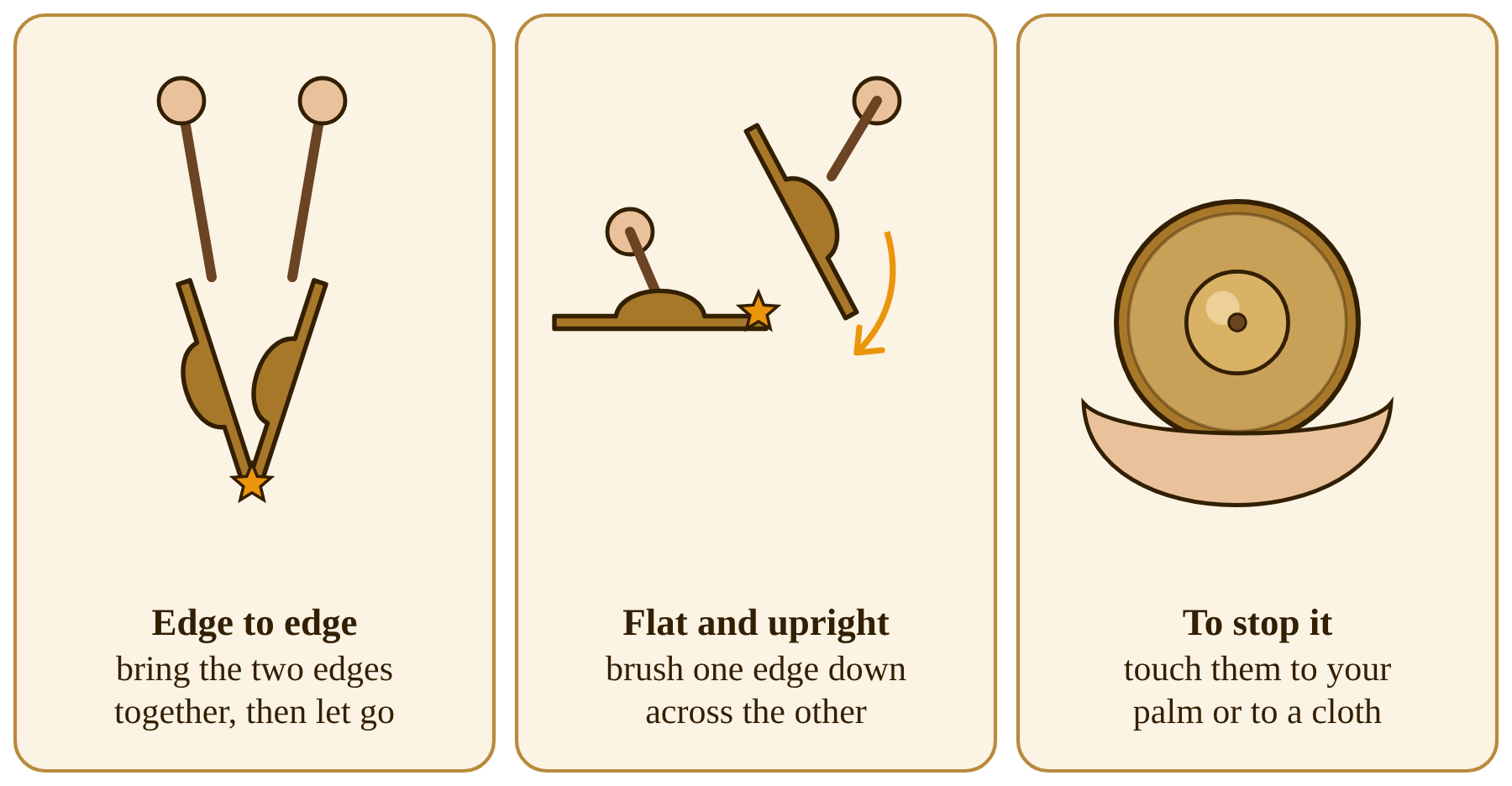
There are two common ways to ring them, and both rely on the same rule: only the edges meet, briefly and lightly.
- Edge to edge: let both cymbals hang from the strap, bring their edges together with a light tap, and let them swing apart so the ring is free.
- Flat and upright: hold one cymbal flat by its strap, and brush the edge of the other down across its rim, rather like striking a match on a matchbox.
A light touch is all it takes. A hard clash sounds harsh, and a flat clap, face to face, stops the sound at once. Wait for each ring to fade before the next.
How do you stop the ring?
Most of the time, let the ring fade on its own: the fading is part of the sound. When you need silence at once, touch the cymbals to your palm or to a cloth, and the ring stops.
How do you play a single tingsha on a stand?
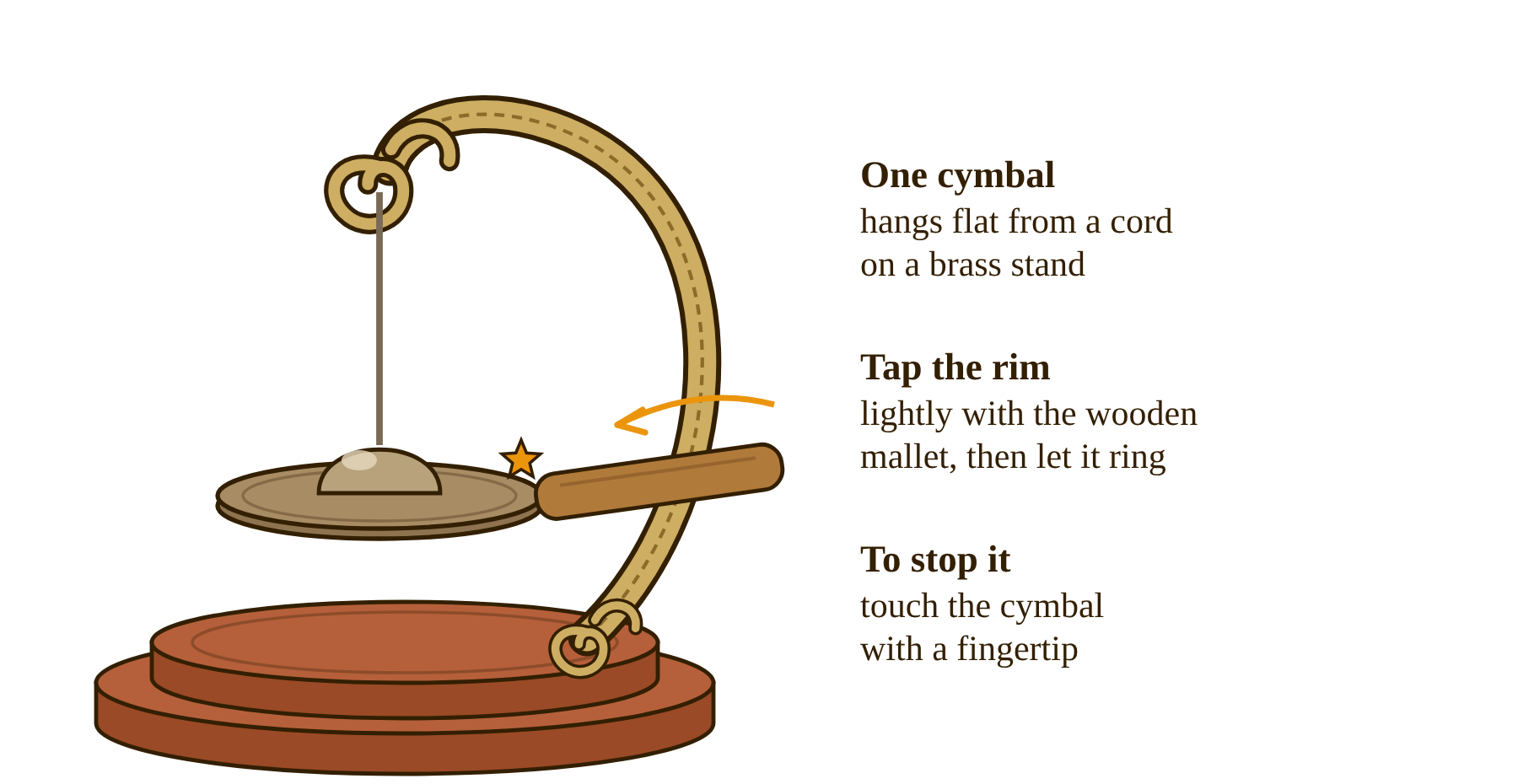
Tingsha also come as a single cymbal on a stand. One cymbal hangs flat, dome up, on a cord from the scrolled top of a curved brass stand set on a round wooden base, and it is rung with a short wooden mallet. It needs only one hand, so it suits a desk, an altar or a meditation timer, and anyone who finds a pair hard to handle.
- Let it hang still, so the cymbal does not touch the stand.
- Tap the rim lightly with the wooden mallet, and let the ring fade.
- To stop it, touch the cymbal with a fingertip.
- Rest the mallet on the base when you are not playing.
Use it just as you would a pair: once to begin, once to end, or for a mindful pause.
When should you use tingsha?
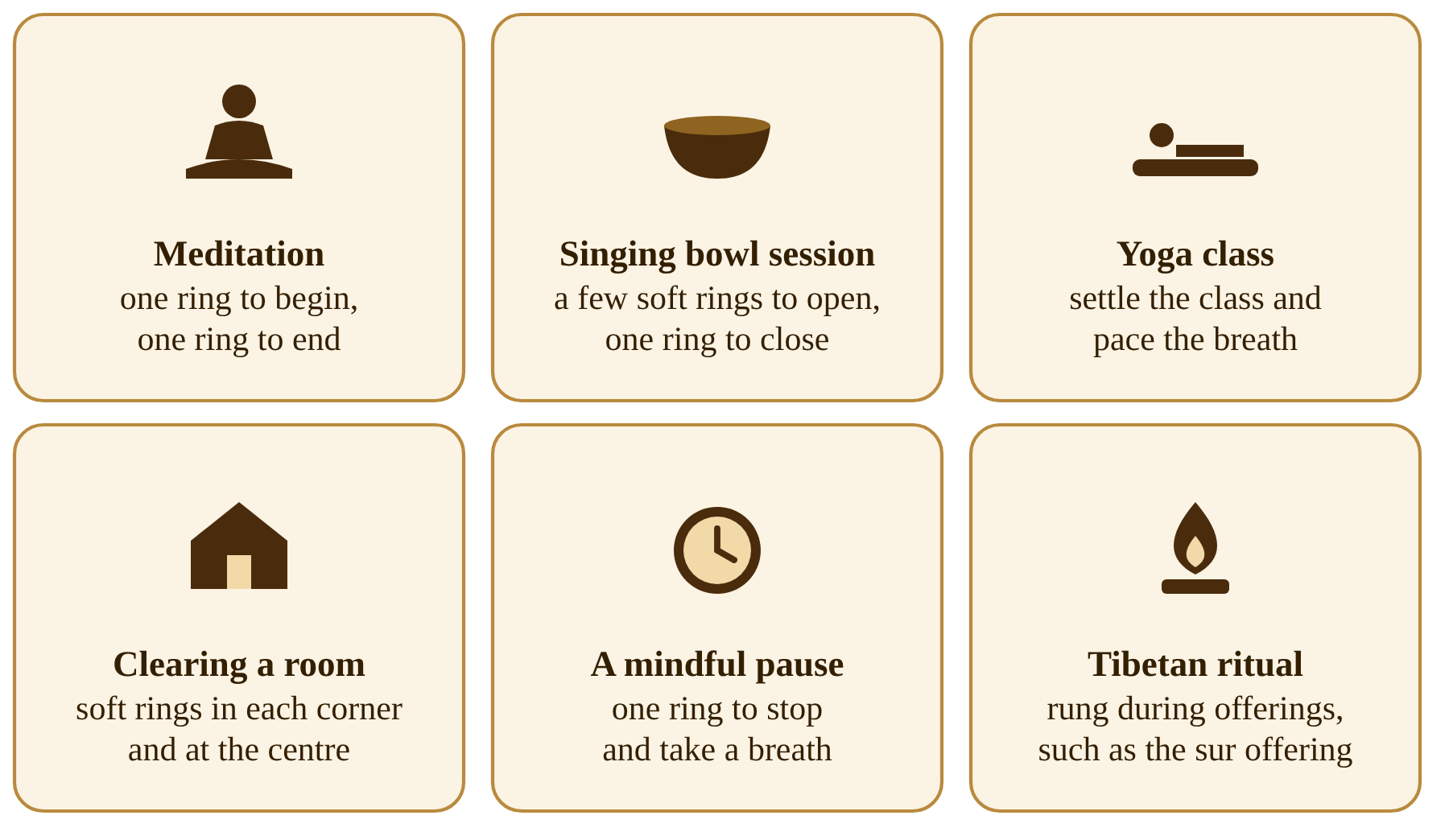
Tingsha are a marker, not a main instrument. Use them wherever one clear sound can say "begin", "pause" or "end".
How do you use tingsha in meditation?
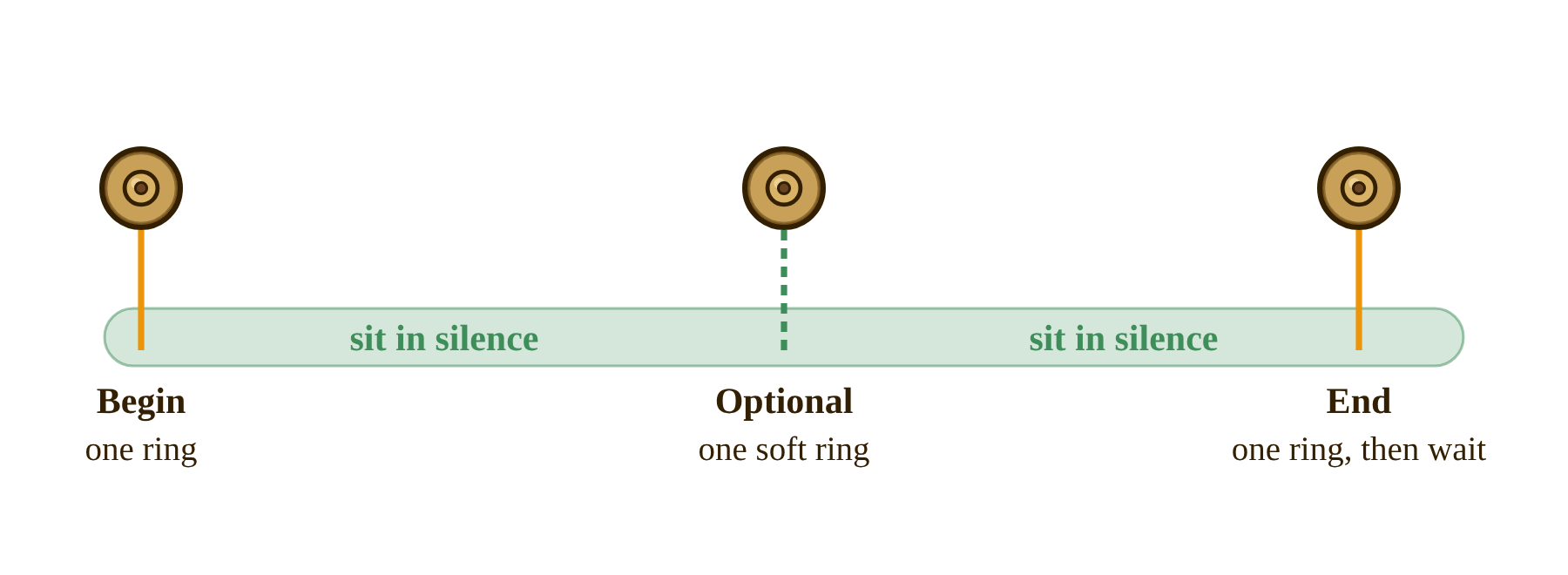
Ring once to begin, and sit while the sound fades into silence. At the end, ring once more, and wait until the sound has gone completely before you move or speak. If your mind wanders in a longer sit, a single soft ring in the middle can bring it back.
How do you use tingsha in a singing bowl session?
Tingsha mark the two ends of a session: two or three soft rings to open, after the incense and a short prayer, and one ring to close, after the quiet rest. The singing bowls carry everything in between. Our guide to tingsha before and after a singing bowl session walks through the opening and closing step by step.
How do you use tingsha in a yoga class?
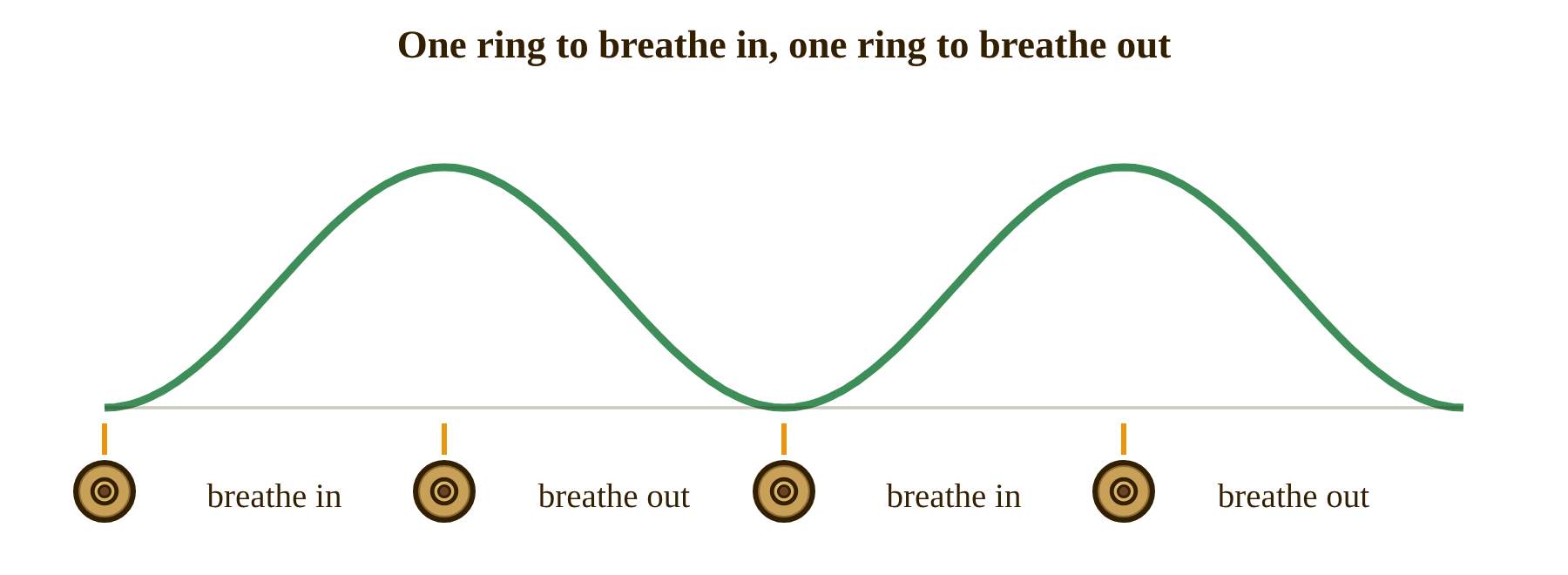
Ring the tingsha to settle the class at the start, to call everyone into stillness before the final rest, and to bring them gently back at the end. You can also use them to pace slow breathing: one ring to breathe in, one ring to breathe out, letting each ring guide the length of the breath.
How do you clear a room with tingsha?
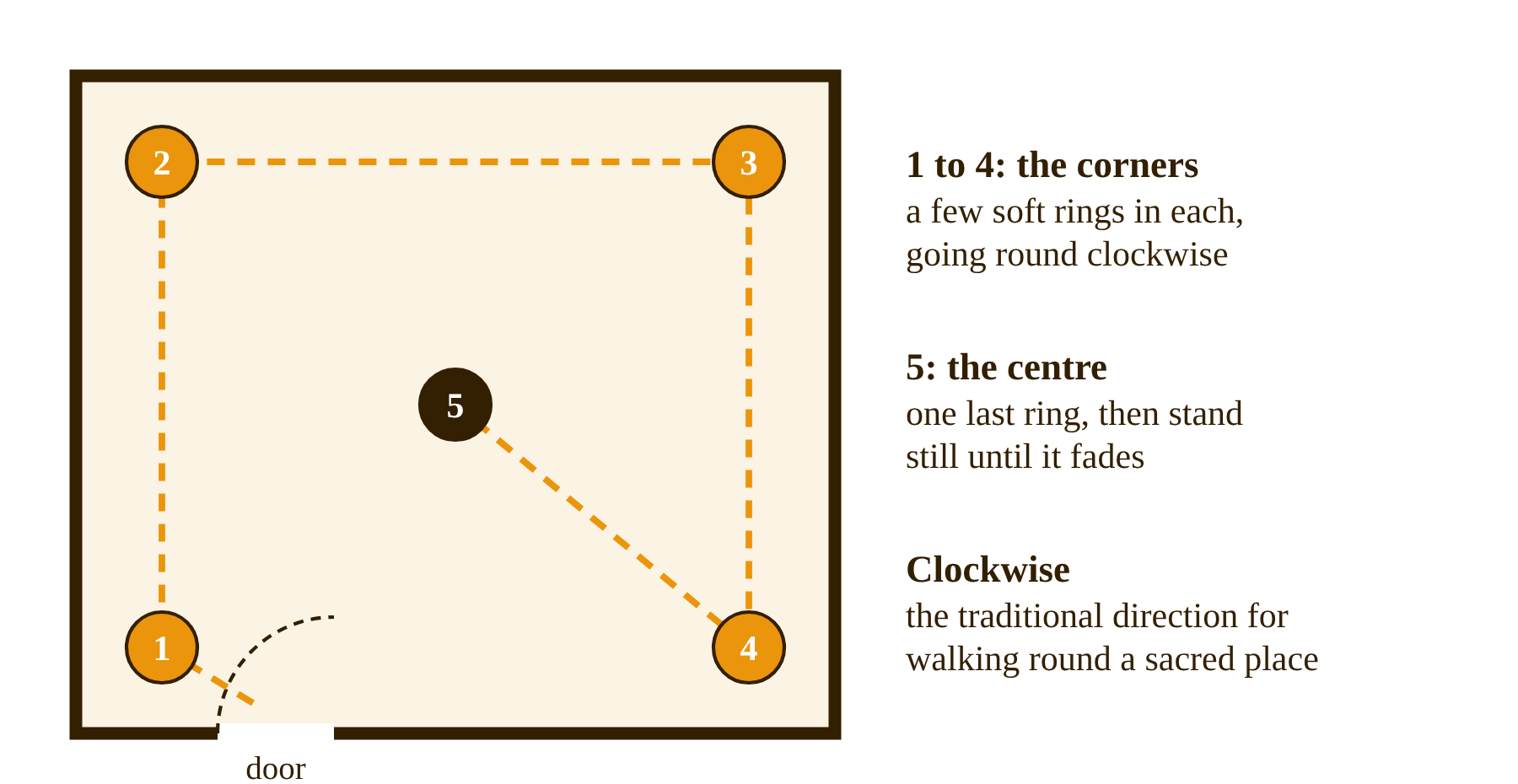
By tradition, the bright ring of the tingsha clears a space before practice. Start at the door and walk round the room clockwise, ringing softly in each corner; our tingsha guide suggests three rings in each. Finish with one ring at the centre, and stand still until it has faded.
Can you use tingsha during the day?
Yes. Keep a pair on your desk or altar and use them for a mindful pause: ring once, stop what you are doing, and take a few slow breaths while the sound fades. It is a simple way to mark the start of work, a meal or the end of the day.
How are tingsha used in Tibetan ritual?
In Tibetan Buddhism, tingsha belong to prayer and ritual. They may be rung during the sur offering, a burnt offering of food, to call the hungry ghosts to come and share it. Used this way they are an offering of sound in their own right, so handle them with care and respect.
How close should you ring tingsha to a person?
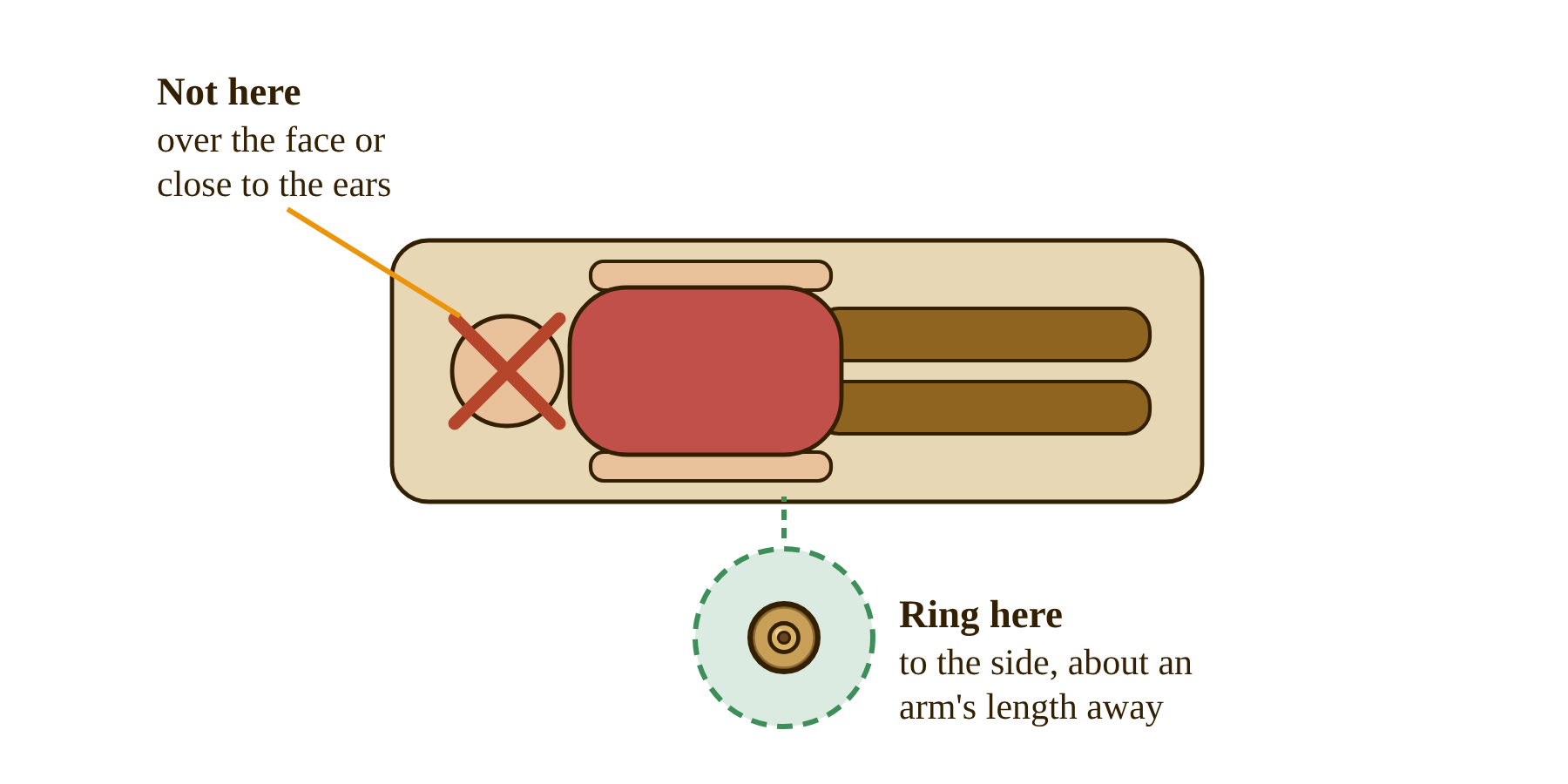
Tingsha are sharp and carry a long way. Near someone who is resting, ring softly, to one side, about an arm's length away, and never over the face or close to the ears.
What mistakes should you avoid?
- Holding the metal: fingers on the cymbal stop the ring.
- Clapping the faces together: only the edges should meet.
- Striking hard: a light touch rings longer and sweeter.
- Ringing too soon: let each ring fade before the next.
- Ringing too often: the marker loses its meaning.
- Ringing near the ears: keep a resting person's head clear.
How do you look after tingsha?
- Store them in a soft pouch, so the faces do not scratch.
- Never drop them on stone or tile: they are thick, but a hard fall can chip the edge.
- Wipe them with a soft, dry cloth after use.
- Check the strap and its knots now and then, and replace a worn strap before it gives way.
Which tingsha should you choose?
Our tingsha are cast in bronze by hand in Nepal and joined by a leather strap, and Sunita checks the sound of every pair before it leaves Kathmandu.
A 2.5 inch pair is lighter and brighter, good for personal practice. A 3 inch pair has a fuller ring that carries further, so it is easier to hear in a class or a group. The design does not change how you play, so choose the one that means something to you; what the eight symbols on our Ashtamangala pairs mean is in our guide to the eight auspicious symbols.
Looking for a first pair?
Our Bronze Tibetan Tingsha are a plain polished pair, 3 inches across, handmade in Nepal and joined by a leather strap. Their full ring carries easily across a room.
| If you want | Look at |
|---|---|
| A plain bronze pair | Bronze Tibetan Tingsha, 3 inches |
| Om Mani Padme Hum | Mantra Embossed Tingsha, 2.5 inches |
| The eight auspicious symbols | Ashtamangala Embossed Tingsha, 2.5 inches |
| A dragon design | Dragon Embossed Tibetan Chimes, 3 inches |
| Om Namah Shivaya | Om Namah Shivaya Tingsha, 2.5 inches |
| The twelve zodiac animals | Tibetan Zodiac Animal Tingsha, 3 inches |
| A dark finish | Black Bronze Tibetan Chimes, 3 inches |
| A full moon pair | Full Moon Tingsha, 3 inches |
Every pair is in Tibetan tingsha.
Practice like this supports relaxation and focus, and does not treat any condition. To learn how tingsha fit into a full session, take our free singing bowl healing course.
Frequently asked questions
How do you use tingsha?
Pinch the strap close to each cymbal, one in each hand, and let the edge of one meet the edge of the other with a light touch. Then hold still while the ring fades.
How do you hold tingsha?
By the leather strap, held close to each cymbal, with your fingers off the metal so the cymbals can ring.
Should tingsha hit flat, face to face?
No. Let only the edges meet, at a slight angle. A flat clap, face to face, cuts the ring short.
Can you play a single tingsha?
Yes. A single tingsha hangs flat from a brass stand on a wooden base and is rung by tapping its rim with a wooden mallet. It needs only one hand, so it suits a desk, an altar or a meditation timer.
When do you ring tingsha?
At beginnings, endings and pauses: the start and end of a meditation, the opening and close of a singing bowl session or yoga class, clearing a room, or a mindful pause in the day.
How many times should you ring tingsha?
Usually once, and let the sound fade completely. To open a bowl session, two or three soft rings; to clear a room, a few soft rings in each corner.
How do you stop tingsha ringing?
Touch the cymbals to your palm or to a cloth, and the ring stops.
What are tingsha used for in Tibetan Buddhism?
Prayer and ritual. They may be rung during the sur offering, a burnt offering of food, to call the hungry ghosts to come and share it.
How do you use tingsha in yoga?
Ring them to settle the class, to call stillness before the final rest and to bring everyone back at the end. You can also ring once for each in-breath and once for each out-breath to pace slow breathing.
Which size tingsha should I choose?
A 2.5 inch pair is lighter and brighter, good for personal practice. A 3 inch pair has a fuller ring that carries further, so it is easier to hear in a class or group.
Ready to ring your own tingsha?
Choose a pair handmade in Nepal, in a design that speaks to you.