



Prayer Bowl, Sound Bowl or Singing Bowl? The Many Names of the Himalayan Singing Bowl
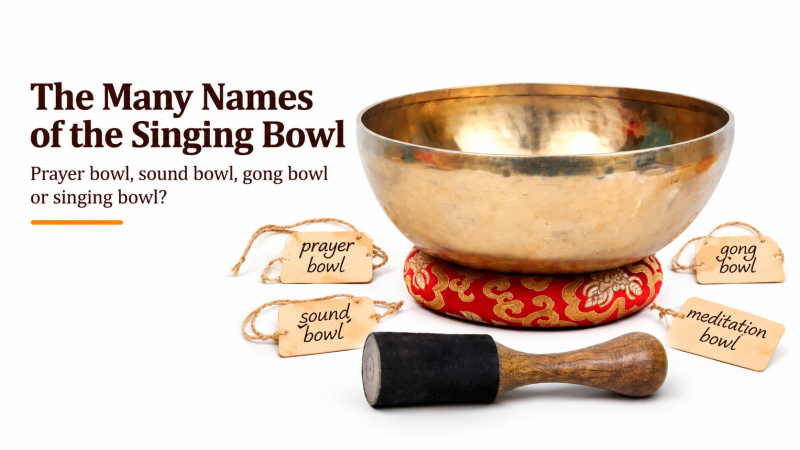
A prayer bowl, sound bowl, gong bowl, meditation bowl and Tibetan or Himalayan singing bowl are usually all names for the same instrument: a metal bowl that rings when struck and sings when its rim is circled. The names describe how the bowl is used, where it comes from or the kind of instrument it is, not a different object. The main exceptions are crystal bowls, Japanese and Chinese temple bowls, and shrine offering bowls.
Key takeaways
- One instrument: most of these names describe the same hand-made metal bowl.
- Use, place or type: "meditation bowl" names the use, "Himalayan bowl" the place and "gong bowl" the kind of instrument.
- Some names differ: crystal bowls, temple bowls and offering bowls are different objects.
- Read the listing: material, how it is made and who played it matter more than the name.
Why does a singing bowl have so many names?
In Nepal, a metal bowl was simply a bowl. In Nepali it is a bata, and some of the bowls now sold as singing bowls were once everyday rice bowls (The Kathmandu Post).
The name "singing bowl" came later, with the trade in Kathmandu, and the bowls were being exported to the West from the early 1970s (Wikipedia). As they spread, each shop and country added its own name for the same thing.
Some names describe how the bowl is used, some where it comes from and some what kind of instrument it is. This table shows what each of the common singing bowl names usually means:
| Name | What it usually means | Same as a singing bowl? |
|---|---|---|
| Singing bowl | A metal bowl that rings when struck and sings when its rim is circled | Yes |
| Tibetan singing bowl | The best-known trade name; most are made in Nepal and northern India | Yes |
| Himalayan or Nepali singing bowl | Names the region where the bowl is made | Yes |
| Prayer bowl | A Western name taken from the bowl's link with Buddhist practice | Yes, usually |
| Meditation bowl | Names the use: a bowl to begin or anchor meditation | Yes |
| Healing bowl | Names the use in sound healing | Yes |
| Chakra bowl | A bowl chosen for one chakra, often as part of a set | Yes |
| Gong bowl or bowl gong | A music term for a bowl-shaped bell | Yes |
| Standing or resting bell | The family of instruments a singing bowl belongs to | Yes |
| Sound bowl | A broad name, also used for crystal bowls | Sometimes |
| Buddhist bowl or temple bowl | Often a Japanese rin or a Chinese temple bowl | Related, but different |
| Tibetan bell | Can mean a singing bowl or the ritual hand bell used with a dorje | Check the photo |
| Crystal singing bowl | Made from quartz, not metal | No |
| Offering bowl | A small bowl for water offerings on a shrine | No |
Tibetan prayer bowl: is a singing bowl used for prayer?
"Prayer bowl" is mostly a Western name, taken from the singing bowl's link with Buddhist practice. It describes a mood more than a fixed ritual use.
The rows of small bowls filled with water on a Tibetan shrine are offering bowls, a different object made for offerings, not for sound. We explain them in our guide to what dharma tools are.
Many people do strike a singing bowl to begin prayer or meditation at home. So the name is not wrong, just broad.
Meditation bowl, healing bowl and chakra bowl
These names describe the use, not a different bowl. A meditation bowl is a singing bowl used to begin or anchor meditation, and most people choose a hand-hammered bowl of about 5 to 7 inches; see our singing bowls for meditation.
A healing bowl is a singing bowl used in sound healing sessions. Whatever it is called, a singing bowl supports relaxation and focus, and does not treat any condition.
A chakra bowl is a singing bowl chosen for one chakra, usually as part of a set. Our chakra singing bowl sets come in sets of 3, 5, 7, 9 and 12.
Gong bowl, bowl gong and standing bell
In music, a singing bowl belongs to the family of standing bells, also called resting bells. These are bells that sit on their base, open side up, instead of hanging (Wikipedia).
English has many names for this family, including bowl gong, cup gong and rin gong, which is where "gong bowl" comes from. A singing bowl is even classified twice: once as a struck instrument and once as a rubbed one, for when its rim is circled.
A flat gong that hangs from a stand is a different instrument with a different sound. If that is what you are after, see our Tibetan gongs.
Tibetan, Himalayan or Nepali singing bowl?
"Tibetan singing bowl" is the best-known trade name, but most of these bowls come from Nepal and northern India (Wikipedia). The Kathmandu Post reports that the "Tibetan" label grew with the trade in Kathmandu, partly because it made the bowls sound more valuable.
"Himalayan" or "Nepali singing bowl" is the more accurate name for bowls like ours, made in the Kathmandu Valley. We explain where bowls are really made in where singing bowls are made.
Older bowls also carry their own local form names, such as Jambati, Thadobati, Ultabati and Manipuri. You will find these in our antique singing bowls.
Buddhist bowl, temple bowl and rin: related but different
In Japanese Buddhism, a bowl-shaped bell called a rin is struck during chanting and on home altars, and other names include kin and keisu (Wikipedia). In Chinese temples, chanting may be marked by a bowl called a qing, played alongside a wooden block.
These temple bowls are close cousins of the singing bowl, but they are made for a different shape, sound and use. If you want a bowl that sings when its rim is circled, look for a Himalayan singing bowl.
Crystal bowls and "sound bowls"
Crystal singing bowls are made from quartz rather than metal, and some modern ones are formed from crushed synthetic crystal (Wikipedia). They give a pure, strong, single tone and are often sold as sound bowls.
A metal bowl gives many layered tones at once and can be placed on or near the body. We compare the two in metal vs crystal singing bowls.
Tibetan bell or singing bowl?
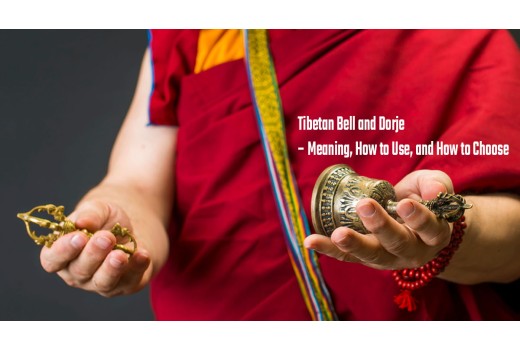
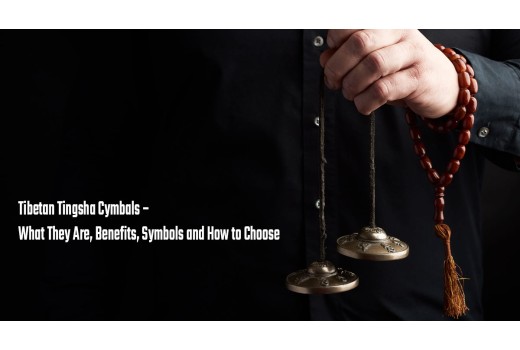
"Tibetan bell" can mean a singing bowl, the ritual hand bell used with a dorje, or even a pair of tingsha. The photo usually settles it: a singing bowl sits open side up, while a hand bell has a handle.
If you are looking for the ritual bell, see our Tibetan bell and dorje sets.
Hand-hammered or hand-cast: the name that matters most
Whatever a metal bowl is called, it is made in one of two ways: hammered by hand, or poured into a mould and finished by hand. There is no machine that makes a singing bowl, so a "machine-made" bowl is a hand-cast bowl.
Hand-hammered singing bowls show hammer marks and usually give a layered sound with a long fade. Hand-cast singing bowls are smoother and give a clearer, simpler tone, which makes them a good first or gift bowl.
We explain the difference in more detail in handmade vs hand-beaten vs cast singing bowls.
How to tell what you are buying, whatever it is called
Look past the name in the title and check these five things in the listing:
- Material: a metal alloy or quartz crystal.
- How it is made: hand-hammered or hand-cast.
- Where it is made: Nepal, India or somewhere else.
- Size and weight: together they shape the note and how long the sound lasts.
- Who played it: whether this bowl was played and checked before it was sent.
Every Dharma Tool bowl is played and selected by Sunita for each order before it leaves Kathmandu, usually within 3 to 4 business days. For finishes such as etched, engraved and painted bowls, see our guide to types of Tibetan singing bowls.
Whatever you call it, choose it by sound
Every Dharma Tool singing bowl is made in Nepal, and played and checked by a sound healer before it leaves Kathmandu.
| If you want | Look at |
|---|---|
| Any singing bowl | Tibetan singing bowls |
| A hand-hammered bowl | Hand-hammered singing bowls |
| A first or gift bowl | Hand-cast singing bowls |
| A bowl for meditation | Singing bowls for meditation |
| Bowls chosen for the chakras | Chakra singing bowl sets |
| A bowl with your own name, mantra or symbol | Custom singing bowl |
Frequently asked questions
Is a prayer bowl the same as a singing bowl?
Usually, yes. "Prayer bowl" is a Western name for the singing bowl, taken from its link with Buddhist practice. The small water bowls on a Tibetan shrine are offering bowls, which are a different object.
What is a sound bowl?
A sound bowl is a broad name for any bowl played for its sound. It can mean a metal singing bowl or a crystal bowl, so check the material in the listing.
What is a gong bowl?
A gong bowl, or bowl gong, is a music term for a bowl-shaped bell, which is what a singing bowl is. It is not the same as a flat hanging gong.
What is the difference between a Tibetan and a Himalayan singing bowl?
Usually none. "Tibetan singing bowl" is the best-known trade name, while "Himalayan" or "Nepali" describes more accurately where most bowls are made today.
Is a crystal bowl a singing bowl?
A crystal bowl sings when its rim is circled, but it is made from quartz rather than metal. It gives a pure single tone, while a metal bowl gives many layered tones at once.
What is a Buddhist bowl or temple bowl?
These names often mean a Japanese rin or a Chinese temple bowl, struck during chanting and at home altars. They are related to singing bowls but are made for a different shape, sound and use.
What is a singing bowl called in Nepal?
In Nepali, a metal bowl is simply a bata, and some were once everyday rice bowls. "Singing bowl" is a newer trade name that grew with the export trade from Kathmandu.
What is a meditation bowl?
A meditation bowl is a singing bowl used to begin or anchor meditation. Most people choose a hand-hammered bowl of about 5 to 7 inches for this.
Can a singing bowl heal?
Many people use a singing bowl to relax and settle the mind. A singing bowl supports relaxation and focus, and does not treat any condition.
Make a bowl that is yours
Choose the size, note and finish, and add a name, mantra or symbol, free of charge.