




Can You Stand in a Singing Bowl With a Mantra - The Rules
You can stand in a singing bowl with a mantra if the mantra is on the outside wall and the inside is plain, but tradition says not to stand on a mantra, Om or holy image carved inside the base. In Nepali and Tibetan culture the feet are the lowest part of the body, and sacred words are never stepped on. Choose a plain bowl, step in with clean bare feet, and dhog before you step in.
Like any sound practice, standing in a bowl supports relaxation and focus, and does not treat any condition. The rules below are about respect for the tradition the bowl comes from.
Key takeaways
- Plain inside is best: your feet should never rest on sacred words or images.
- Mantra outside only is fine for most: your feet never touch it.
- Dhog before you step in: the Nepali bow of respect, palms joined, forehead to the rim.
- Clean feet, slow steps: step in gently and step out the same way.
Why feet matter around sacred objects
In Nepali culture the feet are seen as the least clean part of the body, while paper and writing carry the respect given to learning and the gods. If someone steps on paper by accident, they pick it up and touch it to their head, as the USC Digital Folklore Archives record.
Tibetan Buddhist centres teach the same care. Dharma texts are not sat on, stepped over or placed directly on the floor, and people avoid pointing the soles of their feet at an altar, as the Kurukulla Center explains.
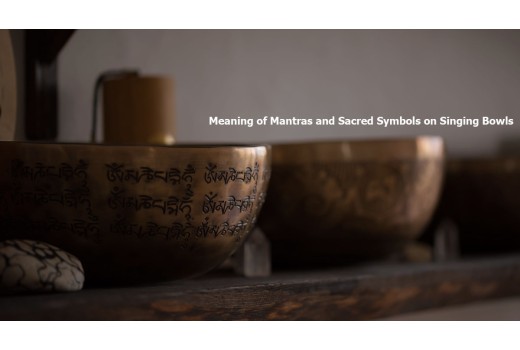
A mantra carved on a singing bowl is a sacred text in metal, which is why many people call these sacred bowls. Where the mantra sits on the bowl decides whether you should stand in it.
Can you stand in a singing bowl with a mantra?
| What is on the bowl | Can you stand in it? |
|---|---|
| Plain inside and out | Yes. This is the best bowl to stand in |
| A mantra or design on the outside wall only | Yes, with respect. Your feet never touch the sacred words |
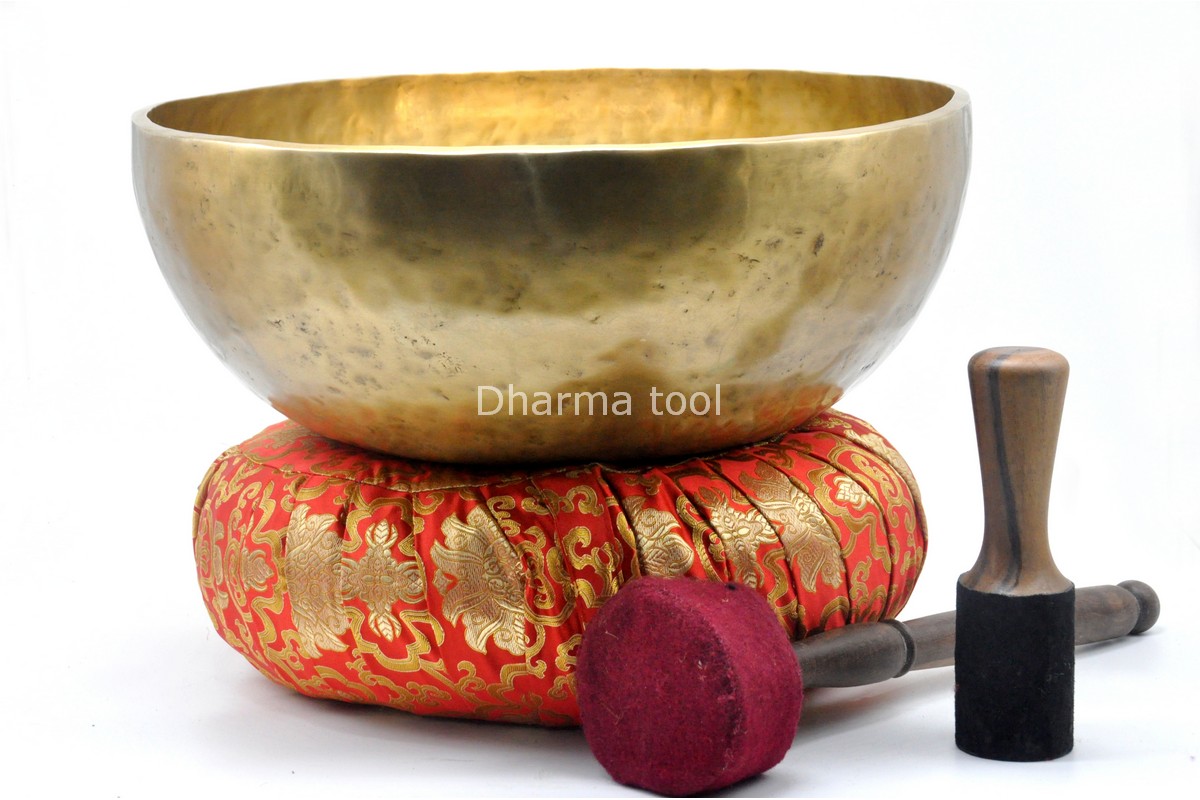
| A mantra, Om or a deity inside the base | Better not. Play this bowl instead of standing in it |
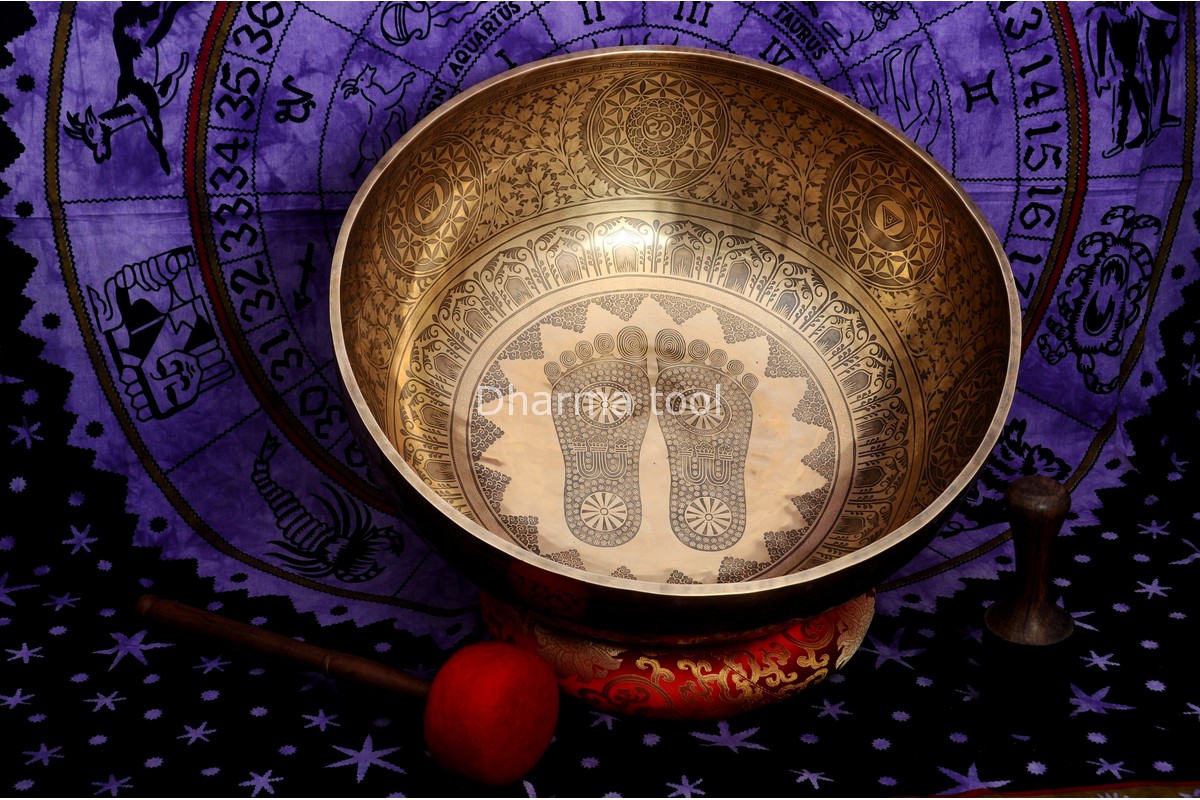
| A Buddha Foot carved inside | It is made to mark where the feet go; some people stand there with respect, others keep it for playing |
| The Flower of Life or other geometry | Yes, for most people. It is a pattern, not a sacred text |
A singing bowl you stand in is made for it, so standing in one is not disrespectful in itself. Our guide to singing bowl symbols and mantras explains what each carving means, so you can tell which is which.
Dhog before you step in: the Nepali bow of respect
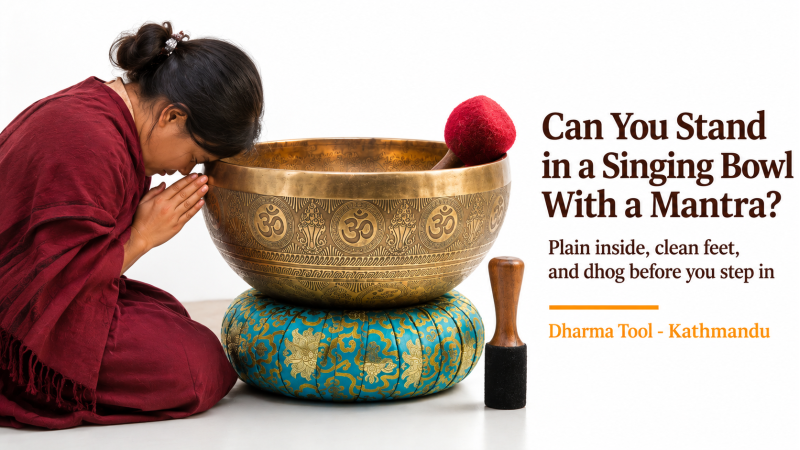
In Nepal, the bow of respect is called dhog (ढोग), and to do it is dhognu (ढोग्नु). You join your palms, bow, and touch your forehead to the feet of an elder, a deity or a sacred object; in Tibetan practice the bow of respect is the prostration, chak tsal.
Before you stand in a bowl, kneel beside it, join your palms and touch your forehead to the rim. If kneeling is hard, touch the rim with your fingertips and then touch your forehead.
It takes a few seconds, and it turns stepping into a bowl into a small act of respect. Many people dhog again when they step out.
The rules for standing in a singing bowl
- Choose the right bowl: plain inside, at least 15 inches across, on its cushion on a flat floor.
- Clean bare feet: wash or wipe your feet first; never step in with shoes.
- Dhog first: palms joined, forehead to the rim, and a moment of quiet intention.
- Step in gently: one foot at a time, both feet flat near the centre, with a hand on a chair or a helper's arm.
- Never step over a bowl: walk around bowls on the floor, yours or anyone else's.
- Mind your soles: when you sit after standing, avoid pointing your feet at an altar or at other bowls.
- Step out slowly: one foot at a time, then join your palms and dhog again if you wish.
- If a foot touches a mantra: touch the spot with your fingertips, then touch your forehead.
For safety while standing, including who should check with a doctor first, see our guide to standing singing bowls. A second person should play the bowl while you stand in it.
What about the Buddha Foot bowl?
A foot singing bowl is any large bowl made to stand in; the Buddha Foot bowl adds the Buddha's footprints, an ancient sign of his presence, carved to mark where your own feet go. Many people stand there with deep respect, and some prefer to keep the bowl for playing only.
Both choices are respectful. Our guide to the Buddha Foot bowl explains the meaning of the footprints and how the bowl is used.
Om, deities and Hindu designs
Om is sacred in both Hindu and Buddhist practice, and the same is true of deities such as Shiva. If Om or a deity is carved inside the base, play the bowl rather than stand in it; our guide to the Om singing bowl explains what the syllable means.
If the design is only on the outside wall, standing in the plain inside is a personal choice. When in doubt, choose a plain bowl for standing and keep the carved bowl for playing.
Keeping a standing bowl with respect
- Keep it raised: on its cushion in a clean place, not on the bare floor among shoes.
- Cover it: a soft cloth keeps dust off and marks it as something special.
- Give it a place: near your altar or practice space, as in our guide to building a sacred space at home.
- Clean it gently: a soft, dry cloth is enough; our singing bowl care guide has the details.
Why these small acts matter is part of a bigger story, told in our guide to why singing bowls feel sacred.
Choosing a bowl to stand in
Our large standing singing bowls start at about 15 inches, and the plain ones are the best choice for standing. Every bowl is played and selected by Sunita for each order before it leaves Kathmandu.
| If you want | Look at |
|---|---|
| A plain bowl made for standing | Extra large standing singing bowl |
| A plain giant bowl made on the full moon | Extra large full moon singing bowl |
| A plain bowl with a bright finish | Extra large standing bowl, shining finish |
| A bowl with the Buddha's footprints | Buddha Foot master healing bowl |
| Your mantra on the outside, plain inside | Custom singing bowl |
If you want a mantra on your standing bowl, a custom singing bowl can carry it on the outside wall while the inside stays plain. Every order leaves Kathmandu within 3 to 4 business days by DHL Express.
A standing bowl made with respect
Ask for your mantra on the outside and a plain inside, made by hand in Nepal.
Learn more, free
Our free singing bowl healing course is designed from Sunita's own notebook. It takes you from your first strike to full sessions, one short lesson at a time.
Find your standing bowl
Hand-hammered standing bowls from 15 inches up, played and selected by a sound healer before they leave Kathmandu.
Frequently asked questions
Can you stand in a singing bowl with a mantra on it?
If the mantra is inside the base, where your feet go, tradition says it is better to play the bowl than stand in it. If the mantra is only on the outside wall and the inside is plain, many people stand in it with respect.
Is it disrespectful to stand in a singing bowl?
Not in itself. Large bowls are made to be stood in, and the respect lies in which bowl you choose and how you step in.
What is dhog?
Dhog is the Nepali bow of respect: you join your palms, bow and touch your forehead to an elder's feet, a deity or a sacred object. To do it is dhognu, and many people dhog before stepping into a bowl.
Can I stand on a Buddha Foot singing bowl?
The Buddha Foot is carved to mark where the feet go, and many people stand there with respect. If it does not feel right to you, stand in a plain bowl and keep the Buddha Foot bowl for playing.
What should I do if my foot touches a mantra by accident?
Touch the spot gently with your fingertips, then touch your fingertips to your forehead. It is the same gesture Nepalis use when a foot touches paper or a book.
Can I stand in a bowl with Om inside?
It is better not to. Om is sacred in both Hindu and Buddhist practice, so a bowl with Om inside the base is best played, not stood in.
Do I need to wash my feet before standing in a singing bowl?
Yes. Step in with clean, bare feet; it shows respect and also protects the bowl's surface.
Where should I keep a standing bowl when I am not using it?
Keep it on its cushion in a clean place, raised from the bare floor and away from shoes. A soft cloth over the bowl keeps dust off.
Learn from Sunita's notebook, free
From your first strike to a full session, with the free singing bowl healing course.