




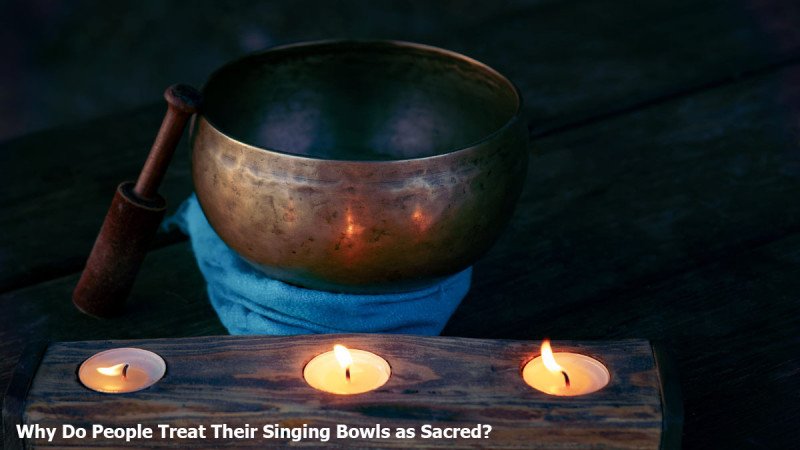
Why Do People Treat Their Singing Bowls as Sacred?
Because the bowl marks a threshold. Its job is to signal that ordinary time has ended and something else begins, and an object that does that daily stops being neutral. Add conditioning, the wordless immediacy of sound, and visible evidence of the maker's hands, and you get reverence — not worship. Nobody prays to a bowl. They treat it as set apart, which is a different thing and a reasonable one.
Most people who own a singing bowl for any length of time end up doing things they would struggle to justify.
Keeping it on cloth rather than the floor. Never stacking it with anything. A slight tightening when a visitor picks it up without asking. Not selling it, even when clearing out everything else. Meaning to leave it to someone.
None of that is silly, and it is worth understanding rather than either mystifying or dismissing. There are real mechanisms behind it — and one honest complication that almost nobody mentions.
Reverence Is Not Worship
Worth separating these, because the word people reach for is usually the wrong one.
Worship means addressing something as a power. Petitioning it, attributing agency to it, believing it hears you.
Reverence means treating something as set apart. Handling it carefully, keeping it somewhere particular, not using it casually.
Essentially nobody worships a singing bowl. What they do is revere one — the same way a musician treats an instrument, a cook treats a good knife, or anyone treats something that belonged to a grandparent.
That distinction matters because reverence needs no supernatural claim to make sense. It is what humans do with objects that carry weight, and the reasons are traceable.
Four Reasons It Happens
1. The Bowl Marks a Threshold
This is the strongest reason and the least obvious.
A singing bowl's actual function in practice is to mark a boundary. One strike means the session has begun; another means it has ended. Ordinary time stops, something else starts, and now it stops again.
Do that every day for a year and the object stops being an item near the doorway. It becomes the doorway. And people do not treat doorways to important places casually — every tradition has a threshold that gets crossed deliberately.
This is why the reverence tends to grow with use rather than arriving with the purchase.
2. Conditioning Is Real
Repeatedly pair an object with a particular state and the object begins producing that state on its own. This is ordinary associative learning, not belief.
Someone who has sat with the same bowl daily for months has built a genuine conditioned response. Picking it up begins the settling before anything is struck. They are not imagining that.
Which means the bowl does something the moment it is touched — just not through any property of the bronze. The same mechanism is why incense works so well as a practice cue, covered in our article on incense in singing bowl practice.
3. Sound Arrives Without Language
A bowl produces an emotional response before any thought about it. That is partly acoustics — a sustained tone slows breathing and settles the nervous system — and partly the fact that hearing bypasses the interpretive step that reading or looking requires.
The result is a strong feeling with no obvious cause attached. And when a feeling arrives without explanation, attribution lands on whatever is present. The bowl is present. So the bowl gets the credit.
4. Someone's Hands Are Visible in It
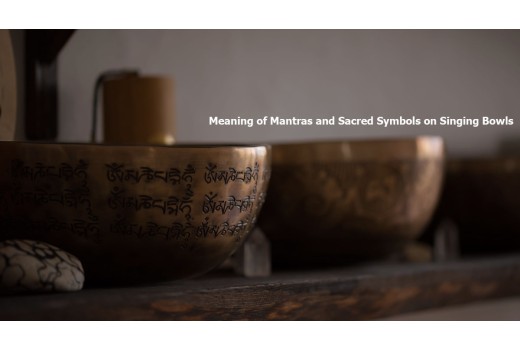
A hand-forged bowl carries the marks of its making — hammer dents, slight asymmetry, a note nobody chose. Two bowls of identical size sound different because of those irregularities, as our article on why every singing bowl sounds different explains.
Objects that show their maker are treated differently from objects that do not. This is why people keep handmade pottery and discard identical mugs. The bowl was made by a person, in a workshop, in a tradition that runs back centuries, and that is visible in the metal itself.
The marks are the reason a bowl stops being an object
Hammer dents, slight asymmetry, a note that emerged rather than being chosen. Explore handmade singing bowls forged by artisan families in the Kathmandu Valley, or antique collected pieces that have already been someone's for a century or more.
The Complication Nobody Mentions
Here is the part that gets left out, and it is worth stating clearly.
Singing bowls are not traditionally sacred objects in Himalayan practice.
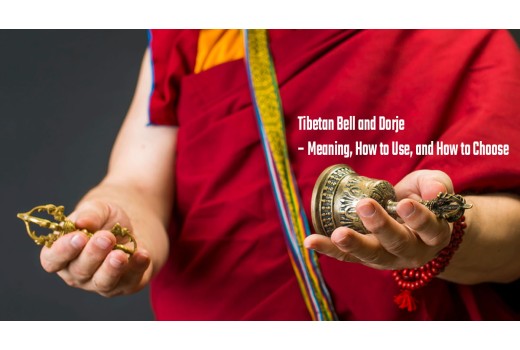
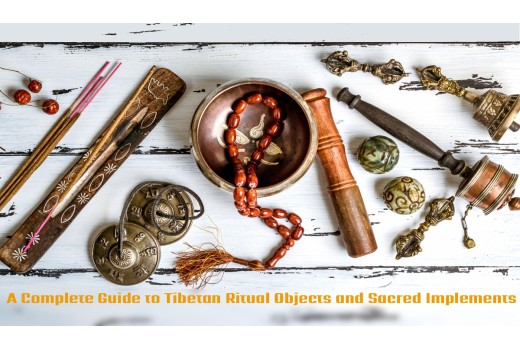
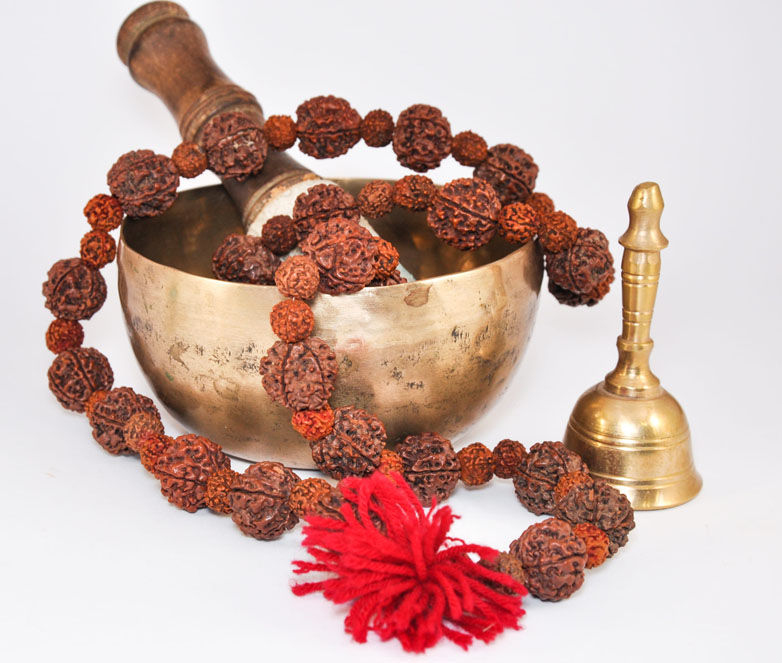
The genuinely consecrated items are different ones. The bell and dorje are ritual implements with specific doctrinal meaning — wisdom in the left hand, method in the right, never used apart. Prayer wheels contain consecrated mantra scrolls wound around a central axis. Statues are filled and blessed in formal ceremonies.
Bowls, for most of their history, were vessels. This is not a slight — it is why the Nepali words for them, dabaka, bati and bata, simply mean "bowl." No word for singing, nothing ritual. Our article on who invented the singing bowl goes into what the evidence actually shows.
So a good part of the reverence Western owners feel is borrowed — transferred from genuinely ritual objects sitting nearby on the same shelf, in the same tradition, with the same appearance.
Which Does Not Make It Wrong
Objects become sacred through use rather than through certification. That is how it has always worked, including for the objects that are now formally consecrated. Something gets treated as set apart for long enough, by enough people, and it is.
What is happening with singing bowls is a genuine process, observable in real time, in a tradition perhaps sixty years old rather than six hundred.
The only thing worth avoiding is claiming the older lineage for it. The bowls are genuinely old, genuinely hand-forged, genuinely made in a centuries-deep craft. They do not need an invented ritual history on top, and claiming one invites exactly the scepticism it was meant to prevent.
Why You Feel Odd About Others Playing It
Nearly every owner recognises this and few say it aloud. Someone picks up your bowl without asking and something tightens.
Two reasons, and both are legitimate.
The practical one. People who have not handled a bowl strike it too hard, wear rings that buzz against the metal, and set it down on hard surfaces. Bronze is durable and brittle at once, and a dropped bowl can crack invisibly and never ring properly again.
The conditioning one, which is more interesting. If your bowl has become a cue for a particular state, that association is built through consistency. An anchor works because the object means one thing. The more contexts it appears in, the weaker the association becomes.
This is the same reason a blend of incense reserved for practice works better than one you also burn while doing your accounts. Exclusivity is not superstition here — it is how conditioning is maintained.
So the instinct is sound. You do not need to explain it in energetic terms to justify it.
Where This Tips Over
One line worth naming, because articles like this rarely name it.
Treating a bowl as meaningful is healthy. Treating it as having preferences is where it starts going the wrong way.
"It doesn't like being played by other people." "It chose me." "It won't sing for him."
Those are ordinary explanations dressed as agency. A bowl that will not sing for a visitor is a bowl being rimmed too fast by someone who has not learned the technique — covered in our guide on why a singing bowl takes time to sing. Nothing has been decided by the bronze.
The distinction matters practically. An object you find meaningful is one you are in charge of. An object with preferences starts making decisions for you — about who may enter a room, what may be moved, what a bad session means. That is a small unhappiness dressed as devotion, and it is worth catching early.
Reverence enriches. Attribution of agency slowly narrows things.
What Reverence Looks Like in Practice
Everything below is sensible, and none of it needs a metaphysical justification.
- Keep it somewhere consistent. The same shelf, the same corner. This maintains the association and means you will actually reach for it.
- Stand it on cloth or a cushion. Practical — it protects the rim and stops the bowl sliding. Also marks it as not-a-shelf-item.
- Do not stack anything in or on it. Metal against metal chips rims, and rims are the most fragile part of the instrument.
- Ask before letting someone play it, and show them how first. Both protect the bowl and the association.
- Leave the patina alone. It protects the metal and holds the history. Polishing an antique bright reduces its value considerably.
- Mark occasions with it. A move, a loss, a beginning. This is how objects accumulate meaning, and it is the whole mechanism working as intended.
On Blessing
Many people want a bowl blessed, and it is worth being straightforward about what that is.
A monk blessing is a genuine ceremonial act performed within a living tradition. It does not alter the metal or the acoustics. What it does is mark the object as dedicated — the same threshold-crossing the bowl itself performs, applied to the bowl.
For a piece bought to mark a birth, a death, or the beginning of a practice, that is meaningful in exactly the way the rest of this article describes. Our custom singing bowl service includes an optional monk blessing, alongside engraving a name, a date or a mantra at the point of forging.
A name, a date, and a blessing — worked in before the bowl is finished
Objects become significant through use, and a bowl commissioned for an occasion starts with the meaning already attached. Through Dharma Tool's custom singing bowl service you specify size, note, wall thickness and engraving, hand-forged by artisans in Kathmandu, with optional monk blessing before it ships.
The Short Version
People treat their singing bowls as sacred because the bowl is where the boundary between ordinary time and set-apart time gets drawn, repeatedly, by hand, for years. Objects that do that job accumulate significance. This is how it has always worked.
It does not require the bronze to be special, and it does not require an ancient ritual lineage the bowls never had. It requires only that someone has picked up the same object at the same moment, over and over, and something changed each time.
That is enough. It has always been enough.
Frequently Asked Questions
Why do people treat singing bowls as sacred?
Because the bowl marks a threshold — one strike signals that ordinary time has ended and practice begins. An object doing that daily stops being neutral. Add conditioning, the wordless immediacy of sound, and visible evidence of the maker's hands, and the result is reverence. Notably this is not worship: essentially nobody prays to a bowl, they treat it as set apart.
Are singing bowls traditionally sacred objects?
Not really. The genuinely consecrated items in Himalayan practice are the bell and dorje, prayer wheels containing mantra scrolls, and statues filled and blessed in formal ceremonies. Bowls were largely household vessels — which is why the Nepali words for them, dabaka, bati and bata, simply mean "bowl." Much of the reverence they receive in the West is transferred from genuinely ritual objects nearby.
Why do I feel uncomfortable when others play my singing bowl?
Two legitimate reasons. Practically, people unfamiliar with bowls strike too hard, wear rings that buzz against the metal, and set them down carelessly — bronze is durable and brittle at once. And if your bowl has become a cue for a particular state, that association depends on consistency. The more contexts it appears in, the weaker the anchor becomes.
Does a singing bowl really calm me before I even play it?
Yes, through conditioning rather than any property of the metal. Repeatedly pairing an object with a particular state means the object begins producing that state on its own. Someone who has sat with the same bowl daily for months has built a genuine conditioned response, so picking it up starts the settling before anything is struck.
Should I have my singing bowl blessed?
It depends what you want it to mark. A monk blessing is a genuine ceremonial act within a living tradition, and it does not alter the metal or the acoustics — what it does is dedicate the object. For a bowl bought to mark a birth, a death or the beginning of a practice, that dedication is meaningful in the same way the rest of the object's significance is.
When does reverence for an object become unhealthy?
When the object is treated as having preferences rather than meaning. "It doesn't like being played by others" or "it chose me" are ordinary explanations dressed as agency — a bowl that will not sing for a visitor is usually being rimmed too fast. The distinction is practical: an object you find meaningful is one you are in charge of, while an object with preferences starts making decisions for you.