



Meditation Bells - Which Bell to Use: Singing Bowl, Tingsha, Tibetan Bell or Burma Bell
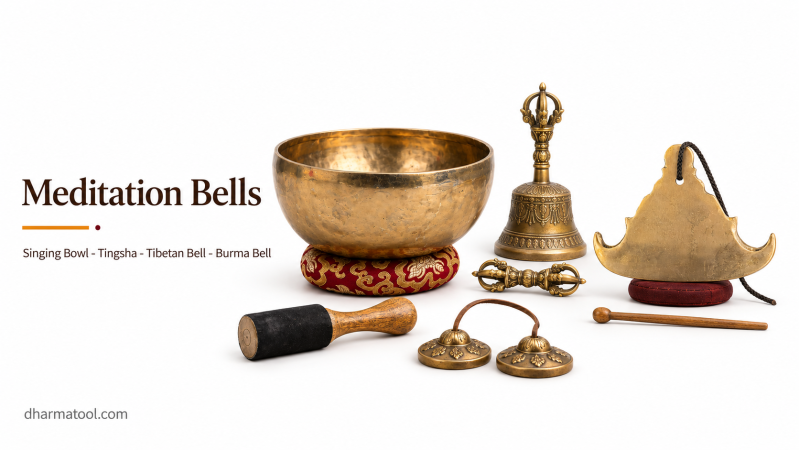
A meditation bell is any bell you ring to open and close a sitting, or to bring your attention back to the breath. The four used most are the singing bowl, the tingsha, the Tibetan bell with its dorje, and the Burma bell. For most people meditating at home, one hand-hammered singing bowl of 5 to 7 inches is the easiest place to start.
Each bell has its own sound and its own job: a long fading tone to follow, a short bright signal, a ritual sound, or a shimmering tone that fills a room. Like any sound practice, ringing a bell supports relaxation and focus, and does not treat any condition.
Key takeaways
- Singing bowl: the most versatile meditation bell, both a signal and a tone to follow into silence.
- Tingsha: a short, bright ring to open and close, popular in yoga classes and groups.
- Tibetan bell and dorje: the ritual bell of Tibetan Buddhist practice, rung with mantra and prayer.
- Burma bell: struck and then spun, for a shimmering tone that fills the room.
What is a meditation bell?
A meditation bell is any bell used to mark time in meditation: the start of a sitting, a change of practice, and the end. Buddhist bells for meditation come in many forms, and each tradition has its own way of ringing them.
In Soto Zen, the bell is rung three times when zazen begins and once when it ends (Soto Zen). In the Plum Village tradition of Thich Nhat Hanh, you do not strike the bell, you invite it, and everyone who hears it stops for three mindful breaths (Deer Park Monastery). The Zen bell itself is usually a bowl-shaped standing bell, called rin or keisu in Japan.
A singing bowl is itself a standing bell: an upturned bell that rests on its base (Wikipedia). In temples these bowls are struck to mark meditation and chanting, not rubbed around the rim, and a single strike is still the best way to use one as a meditation bell at home.
The four meditation bells compared
| Bell | Sound | How you play it | Best for |
|---|---|---|---|
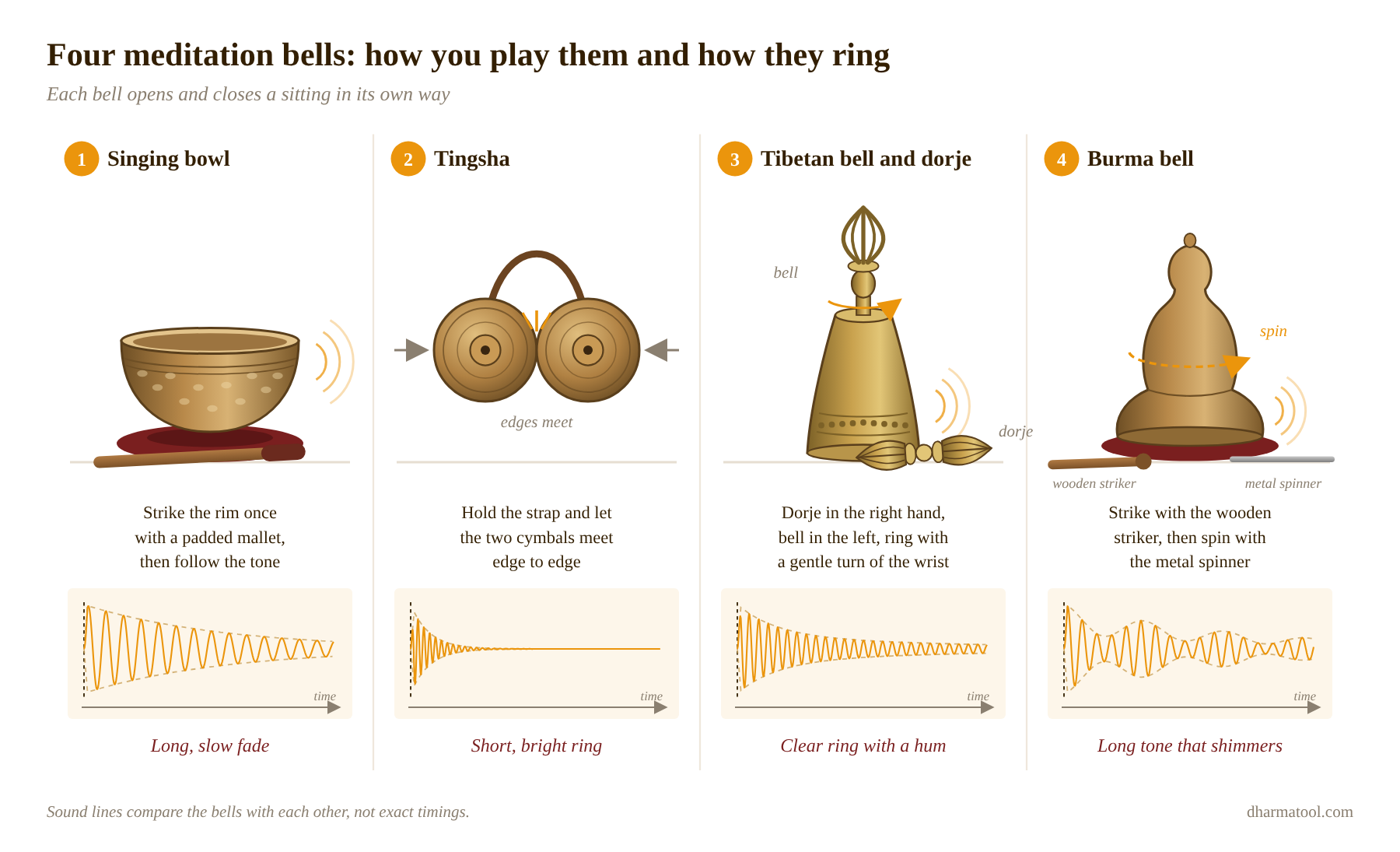
| Singing bowl | Warm, layered tone that fades slowly | Strike the rim once with a padded mallet | Opening and closing a sitting, and following the tone into silence |
| Tingsha | Bright, clear, high ring | Hold the strap and let the two cymbals meet edge to edge | A short, clear signal for yoga classes and groups |
| Tibetan bell and dorje | Clear ring with a long hum | Dorje in the right hand, bell in the left, a gentle turn of the wrist | Tibetan Buddhist practice, mantra and prayer |
| Burma bell | Bright tone that shimmers as it spins | Strike with the wooden striker, then spin with the metal spinner | One long opening tone, or a centrepiece on an altar |
The singing bowl: the most versatile meditation bell
A singing bowl does two jobs at once. Strike it once to open your sitting, then follow the tone all the way into silence as your first point of attention.
For meditation, a hand-hammered bowl of 5 to 7 inches sits in the palm and suits a quiet room, while 8 to 12 inches gives a deeper tone for a larger space. Our meditation singing bowls are chosen for a steady note and a long sustain, and every bowl is played and selected by Sunita for each order before it leaves Kathmandu.

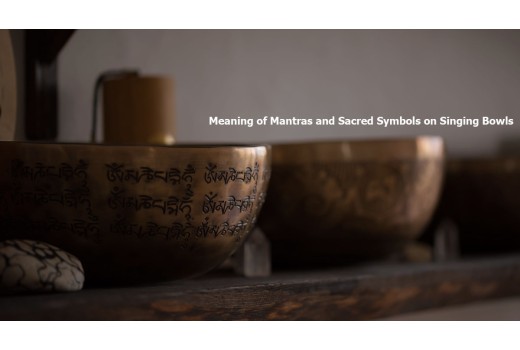
A 6 inch mantra-etched singing bowl makes a good first meditation bell, because the carved mantra also gives your eyes a point of focus. Our guide to meditation with a singing bowl covers the full technique.
The tingsha: a short, bright signal
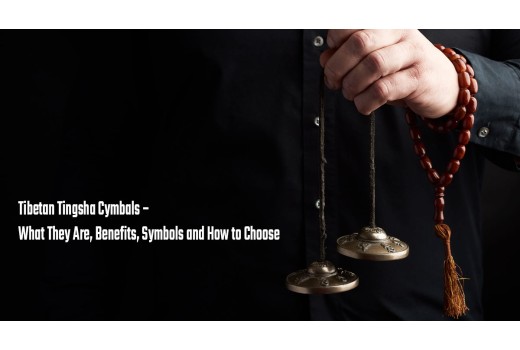
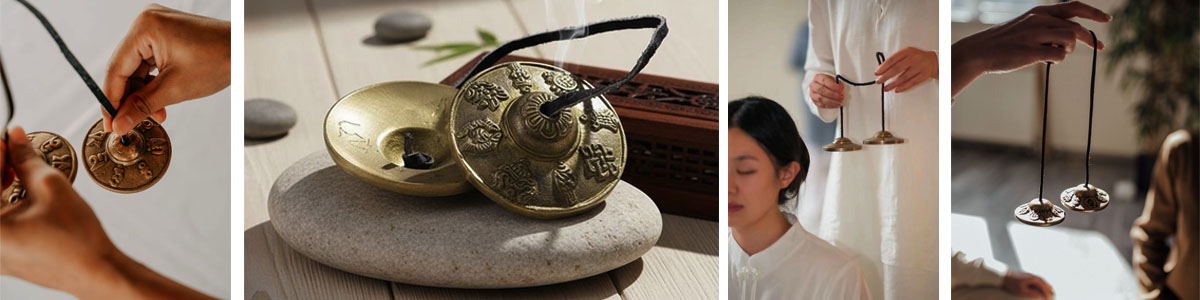
Tingsha are two small, thick cymbals joined by a leather strap, struck together for a clear, high ring (Wikipedia). The sound is short and bright, so it cuts through a room without lingering.
That makes Tibetan tingsha the favourite signal of many yoga and meditation teachers: one ring to begin, one ring to end. Shops often sell them as "Tibetan chimes", and our bronze tingsha, handmade in Nepal, are a classic pair. See how to use tingsha for the grip and the timing.
The Tibetan bell and dorje: the ritual bell
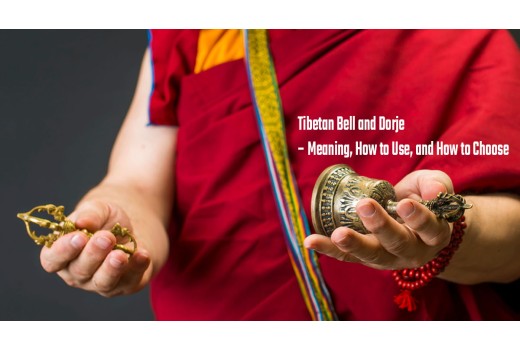
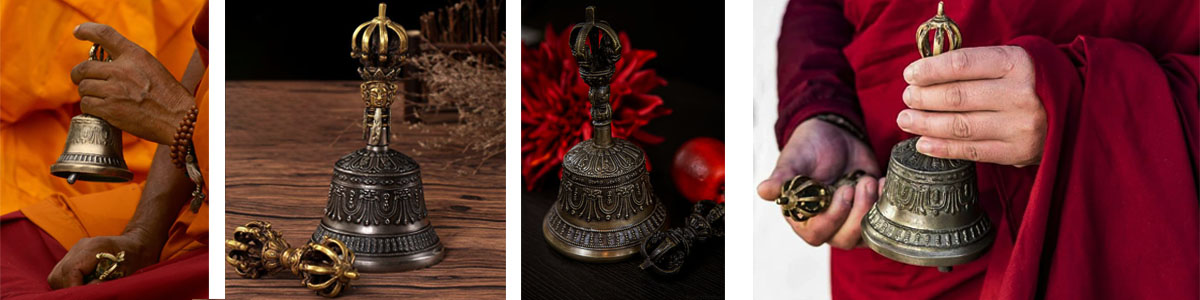
The Tibetan bell, called drilbu or ghanta, is always paired with the dorje, or vajra. The dorje is held in the right hand and the bell in the left, and together they stand for compassionate action and wisdom.
In Tibetan Buddhist practice the bell is rung during prayers, mantras and offerings, and it can open and close a meditation in the same way. A 7 inch handmade bell and dorje set is a comfortable size for home practice, and our Tibetan bell and dorje guide explains the meaning of each part.
The Burma bell: a tone that spins
The Burma bell, or kyeezee, is a bronze temple bell from Myanmar. You strike it with the wooden striker and then spin it with the metal spinner, so the tone shimmers and moves around the room.
One strike carries for a long time, which makes it a beautiful single opening tone or a centrepiece on a meditation altar. Our 6.5 inch Burma bell comes with both striker and spinner, and our Burma bell guide tells its story.
What about meditation chimes?
"Meditation chime" can mean two things. Many shops use "Tibetan chimes" for tingsha, and others mean a hanging chime that rings with several tones.
Our hanging singing bowl chime is three hand-hammered bowls on one cord, played from the top down or from the bottom up. The tones overlap into a gentle cascade, a soft way to open a group sitting or a yoga class.
Which meditation bell should you choose?
| If you | Choose |
|---|---|
| Meditate alone at home and want one bell | A singing bowl of 5 to 7 inches |
| Teach yoga or lead a group | Tingsha, for a clear signal everyone hears |
| Follow Tibetan Buddhist practice | A Tibetan bell and dorje |
| Want one long tone, or a piece for your altar | A Burma bell |
| Want a soft, layered opening | A hanging singing bowl chime |
You do not need all of them. Most people start with one singing bowl and add a tingsha later, when they want a sharper signal for a class or a group.
How to use a meditation bell, step by step
- Settle first: sit comfortably, lower your gaze and take three slow breaths before the first sound.
- Open with the bell: strike the bowl once, or ring the tingsha once, and follow the tone until it is completely gone. If you like the Zen form, ring three times.
- Sit: rest with your breath. In a longer sitting, one soft ring halfway through can call your attention back.
- Close with one ring: strike once to end, and stay still until the tone fades before you open your eyes.
- Keep it gentle: a soft strike gives a cleaner tone than a hard one, and a padded mallet gives the warmest sound.
Whenever you hear a bell during the day, try the Plum Village way: stop, and take three mindful breaths. It turns any ring into a small pause.
Real bell or meditation timer app?
A timer app with a bell sound is handy for keeping time, and many people use one. A real bell is different: you feel the tone in the room, and the act of striking it becomes part of the practice.
A simple way to combine them is to let the app keep time and ring a real bowl or tingsha to open and close.
Make your meditation bell your own
A meditation bell is used every day, so many people like it to be personal. With a custom singing bowl you choose the size, note and finish, and add a mantra, a name or a date, engraved free of charge.
If you later want two or three bowls that sound well together for longer sessions, our set builder suggests a set to match your practice. Every order leaves Kathmandu within 3 to 4 business days by DHL Express.
Learn to open and close a session
Our free singing bowl healing course is designed from Sunita's own notebook. It shows, step by step, how to open and close a session with a singing bowl and tingsha, and how to follow the tone with your breath.
Find your meditation bell
Every Dharma Tool singing bowl, tingsha and bell is made in Nepal and checked by a sound healer before it leaves Kathmandu.
| If you want | Look at |
|---|---|
| A singing bowl for meditation | Meditation singing bowls |
| A first meditation bowl with a mantra | 6 inch mantra-etched singing bowl |
| A short, bright signal | Tibetan tingsha |
| A ritual bell for Tibetan practice | Tibetan bell and dorje sets |
| One long, spinning tone | Burma bell (kyeezee) |
| A soft, layered chime | Hanging singing bowl chime |
| A bowl with your own mantra or name | Custom singing bowl |
Frequently asked questions
What is a meditation bell called?
It depends on the tradition. In Japan the bowl-shaped bell is called rin or keisu, in Tibet the hand bell is the drilbu or ghanta, and many people today use a singing bowl as their meditation bell.
How many times do you ring a meditation bell?
In Soto Zen the bell is rung three times when zazen begins and once when it ends. At home, one ring to open and one ring to close is plenty.
Can I use a singing bowl as a meditation bell?
Yes. A singing bowl is a standing bell, and in temples bowls like it are struck to mark meditation and chanting. Strike it once and follow the tone into silence.
What is the difference between a tingsha and a singing bowl?
A tingsha gives a short, bright ring from two small cymbals, while a singing bowl gives a warm tone that fades slowly. Tingsha make a clear signal, and a bowl is also a tone to follow.
Should I strike or rim a singing bowl for meditation?
Strike it to open and close a sitting, as temples do. Rimming gives a continuous tone that some people like to meditate with, but a single strike is the traditional bell sound.
What size meditation bell is best?
For a singing bowl, 5 to 7 inches suits a quiet room and sits in the palm, while 8 to 12 inches gives a deeper tone for a larger space. Tingsha of about 2.5 to 3 inches carry well in any room or class.
What is a mindfulness bell?
A mindfulness bell is a bell that reminds you to stop and come back to the present moment. In the Plum Village tradition you invite the bell rather than strike it, and everyone pauses for three mindful breaths.
Does a meditation bell have any health effect?
A bell helps you mark time and settle your attention. Like any sound practice, it supports relaxation and focus, and does not treat any condition.
Learn from Sunita's notebook, free
Open and close every sitting with confidence, with the free singing bowl healing course.