




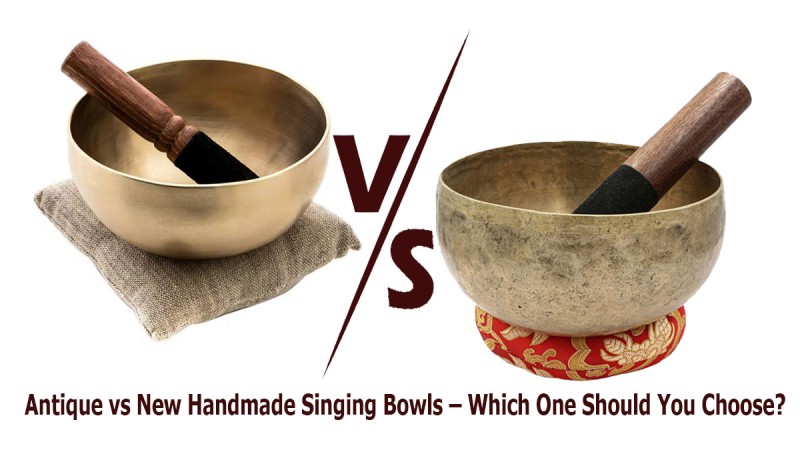
Antique vs New Handmade Singing Bowls: What Really Makes the Difference?
Short answer: antique or handmade singing bowl, which is better?
Neither is better. An antique singing bowl is a genuinely old, used bowl. You choose it for its history and its worn, one-of-a-kind character, and you accept the note and size it happens to have. A new handmade bowl is hand-hammered today by the same method. You choose it when you want a particular size, note, finish or engraving, or a full chakra set. A well-made new bowl will outperform a mediocre antique, so judge any bowl by how it sounds, not by its age.
If you are planning to buy a singing bowl, this question comes up early: an antique, or a new handmade one? Both are made by hand, and both can be excellent instruments. The real differences are in choice, availability, condition and meaning. This guide compares them point by point.
Antique vs handmade singing bowls at a glance
| Antique singing bowl | New handmade singing bowl | |
|---|---|---|
| What it is | A genuinely old bowl, used for years before it was sold | A bowl hand-hammered recently by smiths in Nepal |
| How it is made | Hand-hammered | Hand-hammered |
| Sound | Often described as softer in attack, with a long fade | Clear, layered overtones and a long sustain |
| Choosing a note | Limited to the old bowls that exist | Selectable on most bowls |
| Size and finish | As found | You choose |
| Engraving | Not recommended, it damages an old surface | Free personal engraving |
| Chakra sets | Possible, built to order, slower | Readily available in 3, 5, 7, 9 and 12 bowls |
| Condition | Wear, dents and marks are normal | New |
| Authenticity risk | Fakes are common, so the seller matters | Low, though machine-made bowls are sold as handmade |
| Availability and cost | Scarce, and usually costs more | Widely available, and usually costs less |
What are antique singing bowls?
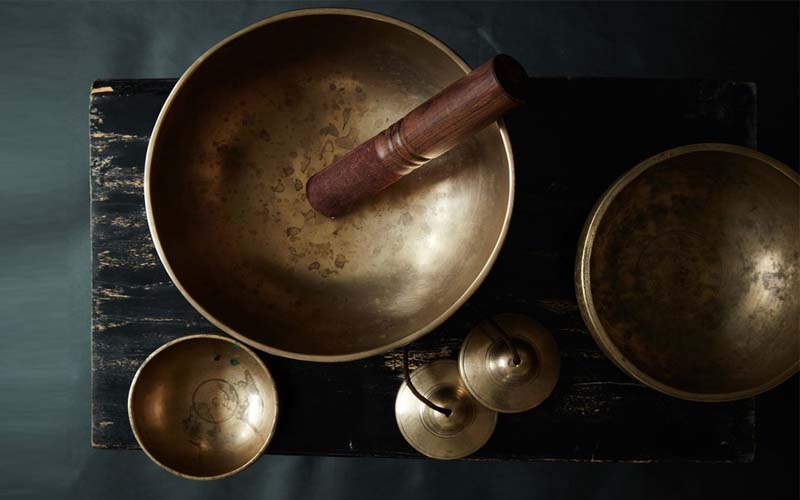
Antique singing bowls, also called old, vintage or collected singing bowls, are genuinely old Himalayan bowls. They were made for use in homes, temples and monasteries, as food bowls, offering bowls and ritual vessels, and were only later sold as sound instruments. They carry no maker's marks or dates, so nobody can say exactly how old a given bowl is. What you can see is the wear.
Why people love antique bowls
- A real connection to history and to the people who used the bowl before you.
- A worn surface and patina that cannot be reproduced.
- A tone many players describe as soft, deep and long-lasting.
- Every bowl is one of a kind.
Limits of antique bowls
- You choose from the old bowls that exist. A specific note or size may not be available.
- A chakra set can be built from antiques, but it takes longer, because the notes cannot be changed.
- Condition varies. Rim damage, the one flaw that affects playing, has to be checked.
- Artificially aged fakes are common. See how to spot a fake antique singing bowl.
- They usually cost more. See why antique singing bowls are expensive.
What are new handmade singing bowls?
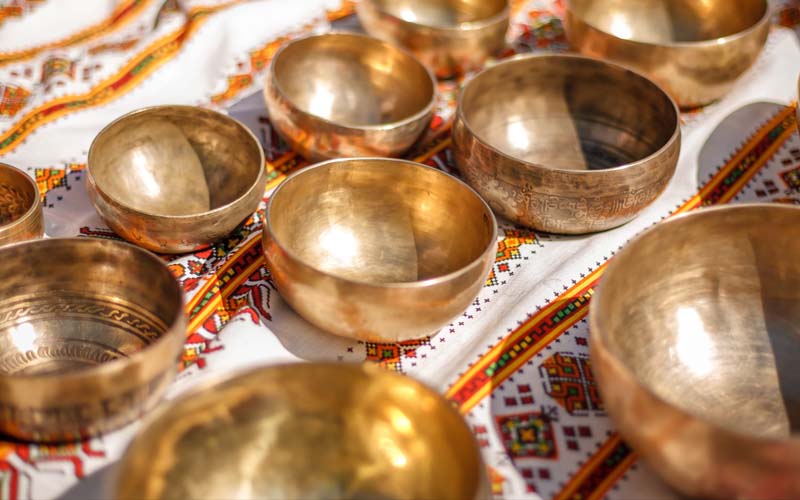
New handmade singing bowls are made today by smiths in Nepal, using the same hammering method as the old ones: a heated disc of bronze alloy, beaten into shape by a team. Each bowl still has its own tone, because no two hand-hammered bowls come out the same. See our hand-hammered singing bowls.
Why people choose handmade bowls
- You can choose the size, the finish and, on most bowls, the note.
- Personal engraving is possible, and with us it is free.
- Full chakra singing bowl sets are readily available.
- They are new, with no hidden wear or damage.
- They usually cost less, which makes them the natural first bowl.
Limits of handmade bowls
- They have no history yet. That will come with your own use.
- A bowl's note is discovered when it is finished, not made to order, so your note is found by selection.
- Quality depends on the smith. Some bowls sold as handmade are machine-pressed.
The real difference
The difference is not natural versus controlled. Both kinds are hand-hammered, and in both the note is discovered, not made. The difference is choice.
- With an antique, you choose from what has survived.
- With a new bowl, there are many more to choose from, so a specific size, note or set is much easier to find.
At Dharma Tool the selection works the same way for both. When you order, I play the bowls that match, old or new, and choose yours. For an antique I am choosing from a smaller collection, so tell me what matters most to you.
Does an antique really sound better?
Many players find old bowls softer in attack and longer in their fade. It is a common experience, but it has not been proven that age itself is the cause. Old bowls were made by different smiths with different alloys, and the poor ones have mostly not survived. What is certain is that age does not rescue a badly made bowl. For how bowls change with time, see how long a singing bowl lasts.
Explore antique and collected singing bowls
Genuinely old Himalayan bowls in Thadobati, Jambati, Manipuri, Lingam and other forms, played and chosen for your order.
Explore hand-hammered singing bowls
New bowls hammered by hand in Nepal. Choose the size, finish and note, with free engraving.
Which one should you choose?
- Choose an antique if history and character matter to you, you are happy to take the note the bowl has, and you want something nobody else owns.
- Choose a new handmade bowl if you need a particular note or size, want engraving, are building a set, or are buying your first bowl.
- Choose both in time. Many practitioners keep one or two old bowls for their character and use new bowls for chakra work and structured sessions.
If you would like help deciding by how you plan to use the bowl, read new handmade vs antique: which one is right for you, or tell us what you need it for.
Frequently asked questions
Are antique singing bowls better than handmade ones?
No. Both are hand-hammered. An antique offers history and unique character, and a new handmade bowl offers choice of size, note, finish and engraving. A well-made new bowl will outperform a mediocre antique.
What is the difference between an antique and a new singing bowl?
An antique is a genuinely old bowl that was used for years before it was sold. A new bowl is made today by the same hammering method. The main practical difference is choice: with an antique you choose from what has survived.
Why are antique singing bowls more expensive?
They are scarce, each one is unique, and they cannot be made again.
Can antique singing bowls be matched to the chakras?
Yes, by selection. A note cannot be changed, so an antique chakra set is built by finding old bowls whose notes belong together. It takes longer than a set of new bowls.
Are new handmade singing bowls authentic?
Yes. A bowl hand-hammered in Nepal today is made the same way as the old ones. Check that it is truly hand-hammered and not machine-pressed.
Which singing bowl is best for beginners?
A new handmade bowl. It costs less, it has no hidden wear, and you can choose the size and note.