




How Long Does a Singing Bowl Last?
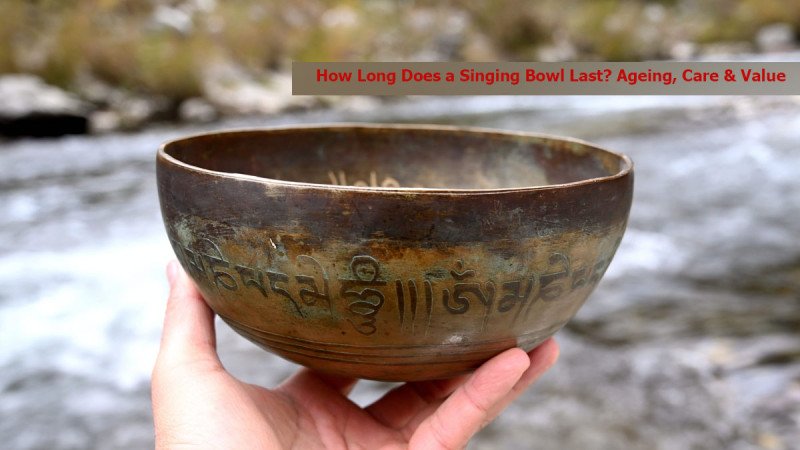
A hand-forged bronze singing bowl lasts for centuries. Bronze resists corrosion and does not wear out through normal playing — antique Himalayan bowls two to three hundred years old are still played daily. A singing bowl does not die of old age. It only stops working if it cracks, and cracking comes from being dropped, struck too hard, or cleaned too aggressively. Kept safely, a good bowl will outlive the person who bought it.
This is one of the few things you can buy that has no realistic end date. Not a decade of use. Not a lifetime. Generations.
Bronze is the reason. It resists corrosion in a way that few metals do, and when undamaged it can survive for thousands of years — museums are full of bronze objects considerably older than any singing bowl. The antique collected bowls still in daily use across Nepal and beyond are the practical proof.
But there is a real caveat, and it is worth understanding properly. Bronze is durable and simultaneously brittle. It does not degrade, but it can break — and a bowl that breaks is finished in a way that cannot be repaired. This guide covers what actually shortens a bowl's life, what is simply normal ageing, how sound changes over decades, and whether these instruments hold their value.
Why Does Bronze Last So Long?
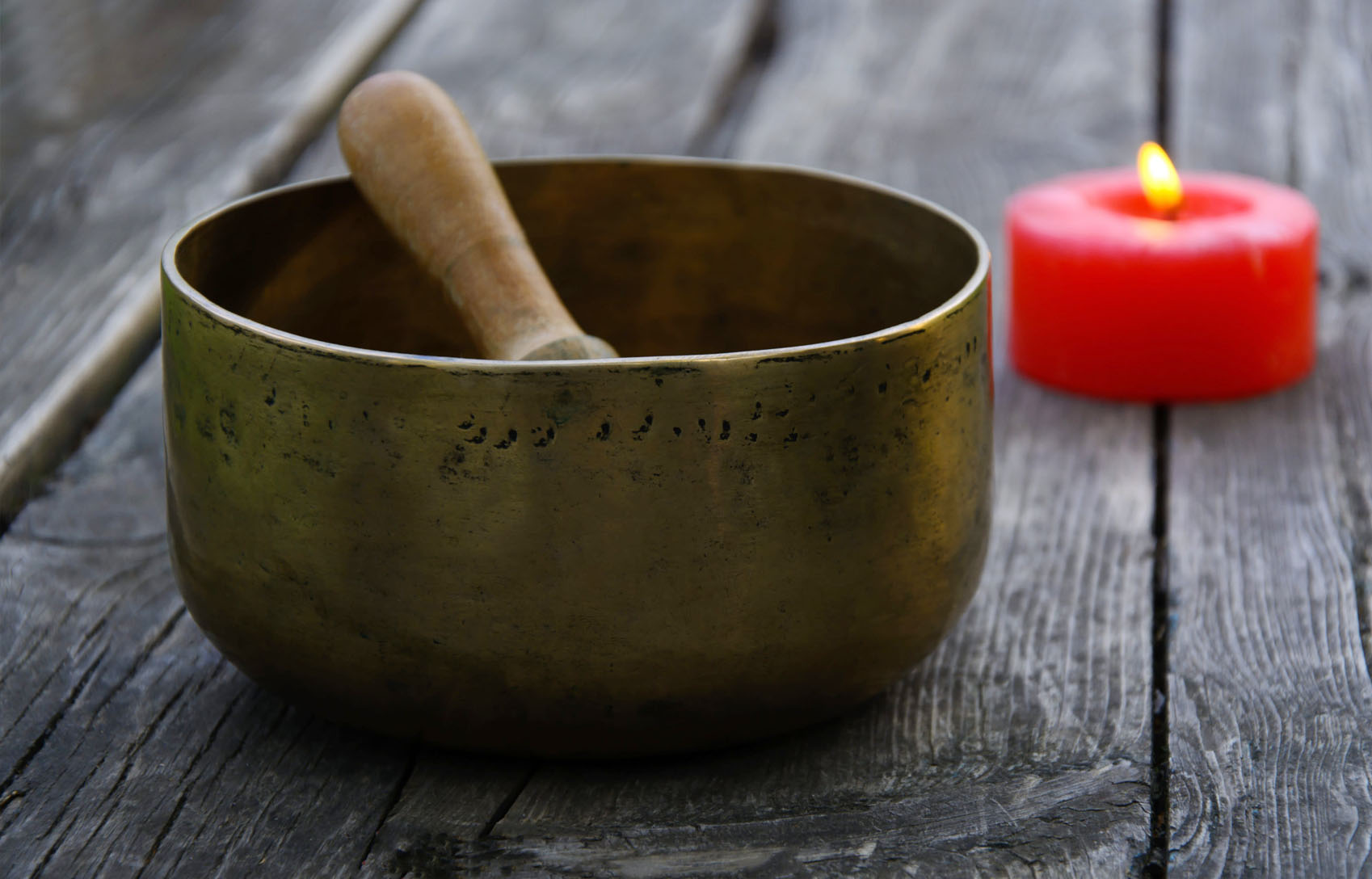
Bronze is an alloy of copper and tin, and it has been the material of choice for bells, ritual objects, and sculpture across most of human history for one reason: it does not rot, rust through, or decay the way iron and organic materials do.
When bronze meets air and moisture it forms a surface oxide layer rather than corroding inward. That layer — the patina — actually protects the metal beneath it. The surface changes colour and then largely stops. Left alone, bronze can survive for millennia before oxidation works its way meaningfully into the structure.
Normal playing does not wear a bowl out either. Rimming and striking transfer energy into the metal, but they do not remove material at any rate that matters. The visible effect of centuries of playing on genuine antiques is a rim edge worn smooth and rounded, and hammer marks softened by handling — cosmetic changes, not structural ones. The bowl still sings.
Bronze Versus Brass
This is where mass-produced bowls differ meaningfully. Most cheap machine-pressed bowls are brass — copper and zinc — which is softer, cheaper, and easier to machine. Brass does not have the same acoustic properties as bronze, and it does not have the same longevity narrative either.
A hand-forged bronze bowl from a Nepali workshop is built on the same material logic as a temple bell. A pressed brass bowl is built on the logic of a decorative object. Both will physically persist, but only one is an instrument designed to be played for generations. Every handmade singing bowl at Dharma Tool uses traditional bronze composition for exactly this reason.
Does a Singing Bowl's Sound Change With Age?
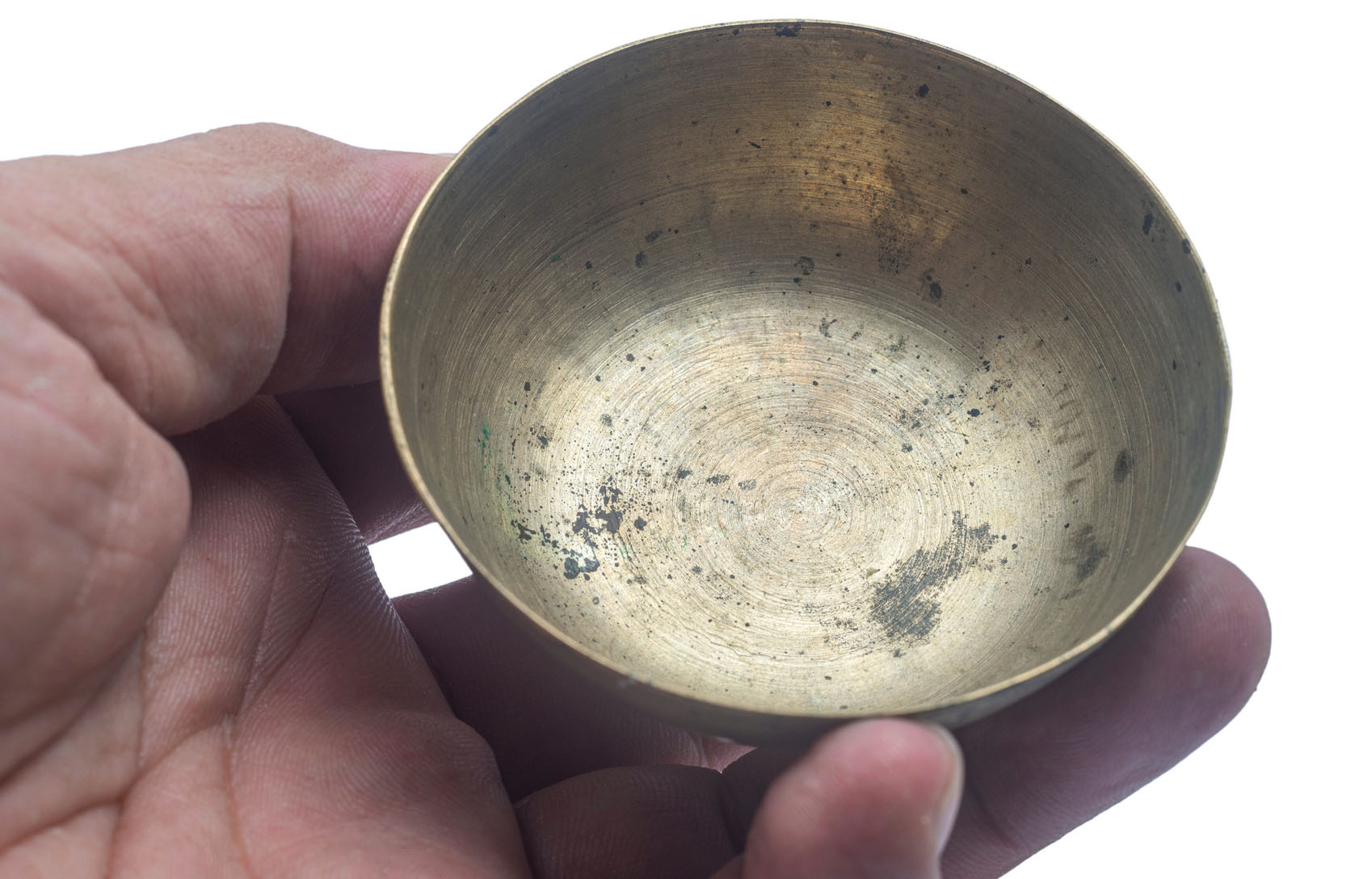
Yes, though the reasons are less mystical than they are often presented.
Bronze becomes progressively more brittle over long timescales as its crystal structure changes. Increased brittleness affects how the metal vibrates, and many collectors and practitioners describe antique bowls as sounding warmer, more mellow, and more complex in their overtone blending than new ones. That difference is real and widely reported.
Physical wear contributes as well. On very old bowls the rim edge has been rounded by centuries of playing, which changes the contact surface and how the bowl responds. The patina layer also sits on the vibrating surface and has some acoustic effect.
Being Honest About This
What deserves scepticism is the claim that any old bowl automatically sounds better than any new one. It does not. Age correlates with quality in the antique market largely because badly made bowls did not survive, and because older bowls were hand-forged as a matter of course. A well-made contemporary bowl can outperform a mediocre antique comfortably.
The honest position: age changes sound, often pleasantly, but craftsmanship determines quality far more than years do. Our guide on new handmade versus antique singing bowls covers this comparison in detail.
Bronze, hand-forged in Kathmandu — the same way bowls that survived three centuries were made
Explore handmade singing bowls forged in traditional bronze, or antique collected bowls that have already proven how long a well-made instrument lasts. For a piece intended to be passed down, a custom singing bowl can be engraved with names and dates at the point of forging.
What Actually Damages a Singing Bowl?
A singing bowl has essentially one failure mode: cracking. Everything that shortens a bowl's life leads there.
Dropping It
The single biggest risk, and the reason most bowls that die, die. Bronze is brittle. A fall onto a hard floor can produce a crack that is invisible to the eye and permanently silences the resonance. The bowl will look perfect and buzz whenever played.
Most drops happen during handling rather than playing — carrying a bowl one-handed, setting it on an edge, or letting a child pick it up unsupervised.
Striking Too Hard
A hard strike does not produce a better tone. It produces a percussive clank and puts stress into the metal. Bronze accumulates that stress. Bowls have cracked from repeated heavy striking, particularly at the rim, which is thinner and more vulnerable than the wall.
Aggressive Rimming Followed by a Sudden Stop
Driving a bowl very hard with a mallet and then abruptly halting creates a sharp mechanical shock. This is an uncommon but genuine cause of cracking, especially in thinner bowls. Build and release volume gradually.
Thermal Shock
Pouring hot water into a cold bowl, or leaving a bowl in direct sun and then filling it with cold water, stresses the metal through uneven expansion. Water techniques are fine — sudden temperature differences are not.
Over-Cleaning and Polishing
This is the most common form of self-inflicted damage, and it is entirely avoidable. Abrasive polishing compounds physically remove metal. Harsh chemicals attack the surface. Both strip the protective patina and, done repeatedly, thin the wall and alter the tone.
A soft dry cloth is sufficient for almost all maintenance. Our full guide on how to care for your singing bowl covers cleaning properly, including when a gentle wash is appropriate and what to keep well away from bronze.
Stacking Bowls
Nesting bowls inside each other puts metal against metal, and any movement or vibration causes chipping at the rims — the most fragile part of the instrument. Store bowls separately, each on its own cushion or padded.
Normal Ageing or Real Damage? How to Tell
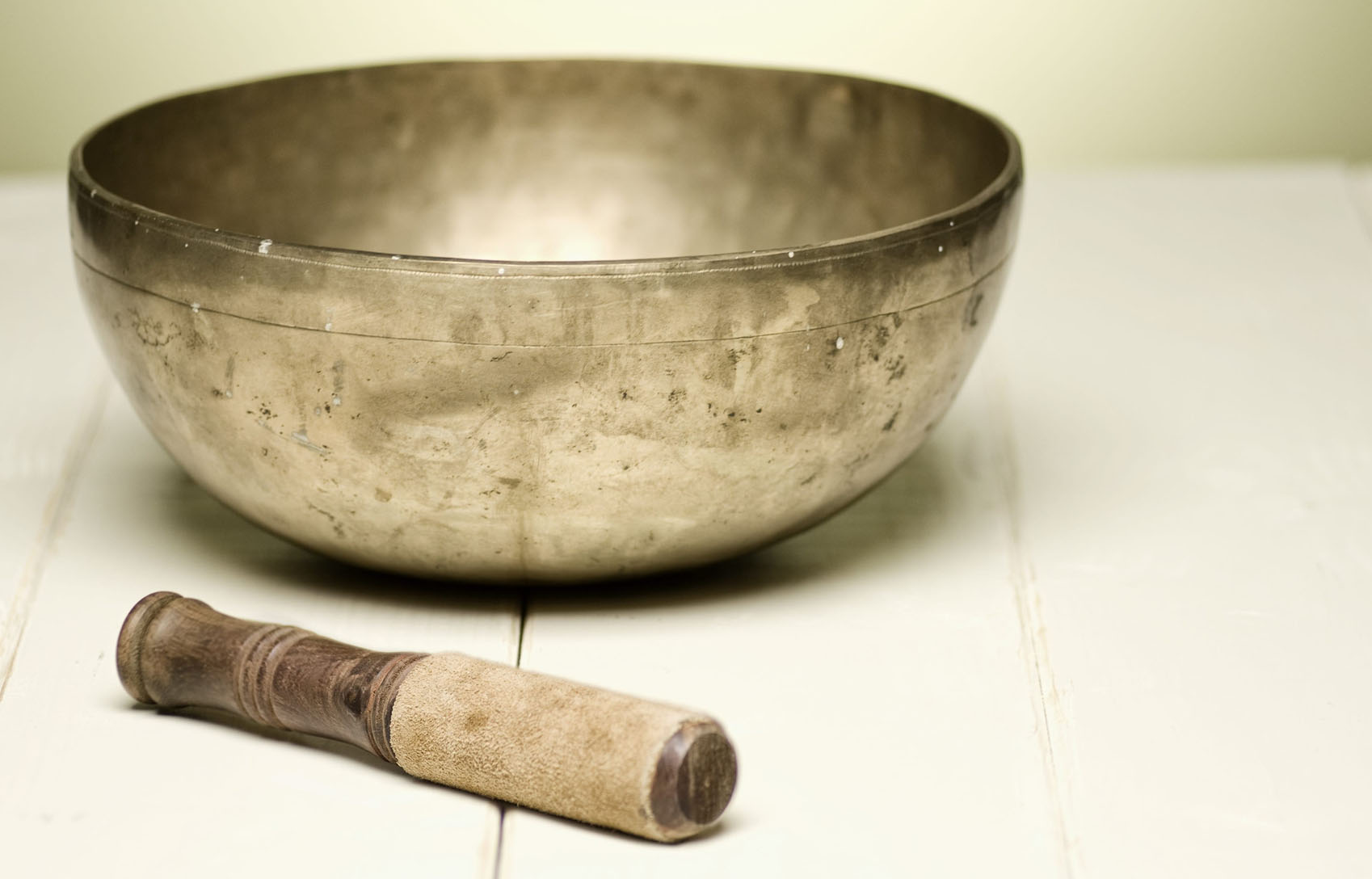
Owners frequently panic about marks that are entirely normal, and ignore signs that genuinely matter. This table separates the two.
| What you see or hear | Normal ageing or damage? | What to do |
|---|---|---|
| Dark or uneven surface colour | Normal — this is patina | Leave it. It protects the metal and holds value |
| Scratches, small dents, stains | Normal on any used or antique bowl | Nothing. Cosmetic only |
| Rim edge worn smooth and rounded | Normal — evidence of decades of playing | Nothing. A sign of a genuinely old bowl |
| Fine spidery surface fractures | Common, especially on large antiques | Fine if the sound is unaffected. Monitor |
| Persistent buzz whenever played | Damage — likely a crack | Check rim and wall carefully by hand and eye |
| Tone suddenly dead or dramatically shortened | Damage — structural | Usually unrepairable. The bowl is finished as an instrument |
| Green powdery deposits | Damage — active corrosion | Needs treatment. Keep dry and seek specialist advice |
| Crack visible through the wall | Damage — terminal | Retire it. A through-crack cannot be fixed |
The most useful diagnostic is sound, not appearance. A bowl covered in scratches and dark patina that still rings clearly is a healthy bowl. A pristine bowl that buzzes has a problem. Superficial cracks that do not penetrate the wall are acceptable and common on antiques — what matters is whether the resonance is intact.
What Is Patina and Should You Remove It?
Patina is the natural darkening that occurs as bronze oxidises through contact with air, moisture, and human hands. It builds slowly over years and decades, and it is the visual record of a bowl's life.
Do not remove it. Three reasons.
First, patina protects the metal underneath. Stripping it exposes fresh bronze to oxidation and restarts a process that had reached equilibrium.
Second, it carries the value. In the antique and art markets, patina on bronze is understood as enhancing beauty and worth, not diminishing it. Aggressive cleaning of an antique bowl can significantly reduce what it is worth — collectors specifically look for undisturbed surfaces.
Third, it is the history. The darkening on an old bowl records every hand that has held it. Polishing it to a bright finish erases that permanently, and it does not come back.
A brightly polished antique often signals a bowl that has been cleaned for export rather than a bowl that is genuinely young. And in the other direction, artificial ageing and fake patina have become common as authentic antiques grow scarcer — which is why patina alone is never a reliable indicator of age.
Do Singing Bowls Hold Their Value?
Hand-forged bronze singing bowls hold their value well, and genuine antiques have appreciated as supply has declined. Mass-produced brass bowls hold almost no resale value.
Three factors drive this. Genuine antique Himalayan bowls are a finite and shrinking supply — no more are being made, and the ones in circulation are the ones that exist. Hand-forging is labour-intensive skilled work whose cost rises rather than falls. And bronze itself does not depreciate through use, unlike almost any other purchase.
An Honest Caveat
A singing bowl is not an investment vehicle, and treating it as one leads to disappointment. The market is small, illiquid, and heavily dependent on authentication and provenance. Selling well requires finding the right buyer, which is not quick.
The realistic framing: a good bowl is a purchase that does not lose money the way most objects do, and may gain. That is unusual and worth something. It is not a reason to buy one. The reason to buy one is that you want to play it.
What Preserves Value Best
Undisturbed patina, intact resonance, no through-cracks, and documented origin. Bowls with a known workshop, a named artisan, or clear provenance consistently do better than anonymous ones. Keeping any documentation that came with a bowl is worth doing, and costs nothing.
Making a Bowl Meant to Be Passed Down
There is a particular kind of purchase where longevity stops being a technical fact and becomes the entire point — a bowl bought for a birth, a marriage, a memorial, or simply as the thing that will still be in the family in eighty years.
For that, what matters is not just bronze construction but permanence of meaning. A bowl engraved at the point of forging with a name, a date, a mantra, or a symbol carries that information as long as the bowl exists, which is to say indefinitely. Engraving added later never integrates the same way.
Dharma Tool's custom singing bowl service lets you specify size, musical note, metal composition, and engraving, with the bowl hand-forged by artisans in Kathmandu. For heirloom pieces this is the practical difference between an object that happens to last and an object made to be inherited.
Custom commissions can also include the monk blessing, which for a bowl intended to mark a birth, a passing, or a beginning carries genuine weight beyond the metal.
Forged with a name, a date, and an intention that lasts as long as the bronze does
Engraving worked in at the point of forging becomes part of the bowl permanently. Through Dharma Tool's custom singing bowl service, you specify the size, note, metal, engraving, and intention, and the bowl is hand-forged in Kathmandu by artisans working in a centuries-old tradition. Optional monk blessing available on every commission.
How to Make Your Bowl Last Generations
- Never leave it where it can fall. Table edges, high shelves, and the floor near walkways account for most broken bowls. Choose a stable, low, out-of-the-way place.
- Store each bowl separately. No stacking or nesting. Metal against metal chips rims, and rims are the most fragile part.
- Strike gently, always. A soft strike two thirds up the outer wall produces a better tone than a hard one and puts no stress into the metal.
- Build and release volume gradually when rimming. Never drive a bowl hard and stop abruptly.
- Clean with a soft dry cloth only. No polishing compounds, no abrasives, no harsh chemicals. See the full care guide for when more is appropriate.
- Leave the patina alone. It protects the metal, carries the value, and holds the history.
- Avoid sudden temperature changes. No hot water into a cold bowl, and keep it out of direct sun.
- Use a proper cushion. A firm ring cushion supports the base and stops the bowl sliding or contacting hard surfaces.
- Keep any documentation. Provenance meaningfully affects value, and it costs nothing to hold onto.
Frequently Asked Questions
How long does a singing bowl last?
A hand-forged bronze singing bowl lasts for centuries. Bronze resists corrosion and does not wear out through normal playing, and antique Himalayan bowls two to three hundred years old are still played daily. A bowl only stops working if it cracks, which comes from dropping, striking too hard, or aggressive cleaning rather than from age.
Do singing bowls wear out from being played?
No. Rimming and striking transfer energy into the metal without removing material at any meaningful rate. Centuries of playing produce a rim edge worn smooth and softened hammer marks — cosmetic changes only. The instrument continues to sing. A bowl played daily for fifty years will be in essentially the same structural condition as one kept on a shelf.
Does a singing bowl sound better with age?
Age does change the sound. Bronze becomes progressively more brittle over long timescales, which affects how it vibrates, and many practitioners describe antique bowls as warmer and more complex in overtone blending. However, age does not guarantee quality — craftsmanship matters considerably more. A well-made new bowl can outperform a mediocre antique.
Should I clean or polish my singing bowl?
Clean with a soft dry cloth, and avoid polishing compounds, abrasives, and harsh chemicals entirely. These physically remove metal and strip the protective patina, which can thin the wall and alter the tone over time. Patina also carries much of an antique bowl's value, and removing it reduces what the bowl is worth.
How do I know if my singing bowl is cracked?
Sound is the reliable test. A cracked bowl buzzes persistently whenever played, or has a suddenly dead or dramatically shortened tone. Run a finger slowly around the rim and inside wall to check. Fine surface fractures that do not penetrate the wall are common on antiques and are not a problem if the resonance is unaffected. A crack through the wall cannot be repaired.
Do singing bowls hold their value?
Hand-forged bronze bowls hold value well, and genuine antiques have appreciated as supply has declined. Mass-produced brass bowls hold almost none. That said, the market is small and illiquid, and a singing bowl should not be treated as an investment. Undisturbed patina, intact resonance, and documented provenance preserve value best.