




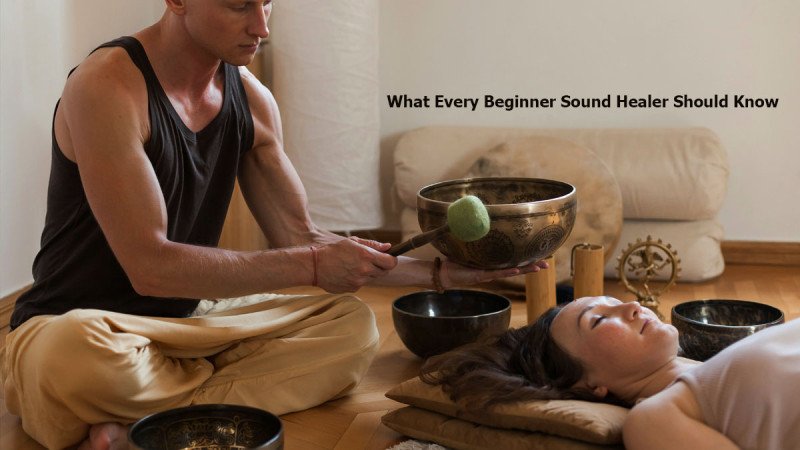
What Every Beginner Sound Healer Should Know
Sound healing is unregulated almost everywhere, so nobody will stop you starting. That freedom puts the responsibility on you. What matters most at the beginning is not technique or the number of bowls you own — it is understanding what you can honestly offer, what you must not claim, and what to do when someone in your session becomes emotional. The bowls are the easy part.
Most people arrive at this the same way. A sound session did something for them that nothing else had, and they want to be able to give that to other people.
That is a good reason to start. It is also the reason a lot of beginners go wrong, because the instinct to help can quietly turn into claiming more than you can deliver.
This is what we would want someone to know before they run a session for another person — written from years of practice, and including several things that make the work sound less magical than the marketing does.
Nobody Will Certify You, and That Matters
In most countries sound healing is entirely unregulated. There is no licensing body, no protected title, no legal qualification. Anyone can buy a bowl and advertise sessions tomorrow.
People usually hear that as good news. It is worth sitting with the other half of it: because no one is checking, your credibility rests entirely on what you claim and how you behave. There is no institution standing behind you, and there is none to hide behind either.
This also means certificates vary enormously. A weekend online course and a serious training with supervised practice both produce a certificate, and the certificate looks similar. Buyers cannot tell them apart, which is why so many people assume all of it is nonsense.
Training is genuinely worth doing — but for what you learn, not for the paper. A good course teaches session structure, pacing, how to read a room, and what to do when things get emotional. It does not make the bowls work better.
That is also why we publish our own sound healing course free, and say plainly on every certificate page that it records what you have studied and is not a licence to practise. Supervised practice with a teacher is what makes a practitioner. A page cannot do it, and neither can a PDF.
What You Can Honestly Say You Offer
This is the most important thing on the page, and the thing beginners get wrong most often.
What you can offer with confidence: a relaxing sound experience. Something people will find calming, grounding and often quite moving. A space where nothing is asked of them. Support for rest, for settling, for stepping out of a difficult week for an hour.
That is a real service and people will pay for it and thank you.
What you must not offer: treatment. Do not say your sessions heal conditions, cure anything, replace medical care, or work on a cellular level. Not because it is bad marketing — because it is not true, and because someone might delay real care on the strength of it.
| Say this | Not this |
|---|---|
| A sound session to support relaxation | Sound therapy to treat your anxiety |
| Many people find it calming and grounding | This will reduce your stress levels |
| Space to rest without anything being asked of you | A healing that clears blocked energy |
| Sound can support the conditions for rest | The frequencies repair your cells |
| Works well alongside whatever care you have | An alternative to medication |
| Responses vary between people | You will feel a shift by the end |
The left column is not weaker. It is more credible, it is defensible, and it will not put you in front of a regulator or an unhappy client. Anyone who has read three pages of inflated claims will notice immediately when someone describes their work accurately.
Have the sentence ready before you need it, because it will be asked of you by someone hopeful and improvising under that kind of hope is how decent people end up overclaiming. Something close to: I can't treat that, and I wouldn't want to say otherwise. What this does do is help people relax deeply, and a lot of people sleep better afterwards. You're welcome to have a session for that reason, alongside whatever your doctor is doing.
What You Actually Need to Start
Considerably less than most people assume. A skilled practitioner with three bowls will run a better session than a beginner with twelve.
One large bowl. This is the anchor and where your money should go. A large standing bowl of 25cm or more produces low frequencies people feel in the chest and through the floor rather than only hear. That felt quality is what makes a session an experience rather than pleasant background sound. Five medium bowls do not add up to one large one.
Two or three mid-sized bowls in notes that sit together rather than clashing. These do most of the playing through the middle of a session.
One small bowl for opening and closing. A single clear note that tells everyone the session has begun, and later that it is time to return.
A felt mallet for each bowl, plus cushions or mats for whoever is lying down.
That kit runs a genuine forty-five minute session for up to eight people. Add more bowls later, when you know what you actually reach for.
If you are buying a single bowl rather than a working kit, the Himalayan tradition has a clear answer: an A or B bowl. Those two are treated as the universal bowls, playable for any person and any chakra, which is why healers keep them for general work.
What Not to Buy Yet
A full chakra set, unless your practice is already built around that framework. A gong. Anything sold on the basis of a specific frequency claim — particularly Solfeggio numbers, which come from 1970s numerology rather than from any Eastern tradition and do not correspond to the chakra notes at all. And any bowl you have not heard, from a listing with a stock photograph — no two hand-forged bowls sound alike, so a photograph tells you almost nothing.
Buy the large bowl properly. Everything else can wait.
The anchor bowl does most of the work and is worth the money. Explore large standing bowls for the felt low end, Meditation bowls for the working mid-range, and a Clear Mind bowl for opening and closing.
The Hardest Part Is Not the Bowls
Beginners spend most of their preparation on technique and instruments. Then, in their fourth or fifth session, somebody starts crying, and they discover what the job actually asks of them.
Sound surfaces emotion. That is part of why it works and it is the part nobody prepares you for. Someone lying on a mat with nothing asked of them, for the first time in months, will sometimes find that things arrive.
What to do: keep playing, quietly. Do not stop the session, do not rush over, do not ask if they are alright. Both of those turn a private moment into a public one and pull the person out of it. Let the sound continue and let them have it.
Afterwards: do not single them out. If they want to speak they will find you. If they do not, they leave with it intact.
If someone becomes genuinely distressed — shaking, unable to settle, clearly overwhelmed — stop, help them sit up, get their feet on the floor, and ask them to name three things they can see in the room. Ordinary grounding. Then let them leave whenever they want.
This is the skill that separates a competent practitioner from someone who owns nice bowls, and it is why training with supervised practice is worth more than any certificate.
And When They Do Want to Talk
There is a second half to this that gets discussed even less, and it is where sound practitioners do most of the harm they ever do.
Do not interpret. If someone tells you they felt heat in their chest, that is information, not a diagnosis. Do not tell them their heart chakra was blocked, that they are releasing something, or what their experience meant. You do not know — and a person in that state, softened and open, will believe you.
Ask open questions instead. How are you feeling? Where did you notice it most? Anything you want to tell me before you go? Then stop talking. If something they say concerns you, the only safe sentence is that it sounds worth mentioning to their doctor.
The full closing and waking procedure — including the tradition's rule that the client moves the right hand first before five o'clock and the left hand first after it — is set out in Lesson 3.9 of our free course.
Your First Session, Step by Step
Forty-five minutes. Not ninety. People who want more will ask; people who found it too long will simply not come back.
- Set the room before anyone arrives. Mats spaced out, blankets folded at the foot of each, lighting low but not dark. Your bowls arranged within reach so you never have to stand up mid-session.
- Let people settle for five minutes. They arrive talking, from traffic or work. Give them time to lie down and stop moving before anything starts.
- Open with one clear strike. A single note does more to settle a room than any spoken introduction.
- Say very little. Three sentences at most: where to put their attention, that falling asleep is fine, and that they can leave quietly if they need to. Then stop talking.
- Begin with the large bowl. Low, slow, unhurried. The first five minutes are for the nervous system to notice that nothing is required of it.
- Build through the middle. Bring in your mid-range bowls, overlap tones, let them layer and separate. Vary the density rather than the volume.
- Come down earlier than feels right. Guests should arrive at silence gradually rather than have it announced.
- Let the silence sit for two full minutes. This is the part beginners cut and the part people remember.
- Close with the same small bowl, then let people get up in their own time. No group discussion, no asking how it was.
That last point is worth defending. The instinct afterwards is to invite people to share. Resist it. Most are somewhere quiet inside themselves, and being asked to describe it pulls them straight out.
One thing worth trying once you are comfortable: the Nepali tradition holds the closing silence for a minimum of six minutes, not two. It feels far longer than it sounds, and the instruction is to stay still in the room while it runs — no tidying bowls, no checking a phone. People can hear you packing up, and a practitioner packing up is a practitioner announcing the session is over before anyone is ready for it. Try six once and see what changes.
Mistakes Almost Every Beginner Makes
Playing too loud. The most common error by a distance. Volume is not intensity. A room held quietly draws people in; a room filled aggressively leaves them braced.
Playing too much. Beginners fill every silence because silence feels like failure. It is not. The gaps are where most of the work happens.
Talking through the session. The bowls do not need narration. Every sentence pulls attention back into language and out of listening.
Too many bowls. Three played well beats nine played nervously. More instruments means more decisions, and decisions show in the sound.
The wrong room. A hard-surfaced room with an echo turns sustained tone into noise. A heavily carpeted room swallows the low frequencies that make it physical. Clap once and listen before you commit to a space.
Skipping the aftermath. Ending a session and immediately serving tea or starting a conversation discards most of the benefit. Leave the space open.
Overclaiming when nervous. New practitioners often inflate what they offer because they feel they have not earned the fee. Do the opposite — describe it accurately and let the session speak.
Improvising without a system. Playing by feel works until a session does not land, and then you have nothing to examine. A method tells you what to change; improvisation only tells you to try again.
Know Where Your Practice Ends
Scope of practice is not bureaucracy. It is the thing that protects both you and the person on the mat.
You are not a therapist. If someone begins disclosing trauma in detail, you are not equipped to work with it and it is not what they came for. Listen kindly, do not probe, and if it seems appropriate suggest they speak to someone qualified.
You are not a doctor. Never advise anyone on medication, treatment or a medical decision. If someone mentions a condition, the correct response is that their doctor is the person to ask.
Take an intake before the first session. Five questions, before anyone lies down: whether they are pregnant, whether they have a pacemaker or implanted device, whether they have epilepsy, whether they have had recent surgery or injury, and whether they are sensitive to sound. Each answer changes something, and none of them is awkward to ask if you ask it as routine. The full list of situations where a session should be modified or declined is in who should not receive sound healing.
Body placement is bodywork. Placing bowls directly on someone is a different activity from playing them in a room, and it has genuine contraindications — implanted electronic devices, pregnancy, recent surgery, thrombosis. It needs training and consent. Our article on singing bowls in massage therapy covers the approach, and Lesson 3.5 covers the traditional method and its placement rules.
Tell your insurer. If you are charging, you need cover, and cover only applies to what you have declared. This takes one phone call.
Working with children has its own considerations around consent, volume and duration. Our guide on singing bowls for children covers them.
How to Learn Properly
Five things, in order of how much they will actually improve your practice.
Receive sessions from other people. This is the most undervalued step. Book with several practitioners, notice what worked and what did not, and pay attention to what they do in the silences. You will learn more from three good sessions than from any online course.
Practise on people who will tell you the truth. Friends and family, free, for months. Ask specifically what was too loud, too long, or uncomfortable. Beginners rarely get honest feedback because clients are polite.
Learn one system properly. Not a collection of techniques — a system, with a sequence you can repeat and evaluate. The Himalayan tradition has two, and they are not variations of each other: the Vedic system puts C at the root and works downward from crown to root for healing, while the Tibetan system puts F at the root and moves in a different order entirely. Only the crown agrees between them, and the two are never mixed within a session. Both are set out in Course Three of our free course, alongside intake, sound massage and an eighteen-day treatment programme.
Train with supervised practice. The value is in someone experienced watching you work and telling you what you did not notice. Nepal remains one of the best places to do this — our guide to singing bowl healing and training centres in Nepal covers the established ones, and Sunita's own certifications and training are published in full if you want to see what a real course covers.
Learn your instrument properly. Not spiritually — technically. Know how to build a tone reliably, why bowls take time to sing, and what the difference is between striking and rimming. Our article on the male and female tones of a singing bowl and the guide on how to play a singing bowl are the practical starting points.
Thirty-six lessons from a Nepali healer's training notebook
We transcribed Sunita Poudel's handwritten notebook in full — the Vedic and Tibetan systems, client intake and contraindications, sound massage, warm water therapy for clients who cannot lie down, and an eighteen-day treatment programme. Free to read, no account and no email. Start with Course One if you have never given a session, or go straight to Course Three if you already practise.
What Nobody Tells You About the First Year
Three things, all of them normal.
You will feel like a fraud. Almost everyone does, because the work involves no visible effort and the fee feels unearned. It passes, and the ones who never feel it are usually the ones overclaiming.
Some sessions will land and some will not, and you will not always know why. Room, mood, who came, what happened in their week. Consistency comes with experience, but the variability never disappears entirely.
You will be tempted to add things. More bowls, crystals, oils, a bigger framework, better language. Resist for a while. Getting very good with three bowls and forty-five minutes is worth more than being adequate with a lot of equipment.
A note on health: Sound sessions support relaxation, rest and nervous system regulation. They are not treatment for any condition and should never be presented as such. If someone in your care is dealing with a health problem, the right advice is always that they see a qualified clinician.
Frequently Asked Questions
Do I need certification to work as a sound healer?
In most countries there is no legal requirement, no licensing body and no protected title. That freedom puts the responsibility on you — your credibility rests on what you claim and how you behave rather than on any institution. Training is genuinely worth doing for what you learn: session structure, pacing, and how to handle someone who becomes emotional. It does not make the bowls work better.
Is there a free sound healing course worth taking?
We publish one, and we would rather say what it is than oversell it. It is thirty-six lessons transcribed from the handwritten training notebook of Nepali healer Sunita Poudel, covering the Vedic and Tibetan systems, client intake, sound massage, warm water therapy and an eighteen-day treatment programme. It is free to read with no account or email. What it cannot give you is supervised practice, which is what actually makes a practitioner — so use it to learn the material, then find a teacher.
What can I honestly say a sound session does?
That it supports relaxation and rest, that many people find it calming and grounding, and that it offers a space where nothing is asked of them. What you must not say is that it treats or cures any condition, replaces medical care, or works on a cellular level. Accurate description is more credible than inflated claims, and it protects both you and your clients.
How many singing bowls do I need to start?
One large bowl, two or three mid-sized bowls, and one small bowl for opening and closing. Plus a felt mallet for each and cushions for whoever is lying down. That runs a genuine forty-five minute session for up to eight people. The large bowl matters most — it produces the low frequencies people feel physically, and no number of medium bowls substitutes for it. If you are buying only one, an A or B bowl is the most forgiving, as those are treated as the universal bowls in the Himalayan tradition.
What should I do if someone cries during a session?
Keep playing, quietly. Do not stop, rush over, or ask if they are alright — both turn a private moment into a public one. Let the sound continue and let them have it. Afterwards, do not single them out. If someone becomes genuinely distressed, stop, help them sit up with feet on the floor, and ask them to name three things they can see in the room.
Should I tell someone what their experience meant?
No. If a client says they felt heat in their chest, that is information rather than a diagnosis — telling them a chakra was blocked or that they are releasing something is where sound practitioners do most of the harm they ever do, because a person in that softened state will believe you. Ask open questions instead and then stop talking. If something concerns you, the only safe response is that it sounds worth mentioning to their doctor.
How long should a beginner's session be?
Forty-five minutes. Not ninety. People who want more will ask, while people who found it too long rarely say so — they simply do not come back. Within that, spend the first five minutes low and slow, build through the middle, come down earlier than feels right, and let the closing silence sit for at least two full minutes. The Nepali tradition holds it for a minimum of six.
What is the best way to learn sound healing?
Receive sessions from other practitioners first — you will learn more from three good sessions than from any online course. Then practise on friends who will tell you the truth about what was too loud or too long. Then learn one system properly rather than a collection of techniques, because a system tells you what to change when a session does not land. Then train somewhere with supervised practice. Certificates vary enormously in what they represent; supervised practice does not.