



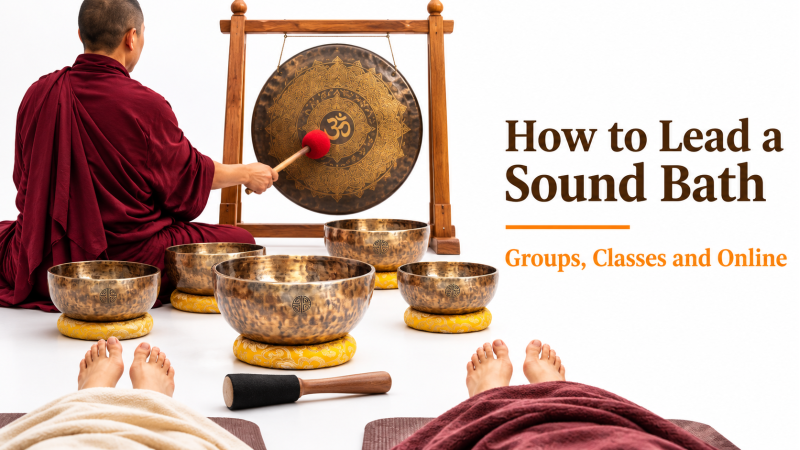
How to Lead a Sound Bath - Groups, Classes and Online
To lead a sound bath, set up a quiet room where everyone can lie down comfortably, give a short welcome, and play for 30 to 60 minutes. Start low and slow, build gently in the middle, then come back to quiet and close with one clear tone and a few minutes of silence. Say little, play softly, and let people get up in their own time.
A sound bath supports relaxation and focus, and does not treat any condition. Whether you host a sound bath for friends, a yoga class or an online group, the same simple shape works.
Key takeaways
- Prepare: ask a few safety questions and keep heads away from large bowls and gongs.
- Say little: a short welcome, then let the sound lead.
- Shape it: settle, ground, build, rest and return, in about 45 minutes.
- Close gently: one clear tone, silence, and no rush to talk.
What you need to lead a group sound bath
| What you need | Why it matters |
|---|---|
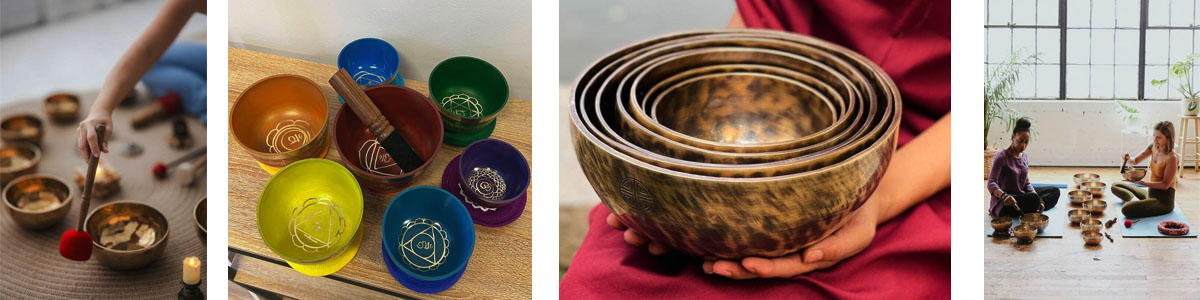
| 3 to 7 singing bowls | A range of low, middle and high tones; a chakra singing bowl set gives you all of them |
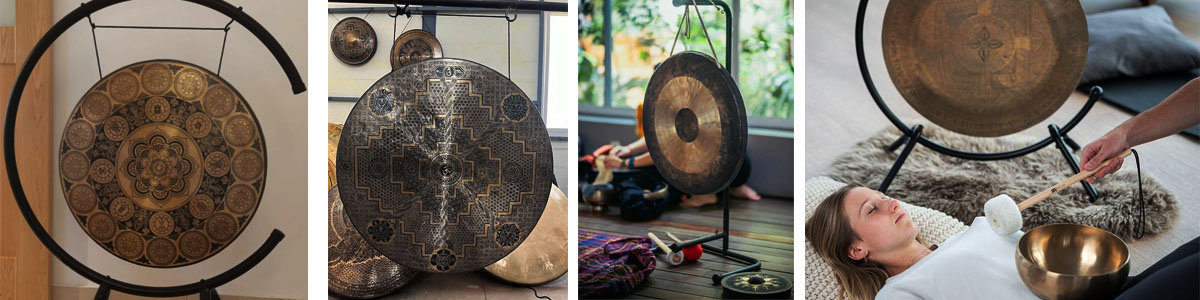
| A large bowl or a gong | A deep tone to open and settle the room; see our large standing singing bowls and Tibetan gongs |
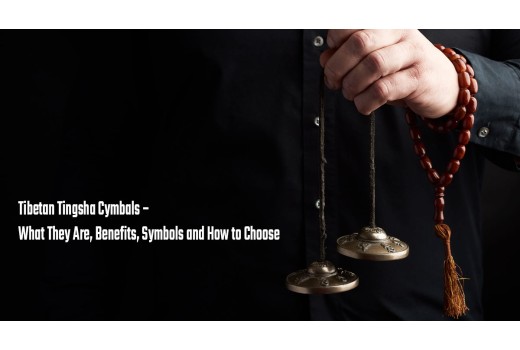
| Tingsha or a small bowl | One clear signal to begin and to end; see our tingsha |
| Mallets and a felt striker | Soft strikes and steady rimming |
| Mats, blankets and cushions | People stay comfortable and warm lying still for 45 minutes |
Fewer instruments played well always beat many played in a rush. A set of three to seven bowls, a deep bowl or gong and one clear signal are enough for most rooms.
Before people arrive: the room and safety
- Lay out the mats: in a circle or a semicircle facing you, with space so that no one's head is right beside a large bowl or gong. Our guide to setting up singing bowls for a sound bath shows five layouts.
- Ask a few questions privately: pregnancy, implanted devices such as a pacemaker, epilepsy, recent surgery and sensitivity to sound. Our guide to sound healing contraindications explains why each matters.
- Make it comfortable: low light, a warm room, blankets and eye pillows, and phones switched off.
- Agree on touch: never place a bowl on anyone's body without asking first.
What to say: a simple sound bath script
The best welcome is short. You can adapt these words to your own voice.
"Welcome. For the next 45 minutes there is nothing you need to do. Lie down or sit in whatever way is comfortable, and let the sound come and go."
"If a sound ever feels too strong, you can cover your ears, change position or leave quietly. If you fall asleep, that is completely fine."
"When the last sound fades, take your time. There is no rush to get up."
After the welcome, stop talking. The sound will hold the room far better than words.
How to lead a sound bath step by step: a 45-minute running order
| Time | Stage | What to play |
|---|---|---|
| 0 to 5 min | Arrive and settle | Short welcome, three slow breaths, one tingsha or small bowl |
| 5 to 12 min | Ground | Large bowl or soft gong strokes, slow, with long gaps |
| 12 to 30 min | Build | Move from low to middle bowls, strike and rim, layer two or three bowls |
| 30 to 38 min | Fullest, then soften | Your fullest sound or a gentle gong swell, then thin it out bowl by bowl |
| 38 to 43 min | Rest | Single soft strikes, then silence |
| 43 to 45 min | Return | One clear closing tone, then people get up in their own time |
Each stage flows into the next with no gaps in mood, only in sound. Our guide for the beginner sound healer covers a first session in more depth.
Playing tips for a room full of people
- Play softer than you think: a strike that sounds gentle to you can be loud to someone lying close by.
- Leave space: let each tone fade before the next, and let silence be part of the music.
- Change slowly: avoid sudden loud sounds, and build any gong swell gradually; our guide to combining a gong and singing bowls shows how.
- Move quietly: if you walk among the mats, tell people at the start so no one is surprised.
Leading sound baths in yoga classes, workplaces and online
| Setting | Length | How to lead it |
|---|---|---|
| Yoga class | 5 to 10 min | Play softly from the front during savasana; our guide for yoga teachers has more |
| Workplace or office | 15 to 20 min | Seated in chairs, eyes open or closed, three or four bowls, no need to lie down |
| Online | 20 to 30 min | Turn on Zoom's Original sound for musicians, place the microphone 1 to 2 metres from the bowls, and mute everyone |
| Studio or day workshop | 45 to 60 min | Full set with a large bowl or gong, mats and blankets, the full running order above |
Online, the sound changes more than in a room, so test your microphone with a friend before your first session. In every setting, keep the same shape: settle, build, rest and return.
How to close a sound bath
Play one clear closing tone on a small bowl or tingsha, then sit in silence for two minutes or longer. Invite small movements first, fingers and toes, then rolling to one side, then sitting up slowly.
"Gently bring some movement into your fingers and toes. When you are ready, roll onto your side and rest there for a moment."
"Take your time to sit up. There is no need to say anything; simply notice how you feel."
Keep the lights low and offer water. Avoid telling anyone what their experience meant, and let people leave quietly if they wish.
Common mistakes when leading a sound bath
- Talking too much: long explanations pull people back into their heads.
- Playing too loud or too close: comfort comes before drama.
- Promising results: describe a sound bath as rest, never as a fix for any problem.
- No silence: without pauses, the sound becomes noise.
Instruments for leading sound baths
Our chakra singing bowl sets give a leader a full range of tones in one order, such as this 7 chakra set in an antique finish. Every bowl is played and selected by Sunita for each order before it leaves Kathmandu.
You can also build your own matched set with our singing bowl set builder, or have your studio name or a mantra on a custom singing bowl. Every order leaves Kathmandu within 3 to 4 business days by DHL Express.
| If you want | Look at |
|---|---|
| A full range of tones | Chakra singing bowl sets |
| A ready set to start leading | 7 chakra set in an antique finish |
| A deep opening tone | Large standing singing bowls |
| A gong for bigger rooms | Tibetan gongs |
| Your own matched set | Singing bowl set builder |
| A bowl with your studio name or mantra | Custom singing bowl |
Studios and healers who buy for regular classes can ask about our studio and trade partnership.
Learn to lead, free
Our free singing bowl healing course is designed from Sunita's own notebook. It takes you from your first strike to full sessions, one short lesson at a time.
To see a sound bath from the other side of the mat, read our guide to what a sound bath is and what people feel during one.
Build your sound bath set
Hand-hammered singing bowls, gongs and tingsha from Nepal, played and selected by a sound healer before they leave Kathmandu.
Frequently asked questions
How do you lead a sound bath for beginners?
Ask a few safety questions, set mats where no one is right beside a large bowl or gong, and give a short welcome. Play low and slow, build gently, come back to quiet, and close with one clear tone and a few minutes of silence.
How long should a sound bath be?
Most group sound baths run 45 to 60 minutes. In a yoga class 5 to 10 minutes is enough, and a workplace session works well at 15 to 20 minutes.
How many people can join a sound bath?
A small set of singing bowls suits about eight people. For larger groups, add a large bowl or a gong so the sound reaches everyone without playing harder.
What do you say at the start of a sound bath?
Keep it short: there is nothing to do, lie or sit however is comfortable, and it is fine to fall asleep. Tell people they can cover their ears, move or leave quietly if a sound feels too strong.
Do I need a certificate to lead a sound bath?
Sound healing has no single official certificate. What matters is practice, safe preparation and honest language, and good training helps you build all three.
Can you lead a sound bath online?
Yes. Turn on Zoom's Original sound for musicians, place the microphone 1 to 2 metres from the bowls, mute everyone, and ask people to use headphones or speakers at a low volume.
Who should not join a sound bath?
Ask privately about pregnancy, implanted devices such as a pacemaker, epilepsy, recent surgery and sensitivity to sound. Anyone unsure should check with their doctor first.
Is a sound bath a medical session?
No. A sound bath supports relaxation and focus, and does not treat any condition. Describe it as a time to rest, never as a fix for any problem.
Learn from Sunita's notebook, free
From your first strike to a full session, with the free singing bowl healing course.